
 Country
Europe
Luxembourg
Luxembourg is a small country in the middle of Europe. It has green forests, rivers, castles and people who speak many languages.
Luxembourg is one of the smallest countries in the world, tucked between Belgium, France and Germany. It has forested hills in the north, farms and vineyards in the south, a capital built on a steep rocky outcrop, and about 691,000 people (2026) who use Luxembourgish, French and German.
Luxembourg is a landlocked grand duchy of 2,586 km² between Belgium, France and Germany, the only grand duchy in the world. Its 690,959 inhabitants (1 January 2026) include 46.6 percent foreign nationals; Luxembourgish, French and German are all used in administration, and its capital, once one of Europe's largest fortresses, is one of the three seats of the institutions of the European Union.
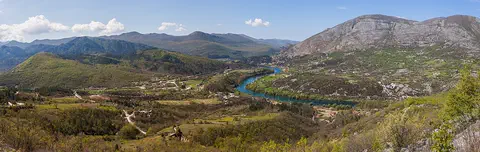
Photo: Pierre Blaché from Paris, France, CC0 1.0, via Wikimedia Commons
Discover Luxembourg
Luxembourg is a small country in Europe.
It has no sea. Its neighbors are Belgium, France and Germany. The capital city has the same name: Luxembourg. Many people there speak several languages.
Luxembourg is one of the smallest countries in the world, about 2,586 square kilometers. It is landlocked, which means it has no coast, and it is squeezed between Belgium, France and Germany. Its full name is the Grand Duchy of Luxembourg, and today it is the only grand duchy in the world.
The north is a land of forested hills and deep river valleys, and the south has farms, woods and towns. The capital, also called Luxembourg, sits on a steep, rocky outcrop where two rivers meet. About 691,000 people lived in the country at the start of 2026.
Luxembourg is a landlocked state of 2,586 km² in western Europe, bordered by Belgium to the west and north, France to the south and Germany to the east. The government's portal calls it one of the smallest countries in the world and, currently, the only grand duchy. It is a representative democracy in the form of a constitutional monarchy: the Grand Duke is head of state, and the 60-member Chamber of Deputies, elected for five years by proportional representation, represents the people in making laws.
The national statistics institute STATEC counted 690,959 inhabitants on 1 January 2026, 1.3 percent more than a year before, with growth driven mainly by migration. The country divides into two natural regions, the Éislek (Oesling) in the north, part of the Ardennes, and the larger Guttland in the center and south, which holds the capital and is much more densely populated. Luxembourgish is the national language, and French and German are both used in administration.
A capital of cliffs and fortresses
Luxembourg City sits on top of steep rocks.
Two rivers flow in the valleys below. Long ago, big stone walls and forts protected the city. Some of them are still there.
Luxembourg City began as a small castle on a steep, rocky outcrop where two rivers, the Alzette and the Pétrusse, meet. Over the centuries, powerful rulers turned it into one of the biggest fortresses in Europe, nicknamed the "Gibraltar of the North." After 1867 most of the walls were pulled down, but gates, forts, bastions and casemates remain, and the old city is a World Heritage Site.
Today the city is also home to many European Union offices. In the north, small towns such as Clervaux, Wiltz and Vianden sit among wooded hills, and Esch-sur-Alzette in the far southwest is a traditional iron- and steel-making town.
UNESCO's listing "City of Luxembourg: its Old Quarters and Fortifications" (1994) describes a site at the confluence of the Alzette and Pétrusse on a steep rocky outcrop that was almost a natural fortress. A small castle stood there shortly after the middle of the 10th century; walls followed in the 12th century and were extended in the 14th and 15th. Burgundians, Habsburgs, Spain, France (Vauban extended the works after Louis XIV's conquest), Austria and Prussia strengthened it in turn until it was one of the largest fortresses of modern Europe. After the Treaty of London of 1867 most fortifications were demolished, yet gates, forts, bastions, redoubts and casemates survive, along with old quarters such as the Grund and its Neumünster Abbey.
The government portal notes that Luxembourg City has hosted European institutions since 1952 and is one of the three institutional seats of the European Union, home to most of its financial and legal bodies. Britannica describes the second city, Esch-sur-Alzette, as a traditional iron- and steel-making center in the far southwest.
Forests, valleys and red rocks
The north of Luxembourg has hills and forests.
Rivers wind through deep valleys. In the south there are farms and vineyards. Grapes grow on the sunny slopes by the Moselle River.
Luxembourg has two main regions. The Éislek, or Oesling, in the north covers about a third of the country. It is part of the Ardennes, a high, green plateau cut by steep wooded valleys. The Haute-Sûre reservoir there is the largest lake in the country, and the highest point, 560 meters, is at Wilwerdange.
The Guttland, or "good land," covers the rest. The Moselle valley in the east is covered with vineyards, and the Mullerthal has a great beech forest and rocky sandstone hills. In the far south, the Land of the Red Rocks, or Minett, was shaped by iron-ore mining. Forests cover about 35 percent of the whole country.
The government portal divides the 2,586 km² into the Éislek (Oesling), 828 km² or one third of the territory, and the Guttland, 1,758 km² or 68 percent. The Éislek is a corner of the Ardennes: Britannica describes a plateau averaging about 450 m, built of schists and sandstones and cut by deep valleys of rivers draining to the Sûre. Its highest point, 560 m, is at Wilwerdange, and the Haute-Sûre reservoir is the country's largest lake. The Guttland averages about 245 m; its sandstone Mullerthal holds a great beech forest, and the Moselle valley's chalk and clay slopes, covered in vineyards, are sunny enough to be called the "Little Riviera." In the southwest, the Minett takes its name from minette, the name for iron ore in Lorraine, and some former industrial land has been turned into nature reserves.
Forest covers 92,150 hectares, about 35 percent of the land, 64 percent of it hardwoods; beech is the most common tree. Britannica gives mean temperatures in the capital of about 0.7 °C in January and 17 °C in July, with about 1,000 mm of precipitation in the southwest and 685 mm in the southeast.
Wildlife in woods and wetlands
Deer, wild boar and foxes live in Luxembourg's forests.
Woodpeckers, owls, gray herons and kingfishers live in Luxembourg too. Bats find shelter in old mine tunnels.
Luxembourg's forests of beech, oak, maple and ash are home to deer, wild boar and foxes, along with many birds, insects and other small animals. Old trees and dead wood give fungi, lichens and insects places to live.
About 29 percent of the country is protected. Woodpeckers, owls, gray herons, kingfishers and sedge warblers live in these places. In the south, old open-pit iron mines have become safe homes for rare plants and animals, and the abandoned iron ore tunnels are now shelters for many kinds of bats.
The government portal lists deer, boar and foxes among the mammals of Luxembourg's forests, where dead wood and old trees support fungi, lichens and insects. More than 29 percent of the territory is protected: 67 Natura 2000 sites cover about 72,000 hectares, 49 of them special areas of conservation and 18 special protection areas for birds, and a further 77 national nature reserves cover about 6 percent of the land.
These sites hold 109 of the roughly 1,200 species and habitats that the European Union classes as worthy of protection. Recorded species include several woodpeckers and owls, the gray heron, the kingfisher and the sedge warbler, Bechstein's bat, the southern damselfly, the marsh fritillary butterfly and the river mussel. In the Minett, former open-pit iron mines now give rare plants and animals a secure habitat and old ore tunnels shelter many bat species. Protection also crosses borders: a German-Luxembourgish project monitors dragonflies in the Our valley.
People, languages and food
About 691,000 people live in Luxembourg.
People from about 180 countries live there. Many children learn several languages at school. Buses, trains and trams are free for everyone.
At the start of 2026, 690,959 people lived in Luxembourg, and almost half of them were citizens of other countries, from about 180 nations. The biggest groups of foreign citizens were Portuguese, French and Italian.
Luxembourgish is the national language, and French and German are used by the government too. A 2018 study found that 98 percent of people speak French, 80 percent English, 78 percent German and 77 percent Luxembourgish. Since 29 February 2020, buses, trains and trams have been free for everyone. Kniddelen, flour dumplings, are traditionally eaten in the colder seasons, and fried potato patties called Gromperekichelcher are eaten at festivals and fairs.
STATEC counted 690,959 residents on 1 January 2026, of whom 322,050 (46.6 percent) were foreign nationals, from some 180 nationalities. Portuguese nationals were the largest group at 12.8 percent of the population, followed by the French (7.1) and Italians (3.7). Life expectancy at birth was 85.2 years for women and 81.1 for men, and the fertility rate, 1.23 children per woman in 2025, had never been so low.
Luxembourgish, a Moselle-Franconian form of German enriched with French words, is the national language; under the Languages Law of 1984, French, German or Luxembourgish may be used in administrative and judicial matters, and laws are written in French. A 2018 Ministry of Education study found that 98 percent of residents speak French, 80 percent English, 78 percent German and 77 percent Luxembourgish, and pupils learn at least three foreign languages at school. Britannica notes that most native citizens are Roman Catholic, with small numbers of Protestants, Jews and Muslims. Public transport has been free nationwide since 29 February 2020, except first class. Kniddelen (flour dumplings with bacon) and Gromperekichelcher (fried potato patties with apple sauce) recall the country's farming past.
From a little castle to a grand duchy
Long ago, a count got a small castle on a rock.
A town grew up around it. Over many years, different rulers held the land. Today Luxembourg is a country with its own Grand Duke.
Luxembourg's story begins in 963, when a nobleman named Siegfried got a small castle on a rocky outcrop. Its old name, Lucilinburhuc, means "little fortress," and a town grew around it. Over the centuries the land passed to dukes of Burgundy, to Spain, France and Austria.
In 1815 Luxembourg became a grand duchy, and in 1839 a treaty gave it the borders it has today. After 1867 its fortress walls were taken down. In the 1900s Luxembourg was a founding member of several international economic organizations. In 1985 the Schengen Agreements, which became the cornerstone of free movement between European countries, were signed aboard a passenger ship; Schengen is a small Luxembourg village on the Moselle.
In 963 Count Siegfried acquired a small castle on the rocky Bock outcrop, near the old Roman road from Reims to Trier, from the St Maximin Abbey in Trier; the castle's name, Lucilinburhuc ("little fortress"), became the country's. His descendants enlarged their lands, one of them became Holy Roman emperor as Henry VII in 1308, and in 1354 Emperor Charles IV made the county a duchy. Luxembourg passed to Burgundy in 1443 and the Habsburgs in 1477, and was later ruled from Spain, France and Austria. The Congress of Vienna made it a grand duchy in 1815 under William I, king of the Netherlands.
The Treaty of London of 1839 gave the western part to Belgium and fixed the present borders; another Treaty of London in 1867 ended the fortress and declared neutrality. On 10 May 1940, at the start of the Second World War in western Europe, German forces invaded the neutral country. Luxembourg was an original member of the Benelux Economic Union (1944), which went on to form the core of the European Economic Community; the High Authority of the European Coal and Steel Community sat in Luxembourg from 1952 to 1968, and on 14 June 1985 Luxembourg, Germany, France, Belgium and the Netherlands signed the Schengen Agreements aboard the passenger ship MS Princesse Marie-Astrid.
Luxembourg on the map
Find Luxembourg on the globe.
It is a small country in western Europe. Belgium, France and Germany are all around it. It has no sea.
Luxembourg is in western Europe. It is landlocked, with Belgium to the west and north, France to the south and Germany to the east. The 135-kilometer border with Germany follows rivers: the Our, the Sûre and the Moselle.
The border with Belgium is 148 kilometers long and the one with France 73 kilometers. Luxembourg City lies in the south, on the Alzette River, which flows north to join the Sûre.
Luxembourg lies in western Europe at what Britannica calls a point of contact between the Germanic- and Romance-language communities. It is bordered by Belgium to the west and north (148 km), France to the south (73 km) and Germany to the east (135 km). The eastern boundary follows rivers: Britannica lists, from north to south, the Our, the Sûre and the Moselle, and the government portal counts 135 km of natural river border with Germany.
Its present shape dates from the Treaty of London of 1839, which gave the western part of the old grand duchy to Belgium, where it is now the Belgian province of Luxembourg. The country is divided into 12 cantons. The capital stands in the Guttland on the northward-flowing Alzette, which joins the Sûre farther north.
- Area
- 2,586 km²
- Highest point
- 560 m, at Wilwerdange
- Borders
- Belgium 148 km, Germany 135 km, France 73 km
- Population
- 690,959 (1 January 2026)
Amazing facts
-
In Luxembourg, buses, trains and trams are free.
Since 29 February 2020, everyone in Luxembourg, residents and visitors alike, has been able to ride buses, trains and trams for free.
Luxembourg made public transport free nationwide on 29 February 2020 for trains, trams and buses; only first-class tickets are still paid for.
-
Luxembourg is the only grand duchy in the world.
A grand duchy is a country headed by a Grand Duke, and today Luxembourg is the only one in the world.
The government portal describes Luxembourg as currently the only grand duchy in the world, a representative democracy in the form of a constitutional monarchy.
-
Bats shelter in old mine tunnels in Luxembourg.
In the south, tunnels where iron ore was once dug out have become shelters for many kinds of bats.
In the Minett, former open-pit iron mines are now habitats for rare plants and animals, and abandoned ore tunnels shelter many bat species.
-
Many people in Luxembourg speak French.
A 2018 study found that 98 out of every 100 people in Luxembourg speak French.
A 2018 Ministry of National Education study found 98 percent of the population speak French, 80 percent English, 78 percent German and 77 percent Luxembourgish.
-
Luxembourg's name comes from a little castle.
Luxembourg is named after a castle called Lucilinburhuc, which means "little fortress."
Britannica derives the country's name from Lucilinburhuc ("Little Fortress"), the Roman castle Count Siegfried acquired in 963.
Words to know
- landlocked
- having no coast; surrounded by land on every side
- grand duchy
- a country whose head of state is a Grand Duke or Grand Duchess
- fortress
- a place with strong walls and forts built to protect it
- casemate
- a protected room or tunnel inside a fortress wall
- plateau
- a large, high area of fairly flat land
- vineyard
- a field where grapevines are grown
- multilingual
- using or speaking several languages
Discovery challenge
-
Which countries are Luxembourg's neighbors?
Which three countries border Luxembourg?
Luxembourg is landlocked. Which three countries share its borders?
- Belgium, France and Germany
- Spain, Portugal and Italy
- Austria, Switzerland and Poland
Show the answer
Belgium, France and Germany
Belgium, France and Germany are all around Luxembourg.
Belgium is to the west and north, France to the south and Germany to the east.
Belgium (148 km), France (73 km) and Germany (135 km), with the eastern border following the Our, Sûre and Moselle rivers.
-
Which three languages does Luxembourg's government use?
Which three languages are used by Luxembourg's government?
Under the 1984 Languages Law, which three languages may be used in administrative matters?
- English, Spanish and Dutch
- Luxembourgish, French and German
- Italian, Portuguese and Greek
Show the answer
Luxembourgish, French and German
The government uses Luxembourgish, French and German.
Luxembourgish is the national language, and French and German are also used by the government.
The 1984 law allows French, German or Luxembourgish in administrative and judicial matters; laws are written in French.
-
What can everyone ride for free in Luxembourg?
Since 2020, what has been free for everyone in Luxembourg?
What did Luxembourg make free nationwide on 29 February 2020?
- Taxis
- Bicycles
- Buses, trains and trams
Show the answer
Buses, trains and trams
Buses, trains and trams are free for everyone.
Since 29 February 2020, buses, trains and trams have been free for residents and visitors.
All public transport, trains, trams and buses, became free on 29 February 2020; only first class is still paid for.
-
What is the forest land in the north of Luxembourg called?
What is the forested northern third of Luxembourg called?
Which region, a corner of the Ardennes, covers the northern third of Luxembourg?
- The Éislek
- The Minett
- The Moselle valley
Show the answer
The Éislek
The north is called the Éislek. It is green and hilly.
The Éislek, or Oesling, is a high plateau with deep, wooded valleys, part of the Ardennes.
The Éislek (Oesling), 828 km², is part of the Ardennes; the Minett is the iron-ore region of the southwest and the Moselle valley lies on the eastern border.
-
Luxembourg began with a small what?
In 963, Luxembourg's story began with a small what?
Lucilinburhuc, acquired by Count Siegfried in 963, was a small what?
- Castle
- Bridge
- Farm
Show the answer
Castle
It began with a small castle on a rock.
In 963 Siegfried got a small castle on a rocky outcrop, and a town grew around it.
Lucilinburhuc means "little fortress": a small castle on the rocky Bock outcrop, and its name became the country's.
Animals of Luxembourg
-
 Watch
3D
Animal
Wild boar
Wild boars are bristly wild pigs that live in forests and fields across Europe, Asia and North Africa. They sniff out food with their powerful snouts, live in family groups called sounders, and are the wild ancestors of farm pigs.
-
 Watch
Animal
Red deer
The red deer is one of the largest deer in the world. It lives in forests, hills and moors across Europe and into western Asia and North Africa. Males, called stags, grow huge branching antlers every year and roar to win mates in autumn.
-
 Watch
3D
Animal
Common kingfisher
The common kingfisher is a small, dazzling blue and orange bird of rivers, canals and lakes across Europe, Asia and North Africa. It watches from a perch, then dives headfirst into the water to catch small fish with its dagger-shaped bill.
Explore next
-
 Watch
 Country
Belgium
Belgium is a small, busy country in northwestern Europe, low and flat near the North Sea and hilly in the forested Ardennes. About 11.9 million people live there, speaking mainly Dutch in the north and French in the south, and its capital, Brussels, hosts the European Union.
-
 Watch
 Country
Germany
Germany is a country in north-central Europe. The land rises from flat plains by the North Sea and the Baltic Sea to forested hills and, in the far south, the Alps. About 83.5 million people (2025) live there, and its capital is Berlin.
-
 Watch
 Country
France
France is a country in northwestern Europe, between the Atlantic Ocean and the Mediterranean Sea. It has high mountains such as the Alps and the Pyrenees, long rivers such as the Loire and the Seine, and about 69.1 million people (2026). Its capital is Paris.
-
Watch
3D
Animal
Wild boar
Wild boars are bristly wild pigs that live in forests and fields across Europe, Asia and North Africa. They sniff out food with their powerful snouts, live in family groups called sounders, and are the wild ancestors of farm pigs.
-
Watch
Animal
Red deer
The red deer is one of the largest deer in the world. It lives in forests, hills and moors across Europe and into western Asia and North Africa. Males, called stags, grow huge branching antlers every year and roar to win mates in autumn.
-
Watch
3D
Animal
Common kingfisher
The common kingfisher is a small, dazzling blue and orange bird of rivers, canals and lakes across Europe, Asia and North Africa. It watches from a perch, then dives headfirst into the water to catch small fish with its dagger-shaped bill.
-
 Watch
 Country
Belarus
Belarus is a landlocked country in eastern Europe. Ice sheets of the last ice age shaped its low hills and wide plains, it has more than 10,000 lakes and one of Europe's largest wetlands, and about 9.1 million people lived there in 2025.
-
 Watch
 Country
Bosnia and Herzegovina
Bosnia and Herzegovina is a mountainous country in southeastern Europe. It has forests, limestone hills and many rivers, and famous old stone bridges cross some of them. Its capital is Sarajevo. It touches the Adriatic Sea along only about 20 kilometers of coast.
For parents & teachers
What children will learn
- Locate Luxembourg and name its three neighbors.
- Describe its two natural regions, the Éislek and the Guttland, and some of their wildlife.
- Explain how and why many languages are used in Luxembourg, using real figures.
- Outline its history from a small castle in 963 to its role in the European Union.
Recommended ages: 3 to 17 · About 15 minutes
Talk about it
- What might be good and what might be hard about free buses and trains for a whole country?
- Why do you think a city on steep rocks above two rivers was a good place for a fortress?
- How many languages do people around you speak, and where do they use each one?
Try at home or in class
- On a map of Europe, trace Luxembourg's borders and find the three rivers along its border with Germany.
- Make a chart of the languages your family and friends speak, then compare it with Luxembourg's 2018 language figures.
Key vocabulary: landlocked, grand duchy, fortress, casemate, plateau, vineyard, multilingual
Where these facts come from
- Wikidata , Wikimedia Foundation (CC0 1.0)
- Natural Earth vector data , Natural Earth (NACIS) (Public domain)
- UNESCO World Heritage List , UNESCO World Heritage Centre (Linked as a reference; site facts come from Wikidata)
- Lower migration, low fertility: the demographic slowdown continues , STATEC (National Institute of Statistics and Economic Studies of Luxembourg)
- Luxembourg , Encyclopaedia Britannica
- Luxembourg: History , Encyclopaedia Britannica
- City of Luxembourg: its Old Quarters and Fortifications , UNESCO World Heritage Centre
- Territory , Government of Luxembourg (luxembourg.public.lu)
- Forests in Luxembourg , Government of Luxembourg (luxembourg.public.lu)
- Natura 2000 , Government of Luxembourg (luxembourg.public.lu)
- Languages spoken in Luxembourg , Government of Luxembourg (luxembourg.public.lu)
- Public transport , Government of Luxembourg (luxembourg.public.lu)
- The Grand Duke , Government of Luxembourg (luxembourg.public.lu)
- The Chamber of Deputies , Government of Luxembourg (luxembourg.public.lu)
- Luxembourg, home of European institutions , Government of Luxembourg (luxembourg.public.lu)
- The foundation of Luxembourg , Government of Luxembourg (luxembourg.public.lu)
- Top 5 historic dates , Government of Luxembourg (luxembourg.public.lu)
- Kniddelen: flour dumplings , Government of Luxembourg (luxembourg.public.lu)
- Gromperekichelcher: potato patties , Government of Luxembourg (luxembourg.public.lu)
- PlayOwl region table, version 1 , PlayOwl (PlayOwl original data)
- flag-icons 7.5.0 , Panayiotis Lipiridis and contributors (MIT)
- Wikimedia Commons , Wikimedia Foundation (Per file (public domain, CC0, CC BY or CC BY-SA); see each media record)
Checked, not yet human-reviewed. Last updated October 27, 2026. Spotted a mistake? Tell us.