
Animal
Common kingfisher
The kingfisher is a small, bright blue and orange bird. It dives into rivers to catch little fish.
The common kingfisher is a small, dazzling blue and orange bird of rivers, canals and lakes across Europe, Asia and North Africa. It watches from a perch, then dives headfirst into the water to catch small fish with its dagger-shaped bill.
Alcedo atthis is a small fishing bird found from western Europe and North Africa to Japan, Indonesia and the Solomon Islands. Its blue is a structural color, not a pigment; it hunts by plunge-diving from perches, nests in tunnels it digs in riverbanks, and is listed as Least Concern although its numbers are decreasing.
Photo: Luca Casale, CC BY-SA 4.0, via Wikimedia Commons
Meet the common kingfisher
This is the kingfisher.
It has a shiny blue back and an orange tummy. Its beak is long and pointy. The kingfisher lives by rivers and catches fish.
The common kingfisher is a small bird that looks like a flying jewel. Its head and back are bright metallic blue, and its breast is a warm coppery orange. It has a long, dagger-shaped bill.
It is about 16 to 17 centimeters long, only a little bigger than a European robin, but nearly twice as heavy. Kingfishers live beside slow rivers, canals and lakes, where they fly fast and low over the water and dive in to catch fish.
Alcedo atthis belongs to the kingfisher family, Alcedinidae, in the order Coraciiformes. Adults are 16 to 17 centimeters long with a wingspan of 24 to 26 centimeters and weigh about 34 to 46 grams; the BTO's average for UK adults is 39.1 grams.
The sexes are easiest to tell apart by the bill: a male's is all black, while a female's lower mandible is orange-pink at the base. Despite its brilliant plumage the bird can be hard to spot as it sits still on a waterside branch, and birdwatchers often notice its high, piping call first.
Quick facts
- Group
- Bird
- Length
- 0.16 to 0.17 m
- Wingspan
- 0.24 to 0.26 m
- Weight
- 0.03 to 0.05 kg
- Lifespan in the wild
- 2 years
Where it lives
Kingfishers live near water.
They like rivers, canals and lakes with clear water. They live in many countries in Europe and Asia, and in the north of Africa.
Common kingfishers live across Europe, much of Asia and the north of Africa, and as far east as Japan, Indonesia and the Solomon Islands. They need clear or slow-moving water, so they can see the fish below. Rivers, canals, lakes and marshes all suit them, and in Britain they sometimes even visit garden ponds.
In western and southern Europe many kingfishers stay all year. Some kingfishers that breed farther north and east fly south for the winter, and in Britain some move to the coast.
The IUCN's 2024 global assessment lists the species as resident across much of Europe, North Africa and the Middle East, and as a breeding bird across a vast area from Norway and Russia to China, Japan, Southeast Asia, New Guinea and the Solomon Islands. It occurs from sea level to about 3,100 meters and is classed as a full migrant: some birds move south in winter, reaching countries such as Oman, Saudi Arabia and Sudan.
Its habitats include wetlands, forest, grassland, coastal waters and artificial waterways. In Britain and Ireland it is mainly a bird of lowland rivers; the BTO notes that birds may leave their breeding territories in winter, sometimes for the coast, when freezing weather makes fishing hard.
Continents
Its habitat

Where can you find this animal?
- Lives here naturally · Countries and seas named by a scientific source
- Sightings recorded · Records of wild sightings (GBIF)
- Visits for part of the year · Countries and seas named by a scientific source
Lives here naturally · Countries and seas named by a scientific source
Rivers, canals, lakes and coasts across Europe, North Africa and the Middle East (where many birds stay all year) and across Asia east to Japan, Indonesia, New Guinea and the Solomon Islands (where the IUCN lists it as a breeding bird). Kingfishers live only along suitable water in each country shown.
Places: Austria, Azerbaijan, Belarus, Belgium, Bulgaria, Croatia, Czechia, Estonia and 76 more places.
Source: iucn-red-list · checked October 2026
Sightings recorded · Records of wild sightings (GBIF)
Counts of GBIF records of wild observations (human and machine) and preserved specimens. Records include introduced populations, vagrants, escaped or released animals and misidentifications, so a country with records is not necessarily part of the native range.
Wild sightings have been recorded in Netherlands, France, India, Spain, UK, Taiwan, Sweden, Germany and 96 more places.
Source: gbif · checked October 2026
Visits for part of the year · Countries and seas named by a scientific source
Countries where the IUCN lists the common kingfisher only outside the breeding season.
Places: Oman, Palestine, Qatar, Saudi Arabia and Sudan.
Source: iucn-red-list · checked October 2026
Range maps show where scientists say an animal lives, often country by country. An animal may live in only part of a country shown, and sightings records can include animals that wandered far from home.
What it eats
Kingfishers eat little fish.
The kingfisher sits very still on a branch over the water. When it sees a fish, splash! It dives in and grabs it with its beak.
Kingfishers are expert fishers. They mostly eat small fish, such as minnows, and also water insects like dragonfly nymphs, the young stage of dragonflies.
A kingfisher hunts from a perch, such as a low branch or a post by the water. It watches carefully, sometimes hovers above the surface, then dives headfirst into the water and grabs its prey in its long bill. A clear third eyelid slides across each eye as it hits the water, a bit like built-in swimming goggles.
The diet is mainly small fish, such as minnows, along with aquatic invertebrates including dragonfly nymphs. Hunting is by plunge-diving: the bird watches from a riverside perch, or occasionally hovers, then dives and seizes prey in its bill.
A transparent nictitating membrane, a third eyelid, covers each eye on impact, protecting it while the bird keeps its target in view. Clear, slow-flowing water makes prey easier to see, which is one reason the species favors such sites. In the 1800s, the Woodland Trust notes, fishery owners believed kingfishers ate far too many fish and persecuted them.
Did you know?
Kingfishers dig tunnels for their nests.
Kingfishers dig a tunnel into a steep riverbank and lay their eggs in a little room at the end.
Nests are chambers at the end of tunnels excavated into high-sided banks, and a pair can raise two or even three broods in a year.
An amazing body
The kingfisher's blue is a light trick!
Its feathers are really brown. Tiny parts in the feathers bounce the light and make them shine blue. Its beak is long and sharp, like a dagger.
Here is a surprise: a kingfisher's feathers have no blue color in them at all. The feathers are really a dull brown. The bright blue we see comes from tiny structures inside the feathers that scatter light.
The long, pointed bill is perfect for grabbing slippery fish. A male's bill is all black; a female's has orange-pink underneath, like a streak of lipstick.
The kingfisher's blue is a structural color: the feathers contain no blue pigment and would look dull brown without the microscopic structures that scatter blue light toward the viewer.
The long, straight, dagger-like bill seizes fish after a dive. The bill also separates the sexes: entirely black in males, with an orange-pink lower mandible in females. A transparent third eyelid protects the eye underwater. The wings are short (the BTO's average wing length for adults is about 79 millimeters), and kingfishers fly rapidly, low over the water.
Growing up
Kingfishers dig a tunnel in a riverbank.
At the end is a little room for the eggs. Mom and dad take turns keeping the eggs warm. Then they bring food to the chicks.
Kingfishers dig their nest. A pair tunnels into a steep riverbank and makes a small room at the end. There the female lays about 5 to 7 eggs, and both parents take turns keeping them warm.
After about 20 days the chicks hatch, bare and helpless. Their parents feed them until they leave the nest at about 25 days old. The parents feed them for a few more days, then chase them away and start another family. A pair can raise one or two broods a year, sometimes three.
Pairs excavate a tunnel into a high-sided bank and lay in a chamber at its end. In the UK the average first clutch is laid around 25 April; typical clutches are 5 to 7 eggs, and both sexes incubate for about 20 days. The chicks are altricial and naked, and fledge after about 22.5 to 26 days.
The Woodland Trust notes that parents feed fledglings for a further four days or so before driving them off and starting the next brood; pairs raise one or two broods a year, occasionally three. Young birds breed at one year. Life is short: BTO ringing data give a typical life expectancy of two years for birds that reach breeding age, and the oldest ringed kingfisher lived 4 years and 6 months.
Fast flyers with their own stretch of river
Kingfishers fly fast, low over the water.
Each kingfisher has its own part of the river for fishing. It does not like other kingfishers coming there.
A kingfisher flies straight and fast, low over the water, often calling with a high, piping whistle. You might see only a flash of blue as it zooms past.
Each kingfisher guards its own stretch of river for fishing, and males defend their fishing spots fiercely against rivals. In late summer young kingfishers leave home to find territories of their own, so in Britain August is a good time to spot one.
Kingfishers are strongly territorial. Males defend prized feeding stretches of water against rivals, and the RSPB notes that fights between rivals can escalate quickly. Linear waterways such as rivers and canals are the species' principal habitat in Britain.
Flight is rapid and direct, usually just above the water, and the piping call often reveals a bird before it is seen. Young birds disperse to find their own territories after fledging; in Britain this makes August a good month to see them, and the BTO records more occupied map squares in winter than in the breeding season, which it links to birds dispersing away from breeding territories.
Did you know?
A kingfisher's blue feathers are really brown!
Kingfisher feathers contain no blue pigment. They are dull brown, and tiny structures in them scatter light to make them look blue.
The blue is structural: microscopic feather structures scatter blue wavelengths, while the feathers themselves hold no blue pigment.
Helping kingfishers
Kingfishers need clean rivers with lots of little fish.
Very cold winters are hard for them. Keeping rivers clean helps kingfishers.
Kingfishers are not in danger worldwide: the IUCN lists them as Least Concern. Even so, their numbers are slowly going down.
They have a hard time in very cold winters, when water freezes and they cannot fish. Dirty water and badly managed rivers also harm them, because they need clear water full of small fish. In the United Kingdom the law gives kingfishers extra protection: people need a special license even to disturb one.
The IUCN assessed the common kingfisher as Least Concern in May 2024, with a decreasing population estimated at 716,000 to 1,760,000 mature individuals.
Locally, numbers rise and fall. The BTO identifies severe winter weather as perhaps the main driver of change, with water quality and the supply of favored prey also playing a role; the RSPB adds habitat degradation through pollution and poor management of watercourses. In the UK, where the BTO estimated 3,850 breeding pairs in 2016, the species is listed on Schedule 1 of the Wildlife and Countryside Act, which means a license is needed even to disturb it.
IUCN Red List
How is the common kingfisher doing in the wild?
- Least Concern (this animal)
- Near Threatened
- Vulnerable
- Endangered
- Critically Endangered
- Extinct in the Wild
- Extinct
Least Concern
Not at risk of disappearing from the wild right now.
See the IUCN Red List assessment · The IUCN Red List of Threatened Species 2021.3
Amazing facts
-
A kingfisher's blue feathers are really brown!
Kingfisher feathers contain no blue pigment. They are dull brown, and tiny structures in them scatter light to make them look blue.
The blue is structural: microscopic feather structures scatter blue wavelengths, while the feathers themselves hold no blue pigment.
-
Kingfishers have see-through eyelids, like goggles.
When a kingfisher dives, a clear third eyelid covers each eye, like a pair of built-in swimming goggles.
A transparent nictitating membrane shields the eye during the plunge-dive while letting the bird keep its prey in view.
-
You can tell a girl kingfisher by her beak.
A female kingfisher's bill is orange-pink underneath, as if she had put on lipstick. A male's bill is all black.
The lower mandible is the easiest field mark for sexing kingfishers: orange-pink in females, black in males.
-
Kingfishers dig tunnels for their nests.
Kingfishers dig a tunnel into a steep riverbank and lay their eggs in a little room at the end.
Nests are chambers at the end of tunnels excavated into high-sided banks, and a pair can raise two or even three broods in a year.
Words to know
- perch
- a branch or post where a bird sits
- plunge-dive
- to dive headfirst into water from above
- third eyelid
- a clear extra eyelid that slides across the eye to protect it
- structural color
- color made by tiny structures that scatter light, not by pigment
- territory
- an area an animal defends against others of its kind
- nymph
- the young stage of insects such as dragonflies, which lives in water
Discovery challenge
-
What does a kingfisher eat most?
What makes up most of a kingfisher's food?
Which prey makes up most of the common kingfisher's diet?
- Leaves
- Small fish
- Seeds
Show the answer
Small fish
Kingfishers dive into the water to catch little fish.
They mostly catch small fish such as minnows, plus water insects like dragonfly nymphs.
Small fish such as minnows, supplemented by aquatic invertebrates including dragonfly nymphs.
-
What makes a kingfisher look blue?
Why do a kingfisher's feathers look blue?
What produces the kingfisher's blue color?
- Blue paint-like color inside the feathers
- Tiny structures in the feathers that scatter light
- River water staining the feathers
Show the answer
Tiny structures in the feathers that scatter light
It is a light trick! The feathers are really brown.
The feathers have no blue pigment. Tiny structures in them scatter light so they shine blue.
It is structural color: light-scattering microstructures, not pigment, produce the blue.
-
Where do kingfishers make their nest?
Where does a kingfisher lay its eggs?
What kind of nest site does the common kingfisher use?
- In a tunnel in a riverbank
- In a cup of twigs high in a tree
- On floating plants
Show the answer
In a tunnel in a riverbank
They dig a tunnel in a riverbank.
A pair digs a tunnel into a steep bank and lays the eggs in a small room at the end.
Pairs excavate a tunnel into a high-sided bank and lay in a chamber at its end.
-
What protects a kingfisher's eyes in the water?
What helps a kingfisher's eyes when it dives into water?
Which structure protects the kingfisher's eye during a dive?
- Its long tail
- Its orange chest
- A clear third eyelid
Show the answer
A clear third eyelid
A see-through eyelid covers each eye, like goggles.
A clear third eyelid slides across each eye as the bird hits the water.
A transparent nictitating membrane covers the eye on impact.
Places where you might see it
-
 Watch
 Country
United Kingdom
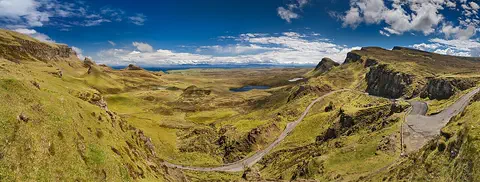
The United Kingdom, or UK, lies on islands off the northwest coast of Europe. It is made up of four parts, England, Scotland, Wales and Northern Ireland, and about 69.5 million people live there. Its capital is London.
-
 Watch
 Country
Japan
Japan is an island country in East Asia. Most of its land is steep mountains and forest, Mount Fuji is its tallest peak, and about 124 million people live there, many of them in big cities such as Tokyo.
-
 Watch
 Country
Luxembourg
Luxembourg is one of the smallest countries in the world, tucked between Belgium, France and Germany. It has forested hills in the north, farms and vineyards in the south, a capital built on a steep rocky outcrop, and about 691,000 people (2026) who use Luxembourgish, French and German.
Explore next
-
Watch
Country
United Kingdom
The United Kingdom, or UK, lies on islands off the northwest coast of Europe. It is made up of four parts, England, Scotland, Wales and Northern Ireland, and about 69.5 million people live there. Its capital is London.
-
Watch
Country
Japan
Japan is an island country in East Asia. Most of its land is steep mountains and forest, Mount Fuji is its tallest peak, and about 124 million people live there, many of them in big cities such as Tokyo.
-
 Watch
Animal
European robin
The European robin is a small songbird of Europe's woods, parks and gardens, famous for its orange-red breast. It sings almost all year round, even at night under streetlights, and it defends its patch fiercely. Young robins have no red breast at all: they are speckled with golden brown.
-
 Watch
Animal
Osprey
Ospreys are large, fish-eating hawks found near water on every continent except Antarctica. They plunge feet first to grab fish, build huge stick nests and, in many places, migrate thousands of kilometers. After pesticides made them rare, they have made a big comeback.
-
 Watch
3D
Animal
European bee-eater
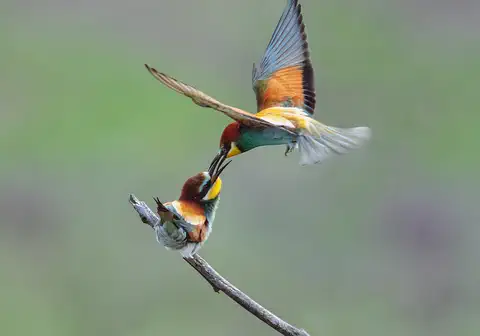
The European bee-eater is one of the most colorful birds in Europe. It catches bees, dragonflies and other flying insects in midair, knocks out the stings on a branch, and digs a long tunnel in a sandy bank for its nest. Every autumn it flies to Africa for the winter.
-
 Watch
Animal
Lilac-breasted roller
The lilac-breasted roller is a dazzling bird of the open woodlands and savannas of eastern and southern Africa. It sits on high perches watching for insects, swoops down to catch them, and gets its name from the rolling, tumbling flights it makes in the breeding season.
-
 Watch
Animal
Laughing kookaburra
The laughing kookaburra is one of the larger members of the kingfisher family. It lives in the woodlands of eastern Australia, pounces on insects, worms and small animals, and lives in family groups. Its famous 'laugh' is really a territorial call that warns other birds to stay away.
-
Watch
Country
Luxembourg
Luxembourg is one of the smallest countries in the world, tucked between Belgium, France and Germany. It has forested hills in the north, farms and vineyards in the south, a capital built on a steep rocky outcrop, and about 691,000 people (2026) who use Luxembourgish, French and German.
For parents & teachers
What children will learn
- Describe how a kingfisher hunts by watching from a perch and diving.
- Explain that the kingfisher's blue is a structural color, made by light, not pigment.
- Describe how kingfishers nest in riverbank tunnels and raise their young.
- Explain why clean rivers and cold winters matter for kingfishers.
Recommended ages: 3 to 17 · About 15 minutes
Talk about it
- Why would clear, slow water be better for a kingfisher than muddy, fast water?
- Why might a kingfisher chase other kingfishers away from its stretch of river?
- What could people do to keep rivers good for kingfishers?
Try at home or in class
- Measure 16 centimeters on a ruler and draw a kingfisher that long; then put your hand next to it to compare.
- Sit quietly by a slow stream or pond for ten minutes and look into the water: can you spot a fish from above? Notice how ripples and mud make it harder, just as they would for a kingfisher.
Key vocabulary: perch, plunge-dive, third eyelid, structural color, territory, nymph
Where these facts come from
- The IUCN Red List of Threatened Species , International Union for Conservation of Nature (IUCN terms of use (no redistribution of Red List data or range maps))
- GBIF Backbone Taxonomy and GBIF Occurrence Search , Global Biodiversity Information Facility (CC0 1.0 (backbone); occurrence counts are facts derived from records under CC0, CC BY and CC BY-NC)
- Alcedo atthis (Common Kingfisher), global Red List assessment 2024 , IUCN Red List of Threatened Species
- Kingfisher , RSPB
- Kingfisher BirdFacts , British Trust for Ornithology (BTO)
- Kingfisher (Alcedo atthis) , Woodland Trust
- Wikidata , Wikimedia Foundation (CC0 1.0)
- Wikimedia Commons , Wikimedia Foundation (Per file: Public domain, CC0, CC BY or CC BY-SA only (credited on each page))
Checked, not yet human-reviewed. Last updated October 28, 2026. Spotted a mistake? Tell us.