
Animal
Red deer
The red deer has a reddish-brown coat. The males grow big, branching antlers. In autumn, they roar loudly!
The red deer is one of the largest deer in the world. It lives in forests, hills and moors across Europe and into western Asia and North Africa. Males, called stags, grow huge branching antlers every year and roar to win mates in autumn.
Cervus elaphus, the red deer, is a large deer of Europe, the Caucasus, Asia Minor, Iran and northwest Africa, closely related to the North American elk. Stags regrow branched antlers each year and compete in a dramatic autumn rut. The IUCN lists it as Least Concern and increasing.
Photo: Charles J. Sharp, CC BY-SA 4.0, via Wikimedia Commons
Meet the red deer
The red deer is a big deer with a reddish-brown coat.
A male is called a stag. A female is called a hind. Only the stags grow antlers. Baby deer are called calves.
The red deer is one of the largest deer species. In summer its coat is a rusty red, and in winter it turns brown. It has a short tail, a pale patch on its rump, a large head and wide-set brown eyes.
A male is called a stag and a female a hind. Only stags grow antlers. In Britain, where it is the biggest land mammal, a stag can weigh 90 to 190 kilograms and stand up to about 1.37 meters at the shoulder. Hinds are smaller.
Cervus elaphus is one of the largest deer, closely related to the slightly larger American elk. In Britain, where it is the largest land mammal, stags weigh 90 to 190 kilograms and stand 1.07 to 1.37 meters at the shoulder, and hinds weigh 63 to 120 kilograms. Deer of open uplands tend to be smaller than those of wooded lowlands; the Woodland Trust puts this down to the better food in woodland.
The coat is rusty red in summer and brown in winter, with a pale rump patch and short tail; adults are not spotted, though calves are. Red deer have a long shared history with people: the British Deer Society notes that they appear widely in European cave art, some of it as old as 40,000 years.
Quick facts
- Group
- Mammal
- Height
- 1.07 to 1.37 m
- Weight
- 90 to 190 kg
- Lifespan in the wild
- up to 18 years
Where red deer live
Red deer live in Europe and parts of Asia and Africa.
They live in forests, on grassy hills and on mountains. In Scotland, many live on open hills.
Red deer live across most of Europe, in the Caucasus Mountains, Turkey, Iran and parts of western and central Asia, and in the Atlas Mountains of North Africa. People have also taken them to places such as New Zealand, Australia, Argentina and Chile.
They prefer woodland and forest, but they can live on open moors and hills too. In Britain, most red deer live in Scotland, especially the Highlands, with smaller groups in England.
The IUCN's global assessment lists the red deer as resident across much of Europe, Russia, the Caucasus, Türkiye, Iran, Algeria and Tunisia; reintroduced in Greece and Morocco; introduced in Argentina, Australia, Chile and New Zealand; and extinct in countries including Albania, Jordan, Lebanon and Syria. It occurs from sea level to 5,000 meters.
The IUCN country list omits Britain and Spain, both of which have native red deer. The British Deer Society says red deer arrived in Britain from Europe about 11,000 years ago and survived in the Scottish Highlands and south-west England; a genetic study of Iberian red deer found that native populations persisted in western and central-southern Spain. These countries are shown from those sources.
Continents
Its habitats


Where can you find this animal?
- Used to live here · Countries and seas named by a scientific source
- Brought here by people · Countries and seas named by a scientific source
- Lives here naturally · Countries and seas named by a scientific source
- Lives here naturally · Countries and seas named by a scientific source
- Lives here naturally · Countries and seas named by a scientific source
- Sightings recorded · Records of wild sightings (GBIF)
- Brought back by people · Countries and seas named by a scientific source
Used to live here · Countries and seas named by a scientific source
Albania, Jordan, Lebanon and Syria, where the IUCN lists red deer as extinct.
Places: Albania, Jordan, Lebanon and Syria.
Source: iucn-red-list · checked October 2026
Brought here by people · Countries and seas named by a scientific source
Argentina, Australia, Chile and New Zealand, where people introduced red deer.
Places: Argentina, Australia, Chile and New Zealand.
Source: iucn-red-list · checked October 2026
Lives here naturally · Countries and seas named by a scientific source
Forests, hills and mountains of most of Europe, Russia, the Caucasus, Türkiye, Iran, and Algeria and Tunisia in North Africa. Red deer live in only part of each country shown.
Places: Algeria, Armenia, Austria, Azerbaijan, Belarus, Belgium, Bosnia & Herz., Bulgaria and 30 more places.
Source: iucn-red-list · checked October 2026
Lives here naturally · Countries and seas named by a scientific source
The United Kingdom, where red deer are native, especially in the Scottish Highlands. The IUCN country list omits it; the British Deer Society describes the native populations.
Places: UK.
Source: https://bds.org.uk/information-advice/about-deer/deer-species/red-deer/ · checked October 2026
Lives here naturally · Countries and seas named by a scientific source
Spain, where native red deer persisted in western and central-southern areas. The IUCN country list omits it; a genetic study of Iberian red deer describes the native populations.
Places: Spain.
Source: https://www.ncbi.nlm.nih.gov/pmc/articles/PMC4729781/ · checked October 2026
Sightings recorded · Records of wild sightings (GBIF)
Counts of GBIF records of wild observations (human and machine) and preserved specimens. Records include introduced populations, vagrants, escaped or released animals and misidentifications, so a country with records is not necessarily part of the native range.
Wild sightings have been recorded in Switzerland, France, United States, Netherlands, UK, Denmark, Spain, Austria and 65 more places.
Source: gbif · checked October 2026
Brought back by people · Countries and seas named by a scientific source
Greece and Morocco, where the IUCN lists red deer as reintroduced.
Places: Greece and Morocco.
Source: iucn-red-list · checked October 2026
Range maps show where scientists say an animal lives, often country by country. An animal may live in only part of a country shown, and sightings records can include animals that wandered far from home.
Grass, heather and shoots
Red deer eat grass and small plants.
They also eat heather and berries. In winter, when food is hard to find, they nibble tree shoots.
Red deer mainly eat grasses, plus sedges, rushes, herbs and small shrubs such as heather and bilberry. In winter, when other food is scarce, they browse on woody plants like tree shoots.
That can cause problems. Deer that eat young tree shoots and farm crops can damage forests and fields, which brings them into conflict with farmers and foresters.
Red deer graze grasses and dwarf shrubs such as heather and bilberry, and take sedges, rushes and herbs; woody browse, including tree shoots, becomes important when food is limited in winter. Deer in woodland grow larger than those on open hills because their food is of higher quality.
Browsing of tree shoots and crops brings red deer into conflict with farmers and foresters. The Woodland Trust notes that with no large carnivores left in the UK, deer densities can become very high, and overgrazing can prevent woodland from regenerating, with knock-on effects for other forest plants and animals.
Did you know?
People drew red deer in caves long, long ago.
Red deer appear in cave paintings across Europe, some of them about 40,000 years old.
The British Deer Society notes red deer in European cave art dating from as early as 40,000 years ago.
Antlers that grow every year
A stag grows new antlers every year.
New antlers are covered in soft, fuzzy skin. When they are grown, the skin comes off. Hinds do not have antlers.
A stag's antlers grow new every year. He drops his old antlers in March or April, and new ones start growing within a few weeks, covered in soft, furry skin called velvet. By August or September they are fully grown and the velvet is gone.
The antlers branch more as the stag gets older, often up to 16 points. Big antlers can be up to a meter across and weigh as much as 15 kilograms.
Antlers are grown only by stags and are cast and regrown every year: the British Deer Society gives casting in March or April and full regrowth, clear of velvet, by August or September. The growing antler is covered in velvet, a skin rich in blood vessels that nourishes it, and growing it is so demanding that stags often lose weight.
The antlers branch more with age, reaching up to 16 points in most cases according to the Woodland Trust, and can span up to a meter and weigh up to 15 kilograms. The forward point leaves the main beam at about 90 degrees, a clue for telling red deer from sika deer. Large hoof prints, called slots, can be 8 to 9 centimeters long on a stag's front foot.
A spotted calf in the grass
A baby red deer is called a calf.
It has spots on its coat. Its mom hides it in tall plants. She comes back to feed it milk.
A hind carries her calf for about eight months and gives birth to a single calf between mid-May and mid-July. The calf is born with a spotted coat, which helps it hide.
For the first few months, the mother leaves her calf hidden in vegetation and visits it only for short times to let it suckle. Calves call to their mothers with bleats, and hinds moo when they are looking for their young.
After a gestation of about eight months, hinds in woodland populations give birth to a single calf between mid-May and mid-July. Calves are spotted for camouflage and are left hidden in vegetation for their first months, visited briefly to suckle. Hinds moo when searching for their young, and calves squeal in alarm and bleat to their mothers.
In productive woodland, deer can be sexually mature before their second birthday, though stags rarely mate before five. On poor hill ground puberty may be delayed until three, and hinds may calve only every two or three years. Some Scottish hill populations lose many calves at birth and in their first winter, and red deer exceptionally live to 18.

The roaring rut
In autumn, stags roar very loudly.
They show off to the hinds. Sometimes two stags push with their antlers. The strongest stag wins.
Outside the breeding season, stags and hinds live apart. On open hills, hinds and their young gather in big herds, while stags live in loose groups. In woodland, red deer live in smaller groups, often just a mother and her calf.
From late September to November comes the rut. Stags roar, walk side by side to size each other up, and sometimes lock antlers and push. The winning stag stays with a group of hinds. Red deer are most active at dawn and dusk.
Red deer society depends on habitat. In woodland they are largely solitary or in mother-and-calf groups; on open ground they form larger single-sex groups, which in the Scottish Highlands may persist for most of the year. They are active around the clock with peaks at dawn and dusk, and disturbed populations use open ground more at night.
During the rut, from the end of September to November, stags assess each other through roaring and parallel walks; fights, which can cause serious injury, occur mainly between stags of similar size that cannot settle dominance otherwise. The dominant stag then mates with the hinds. In the UK adults have no natural predators, though foxes and golden eagles may take young.
Did you know?
A stag grows new antlers every year.
A red deer stag drops his antlers each spring and grows a new set by late summer.
Antlers are cast in March or April and fully regrown, clean of velvet, by August or September.
Too few, then too many
There are lots of red deer.
In some places there are so many that they eat all the young trees. People manage the deer to keep forests healthy.
The red deer is not endangered: the IUCN lists it as Least Concern, and its numbers are growing. In Britain, hunting and the loss of forests made red deer rare by the late 1700s, but they have spread again over the last hundred years.
Now, in Britain, where no large predators are left, there can be too many deer. They eat young trees before they can grow, which harms woodlands. People manage deer numbers so that forests can grow back.
The IUCN's global assessment (2018, errata 2019) lists Cervus elaphus as Least Concern with an increasing trend. History has swung both ways: in Britain, forest clearance and hunting confined red deer to the Scottish Highlands, south-west England and a few scattered areas, and the Woodland Trust says they were rare by the end of the 18th century. Increasing woodland, releases and escapes from deer parks have since allowed them to spread.
Today the main concerns are high densities, which suppress woodland regeneration, and hybridization with introduced sika deer, which threatens genetic purity; in Iberia, genetic studies also caution against restocking with deer from other regions. Culling, managed stalking and careful population management aim to keep deer in balance with their habitats.
IUCN Red List
How is the red deer doing in the wild?
- Least Concern (this animal)
- Near Threatened
- Vulnerable
- Endangered
- Critically Endangered
- Extinct in the Wild
- Extinct
Least Concern
Not at risk of disappearing from the wild right now.
See the IUCN Red List assessment · The IUCN Red List of Threatened Species 2022.2
Amazing facts
-
A stag grows new antlers every year.
A red deer stag drops his antlers each spring and grows a new set by late summer.
Antlers are cast in March or April and fully regrown, clean of velvet, by August or September.
-
Red deer antlers can be very heavy.
A big stag's antlers can be up to a meter across and weigh as much as 15 kilograms.
The Wildlife Trusts give antler spans of up to a meter and weights of up to 15 kilograms.
-
People drew red deer in caves long, long ago.
Red deer appear in cave paintings across Europe, some of them about 40,000 years old.
The British Deer Society notes red deer in European cave art dating from as early as 40,000 years ago.
-
A mother deer moos to call her baby.
Red deer hinds moo when they are looking for their calves, and bark when they are alarmed.
Hinds moo when searching for young and bark in alarm; calves squeal and bleat.
Words to know
- stag
- an adult male deer
- hind
- an adult female red deer
- antler
- a branched growth on a stag's head that falls off and grows back each year
- velvet
- the soft, furry skin that covers a deer's antlers while they grow
- rut
- the autumn breeding season, when stags roar and compete
- glen
- a narrow valley in the hills of Scotland
Discovery challenge
-
Which red deer grow antlers?
Which red deer grow antlers?
Which red deer carry antlers?
- Only stags (males)
- Only hinds (females)
- Only calves
Show the answer
Only stags (males)
Only the boy deer, called stags, grow antlers.
Only stags grow antlers. Hinds, the females, do not.
Antlers are grown only by stags; hinds lack them and are more lightly built.
-
What happens to a stag's antlers every year?
What happens to a stag's antlers each spring?
Which describes the red deer's antler cycle?
- They fall off and grow back
- They turn into leaves
- They never change
Show the answer
They fall off and grow back
They fall off, and new ones grow back.
Antlers drop off in March or April and new ones grow under velvet by August or September.
Cast in spring, regrown under velvet over the summer and clean by August or September, before the rut.
-
What does a baby red deer look like?
How is a red deer calf's coat different from an adult's?
Which describes a newborn red deer calf's coat?
- It has spots
- It is bright green
- It has stripes like a zebra
Show the answer
It has spots
A baby red deer has spots.
Calves are born with a spotted coat, but adults have no spots.
It is spotted, which camouflages the calf while it lies hidden in vegetation; adults are unspotted.
-
When do stags roar?
In which season is the red deer rut?
When does the red deer rut take place?
- Spring
- Autumn
- Only on New Year's Day
Show the answer
Autumn
Stags roar in autumn.
The rut runs from late September to November, in autumn.
From the end of September to November.
Places where you might see it
-
 Watch
 Country
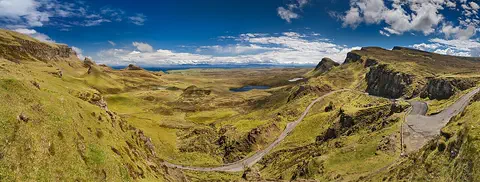
United Kingdom
The United Kingdom, or UK, lies on islands off the northwest coast of Europe. It is made up of four parts, England, Scotland, Wales and Northern Ireland, and about 69.5 million people live there. Its capital is London.
- Watch Natural wonder Cave of Altamira The Cave of Altamira, in northern Spain, holds some of the most famous prehistoric paintings in the world. People who hunted and gathered their food used the cave between about 36,000 and 13,000 years ago, and painted and engraved bison, horses, deer, hands and signs on its walls and ceiling. It was the first cave where prehistoric cave art was ever recognized.
-
 Watch
 Country
Ireland
Ireland is a country on an island in the Atlantic Ocean, west of Great Britain. It covers most of the island, while Northern Ireland, in the northeast, is part of the United Kingdom. Rain keeps its fields green, its capital is Dublin, and more than 5.5 million people live there.
-
 Watch
 Country
Liechtenstein
Liechtenstein is one of the smallest countries in Europe, tucked between Switzerland and Austria. Its west is the flat valley of the Rhine River, and its east is steep Alpine mountains. About 41,000 people live there, and its head of state is a prince.
-
 Watch
 Country
Denmark
Denmark is a country in northern Europe made of the Jutland peninsula and more than 400 islands, with the sea almost all around. It is low and mostly flat, about 6 million people live there, and its capital, Copenhagen, is full of bicycles.
-
 Watch
 Country
Luxembourg
Luxembourg is one of the smallest countries in the world, tucked between Belgium, France and Germany. It has forested hills in the north, farms and vineyards in the south, a capital built on a steep rocky outcrop, and about 691,000 people (2026) who use Luxembourgish, French and German.
Explore next
-
 Watch
3D
Animal
Reindeer
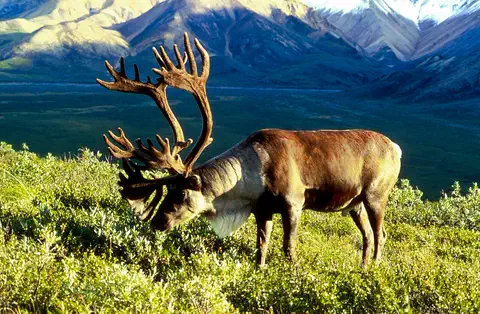
Reindeer, called caribou in North America, are deer of the Arctic tundra and northern forests. They are the only deer in which females grow antlers too. Some herds walk thousands of kilometers a year, and people in northern Europe and Asia have herded reindeer for a very long time.
-
 Watch
Animal
Moose
The moose is the largest member of the deer family. It lives in northern forests, wades and even dives into lakes to eat water plants, and bull moose grow enormous new antlers every year. In Europe it is called an elk.
-
Watch
Country
United Kingdom
The United Kingdom, or UK, lies on islands off the northwest coast of Europe. It is made up of four parts, England, Scotland, Wales and Northern Ireland, and about 69.5 million people live there. Its capital is London.
-
 Watch
3D
Animal
Gray wolf
The gray wolf is the largest member of the dog family and the wild ancestor of pet dogs. Wolves live in family packs that hunt big animals like elk and moose together, and their howls can carry about 10 kilometers. After being wiped out in many places, wolves are coming back in parts of North America and Europe.
-
 Watch
Animal
Red fox
The red fox is a small, clever member of the dog family with an orange coat, black legs and a bushy, white-tipped tail. It lives across North America, Europe, Asia and North Africa, more of the world than any other wild land carnivore, and has even moved into big cities.
- Watch Natural wonder Cave of Altamira The Cave of Altamira, in northern Spain, holds some of the most famous prehistoric paintings in the world. People who hunted and gathered their food used the cave between about 36,000 and 13,000 years ago, and painted and engraved bison, horses, deer, hands and signs on its walls and ceiling. It was the first cave where prehistoric cave art was ever recognized.
-
Watch
Country
Ireland
Ireland is a country on an island in the Atlantic Ocean, west of Great Britain. It covers most of the island, while Northern Ireland, in the northeast, is part of the United Kingdom. Rain keeps its fields green, its capital is Dublin, and more than 5.5 million people live there.
-
 Watch
Animal
White-tailed deer
White-tailed deer live in forests, fields and even towns from Canada down to South America. They are named for the white underside of the tail, which they hold up like a flag when they run. Males grow new antlers every year.
For parents & teachers
What children will learn
- Describe the red deer's body and how stags shed and regrow antlers each year.
- Describe the rut and how stags compete, mostly through display.
- Describe the red deer life cycle and how calves stay hidden.
- Understand why too many deer can harm forests, and why managing them matters.
Recommended ages: 3 to 17 · About 15 minutes
Talk about it
- Why might roaring and walking side by side be safer for stags than fighting?
- Why might a spotted coat help a calf hidden in grass and ferns?
- What could happen to a forest if there are no predators to keep deer numbers down?
Try at home or in class
- Hold out your arms to show one meter, the width of a big stag's antlers.
- Hide a toy deer in long grass or a pile of leaves and see how hard it is to spot, like a hidden calf.
Key vocabulary: stag, hind, antler, velvet, rut, glen
Where these facts come from
- The IUCN Red List of Threatened Species , International Union for Conservation of Nature (IUCN terms of use (no redistribution of Red List data or range maps))
- GBIF Backbone Taxonomy and GBIF Occurrence Search , Global Biodiversity Information Facility (CC0 1.0 (backbone); occurrence counts are facts derived from records under CC0, CC BY and CC BY-NC)
- Red deer , The British Deer Society
- Red deer (Cervus elaphus) , Woodland Trust
- Red deer , The Wildlife Trusts
- Iberian red deer: paraphyletic nature at mtDNA but nuclear markers support its genetic identity (Ecology and Evolution 6(4), 2016) , PubMed Central, US National Library of Medicine
- Cervus elaphus (Red Deer), 2018 assessment (errata 2019) , IUCN Red List
- Wikidata , Wikimedia Foundation (CC0 1.0)
- Wikimedia Commons , Wikimedia Foundation (Per file: Public domain, CC0, CC BY or CC BY-SA only (credited on each page))
Checked, not yet human-reviewed. Last updated October 28, 2026. Spotted a mistake? Tell us.