
 Country
Europe
Poland
Poland is a country in the middle of Europe. It has wide flat land, lots of lakes, old forests with wild bison, and mountains in the south.
Poland lies near the center of Europe, between the Baltic Sea and the Carpathian Mountains. Most of it is low, flat land shaped by Ice Age glaciers, and about 37 million people live there. Its capital, Warsaw, stands on the Vistula River.
Poland lies at the physical center of Europe, almost entirely within the North European Plain, its relief shaped by Pleistocene ice sheets. Its frontiers, drawn in 1945, touch seven countries; it had 37.2 million people in June 2026, and its official language is Polish, a West Slavic language.
Photo: Rhododendrites, CC BY-SA 4.0, via Wikimedia Commons
Discover Poland
Poland is a country in Europe.
Most of it is flat land. It has many lakes and big forests. The sea is in the north. Mountains are in the south. The capital city is called Warsaw.
Poland is in central Europe, roughly round in shape. The Baltic Sea is to the north, and mountains line its southern border. In between, most of Poland is low, flat land, part of the great North European Plain that stretches across northern Europe.
About 37 million people live in Poland. Its capital, Warsaw, stands on the Vistula, Poland's largest river. Warsaw's old town was rebuilt so carefully after it was destroyed in 1944 that it is now a World Heritage Site.
Poland lies at the physical center of Europe, between about 49° and 55° N and 14° and 24° E. Irregularly circular, it consists almost entirely of lowlands within the North European Plain apart from its southern mountains; the average elevation is only 173 m, and more than three-fourths of the land is below 198 m. Its area is about 312,700 square kilometers (Wikidata, from the Statistical Yearbook of Poland; Britannica gives 311,895).
Statistics Poland counted 37,243 thousand people at the end of June 2026, 90 thousand fewer than at the end of 2025, because deaths outnumbered births; almost 60 percent lived in urban areas. Warsaw, the capital, lies on the middle Vistula and is the most prominent of the large centers of the central lowlands.
Cities and famous places
Warsaw is the biggest city in Poland.
Its old town has colorful houses around a big square. Kraków is an old city with a castle on a hill. Deep under the ground near Kraków is a very old salt mine.
Warsaw, the capital, has about 1.9 million people (2024). In 1944, during World War II, most of its historic center was destroyed. After the war, a five-year campaign by its citizens carefully rebuilt the Old Town, with its churches, palaces and market square.
Kraków, a former capital, sits below the Royal Wawel Castle and has one of Europe's largest market squares. Near Kraków, people have mined rock salt at Wieliczka and Bochnia since the 1200s; the mines have hundreds of kilometers of tunnels with statues carved from salt. In the north, Malbork Castle is a huge medieval castle built of brick.
UNESCO records that more than 85 percent of Warsaw's historic center was destroyed during the Warsaw Uprising of August 1944, and that a five-year reconstruction campaign by its citizens restored the Old Town, an outstanding example of near-total reconstruction (World Heritage Site, 1980). The city had 1,862,402 people in 2024 (Wikidata).
Kraków's historic center (1978), at the foot of Wawel Castle, is a 13th-century merchants' town with Europe's largest market square, 14th-century fortifications, the medieval district of Kazimierz with its old synagogues, and the Jagiellonian University. The Wieliczka and Bochnia royal salt mines have been worked since the 13th century and illustrate the development of European mining from the 13th to the 20th century. Malbork, a 13th-century fortified monastery of the Teutonic Order enlarged after 1309, is a fine example of a medieval brick castle; it was restored in the 19th and early 20th centuries and again after severe damage in World War II.

Plains, lakes and mountains
Long ago, giant sheets of ice covered northern Poland.
When the ice melted, it left hills and thousands of lakes. The south has high, rocky mountains. Winters are snowy.
During the Ice Age, huge ice sheets spread over northern Poland several times. When they melted, they left hills and thousands of lakes, such as those of the Masurian Lakeland. Along the Baltic coast, wind has piled sand into big dunes.
In the south rise the Sudeten and Carpathian mountains. The Tatras are the highest part, reaching about 2,500 meters. Almost all of Poland's rivers flow north to the Baltic Sea: about half of the land drains through the Vistula and a third through the Oder. Poland's weather changes a lot, with snowy winters and warm, rainy summers.
Ice Age glaciers advanced and retreated over northern Poland several times during the Pleistocene, laying down the young deposits of the lowlands. Britannica describes east–west zones: Baltic coastal swamps and dunes; a morainic belt with thousands of lakes, whose southern edge marks the limit of the last ice sheet; the central lowlands, the Polish heartland; and the older highlands and mountains of the south. The Carpathian arc dates from the Paleogene and Neogene; the Tatras, at up to 2,499 m in Britannica, are the highest part of the Polish Carpathians.
Virtually all of Poland drains to the Baltic, about half via the Vistula and a third via the Oder. The climate is transitional between maritime and continental and highly variable; Britannica distinguishes six seasons, from a snowy winter of one to three months to a foggy, humid late autumn. Annual precipitation averages about 610 mm, rising to 787–1,194 mm in the mountains and falling to about 457 mm in the central lowlands.

Animals of Poland
European bison live in a very old forest in Poland.
They are big and shaggy. Deer and wild pigs live in the woods. Brown bears live in the mountains.
The European bison, also called the wisent, once lived across much of Europe, but it died out in the wild after World War I. People brought bison born in zoos back to the Białowieża Forest, on the border between Poland and Belarus, and now the forest is home to the largest group of free-roaming European bison.
Białowieża is a huge, very old forest of conifer and broadleaf trees. Elsewhere in Poland, deer and wild pigs roam the woods, elk live in the northeast, brown bears live in the Carpathian Mountains, and chamois and marmots live high in the peaks.
Britannica places Poland's fauna in the European–West Siberian province, with nearly 400 vertebrate species, including more than 200 native birds. Deer and wild pigs roam the woods, elk (moose) inhabit the coniferous forests of the northeast, wildcats live in the mountain woods, chamois and marmots live at the highest levels and brown bears in the Carpathians.
The European bison, or wisent, became extinct in the wild after World War I and was reintroduced from zoo-bred animals into national parks on both sides of the Polish-Belarusian border. UNESCO describes the transboundary Białowieża Forest World Heritage Site (first inscribed in 1979) as an immense primary forest of conifers and broadleaved trees covering 141,885 hectares on the watershed between the Baltic and Black seas, home to the largest free-roaming population of its iconic species, the European bison.

People, language and food
About 37 million people live in Poland.
Most people speak Polish. Pierogi are a kind of dumpling. Many dishes use mushrooms from the forest. On a spring day, children throw winter dolls into the river.
About 37 million people live in Poland, and Polish is the official language. It is a Slavic language, closely related to Czech and Slovak. Polish music is famous too: the Romantic pianist and composer Frédéric Chopin was Polish, and festivals celebrate his music.
Traditional dishes include pierogi (dumplings), barszcz (red beet soup), kielbasa sausage with sauerkraut, and bigos, made with cabbage and mushrooms. On March 23, in a custom called Topienie Marzanny, children throw dolls that stand for winter into rivers.
Polish is a West Slavic language closely related to Czech, Slovak and the Sorbian languages, with dialects such as Great Polish, Little Polish, Mazovian and Silesian, and a modern literary form dating from the 16th century. Britannica notes that the language became a touchstone of national identity during the partitions, despite attempts to Germanize or Russify the population. Poles have settled in large numbers abroad, including in the United States, Canada, Argentina and Australia.
Traditional cooking uses garden and forest produce: barszcz, czarnina (duck soup), pierogi, smoked salmon and eel, kielbasa and sauerkraut, bigos with cabbage and mushrooms, and grzybowa mushroom soup. Major holidays are Christian festivals such as Easter and Christmas and national days such as Constitution Day (May 3) and Independence Day (November 11). The white-over-red flag was adopted in 1919.

A long history
Poland is more than 1,000 years old.
Long ago, Kraków was the capital, with a royal castle on a hill. For a long time, other countries split Poland up. Then Poland came back as a country.
Poland's written history begins with a ruler called Mieszko I, who in 966 joined his state to the Christian world of western Europe. By the 1500s, Poland was one of the largest and most powerful states in Europe. In 1791 it wrote a constitution, a set of basic laws, one of the first in Europe.
Then, from 1772, its neighbors Russia, Prussia and Austria divided Poland among themselves, and for more than 100 years it did not exist as a country. Poland was restored in 1918. After World War II it was ruled by a communist government. Workers in the shipyards of Gdańsk started a movement called Solidarity, and in 1989 the communist government fell and Poland began to change into a democracy.
Mieszko I, first ruler of the Polanie mentioned in written records, accepted Roman Catholicism via Bohemia in 966, which Britannica calls the true beginning of Polish history; at his death the state stretched from the Baltic to the Carpathians. In the mid-1500s united Poland was the largest state in Europe. Its constitution of 1791, which Britannica calls the oldest in Europe, drew on the ideals of the American and French revolutions. In the Partitions of 1772–1918 Russia, Prussia and Austria divided the country, and it disappeared from the map.
Restored in 1918, Poland was ravaged by both world wars. In World War II its historically strong Jewish population was almost wholly annihilated in the Holocaust, and millions of non-Jewish Poles also died. After 1945 Poland became a communist satellite state of the Soviet Union. In the late 1970s, beginning in the shipyards of Gdańsk, workers formed the Solidarity movement, and in May 1989 the communist government fell, opening a rapid transition to democracy. Poland is now a member of NATO and the European Union.

Poland on the map
Find Poland on the globe.
It is in the middle of Europe. The Baltic Sea is at the top. Germany is next door to the west. Mountains are at the bottom.
Poland shares borders with seven countries. Germany is to the west, Czechia and Slovakia to the south, Ukraine and Belarus to the east, and Lithuania and part of Russia to the northeast. The Baltic Sea forms the northern coast.
Two rivers, the Oder and the Neisse, mark much of the border with Germany. In the south, the border runs along the tops of the Sudeten, Carpathian and Beskid mountains. Poland's present borders were drawn in 1945.
Poland is bounded by the Baltic Sea to the north, Russia and Lithuania to the northeast, Belarus and Ukraine to the east, Slovakia and the Czech Republic along the watershed of the Beskid, Carpathian and Sudeten mountains to the south, and Germany along the Neisse and Oder rivers to the west. These frontiers, 3,538 km long, were drawn in 1945.
The Baltic coastline is scarcely indented. Its two main inlets are the Pomeranian Bay, where the Oder discharges into the Szczecin Lagoon, and the Gulf of Gdańsk, where the Vistula forms a large delta; sandbars topped by dunes separate coastal lakes and lagoons from the sea. The ports of Szczecin, Gdańsk and Gdynia are the main coastal cities.
- Latitude
- about 49° to 55° north
- Longitude
- about 14° to 24° east
- Length of borders
- 3,538 km, drawn in 1945
- Average elevation
- 173 m
Amazing facts
-
Wild bison live in Poland's old forest.
European bison died out in the wild, but bison from zoos were brought back to Białowieża Forest.
The wisent, extinct in the wild after World War I, was reintroduced to Białowieża from zoo-bred animals; the forest now holds the largest population.
-
People dug salt near Kraków for more than 700 years.
Rock salt has been mined at Wieliczka and Bochnia since the 1200s, and the mines have statues carved from salt.
The Wieliczka and Bochnia royal salt mines, worked since the 13th century, have hundreds of kilometers of galleries with sculptures carved in the salt.
-
Warsaw's old town was built again after it was destroyed.
After 1944, a five-year campaign by the people of Warsaw carefully rebuilt their Old Town, and rebuilding went on until the mid-1960s.
UNESCO calls Warsaw's Old Town an outstanding example of near-total reconstruction of a span of history from the 13th to the 20th century.
-
Poland has six seasons, not four.
Britannica describes six seasons in Poland, including an early spring and a foggy time before winter.
Poland's variable climate shows six distinguishable seasons, from a snowy one-to-three-month winter to a foggy, humid pre-winter period.
-
Kraków has a very big market square.
Kraków's old town has one of the largest market squares in Europe.
UNESCO describes Kraków's 13th-century merchants' town as having Europe's largest market square.
Words to know
- plain
- a large area of flat or gently rolling land
- ice sheet
- a huge layer of ice covering a wide area of land
- wisent
- the European bison
- constitution
- a written set of a country's most important laws
- partition
- the dividing of a country into parts ruled by others
- reintroduce
- to bring an animal back to a place where it used to live in the wild
Discovery challenge
-
What is the capital city of Poland?
Which city is the capital of Poland?
Which city on the middle Vistula is Poland's capital?
- Kraków
- Warsaw
- Gdańsk
Show the answer
Warsaw
Warsaw is the capital of Poland.
Warsaw is the capital. Kraków is a former capital, and Gdańsk is a port.
Warsaw is the capital; Kraków, at the foot of Wawel Castle, is a former capital.
-
Which big, shaggy animal lives in the Białowieża Forest?
Which animal was brought back to the Białowieża Forest after dying out in the wild?
Which species is the iconic animal of the Białowieża Forest World Heritage Site?
- European bison
- Polar bear
- Camel
Show the answer
European bison
European bison live there.
Bison born in zoos were returned to the forest, which now has the largest group of free-roaming European bison.
The European bison, or wisent, reintroduced from zoo-bred animals, has its largest population there.
-
What made the hills and lakes in northern Poland?
What shaped the hills and thousands of lakes of northern Poland?
What formed the morainic lake belt of northern Poland?
- Volcanoes
- Ice Age glaciers
- Earthquakes
Show the answer
Ice Age glaciers
Giant sheets of ice made them long ago.
Ice Age ice sheets left hills and lakes when they melted.
Pleistocene ice sheets left the moraines; the belt's southern edge marks the last ice sheet's limit.
-
What is Poland's biggest river?
Which river, Poland's largest, flows past Warsaw?
Which river drains about half of Poland and forms a delta in the Gulf of Gdańsk?
- The Vistula
- The Nile
- The Thames
Show the answer
The Vistula
The Vistula is Poland's biggest river.
The Vistula flows past Warsaw and Kraków to the Baltic Sea.
About half of Poland drains to the Baltic via the Vistula, a third via the Oder.
-
What did the people of Warsaw do after their old town was destroyed?
What happened to Warsaw's Old Town after it was destroyed in 1944?
What did Warsaw's citizens do that UNESCO calls an outstanding example of near-total reconstruction?
- They rebuilt it carefully
- They left it empty
- They moved the city to the sea
Show the answer
They rebuilt it carefully
They built it again with great care.
Its citizens spent five years rebuilding it carefully.
UNESCO lists it as an outstanding example of near-total reconstruction after the destruction of 1944.
Places to discover in Poland
Animals of Poland
-
 Watch
Animal
Mute swan
The mute swan is among the largest waterfowl, all white with an orange bill topped by a black knob. It is native to Europe and Asia, where it lives on lakes, rivers and park ponds. People took mute swans to North America and other places, where they now live in the wild and can cause problems for native wildlife.
-
 Watch
Animal
White stork
The white stork is a tall white bird with black flight feathers, a red bill and long orange legs. It nests on rooftops, chimneys and trees across Europe, North Africa and western Asia, and many storks soar south to spend the winter in Africa or South Asia.
Explore next
-
Watch
City
Warsaw
Warsaw is the capital of Poland, on the Vistula River. Much of the city was destroyed in World War II, and afterward its people rebuilt the Old Town so carefully that UNESCO made it a World Heritage Site. About 1.86 million people lived there in 2024.
-
Watch
Animal
Mute swan
The mute swan is among the largest waterfowl, all white with an orange bill topped by a black knob. It is native to Europe and Asia, where it lives on lakes, rivers and park ponds. People took mute swans to North America and other places, where they now live in the wild and can cause problems for native wildlife.
-
 Watch
 Country
Ukraine
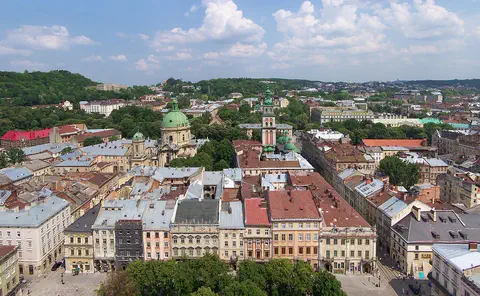
Ukraine is a large country in eastern Europe on the northern shore of the Black Sea. Most of it is level plain with some of the most fertile soil in the world, crossed by the Dnieper River. Its capital is Kyiv, and its official language is Ukrainian.
-
Watch
Animal
White stork
The white stork is a tall white bird with black flight feathers, a red bill and long orange legs. It nests on rooftops, chimneys and trees across Europe, North Africa and western Asia, and many storks soar south to spend the winter in Africa or South Asia.
-
 Watch
 Country
Belarus
Belarus is a landlocked country in eastern Europe. Ice sheets of the last ice age shaped its low hills and wide plains, it has more than 10,000 lakes and one of Europe's largest wetlands, and about 9.1 million people lived there in 2025.
-
 Watch
 Country
Bosnia and Herzegovina
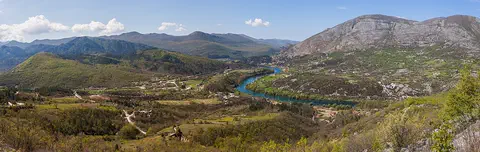
Bosnia and Herzegovina is a mountainous country in southeastern Europe. It has forests, limestone hills and many rivers, and famous old stone bridges cross some of them. Its capital is Sarajevo. It touches the Adriatic Sea along only about 20 kilometers of coast.
-
 Watch
 Country
Bulgaria
Bulgaria is a country on the eastern side of the Balkan Peninsula, with the Danube River to the north and the Black Sea to the east. Mountains cross it from west to east, and about 6.4 million people lived there at the end of 2025.
-
 Watch
 Country
Croatia
Croatia is a crescent-shaped country in southeastern Europe. Its long coast on the Adriatic Sea is fringed by more than 1,100 islands, limestone mountains rise behind it, fertile plains lie in the north, and about 3.87 million people lived there in mid-2025.
For parents & teachers
What children will learn
- Locate Poland in central Europe and name its seven neighbors and its sea.
- Explain how Ice Age glaciers shaped Poland's plains, hills and lakes.
- Describe how the European bison was brought back to the Białowieża Forest.
- Outline Poland's history from 966 through the partitions to democracy after 1989.
Recommended ages: 3 to 17 · About 15 minutes
Talk about it
- Why do you think the people of Warsaw chose to rebuild their old town so carefully?
- What might it mean for people to keep their language and culture while their country is divided?
- Bison were brought back from zoos to the wild. What other animals could people help return?
Try at home or in class
- Freeze a tray of water with sand and pebbles in it, then let it melt on a slope of soil; look at the bumps and puddles it leaves, like Poland's moraines and lakes.
- Find Poland on a map and trace the Vistula from the southern mountains to the Baltic Sea.
Key vocabulary: plain, ice sheet, wisent, constitution, partition, reintroduce
Where these facts come from
- Wikidata , Wikimedia Foundation (CC0 1.0)
- Natural Earth vector data , Natural Earth (NACIS) (Public domain)
- UNESCO World Heritage List , UNESCO World Heritage Centre (Linked as a reference; site facts come from Wikidata)
- Poland , Encyclopaedia Britannica
- Poland: Land , Encyclopaedia Britannica
- Poland: The Sudeten (mountains and drainage) , Encyclopaedia Britannica
- Poland: Climate, plant and animal life , Encyclopaedia Britannica
- Poland: Daily life and social customs , Encyclopaedia Britannica
- Poland: History , Encyclopaedia Britannica
- Population. Size and structure and vital statistics in Poland by territorial division in 2026. As of 30 June , Statistics Poland (GUS)
- Białowieża Forest , UNESCO World Heritage Centre
- Historic Centre of Kraków , UNESCO World Heritage Centre
- Historic Centre of Warsaw , UNESCO World Heritage Centre
- Wieliczka and Bochnia Royal Salt Mines , UNESCO World Heritage Centre
- Castle of the Teutonic Order in Malbork , UNESCO World Heritage Centre
- Vistula River , Encyclopaedia Britannica
- PlayOwl region table, version 1 , PlayOwl (PlayOwl original data)
- flag-icons 7.5.0 , Panayiotis Lipiridis and contributors (MIT)
- Wikimedia Commons , Wikimedia Foundation (Per file (public domain, CC0, CC BY or CC BY-SA); see each media record)
Checked, not yet human-reviewed. Last updated October 24, 2026. Spotted a mistake? Tell us.
Picture credits
- Photo: Rhododendrites, CC BY-SA 4.0, via Wikimedia Commons · source · license
- Photo: XEvansGambitx, CC BY-SA 4.0, via Wikimedia Commons · source · license
- Photo: Brainw0rker, CC BY-SA 4.0, via Wikimedia Commons · source · license
- Photo: Henryk Kotowski at English Wikipedia, CC BY-SA 3.0, via Wikimedia Commons · source · license
- Photo: Diego Delso, CC BY-SA 3.0, via Wikimedia Commons · source · license
- Photo: DerHexer; derivate work: Carschten, CC BY-SA 3.0, via Wikimedia Commons · source · license