
Animal
Mute swan
The mute swan is a big white bird with an orange beak and a black knob. It swims with its long neck bent like the letter S. Its babies are called cygnets.
The mute swan is among the largest waterfowl, all white with an orange bill topped by a black knob. It is native to Europe and Asia, where it lives on lakes, rivers and park ponds. People took mute swans to North America and other places, where they now live in the wild and can cause problems for native wildlife.
Cygnus olor is a large swan of the family Anatidae, native across Europe and temperate Asia and introduced to North America, Australia, New Zealand and South Africa. It grazes submerged plants, defends its nesting territory fiercely and is listed as Least Concern with an increasing population; in North America, where it is not native, some states control its numbers.
Photo: Geni, CC BY-SA 4.0, via Wikimedia Commons
Meet the mute swan
The mute swan is a very big white bird.
It has an orange beak with a black bump on top. It swims with its neck curved like an S. Sometimes it lifts its wings up over its back.
The mute swan is among the largest waterfowl in the world: up to about 1.5 meters long, with wings that spread more than 2 meters. Adults are pure white, with an orange bill and a black knob at its base.
On the water a mute swan often holds its long neck in a graceful S curve and lifts its wings slightly over its back. In the breeding season, the male's black knob swells and becomes bigger than the female's. The rest of the year males and females look alike.
Cygnus olor is a swan of the waterfowl family, Anatidae. Cornell's All About Birds gives a length of 127 to 152 centimeters, a wingspan of 208 to 238 centimeters and a weight of 5.5 to 14.3 kilograms, ranking it among the largest waterfowl.
Adults are entirely white with an orange bill bearing a black base and knob; the male's knob swells in the breeding season. Cygnets come in two color forms: gray ('Royal') young grow mottled gray-brown and white feathers, while white ('Polish') young are white from the start, and white-form adults may have pink or gray rather than black legs. The BTO notes that gray cygnets turn white during their first year.
Quick facts
- Group
- Bird
- Length
- 1.27 to 1.52 m
- Wingspan
- 2.08 to 2.38 m
- Weight
- 5.5 to 14.3 kg
Native and introduced homes
Mute swans come from Europe and Asia.
They live on lakes, rivers, ponds and calm bays. People also took them to North America and other faraway places.
Mute swans are native to Europe and parts of Asia, from Britain and Ireland east to Russia, Kazakhstan, Mongolia and China. They live on lakes, slow rivers, marshes, park ponds and sheltered coastal waters, and in winter some move to ice-free lakes and estuaries.
People brought mute swans to North America from Europe in the mid-1800s and early 1900s to decorate parks and estates. Some escaped, and now wild flocks live in the Northeast, the Midatlantic, the Great Lakes and the Pacific Northwest. They have also been introduced to Australia, New Zealand and South Africa.
The IUCN's 2025 global assessment lists the mute swan as native across Europe and temperate Asia, from Ireland and Britain to Kazakhstan, Mongolia, China and Japan, with wintering birds in places such as Iran, Iraq and South Korea. It lists introduced populations in the United States, Canada, Iceland, the Faroe Islands, Australia, New Zealand and South Africa.
Cornell traces all North American mute swans to birds imported from Europe between the mid-1800s and early 1900s to adorn estates, parks and zoos; escapees founded breeding populations in the Northeast, Midatlantic, Great Lakes and Pacific Northwest. Pairs breed on fresh, brackish and salt ponds, slow rivers, bogs and creeks, and may move to ice-free water in hard winters.
Continents
Its habitat

Where can you find this animal?
- Brought here by people · Countries and seas named by a scientific source
- Lives here naturally · Countries and seas named by a scientific source
- Sightings recorded · Records of wild sightings (GBIF)
- Visits for part of the year · Countries and seas named by a scientific source
Brought here by people · Countries and seas named by a scientific source
Mute swans brought by people now live in the wild in the United States and Canada, Iceland, Australia, New Zealand and South Africa. In North America they are not native.
Places: Australia, Canada, Iceland, New Zealand, South Africa and United States.
Source: iucn-red-list · checked October 2026
Lives here naturally · Countries and seas named by a scientific source
Lakes, rivers, marshes and sheltered coasts of Europe and temperate Asia, from Ireland and Britain to Mongolia, China and Japan. Swans live in only part of many countries shown.
Places: Albania, Azerbaijan, Austria, Belgium, Bosnia & Herz., Bulgaria, Belarus, China and 38 more places.
Source: iucn-red-list · checked October 2026
Sightings recorded · Records of wild sightings (GBIF)
Counts of GBIF records of wild observations (human and machine) and preserved specimens. Records include introduced populations, vagrants, escaped or released animals and misidentifications, so a country with records is not necessarily part of the native range.
Wild sightings have been recorded in United States, Sweden, Netherlands, UK, Denmark, Norway, France, Canada and 77 more places.
Source: gbif · checked October 2026
Visits for part of the year · Countries and seas named by a scientific source
Countries the IUCN lists for native mute swans outside the breeding season only.
Places: Afghanistan, Armenia, Cyprus, Iran, Iraq, South Korea, Kyrgyzstan and Spain.
Source: iucn-red-list · checked October 2026
Range maps show where scientists say an animal lives, often country by country. An animal may live in only part of a country shown, and sightings records can include animals that wandered far from home.
A big appetite for water plants
Mute swans eat mostly water plants.
They put their heads and necks under the water to pull up plants. Sometimes they tip up, with only their tail in the air!
Mute swans eat mostly water plants, such as eelgrass, pondweeds, algae and sea lettuce, plus some grain. They also eat a few frogs, tadpoles, small fish, snails and insects.
They are big eaters. A study in Maryland found mute swans ate up to about 3.6 kilograms (8 pounds) of underwater plants a day. They skim plants from the surface, dip their long necks underwater, tip up for deeper plants and even rake the bottom with their feet.
Mute swans are mainly herbivores, grazing submerged and floating vegetation: eelgrass, pondweeds, filamentous algae, wigeon grass, sea lettuce, bladderwort, grasses and agricultural grain. Cornell notes that a Michigan study found they ate more animal food, such as frogs, tadpoles, fish, snails and insects, during the annual molt and in spring when plants were scarce.
They tear off plants with thick, rough-edged bills anchored by strong muscles, skim the surface, submerge all but the tail and feet, and rake the bottom with their feet to expose tubers. A Maryland study recorded intakes of up to 8 pounds (about 3.6 kilograms) of aquatic plants a day, removing food and habitat for other species faster than the grasses could recover.
Did you know?
Swans slap the water with their feet when they land.
When landing at their nesting site, mute swans slap the water with their feet to announce that they have arrived.
Territorial birds slap the water with their feet before or during landing, announcing their arrival to potential intruders.
A heavy flier
Mute swans have short legs, so they waddle on land.
But they are strong fliers. They fly with their long necks stretched out.
A mute swan's short legs are set far back on its body, so it walks awkwardly on land. In the water, though, it is graceful, and it can even 'sail' with the wind with its wings half-raised.
Despite weighing up to 14 kilograms, it can take off from land or water and flies with its head and neck stretched out. When it lands near its nest, it slaps the water with its feet to announce that it has arrived.
Short legs placed well back on the body give mute swans an awkward gait on land, though they can run quickly if chased. They take off from both land and water and fly with head and neck extended; on the water they sometimes hold the wings raised and 'sail' before the wind.
The heavy, rough-edged bill with its black basal knob is a grazing tool, and the knob differs between the sexes, swelling in breeding males. Cornell notes that poor forward vision and limited maneuverability contribute to collisions with power lines and other structures. Before or during landing at a breeding site they slap the water with their feet to announce their arrival.
Cygnets on the water
The father swan picks a nest place, and the mother builds the nest.
She lays several eggs. The fluffy babies, called cygnets, can swim as soon as their down dries!
The male chooses the nest site, often on a small island or a thick, plant-covered shore, and builds a platform. He passes plants to the female, who shapes them into a huge nest up to 1.5 meters across. Building takes about 10 days.
The female lays 2 to 5 eggs, says Cornell (the BTO gives 4 to 7 in the UK), which hatch after 34 to 41 days. Cygnets hatch with open eyes and soft down, and they can swim and feed as soon as the down dries. The BTO says young swans take about 120 to 150 days to fledge.
Males select the nest site, sometimes starting several before the female accepts one, and build a platform of crisscrossed vegetation, often on an old nest. The female piles material passed by the male and molds the cup with her body and feet; the finished nest can reach 5 feet (1.5 meters) across and up to about 2 feet high, and building takes about 10 days.
Cornell gives clutches of 2 to 5 blue-green eggs that turn chalky white, incubated for 34 to 41 days; the BTO lists 4 to 7 eggs for the UK and incubation of 34 to 44 days. Cygnets hatch with eyes open and can move about, feed and enter the water once their down dries; the BTO gives a fledging period of 120 to 150 days. Breeding usually begins at four years (BTO). The oldest known North American mute swan was at least 26 years 9 months old.

Fierce defenders
Mute swans guard their nests very carefully.
If you see a swan with raised wings, it is telling you to stay away. Always give swans lots of space!
Mute swans pair up for many years, and some pairs stay together for life. They defend their nesting territory fiercely. A swan warns off intruders by raising its wings and pulling its neck back, a display called busking, and it may chase away ducks, geese, gulls, dogs and even people.
Nesting swans sometimes go after canoeists, kayakers and walkers who come too close to their nest or chicks, so it is wise to keep well back. In winter, mute swans often gather in larger groups, especially where people feed them.
Mute swans are predominantly monogamous and form long-lasting pairs; Cornell notes that they re-pair if a partner dies and that partner changes occur occasionally. When a male loses his mate and pairs with a young female, she joins him on his territory, while an older female leads him to hers.
Territorial defense includes the 'busking' display, with wings raised and neck drawn back, chases of other waterbirds, dogs and people, and occasional fights between males. Cornell advises giving nesting swans plenty of space, as they can attack people who come close to nests or cygnets. Outside the breeding season the BTO records gatherings of hundreds of birds at some sites, especially where people provide food.
Did you know?
Some baby mute swans are gray, and some are white.
Mute swan cygnets come in two colors: gray ones, called 'Royal', and white ones, called 'Polish'.
Two cygnet color morphs exist: gray ('Royal') young that grow mottled gray-brown feathers and white ('Polish') young; white-morph adults may have pink or gray legs.
Common at home, a problem abroad
There are lots of mute swans in the world.
In North America they are not native. They eat lots of plants that other animals need, so people there try to control their numbers.
The mute swan is listed as Least Concern, and its numbers are growing. In the United Kingdom, the BTO estimated about 7,000 breeding pairs in 2016. Swans can be harmed by flying into power lines and by lead poisoning from old fishing weights and shot.
In North America, mute swans are an introduced species. They eat so many water plants that they can damage habitat, and they push native birds away from their nesting places. Some states control their numbers, which people sometimes disagree about.
The IUCN lists the mute swan as Least Concern (global assessment, 2025), with 308,000 to 348,000 mature individuals and an increasing trend. The BTO estimated about 7,000 breeding pairs in the UK in 2016 and rates the breeding population as stable from 1995 to 2024; it links the recovery of British swans largely to the ban on lead fishing weights. Threats include collisions with power lines and lead poisoning from spent shot and fishing weights.
In North America, Cornell describes the species as a non-native that can increase quickly, overgraze aquatic vegetation and displace native birds; in Chesapeake Bay, swans drove the last colony of black skimmers off its breeding grounds. Some states addle eggs and cull birds, measures that generate public controversy; Maryland's population of over 4,000 was reduced to fewer than 100 by 2012.
IUCN Red List
How is the mute swan doing in the wild?
- Least Concern (this animal)
- Near Threatened
- Vulnerable
- Endangered
- Critically Endangered
- Extinct in the Wild
- Extinct
Least Concern
Not at risk of disappearing from the wild right now.
See the IUCN Red List assessment · The IUCN Red List of Threatened Species 2021.3
Amazing facts
-
Some baby mute swans are gray, and some are white.
Mute swan cygnets come in two colors: gray ones, called 'Royal', and white ones, called 'Polish'.
Two cygnet color morphs exist: gray ('Royal') young that grow mottled gray-brown feathers and white ('Polish') young; white-morph adults may have pink or gray legs.
-
Swans slap the water with their feet when they land.
When landing at their nesting site, mute swans slap the water with their feet to announce that they have arrived.
Territorial birds slap the water with their feet before or during landing, announcing their arrival to potential intruders.
-
A swan's nest can be as wide as a bathtub is long.
A mute swan nest can be 1.5 meters across at the base and up to about 0.6 meters high.
Finished nests reach 5 feet across at the base and 1.5 to 2.1 feet high, with a cup about 15 inches across.
-
One mute swan in America lived more than 26 years.
The oldest known mute swan in North America was a male at least 26 years and 9 months old.
The North American longevity record is a male banded in Rhode Island in 1962 and found there in 1988, at least 26 years 9 months old.
Words to know
- cygnet
- a baby swan
- waterfowl
- ducks, geese and swans
- introduced species
- an animal or plant that people brought to a place where it did not live before
- native
- living naturally in a place, not brought there by people
- busking
- a swan's warning display with wings raised and neck drawn back
- territory
- an area an animal defends against others
Discovery challenge
-
What is a baby swan called?
What is a young swan called?
What is the term for a young swan?
- A cygnet
- A duckling
- A gosling
Show the answer
A cygnet
A baby swan is a cygnet.
Young swans are called cygnets.
Cygnet; ducklings and goslings are young ducks and geese.
-
What do mute swans mostly eat?
What do mute swans eat most of the time?
What makes up most of the mute swan's diet?
- Water plants
- Big fish
- Fruit from trees
Show the answer
Water plants
They eat water plants.
Mostly water plants, like eelgrass and pondweeds, plus a few small animals.
Aquatic vegetation, with some animal food when plants are scarce.
-
Where did mute swans first come from?
Where are mute swans native?
What is the mute swan's native range?
- Europe and Asia
- South America
- Antarctica
Show the answer
Europe and Asia
They come from Europe and Asia.
Europe and Asia; people brought them to North America and other places.
Europe and temperate Asia; populations in North America, Australia, New Zealand and South Africa are introduced.
-
What should you do if you see a swan nest?
What is the safest thing to do near a mute swan's nest?
What does Cornell advise about nesting mute swans?
- Go close to look at the eggs
- Give the swans plenty of space
- Try to feed the cygnets by hand
Show the answer
Give the swans plenty of space
Stay far away and watch quietly.
Keep well back: nesting swans may chase people who come too close.
Give nesting swans plenty of space; they can attack people near nests or cygnets.
Places where you might see it
-
 Watch
 Country
United Kingdom
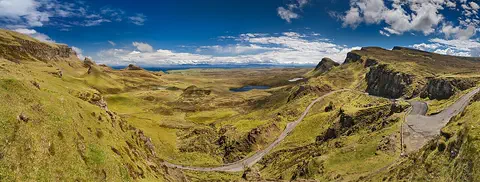
The United Kingdom, or UK, lies on islands off the northwest coast of Europe. It is made up of four parts, England, Scotland, Wales and Northern Ireland, and about 69.5 million people live there. Its capital is London.
-
 Watch
 Country
Poland
Poland lies near the center of Europe, between the Baltic Sea and the Carpathian Mountains. Most of it is low, flat land shaped by Ice Age glaciers, and about 37 million people live there. Its capital, Warsaw, stands on the Vistula River.
-
 Watch
Natural wonder
Volga
The Volga is Europe's longest river. It rises in the Valdai Hills northwest of Moscow and flows about 3,530 kilometers to the Caspian Sea, all within Russia. Almost half of Russia's people live in its basin. Big dams now turn much of it into a chain of long lakes, and its huge delta shelters up to 750,000 waterbirds in mild winters.
Explore next
-
 Watch
Animal
Black swan
The black swan is the only swan in the world that is almost entirely black. It has a bright red bill with a white band near the tip, and white flight feathers that flash when it flies. It is native to Australia and New Zealand, and people have taken it to other countries too.
-
 Watch
3D
Animal
Canada goose
The Canada goose is a big, black-necked goose with a white chinstrap, found near lakes, rivers, fields and parks across North America. Many migrate in noisy V-shaped flocks, but more and more stay all year on city lawns. People also brought Canada geese to Britain and other parts of Europe.
-
 Watch
3D
Animal
Mallard
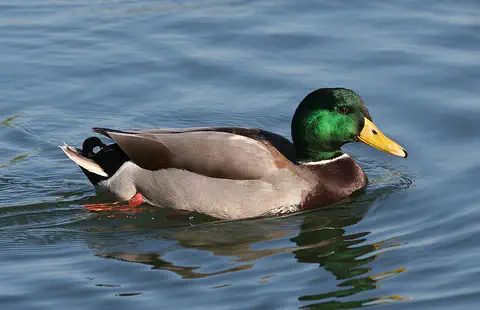
The mallard is perhaps the most familiar duck in the world, found on ponds, lakes, rivers and city parks across North America, Europe and Asia. Males have glossy green heads; females are mottled brown. Almost all farm ducks are descended from mallards.
-
Watch
Country
United Kingdom
The United Kingdom, or UK, lies on islands off the northwest coast of Europe. It is made up of four parts, England, Scotland, Wales and Northern Ireland, and about 69.5 million people live there. Its capital is London.
-
Watch
Country
Poland
Poland lies near the center of Europe, between the Baltic Sea and the Carpathian Mountains. Most of it is low, flat land shaped by Ice Age glaciers, and about 37 million people live there. Its capital, Warsaw, stands on the Vistula River.
-
Watch
Natural wonder
Volga
The Volga is Europe's longest river. It rises in the Valdai Hills northwest of Moscow and flows about 3,530 kilometers to the Caspian Sea, all within Russia. Almost half of Russia's people live in its basin. Big dams now turn much of it into a chain of long lakes, and its huge delta shelters up to 750,000 waterbirds in mild winters.
-
 Watch
Animal
Adélie penguin
The Adélie penguin is a medium-sized penguin, about 70 centimeters tall, with a black back, a white front and a bright white ring around each eye. It breeds in summer on rocky, ice-free ground all around Antarctica, building nests of pebbles, and spends the winter far out at sea among the pack ice.
-
 Watch
Animal
African fish eagle
The African fish eagle is a big eagle of Africa's lakes, rivers and coasts, with a white head, chest and tail and a chestnut-brown body. It snatches fish from the surface of the water, and its loud, ringing call is one of the best-known sounds of Africa.
For parents & teachers
What children will learn
- Identify a mute swan and describe how males, females and cygnets differ.
- Explain how mute swans feed and why they eat so much.
- Describe mute swan nesting, cygnets and territorial behavior.
- Explain the difference between native and introduced species, using mute swans in North America as an example.
Recommended ages: 3 to 17 · About 15 minutes
Talk about it
- Why might an animal that is harmless in its native home cause problems somewhere new?
- Why do people sometimes disagree about controlling introduced animals?
- Why is it important to keep away from nesting birds?
Try at home or in class
- Lay a tape measure on the floor to 2.4 meters to see how wide a big mute swan's wings can spread.
- Weigh out 3.6 kilograms of something in the kitchen (for example, bags of flour) to feel how much plant food a swan can eat in a day.
Key vocabulary: cygnet, waterfowl, introduced species, native, busking, territory
Where these facts come from
- The IUCN Red List of Threatened Species , International Union for Conservation of Nature (IUCN terms of use (no redistribution of Red List data or range maps))
- GBIF Backbone Taxonomy and GBIF Occurrence Search , Global Biodiversity Information Facility (CC0 1.0 (backbone); occurrence counts are facts derived from records under CC0, CC BY and CC BY-NC)
- Wikidata , Wikimedia Foundation (CC0 1.0)
- Cygnus olor (Mute Swan), Red List global assessment 2025 , IUCN Red List of Threatened Species
- Mute Swan overview , Cornell Lab of Ornithology, All About Birds
- Mute Swan identification , Cornell Lab of Ornithology, All About Birds
- Mute Swan life history , Cornell Lab of Ornithology, All About Birds
- Mute Swan, BirdFacts , British Trust for Ornithology
- Wikimedia Commons , Wikimedia Foundation (Per file: Public domain, CC0, CC BY or CC BY-SA only (credited on each page))
Checked, not yet human-reviewed. Last updated October 28, 2026. Spotted a mistake? Tell us.