
 Country
Europe
Portugal
Portugal is a country in Europe by the big Atlantic Ocean. Long ago, its sailors made long trips across the sea. It also has islands far out in the ocean.
Portugal is a country on the Atlantic coast of the Iberian Peninsula in southwestern Europe, with Spain as its only land neighbor. It also includes the Azores and Madeira islands far out in the ocean. About 11.4 million people lived there at the start of 2026, and its capital is Lisbon, on the Tagus River.
Portugal occupies about one-sixth of the Iberian Peninsula, plus the volcanic Azores and Madeira archipelagos in the Atlantic. From the 15th century its navigators reached India and Brazil and it built a vast overseas empire; it remained a colonial power until the mid-1970s, when the Carnation Revolution of 1974 turned a dictatorship into a democratic republic. Eurostat counted 11,424,031 residents on January 1, 2026.
Photo: Rehman Abubakr, CC BY-SA 4.0, via Wikimedia Commons
Discover Portugal
Portugal is a country in Europe.
The Atlantic Ocean is next to it. Spain is its only neighbor. It has islands far out in the sea too. The capital city is Lisbon.
Portugal lies in the far southwest of Europe, on the Iberian Peninsula, which it shares with Spain. Spain is to the north and east, and the Atlantic Ocean is to the south and west. Out in the Atlantic are two groups of islands that are also part of Portugal: the Azores and Madeira.
Portugal has more than 800 kilometers of coastline, and most of it faces west, toward the open ocean. About 11.4 million people lived in Portugal at the start of 2026. Its capital is Lisbon, built on hills beside the wide Tagus River.
Portugal occupies one-sixth of the Iberian Peninsula at Europe's southwestern edge. Spain lies to the north and east and the Atlantic to the south and west, and the Azores and Madeira Islands, to the west and southwest, are part of metropolitan Portugal. The coastline runs for more than 800 km, four-fifths of it facing west, with few natural harbors apart from Lisbon on the Tagus and Setúbal on the Sado.
Eurostat, the European Union's statistics office, counted 11,424,031 residents on January 1, 2026, up from 10,394,297 in 2021. Britannica notes that the cold, rocky north coast and mountainous interior are sparsely settled, while the Algarve in the south is warm and fertile. The name of the country comes from Portus Cale, a Roman-era settlement near the mouth of the Douro River, close to present-day Porto.
Cities and famous places
Lisbon is the capital of Portugal.
It is built on hills next to a big river. Many houses have orange roofs. Porto is another big city. It is next to a river too.
Lisbon is Portugal's capital and largest city. It sits on hills along the Tagus River, near where the river meets the Atlantic, and it is the westernmost capital city on the European mainland. In 1755 an earthquake destroyed the city center, which was then rebuilt.
At Belém, in Lisbon, stands the Jerónimos Monastery, begun in 1502, and the Tower of Belém, built to honor the voyage of the explorer Vasco da Gama. Porto, in the north, climbs the hills above the Douro River and has a history of about 2,000 years. Its name comes from the Roman word for port.
Lisbon, on the north bank of the Tagus estuary about 13 km from the Atlantic, is the westernmost capital of continental Europe and the country's chief port; its metropolitan area had 2,871,133 people in 2021 (Britannica). The city center was destroyed by the earthquake of 1755 and rebuilt under the marquês de Pombal. Expo '98 brought the largest renewal since then, including the six-lane Vasco da Gama Bridge across the widest part of the estuary, then the longest bridge in Europe.
UNESCO inscribed the Monastery of the Hieronymites (Jerónimos), begun in 1502, and the Tower of Belém, built to commemorate Vasco da Gama's expedition, in 1983. The historic center of Porto (inscribed 1996), on hillsides above the mouth of the Douro, records some 2,000 years of growth linked to the sea, from a cathedral with a Romanesque choir to the neoclassical Stock Exchange. Port wine is named after the city, where it has been bottled for centuries.

Mountains, rivers and islands
Portugal has mountains in the north.
In winter, snow sits on the tallest ones. The south is warm and dry. Far out at sea, some islands are volcanoes.
The Tagus River flows across Portugal and divides it in two. Most of the mountains are north of the river, where the Estrela Mountains rise to nearly 2,000 meters and keep snow on their tops for several months of winter. The south is lower and drier, with summer dry spells of two months or more.
The Azores are nine volcanic islands in the middle of the Atlantic, about 1,600 kilometers west of the mainland. Some of their volcanoes are occasionally active. The highest point in Portugal is the volcano Mount Pico, 2,351 meters, on Pico Island. Madeira is another group of volcanic islands, about 1,000 kilometers southwest of the mainland.
The Tagus divides Portugal: north of it, more than nine-tenths of the land rises above 400 m, and the Estrela range, nearly 2,000 m, is the highest on the mainland; in the south, only the São Mamede range exceeds 1,000 m. Less than one-eighth of the country rises above 700 m. Atlantic, continental and Mediterranean influences meet: the northwest is mild and rainy, with more than 2,500 mm a year on some mountain slopes, while in the south the summer drought lasts two months or more and temperatures average about 24 °C in summer and 10 °C in winter.
The nine Azores rise from the Mid-Atlantic Ridge; earthquakes and eruptions show their instability, and the 1957–58 Capelinhos eruption enlarged Faial. Ponta do Pico, 2,351 m, is the highest point in metropolitan Portugal; a new survey marker set on the summit in 2023 marks the same 2,351 m. Madeira's eight volcanic islands, two of them inhabited, lie about 1,000 km southwest; its Laurisilva, a World Heritage Site since 1999, is the largest surviving area of laurel forest. About one-fourth of Portugal is woodland, with cork oak, pines and eucalyptus.

Animals of Portugal
Rabbits, hares and foxes live all over Portugal.
Wolves live in faraway places in the north. Many birds pass through Portugal in winter. Sardines swim in the sea.
Portugal's animals are a mix of European and North African kinds. Foxes, rabbits and Iberian hares are found all over the country, and wild goats, wild pigs and deer live in the countryside. Wolves survive in remote parts of the far north and northeast, and lynx live in the Malcata Mountains.
Many birds from western and central Europe pass through on their winter journeys. The sea around Portugal is full of fish, especially sardines. On Madeira's Desertas Islands, a nature reserve protects the highly endangered Mediterranean monk seal.
Britannica describes Portugal's fauna as a mixture of European and North African types: wild goats, wild pigs and deer in the countryside; wolves surviving in remote parts of the far north and northeast; lynx in the Malcata Mountains; and foxes, rabbits and Iberian hares everywhere. Birdlife is rich because the peninsula lies on the winter migration route of western and central European species. On the Azores, only smaller mammals are found, and some 20 species of whales and dolphins can be watched offshore; whaling ended in 1984.
The highly endangered Mediterranean monk seal is native to Madeira's Desertas Islands, a nature reserve since 1990, where some 40 bird species breed, including the Madeira laurel pigeon and Zino's petrel. Atlantic waters are rich in fish, especially the European sardine; clams and oysters are raised in the Algarve. Protected areas cover more than 5 percent of the mainland, from Peneda-Gerês in the north to the Formosa River in the south.

People, language and food
About 11 million people live in Portugal.
Most people speak Portuguese. In the countryside, many meals are fish, vegetables and fruit. Some people sing deep, emotional songs called fado.
About 11.4 million people lived in Portugal at the start of 2026, and Portuguese is the first language of most of them.
In the countryside, everyday meals are often fish, vegetables and fruit. Dried salted cod, called bacalhau, is thought of as the national dish, and a seafood stew called cataplana is cooked in a copper pot shaped like a clamshell. Fado is a kind of song from Lisbon, sung by one singer with guitars. Nearly every village has its own dance floor for traditional dances, and each region has its own dances and songs.
Britannica names communities of Brazilians, Han Chinese and people from Portugal's former colonies in Africa and Asia, and a Roma community living mainly in the Algarve. Portuguese, which took shape in the 12th century, is the first language of most people. Britannica describes some nine-tenths of citizens as Roman Catholic, and twice a year, in May and October, many people travel to the pilgrimage site of Fátima.
Bacalhau is considered the national dish, the cataplana seafood stew is found everywhere, and sweets, a legacy of Moorish rule, take many regional forms. Fado, inscribed by UNESCO in 2011, is sung by a solo singer with an acoustic guitar and the Portuguese guitarra, a pear-shaped instrument with 12 wire strings. Public holidays include Liberty Day (April 25), marking the 1974 revolution, Portugal Day (June 10), for the poet Luís de Camões, author of The Lusiads (1572), and Republic Day (October 5), for the republic of 1910. José Saramago won the Nobel Prize in Literature in 1998.
Sailors, kings and a revolution
Long ago, people carved pictures on rocks in Portugal.
Later, kings ruled the country. Portuguese sailors made very long trips across the sea. Today, people vote to choose their leaders.
People have lived in Portugal for a very long time: in the Côa Valley, engravings on rocks are about 20,000 years old. Later, the Romans ruled the land. Later still, Muslim rulers called the Moors ruled it for several centuries. In the 1100s Portugal became an independent kingdom.
In 1415 Portugal captured the town of Ceuta and began a great age of expansion overseas. In 1498 Vasco da Gama reached India by sailing around Africa, and in 1500 Pedro Álvares Cabral reached Brazil. Portugal built a huge empire. In 1910 it became a republic, and from 1926 it had an authoritarian government. A peaceful revolution in 1974 brought democracy, and in 1986 Portugal joined the group that became the European Union.
Caves, rock shelters and 20,000-year-old engravings in the Côa valley show that people lived here in the Upper Paleolithic. The Celtic Lusitani settled in the 1st millennium BCE and resisted Rome for generations; later the land lived under Moorish rule for several centuries. Afonso Henriques captured Lisbon in October 1147, and his title of king was formally conceded in 1179. The conquest of Ceuta in 1415 opened the age of expansion: Bartolomeu Dias rounded the Cape of Good Hope in 1488, Vasco da Gama reached India on May 20, 1498, and Pedro Álvares Cabral reached Brazil in 1500. Britannica notes that the crown's late-15th-century wealth came from trade in enslaved people, gold and spices.
Spain's kings ruled Portugal from 1580 until a revolution restored independence on December 1, 1640. Brazil became independent in 1822, and the monarchy fell in 1910. A 1926 military coup led to Salazar's Estado Novo, an authoritarian regime that fought colonial wars in Angola, Mozambique and Portuguese Guinea from 1961. The Revolution of the Carnations on April 25, 1974, ended the dictatorship, and the African colonies became independent in 1975. Portugal joined the European Economic Community on January 1, 1986, adopted the euro in 1999 and returned Macau, its last overseas territory, to China the same year.

Portugal on the map
Find Portugal on the globe.
It is at the edge of Europe, next to Spain. The big Atlantic Ocean is beside it. Its islands are far out in the ocean.
Portugal is on the western edge of the Iberian Peninsula, in southwestern Europe. Spain wraps around it to the north and east, and the Atlantic Ocean lies to the west and south.
Big rivers, such as the Douro and the Tagus, start in Spain and flow west across Portugal to the Atlantic. Far out in the ocean lie the Azores, nine islands in the middle of the Atlantic, and Madeira, to the southwest.
Portugal covers about one-sixth of the Iberian Peninsula. Its major rivers, the Douro, Tagus and Guadiana, rise in Spain's central Meseta and drop over its edge through narrow gorges; the Minho and the Guadiana form parts of the frontier with Spain, and the 220 km Mondego is the longest river wholly in Portugal.
The nine Azores spread in three groups over about 650 km of the mid-Atlantic, roughly 1,600 km west of the mainland; their easternmost island, Santa Maria, lies about 1,400 km from Cape Roca, the nearest continental land. The eight Madeira Islands lie about 1,000 km southwest of the mainland. The Azores form an autonomous region of Portugal, with its capital at Ponta Delgada on São Miguel.
- Share of the Iberian Peninsula
- about one-sixth
- Coastline
- more than 800 km, four-fifths facing west
- Highest point
- Ponta do Pico, Pico Island (Azores), 2,351 m
- Island groups
- the Azores (9 islands) and Madeira (8 islands)
Amazing facts
-
Lisbon is the capital farthest west on the European mainland.
Lisbon is the westernmost capital city in continental Europe.
Britannica describes Lisbon, on the Tagus estuary about 13 km from the Atlantic, as the westernmost capital city in continental Europe.
-
Portugal's tallest mountain is a volcano on an island.
Portugal's highest point is not on the mainland: it is Mount Pico, a volcano 2,351 meters tall on an island in the Azores.
Ponta do Pico, 2,351 m, on Pico Island in the Azores, is the highest point in metropolitan Portugal; the mainland's Estrela range reaches nearly 2,000 m.
-
Some rock pictures in Portugal are very, very old.
Pictures engraved on rocks in Portugal's Côa Valley are about 20,000 years old.
The discovery of 20,000-year-old engravings in the Côa valley led to the opening of an archaeological park of prehistoric rock art in 1996.
-
On one island, people can cook with the heat from the ground.
On São Miguel in the Azores, the ground beside Lake Furnas is hot enough from volcanic heat to cook food.
On São Miguel, volcanic heat on the shores of Lake Furnas, a popular picnic spot, is sufficient for cooking.
-
The Portuguese guitar has 12 strings.
Fado singers are often joined by the Portuguese guitarra, a pear-shaped instrument with 12 wire strings.
UNESCO describes the Portuguese guitarra as a pear-shaped cittern with twelve wire strings, unique to Portugal, that traditionally accompanies fado.
Words to know
- peninsula
- a piece of land with water on three sides
- estuary
- the wide mouth of a river, where fresh water mixes with the sea
- archipelago
- a group or chain of islands
- explorer
- a person who travels to places that are new to them to learn about them
- revolution
- a big, sudden change in how a country is governed
- fado
- a kind of Portuguese song, usually sung by one singer with guitars
Discovery challenge
-
What is the capital city of Portugal?
Which city is the capital of Portugal?
Which city, on the Tagus estuary, is the capital of Portugal?
- Porto
- Lisbon
- Madrid
Show the answer
Lisbon
Lisbon is the capital of Portugal.
Lisbon is the capital and largest city. Madrid is the capital of Spain.
Lisbon, on the north bank of the Tagus estuary, is the capital and chief port, and the westernmost capital of continental Europe.
-
Which ocean is next to Portugal?
Which ocean lies along Portugal's west and south coasts?
Which ocean bounds Portugal to the south and west, and holds the Azores and Madeira?
- Pacific Ocean
- Indian Ocean
- Atlantic Ocean
Show the answer
Atlantic Ocean
The Atlantic Ocean is next to Portugal.
The Atlantic Ocean lies to the west and south of Portugal.
The Atlantic bounds Portugal to the south and west; the Azores and Madeira archipelagos lie in it.
-
Vasco da Gama sailed all the way to which faraway country?
In 1498, the Portuguese explorer Vasco da Gama reached which country by sailing around Africa?
Vasco da Gama's voyage of 1497–99 opened a sea route from western Europe, around the Cape of Good Hope, to which country?
- India
- Brazil
- Australia
Show the answer
India
Vasco da Gama sailed to India. It was a very long trip.
Vasco da Gama reached India in 1498. Two years later, Cabral reached Brazil.
Britannica dates da Gama's arrival in India to May 20, 1498; the Tower of Belém was built to commemorate his expedition.
-
Where is the tallest mountain in Portugal?
Where is Mount Pico, Portugal's highest point?
Ponta do Pico, 2,351 m, the highest point in metropolitan Portugal, is a volcano in which island group?
- On an island in the Azores
- In the city of Lisbon
- In the Algarve, by the beach
Show the answer
On an island in the Azores
It is on an island far out in the ocean. It is a volcano.
Mount Pico, 2,351 meters, is a volcano on Pico Island in the Azores.
The Azores rise from the Mid-Atlantic Ridge; Pico, the second largest island, carries the 2,351 m volcano.
-
What is fado?
What is fado, which UNESCO added to its heritage list in 2011?
What is fado, the Lisbon genre inscribed on UNESCO's Representative List in 2011?
- A kind of song
- A kind of boat
- A kind of cheese
Show the answer
A kind of song
Fado is a kind of song. A singer sings with guitars.
Fado is a kind of song from Lisbon, sung by one singer with guitars.
UNESCO describes fado as a performance genre of music and poetry, sung solo with acoustic guitar and the 12-string Portuguese guitarra.
Places to discover in Portugal
Animals of Portugal
-
 Watch
3D
Animal
European rabbit
The European rabbit is the wild rabbit that all pet and farm rabbits come from. It lives in groups in big underground tunnel homes called warrens. Its numbers have fallen in its first home in Spain, Portugal and France, but people have carried it to many other places, where it became a pest.
-
 Watch
3D
Animal
Gray wolf
The gray wolf is the largest member of the dog family and the wild ancestor of pet dogs. Wolves live in family packs that hunt big animals like elk and moose together, and their howls can carry about 10 kilometers. After being wiped out in many places, wolves are coming back in parts of North America and Europe.
-
 Watch
Animal
Common cuttlefish
The common cuttlefish lives in the eastern Atlantic Ocean and the Mediterranean Sea. It is a relative of octopuses and squids, and it is a champion of camouflage: it can change its colors and patterns in moments to match the sea floor, and it floats using a light, hollow shell inside its body called a cuttlebone.
Explore next
-
Watch
City
Lisbon
Lisbon, the capital of Portugal, is the westernmost capital in mainland Europe, on the hills above the Tagus River near the Atlantic. By the 1400s it was the base for Portugal's voyages of exploration. Destroyed by an earthquake in 1755 and rebuilt, it is a city of steep streets, viewpoints and a famous tower at Belém. About 546,000 people lived there in 2021.
-
Watch
3D
Animal
European rabbit
The European rabbit is the wild rabbit that all pet and farm rabbits come from. It lives in groups in big underground tunnel homes called warrens. Its numbers have fallen in its first home in Spain, Portugal and France, but people have carried it to many other places, where it became a pest.
-
Watch
3D
Animal
Gray wolf
The gray wolf is the largest member of the dog family and the wild ancestor of pet dogs. Wolves live in family packs that hunt big animals like elk and moose together, and their howls can carry about 10 kilometers. After being wiped out in many places, wolves are coming back in parts of North America and Europe.
-
 Watch
 Country
Cabo Verde
Cabo Verde is a country made of ten islands in the Atlantic Ocean, about 620 kilometers off the coast of West Africa. Some islands are flat and sandy, others are steep and volcanic, and rain is rare. Its people are famous for their music, and the 2021 census counted about 491,000 people living there.
-
Watch
Animal
Common cuttlefish
The common cuttlefish lives in the eastern Atlantic Ocean and the Mediterranean Sea. It is a relative of octopuses and squids, and it is a champion of camouflage: it can change its colors and patterns in moments to match the sea floor, and it floats using a light, hollow shell inside its body called a cuttlebone.
-
 Watch
 Country
Belarus
Belarus is a landlocked country in eastern Europe. Ice sheets of the last ice age shaped its low hills and wide plains, it has more than 10,000 lakes and one of Europe's largest wetlands, and about 9.1 million people lived there in 2025.
-
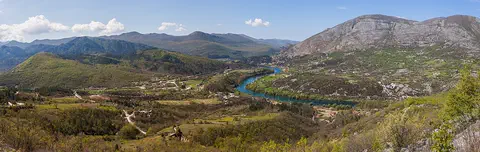 Watch
 Country
Bosnia and Herzegovina
Bosnia and Herzegovina is a mountainous country in southeastern Europe. It has forests, limestone hills and many rivers, and famous old stone bridges cross some of them. Its capital is Sarajevo. It touches the Adriatic Sea along only about 20 kilometers of coast.
-
 Watch
 Country
Bulgaria
Bulgaria is a country on the eastern side of the Balkan Peninsula, with the Danube River to the north and the Black Sea to the east. Mountains cross it from west to east, and about 6.4 million people lived there at the end of 2025.
For parents & teachers
What children will learn
- Locate Portugal, its neighbor Spain, its rivers and its Atlantic islands.
- Describe Portugal's mountains, climate, volcanic islands and some of its wildlife.
- Explain why the Portuguese voyages of the 1400s and 1500s mattered, including their harms.
- Outline Portugal's history from the kingdom of the 1100s to the 1974 revolution and the European Union.
Recommended ages: 3 to 17 · About 15 minutes
Talk about it
- What would sailors in the 1400s have needed for a voyage of many months?
- The explorers' voyages brought trade, but also slavery and empire. Why is it important to tell both sides?
- Why do you think people on islands far out at sea might keep their own traditions?
Try at home or in class
- On a globe, trace Vasco da Gama's route from Lisbon around Africa to India with a piece of string, and compare it with a straight line.
- Listen to a recording of fado with a grown-up and talk about how the music makes you feel.
Key vocabulary: peninsula, estuary, archipelago, explorer, revolution, fado
Where these facts come from
- Wikidata , Wikimedia Foundation (CC0 1.0)
- Natural Earth vector data , Natural Earth (NACIS) (Public domain)
- UNESCO World Heritage List , UNESCO World Heritage Centre (Linked as a reference; site facts come from Wikidata)
- Portugal (introduction) , Encyclopaedia Britannica
- Portugal: Land , Encyclopaedia Britannica
- Portugal: The Madeira Islands, the Azores, drainage, coastline and soils , Encyclopaedia Britannica
- Portugal: Climate and plant life , Encyclopaedia Britannica
- Portugal: Wildlife, people, language and religion , Encyclopaedia Britannica
- Portugal: Settlement patterns , Encyclopaedia Britannica
- Portugal: Daily life and social customs , Encyclopaedia Britannica
- Portugal: Government and society , Encyclopaedia Britannica
- Portugal: History , Encyclopaedia Britannica
- Portugal: The house of Aviz (1383–1580) , Encyclopaedia Britannica
- Portugal: Control of the sea trade , Encyclopaedia Britannica
- Portugal: Overseas empire , Encyclopaedia Britannica
- Portugal: The First Republic (1910–26) , Encyclopaedia Britannica
- Portugal: The New State after Salazar , Encyclopaedia Britannica
- Portugal: Into the 21st century , Encyclopaedia Britannica
- Lisbon , Encyclopaedia Britannica
- Azores , Encyclopaedia Britannica
- Vasco da Gama , Encyclopaedia Britannica
- Monastery of the Hieronymites and Tower of Belém in Lisbon , UNESCO World Heritage Centre
- Historic Centre of Oporto, Luiz I Bridge and Monastery of Serra do Pilar , UNESCO World Heritage Centre
- Laurisilva of Madeira , UNESCO World Heritage Centre
- Landscape of the Pico Island Vineyard Culture , UNESCO World Heritage Centre
- Fado, urban popular song of Portugal , UNESCO Intangible Cultural Heritage
- Population on 1 January (tps00001), Portugal , Eurostat
- Instalado novo marco geodésico no ponto mais alto de Portugal (16 October 2023) , RTP Açores
- Brazil: Independence , Encyclopaedia Britannica
- PlayOwl region table, version 1 , PlayOwl (PlayOwl original data)
- flag-icons 7.5.0 , Panayiotis Lipiridis and contributors (MIT)
- Wikimedia Commons , Wikimedia Foundation (Per file (public domain, CC0, CC BY or CC BY-SA); see each media record)
Checked, not yet human-reviewed. Last updated October 24, 2026. Spotted a mistake? Tell us.
Picture credits
- Photo: Rehman Abubakr, CC BY-SA 4.0, via Wikimedia Commons · source · license
- Photo: Rititaneves, CC BY-SA 3.0, via Wikimedia Commons · source · license
- Photo: Matti Blume, CC BY-SA 4.0, via Wikimedia Commons · source · license
- Photo: Paulo Valdivieso from Lisboa, Portugal, CC BY-SA 2.0, via Wikimedia Commons · source · license
- Photo: Holger Uwe Schmitt, CC BY-SA 4.0, via Wikimedia Commons · source · license