
Animal
Atlantic ghost crab
The Atlantic ghost crab is a pale crab that lives on sandy beaches. It has eyes on tall stalks and digs holes in the sand.
The Atlantic ghost crab is a sand-colored crab of beaches along the Atlantic coast of the Americas. It is so pale that it almost disappears on the sand, like a ghost. It digs deep burrows, comes out mostly at night, and runs very fast on its long legs.
Ocypode quadrata, of the family Ocypodidae, is a mostly nocturnal, burrowing crab of sandy beaches from Rhode Island to southern Brazil. Semi-terrestrial, it wicks water from damp sand to its gills and returns to the sea mainly to release its larvae. The National Park Service treats it as an indicator of beach health, sensitive to heavy human use.
Photo: Andrea Westmoreland from DeLand, United States, CC BY-SA 2.0, via Wikimedia Commons
Meet the Atlantic ghost crab
The ghost crab is pale, like the sand.
Its eyes sit on top of tall stalks. It has long legs and runs very fast.
The Atlantic ghost crab is a small crab with a nearly square shell, about 5 centimeters long. It is straw-colored or grayish white, which makes it very hard to see on pale sand. That is how it got its name.
It has big eyes on tall stalks, long walking legs and two claws of different sizes: one is bigger than the other. The National Park Service calls ghost crabs the fastest land crabs in the world.
Ocypode quadrata belongs to the family Ocypodidae, the ghost and fiddler crabs (order Decapoda, class Malacostraca). Animal Diversity Web describes a quadrate carapace about 5 centimeters long at maturity, straw-colored or grayish white, with large club-shaped eyestalks, unequal chelipeds and long walking legs; males are larger.
The National Park Service at Gulf Islands National Seashore describes ghost crabs as quick mesopredators whose pale color gives them their name and makes them hard to spot on white sand, and it calls them the fastest land crabs in the world.
Quick facts
- Group
- Invertebrate
- Length
- up to 5 cm
- Lifespan in the wild
- up to 3 years
Where it lives
Ghost crabs live on sandy beaches.
They live by the warm Atlantic Ocean, from the United States down to Brazil.
Atlantic ghost crabs live on sandy beaches along the Atlantic coast of the Americas, from Rhode Island in the United States all the way to southern Brazil, and in Bermuda.
They live above the reach of most waves, from the water's edge up to the dunes. Young crabs dig their burrows close to the water, and older crabs dig farther up the beach.
Animal Diversity Web gives a range from Block Island, Rhode Island, to Santa Catarina, Brazil, including Bermuda; larvae reach as far north as Woods Hole, Massachusetts, but adults do not. Ghost crabs occupy tropical and subtropical ocean and estuarine beaches in the supralittoral zone, above the spring high-tide line, from the water line to the dunes.
Burrows show zonation: the Virginia Institute of Marine Science notes that young crabs live closer to the water and older crabs farther away. The National Park Service reports that crabs prefer moist sand near the swash zone but move behind the dunes in winter.
Continents
Did you know?
Ghost crabs drink from wet sand with their legs.
Ghost crabs use tiny hairs on their legs to soak up water from damp sand and keep their gills wet.
Fine hairs at the base of the legs wick water from damp sand to the gills, reducing trips to the sea.
Where can you find this animal?
- Lives here naturally · Countries and seas named by a scientific source
- Sightings recorded · Records of wild sightings (GBIF)
Lives here naturally · Countries and seas named by a scientific source
Sandy beaches of the western Atlantic from Block Island, Rhode Island, to Santa Catarina, Brazil, including the Gulf of Mexico, the Caribbean and Bermuda. The source gives a coastline, not a country list: the countries shown are those along that coast with wild records. The map shades whole countries; the crabs live only on beaches.
Places: United States, Mexico, Belize, Guatemala, Honduras, Nicaragua, Costa Rica, Panama and 11 more places.
Source: https://animaldiversity.org/accounts/Ocypode_quadrata/ · checked October 2026
Sightings recorded · Records of wild sightings (GBIF)
Counts of GBIF records of wild observations (human and machine) and preserved specimens. Records include introduced populations, vagrants, escaped or released animals and misidentifications, so a country with records is not necessarily part of the native range.
Wild sightings have been recorded in United States, Brazil, Mexico, Puerto Rico, Colombia, Costa Rica, Dominican Rep., Cuba and 31 more places.
Source: gbif · checked October 2026
Range maps show where scientists say an animal lives, often country by country. An animal may live in only part of a country shown, and sightings records can include animals that wandered far from home.
What it eats
Ghost crabs hunt on the beach at night.
They eat little clams and crabs, and clean up dead things that wash ashore.
Ghost crabs are both hunters and scavengers. On ocean beaches they catch small clams and mole crabs, little crabs that burrow in the wet sand where the waves wash in.
They also eat dead animals that wash up on the beach, which helps keep the beach clean. If you see a piece of driftwood or a dead fish on the sand, look closely: ghost crab holes often surround it.
Animal Diversity Web describes ghost crabs as predators and scavengers that feed at night. On oceanfront beaches they eat bean (coquina) clams of the genus Donax and mole crabs (Emerita talpoida); on more protected beaches they also take the eggs and hatchlings of loggerhead turtles. The National Park Service adds shorebird eggs and young to the diet.
They are opportunists that move their burrows close to food, and ADW notes that they can store food. As scavengers they help clean the beach, and ADW describes them as top predators of the filter-feeder-based beach food chain.
Did you know?
Ghost crabs can make tapping sounds.
Ghost crabs make sounds by tapping their claws, rubbing their legs together and bubbling.
Three sounds are known: claw rapping, a rasping stridulation of the legs and a bubbling sound presumably from the gill chamber (VIMS).
A crab up close
A ghost crab has two eyes on tall stalks.
It has one big claw and one small claw. Its long legs help it run.
A ghost crab's eyes stand up on tall stalks, and they are very sensitive to changes in light.
One claw is bigger than the other. Ghost crabs also have a clever trick for breathing. They breathe with gills, which need to stay wet, but they live on land. So they wick water up from damp sand with tiny hairs at the base of their legs.
Large, club-shaped eyestalks carry eyes that the Virginia Institute of Marine Science describes as sensitive to changes in light intensity. The chelipeds are unequal in size, and the long walking legs allow rapid running.
Ghost crabs are semi-terrestrial: they breathe with gills that must be kept moist. Besides occasionally returning to the sea, Animal Diversity Web explains, they use fine hairs at the base of the legs to wick water from damp sand up to the gills.
Back to the sea
A mother ghost crab carries her eggs under her body.
She lets the eggs go in the waves. The babies grow in the sea, then come back to the beach.
Ghost crabs mate all year round, usually in or near the male's burrow. The female carries her eggs under her body, and she must keep them wet by going into the water often.
When the eggs are ready, she releases them into the surf. The tiny larvae grow in the salty sea through several stages before they come back to the beach as young crabs. Ghost crabs can have young of their own when they are about a year old, and they usually live about 3 years.
Mating occurs year-round, usually in or near the male's burrow. Females carry eggs beneath the body and must keep them wet by entering the water frequently; some turn upside down in the water to ventilate them, and the young are released into the surf (Animal Diversity Web).
Development includes five zoeal stages and a megalopa, which takes at least 35 days and is one of the largest among true crabs. Both sexes mature at about one year, at carapace lengths above about 24 to 25 millimeters, and typical lifespan is about 3 years.
Diggers of the night
Ghost crabs dig deep holes in the sand.
In the day they rest in their holes. At night they come out to find food.
Ghost crabs are mostly nocturnal. In the morning a crab digs a new burrow or fixes an old one. In the afternoon it plugs the entrance and stays inside until after sunset. Then it comes out to hunt, traveling up to 300 meters in a night.
Their holes range from the size of your finger to the size of a tennis ball. Ghost crabs also make sounds: they tap their claws on the ground, rub their legs together and make a bubbling noise.
Animal Diversity Web describes a daily routine of burrowing in the morning, plugging the burrow in the early afternoon and emerging after sunset. Burrows are 0.6 to 1.2 meters long, about as wide as the crab's carapace, and crabs forage up to 300 meters at night, often not returning to the same burrow. In cooler months they hibernate in their burrows from October to April.
The Virginia Institute of Marine Science lists three sounds: rapping the claw on the sand, a rasping stridulation of the legs and a bubbling sound presumably from the gill chamber. Activity at night reduces the risk from shorebirds and gulls, and by day crabs can slightly change color to match the sand.
Did you know?
Ghost crabs are super fast runners.
The National Park Service calls ghost crabs the fastest land crabs in the world.
Gulf Islands National Seashore describes ghost crabs as the fastest land crabs in the world, quick enough to dart in and out of burrows.
A sign of a healthy beach
Lots of ghost crab holes mean a healthy beach.
You can help by leaving only footprints and picking up trash.
Ghost crabs are not endangered, but they are good messengers. The National Park Service says a beach with lots of ghost crab holes is a sign of a healthy beach.
The more people use a beach, the harder life is for ghost crabs. You can help by leaving only your footprints, joining beach cleanups and driving slowly on beach roads, where crabs sometimes cross.
The species has no IUCN Red List assessment. The National Park Service calls ghost crabs an important indicator species of beach health and names human impacts as their biggest threat: the more people use a beach, the greater the impact.
Park guidance asks visitors to leave only footprints, join beach cleanups and obey speed limits on island roads that crabs cross. As the Park Service puts it, a beach with lots of ghost crab holes is a sign of a healthy beach.
Did you know?
Ghost crab holes can be as big as a tennis ball.
Ghost crab holes range from the size of your finger to the size of a tennis ball, depending on the crab's size.
Burrow width matches carapace width, so entrances range from finger-sized to tennis-ball-sized.
Amazing facts
-
Ghost crabs are super fast runners.
The National Park Service calls ghost crabs the fastest land crabs in the world.
Gulf Islands National Seashore describes ghost crabs as the fastest land crabs in the world, quick enough to dart in and out of burrows.
-
Ghost crabs drink from wet sand with their legs.
Ghost crabs use tiny hairs on their legs to soak up water from damp sand and keep their gills wet.
Fine hairs at the base of the legs wick water from damp sand to the gills, reducing trips to the sea.
-
Ghost crabs can make tapping sounds.
Ghost crabs make sounds by tapping their claws, rubbing their legs together and bubbling.
Three sounds are known: claw rapping, a rasping stridulation of the legs and a bubbling sound presumably from the gill chamber (VIMS).
-
Ghost crab holes can be as big as a tennis ball.
Ghost crab holes range from the size of your finger to the size of a tennis ball, depending on the crab's size.
Burrow width matches carapace width, so entrances range from finger-sized to tennis-ball-sized.
Words to know
- burrow
- a hole or tunnel an animal digs to live in
- nocturnal
- active at night
- eyestalk
- a stalk that holds up an eye, like on a crab
- gills
- body parts that take oxygen from water
- scavenger
- an animal that eats dead animals or leftovers
- indicator species
- a living thing whose numbers show how healthy a place is
Discovery challenge
-
Why is it called a ghost crab?
How did the ghost crab get its name?
What feature gives Ocypode quadrata its common name?
- It glows in the dark
- Its pale color makes it hard to see on sand
- It can walk through walls
Show the answer
Its pale color makes it hard to see on sand
It is pale like the sand, so it seems to disappear.
Its pale color blends with the sand, so it is hard to spot, like a ghost.
Its straw-colored to grayish-white coloring, which matches pale sand.
-
When do ghost crabs come out to eat?
When are ghost crabs most active?
When does Ocypode quadrata usually forage?
- At night
- Only at noon
- Only in winter
Show the answer
At night
They come out at night.
They are mostly nocturnal, resting in burrows by day and hunting at night.
Mainly at night, after plugging their burrows during the afternoon.
-
How does a ghost crab keep its gills wet?
How do ghost crabs keep their gills wet on land?
How do ghost crabs supply water to their gills away from the sea?
- They soak up water from damp sand with leg hairs
- They drink from flowers
- They never need water
Show the answer
They soak up water from damp sand with leg hairs
Tiny hairs on their legs soak up water from wet sand.
Fine hairs at the base of their legs wick water from damp sand to their gills.
Setae at the leg bases wick water from damp sand; crabs also return to the sea occasionally.
-
What do lots of ghost crab holes on a beach mean?
What does a beach with lots of ghost crab holes tell us?
According to the National Park Service, what does a beach with many ghost crab holes indicate?
- A storm is coming
- The beach is healthy
- It is about to snow
Show the answer
The beach is healthy
Lots of holes mean a healthy beach.
The National Park Service says many ghost crab holes are a sign of a healthy beach.
Ghost crabs are an indicator species: many burrows signal a healthy beach with low human impact.
Places where you might see it
-
 Watch
 Country
United States
The United States is a large country in North America made of 50 states, from icy Alaska to the warm islands of Hawaii. It has the Grand Canyon, the Mississippi River and Yellowstone, and about 342 million people live there.
-
 Watch
 Country
Brazil
Brazil covers about half of South America and is the fifth-largest country in the world. It holds most of the Amazon River basin and much of the world's largest rainforest, and about 214 million people lived there in 2026, most of them near the Atlantic coast.
Explore next
-
 Watch
3D
Animal
Atlantic blue crab
The Atlantic blue crab is a swimming crab with bright blue claws and back legs shaped like paddles. It lives along the Atlantic coast of the Americas, especially in bays where rivers meet the sea, like the Chesapeake Bay. A mother crab carries up to two million eggs in a spongy orange mass under her body.
-
 Watch
Animal
Loggerhead sea turtle
The loggerhead sea turtle is named for its huge head and powerful jaws, which crush crabs, conchs and other hard-shelled animals. Babies hatch on sandy beaches, ride the open ocean for years and may cross an entire ocean before coming home to nest.
-
 Watch
3D
Animal
Atlantic horseshoe crab
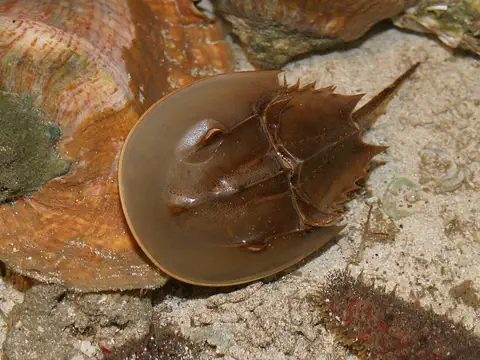
The Atlantic horseshoe crab is a living fossil: its relatives have looked much the same for hundreds of millions of years. Despite its name, it is more closely related to spiders and scorpions than to crabs. Each spring, thousands crawl onto beaches to lay eggs, feeding hungry shorebirds, and its blue blood helps keep medicines safe.
-
 Watch
Animal
Brown pelican
The brown pelican is a large coastal bird of the Americas with an enormous bill and a stretchy throat pouch. It catches fish by diving head-first into the sea from high in the air. Brown pelicans almost disappeared from North America because of pesticides such as DDT, but after DDT was banned they made a full comeback.
-
Watch
Country
United States
The United States is a large country in North America made of 50 states, from icy Alaska to the warm islands of Hawaii. It has the Grand Canyon, the Mississippi River and Yellowstone, and about 342 million people live there.
-
Watch
Country
Brazil
Brazil covers about half of South America and is the fifth-largest country in the world. It holds most of the Amazon River basin and much of the world's largest rainforest, and about 214 million people lived there in 2026, most of them near the Atlantic coast.
-
 Watch
Animal
Coconut crab
The coconut crab, also called the robber crab, is the biggest crustacean that lives on land. It is a close relative of hermit crabs, lives on tropical islands in the Indian and Pacific Oceans, climbs trees, and can open coconuts with its powerful claws.
-
 Watch
Animal
Caribbean hermit crab
The Caribbean hermit crab is a land hermit crab with a big purple claw and red legs. It lives near the coasts of Bermuda, Florida and the Caribbean, carries an empty snail shell for protection, and goes back to the sea only to release its eggs.
For parents & teachers
What children will learn
- Describe how the Atlantic ghost crab is adapted to life on a sandy beach.
- Explain how ghost crabs keep their gills wet while living on land.
- Describe the ghost crab's life cycle, with larvae growing in the sea.
- Understand what an indicator species is and how beach visitors can help.
Recommended ages: 3 to 17 · About 15 minutes
Talk about it
- Why might it be safer for a ghost crab to come out at night?
- Why do you think young ghost crabs dig their burrows closer to the water?
- What could beach visitors do to help ghost crabs?
Try at home or in class
- Put the end of a paper towel into a little water and watch the water creep up: ghost crab leg hairs move water in a similar way.
- On a beach visit, count crab holes in a square of sand you mark with your feet, without digging them up.
Key vocabulary: burrow, nocturnal, eyestalk, gills, scavenger, indicator species
Where these facts come from
- GBIF Backbone Taxonomy and GBIF Occurrence Search , Global Biodiversity Information Facility (CC0 1.0 (backbone); occurrence counts are facts derived from records under CC0, CC BY and CC BY-NC)
- Ocypode quadrata (Atlantic ghost crab) , Animal Diversity Web, University of Michigan Museum of Zoology
- Ghost Crab , Gulf Islands National Seashore, National Park Service
- General Info on Ocypodid Crabs , Virginia Institute of Marine Science
- Wikidata , Wikimedia Foundation (CC0 1.0)
- Wikimedia Commons , Wikimedia Foundation (Per file: Public domain, CC0, CC BY or CC BY-SA only (credited on each page))
Checked, not yet human-reviewed. Last updated October 27, 2026. Spotted a mistake? Tell us.