
Animal
Atlantic blue crab
The Atlantic blue crab has bright blue claws. Its back legs are shaped like paddles, so it can swim!
The Atlantic blue crab is a swimming crab with bright blue claws and back legs shaped like paddles. It lives along the Atlantic coast of the Americas, especially in bays where rivers meet the sea, like the Chesapeake Bay. A mother crab carries up to two million eggs in a spongy orange mass under her body.
Callinectes sapidus, a swimming crab of the family Portunidae, is native to the western Atlantic from Nova Scotia to Argentina and is the basis of major fisheries, notably in the Chesapeake Bay. Its life cycle links estuaries and the coastal ocean. Introduced to Europe, it has spread rapidly in Spain's Ebro Delta, where severe impacts have been documented.
Photo: Ryan Hodnett, CC BY-SA 4.0, via Wikimedia Commons
Meet the Atlantic blue crab
The blue crab has a hard shell and ten legs.
Two of its legs have big blue claws. Its two back legs are flat paddles for swimming.
The Atlantic blue crab gets its name from its bright blue claws. Its shell, called a carapace, can be bluish or olive green and grows up to 9 inches across, wider than a grown-up's hand.
Unlike many crabs, it is a strong swimmer. Its last pair of legs are flat paddles that it uses like oars. Its scientific name, Callinectes sapidus, comes from Greek words meaning "beautiful swimmer." Male blue crabs are known as jimmies and grown-up females as sooks.
Callinectes sapidus belongs to the swimming crabs, family Portunidae (order Decapoda, class Malacostraca). The Chesapeake Bay Program describes a bluish to olive-green carapace up to 9 inches across with nine marginal teeth on each side, the ninth forming a strong lateral spine; bright blue claws, red-tipped in mature females; three pairs of walking legs; and paddle-shaped rear swimming legs.
The sexes differ in the abdomen, or apron: males have a narrow apron shaped like an inverted T, mature females a broad, rounded one, and immature females a triangular one. The genus name comes from the Greek for beautiful swimmer.
Quick facts
- Group
- Invertebrate
- Length
- up to 23 cm
- Lifespan in the wild
- up to 3 years
Where it lives
Blue crabs live along the coast of North and South America.
They like bays where river water mixes with sea water.
Blue crabs live along the western side of the Atlantic Ocean, from Nova Scotia in Canada all the way to Argentina. They are most common from Cape Cod in Massachusetts to Uruguay.
They love estuaries, the places where rivers flow into the sea and fresh water mixes with salt water, such as the Chesapeake Bay. They live on the bottom, from the shallows down to about 36 meters. In winter, Chesapeake crabs bury themselves in the mud of deeper water.
Animal Diversity Web gives a natural range in the western Atlantic from Nova Scotia to Argentina, mostly from Cape Cod to Uruguay. The crab is a bottom-dweller found from the saltiest Gulf waters to the nearly fresh water of back bays, especially in estuaries, from the low-tide line to about 36 meters.
In the Chesapeake Bay, the Chesapeake Bay Program notes that blue crabs are abundant in shallow water and seagrass beds in summer and burrow into the sediment of deeper water to overwinter; males spend more time in fresher upper waters, while females gather in the saltier lower Bay. People have also carried the species, accidentally or deliberately, to Europe and Asia, and to Hawaii and Japan.
Continents
Its habitat

Where can you find this animal?
- Brought here by people · Countries and seas named by a scientific source
- Lives here naturally · Countries and seas named by a scientific source
- Sightings recorded · Records of wild sightings (GBIF)
Brought here by people · Countries and seas named by a scientific source
Introduced to Europe; in Spain's Ebro Delta it was first recorded in 2012 and spread rapidly from about 2016. It has also been introduced elsewhere in Europe and Asia, Hawaii and Japan.
Places: Spain.
Source: https://agris.fao.org/search/en/records/65df02b07c7033e84bec85f3 · checked October 2026
Lives here naturally · Countries and seas named by a scientific source
Coastal waters and estuaries of the western Atlantic from Nova Scotia to Argentina, most common from Cape Cod to Uruguay. The source gives a coastline, not a country list: the countries shown are those along that coast with wild records. The map shades whole countries; the crabs live only in coastal water.
Places: Canada, United States, Mexico, Belize, Guatemala, Honduras, Nicaragua, Costa Rica and 13 more places.
Source: https://animaldiversity.org/accounts/Callinectes_sapidus/ · checked October 2026
Sightings recorded · Records of wild sightings (GBIF)
Counts of GBIF records of wild observations (human and machine) and preserved specimens. Records include introduced populations, vagrants, escaped or released animals and misidentifications, so a country with records is not necessarily part of the native range.
Wild sightings have been recorded in Colombia, United States, Spain, Mexico, Italy, Brazil, Greece, France and 56 more places.
Source: gbif · checked October 2026
Range maps show where scientists say an animal lives, often country by country. An animal may live in only part of a country shown, and sightings records can include animals that wandered far from home.
What it eats
Blue crabs eat almost anything they can find.
They eat clams, mussels, little fish and plants.
Blue crabs are not picky. They eat clams, oysters and mussels, smaller crustaceans, fish that have just died, and bits of dead plants and animals.
Blue crabs are also food for many animals. Big fish such as striped bass and red drum eat them, and herons and sea turtles catch smaller crabs.
The Chesapeake Bay Program describes blue crabs as feeding on nearly anything they can find: clams, oysters, mussels, smaller crustaceans, freshly dead fish, and plant and animal detritus, including vulnerable soft-shelled blue crabs and small juveniles of their own species.
They are in turn prey for large fish such as striped bass, Atlantic croaker and red drum, and smaller crabs are eaten by predatory birds such as blue herons and by sea turtles. The 2026 Blue Crab Advisory Report lists predation by red drum and blue catfish among factors researchers are investigating for low crab numbers.
Did you know?
Baby blue crabs go on a trip out to sea and back.
Baby blue crabs drift out of the bay into the ocean, then ride the wind and tides back in a few weeks later.
Zoeae develop for four to eight weeks offshore before megalopae are carried back into the estuary by wind and tidal currents.
A crab up close
A blue crab has a hard, wide shell.
It has two blue claws, six walking legs and two paddle legs for swimming.
A blue crab has ten legs. The front two end in strong blue claws for grabbing food. The next six are walking legs, and the last two are flat paddles for swimming.
Its wide shell has a row of small points along each edge, ending in one long, sharp spine on each side. To grow, a blue crab must molt: it climbs out of its old shell, and for a short time it has a soft shell until the new one hardens.
As in other portunids, the fifth pair of legs is flattened into swimming paddles. The carapace carries nine marginal teeth on each side, the ninth elongated into a strong lateral spine. Claws (chelipeds) are bright blue, with red tips in mature females.
Growth requires molting, and Animal Diversity Web reports that blue crabs reach adult size after 18 to 20 molts. Freshly molted soft-shelled crabs are vulnerable, even to other blue crabs.
From sponge to crab
A mother blue crab carries her orange eggs under her body.
The tiny babies float in the sea. They grow, come back to the bay, and turn into little crabs.
Blue crabs mate in summer and autumn. Before mating, a male gently carries a female under him for several days while she gets ready for her last molt, and he guards her until her new shell hardens.
The female then travels to saltier water. Under her body she carries a bright orange egg mass called a sponge, with 750,000 to two million eggs. After about two weeks, tiny larvae hatch and drift out to sea, where they grow for four to eight weeks. Then they return to the bay, settle in seagrass and marshes, and turn into little crabs that look like tiny adults.
In the Chesapeake Bay, mating occurs from May through October in brackish water. A male cradles a soft-shelled female during and after her final molt; Animal Diversity Web notes that females mate only once, after this terminal molt. Females then migrate to the saltier lower Bay and carry an external egg mass, or sponge, of 750,000 to two million eggs, which darkens as the larvae use the yolk.
After about two weeks, zoea larvae are released near the mouth of the Bay and carried into coastal waters, where they molt several times over four to eight weeks before metamorphosing into the post-larval megalopa. Megalopae are pushed back into the estuary by wind and tides and settle in nursery habitats such as seagrass beds and marsh fringes. Crabs mature about 12 to 18 months after hatching, and few live longer than three years.
A beautiful swimmer
Blue crabs can walk and swim.
They paddle with their flat back legs. In winter they dig into the mud and rest.
Blue crabs can walk on the bottom, but they can also swim, paddling with their flat back legs. That is why their name means "beautiful swimmer."
They move with the seasons. In summer they spread through shallow water and seagrass beds. In winter they bury themselves in the mud in deeper water. Males often stay in fresher water, while females travel to saltier water to release their eggs.
Blue crabs combine bottom-walking with active swimming on their paddle legs. In the Chesapeake Bay their distribution shifts seasonally: summer in shallows and seagrass, winter buried in deeper sediment, with the sexes partly separated by salinity.
Overwintering is risky. The 2026 Blue Crab Advisory Report notes that although crabs overwinter buried in the mud, cold water can still kill them; overwintering mortality in winter 2025–26 was 5.17 percent of the population, above the 4.19 percent average, after extended cold snaps.
Did you know?
Blue crabs can swim with their back legs.
The blue crab's scientific name, Callinectes, comes from Greek words meaning "beautiful swimmer."
Callinectes derives from the Greek for beautiful swimmer, a nod to the paddle-shaped fifth legs of this portunid.
Crabs and fishing
Lots of people catch blue crabs to eat.
Scientists count the crabs every winter. Rules help keep enough crabs in the bay.
Blue crabs are one of the most important catches in the Chesapeake Bay. Every winter, scientists count crabs to help set fishing rules. In 2026 they found that the crabs are not overfished, but there are fewer grown-up females than they would like, so they asked for careful limits.
Far from home, blue crabs can cause problems. People have carried them to Europe, and in Spain's Ebro Delta they have spread quickly. Scientists there found that several other animals declined as blue crabs took over.
There is no IUCN Red List assessment. In the Chesapeake Bay, the Chesapeake Bay Program reports that the population has not been overfished since female-specific management began in 2008. The Chesapeake Bay Stock Assessment Committee's 2026 Blue Crab Advisory Report found the stock not overfished, but the total population of 349 million was below the 1990–2025 average and adult females (81 million) were below the 196 million target, so it recommended that Maryland, Virginia and the Potomac River managers stay cautious.
As an invader the species is serious. Clavero and colleagues (2022) report that in Spain's Ebro Delta it was first recorded in 2012, expanded from about 2016 and increased exponentially in 2017–2018, as several species, including threatened and commercially exploited ones, declined steeply; they describe it as becoming a keystone species in invaded systems.
Did you know?
Boy blue crabs and girl blue crabs have different names.
Male blue crabs are called jimmies, and grown-up females are called sooks.
Males are known as jimmies and mature females as sooks; mature females also have red-tipped claws.
Amazing facts
-
Blue crabs can swim with their back legs.
The blue crab's scientific name, Callinectes, comes from Greek words meaning "beautiful swimmer."
Callinectes derives from the Greek for beautiful swimmer, a nod to the paddle-shaped fifth legs of this portunid.
-
Boy blue crabs and girl blue crabs have different names.
Male blue crabs are called jimmies, and grown-up females are called sooks.
Males are known as jimmies and mature females as sooks; mature females also have red-tipped claws.
-
A mother crab carries her eggs in an orange sponge.
A female blue crab's egg mass is called a sponge and can hold up to two million eggs.
The external egg mass, or sponge, holds 750,000 to two million eggs and darkens as the larvae use up their yolk.
-
Baby blue crabs go on a trip out to sea and back.
Baby blue crabs drift out of the bay into the ocean, then ride the wind and tides back in a few weeks later.
Zoeae develop for four to eight weeks offshore before megalopae are carried back into the estuary by wind and tidal currents.
Words to know
- carapace
- the hard shell that covers a crab's back
- estuary
- a place where a river meets the sea and fresh and salt water mix
- molt
- to shed an old shell or skin so the body can grow
- sponge
- the mass of eggs a female crab carries under her body
- larva
- a young animal that looks very different from its parents
- invasive
- a living thing brought to a new place where it causes harm
Discovery challenge
-
What are a blue crab's back legs shaped like?
What shape are the blue crab's last pair of legs?
How is the blue crab's fifth pair of legs adapted?
- Hooks
- Flat paddles for swimming
- Long feathers
Show the answer
Flat paddles for swimming
They are flat paddles, so the crab can swim.
The last pair are flat paddles the crab uses like oars.
They are flattened into swimming paddles, typical of the swimming crabs (Portunidae).
-
What color are a blue crab's claws?
What color are an Atlantic blue crab's claws?
What color are the chelipeds of Callinectes sapidus?
- Bright blue
- Green
- Yellow
Show the answer
Bright blue
Its claws are bright blue.
Its claws are bright blue, and grown-up females have red tips.
Bright blue, with red tips in mature females.
-
What is a mother crab's egg mass called?
What is the egg mass a female blue crab carries called?
What do fishers call the external egg mass of a female blue crab?
- A nest
- A cocoon
- A sponge
Show the answer
A sponge
It is called a sponge.
It is called a sponge and holds 750,000 to two million eggs.
A sponge, carried beneath the apron for about two weeks before the zoeae hatch.
-
Where do blue crabs come from?
Where is the Atlantic blue crab's natural home?
What is the native range of Callinectes sapidus?
- The Atlantic coast of the Americas
- The Indian Ocean
- The Arctic Ocean
Show the answer
The Atlantic coast of the Americas
They come from the Atlantic coast of North and South America.
They live along the western Atlantic, from Canada to Argentina.
The western Atlantic from Nova Scotia to Argentina; it has been introduced to Europe and Asia.
Places where you might see it
-
 Watch
 Country
United States
The United States is a large country in North America made of 50 states, from icy Alaska to the warm islands of Hawaii. It has the Grand Canyon, the Mississippi River and Yellowstone, and about 342 million people live there.
-
 Watch
 Country
Spain
Spain covers most of the Iberian Peninsula in southwestern Europe. Its middle is a high, flat plateau, the Pyrenees mountains stand between it and France, and almost 50 million people live there, with Madrid as the capital.
Explore next
-
 Watch
3D
Animal
Atlantic ghost crab
The Atlantic ghost crab is a sand-colored crab of beaches along the Atlantic coast of the Americas. It is so pale that it almost disappears on the sand, like a ghost. It digs deep burrows, comes out mostly at night, and runs very fast on its long legs.
-
 Watch
3D
Animal
Red swamp crayfish
The red swamp crayfish is a dark red freshwater crustacean with long claws covered in bright red bumps. It comes from the swamps and streams of the southern United States and northern Mexico, where it digs burrows in the mud. People have carried it around the world for food, and in many new places it harms the plants and animals that already live there.
-
 Watch
3D
Animal
Atlantic horseshoe crab
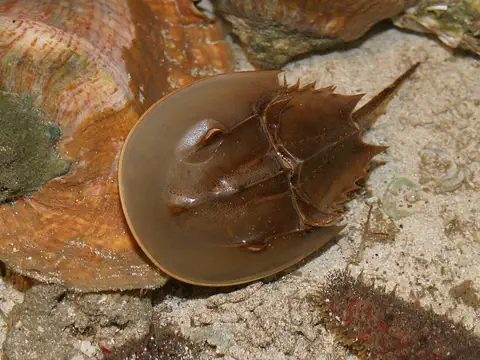
The Atlantic horseshoe crab is a living fossil: its relatives have looked much the same for hundreds of millions of years. Despite its name, it is more closely related to spiders and scorpions than to crabs. Each spring, thousands crawl onto beaches to lay eggs, feeding hungry shorebirds, and its blue blood helps keep medicines safe.
-
 Watch
3D
Animal
Lined seahorse
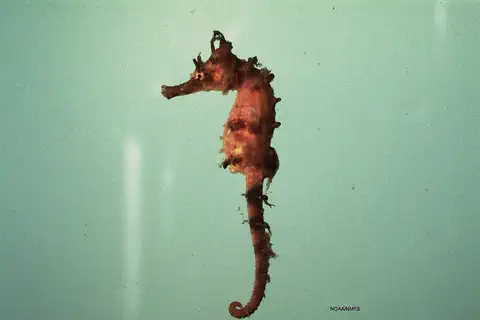
The lined seahorse is a small fish of the western Atlantic Ocean, from Canada and the United States down to Brazil. It has a horse-shaped head, a long snout with no teeth and a tail that grips seagrass. The male carries the eggs in a pouch until tiny seahorses are born.
-
Watch
Country
United States
The United States is a large country in North America made of 50 states, from icy Alaska to the warm islands of Hawaii. It has the Grand Canyon, the Mississippi River and Yellowstone, and about 342 million people live there.
-
Watch
Country
Spain
Spain covers most of the Iberian Peninsula in southwestern Europe. Its middle is a high, flat plateau, the Pyrenees mountains stand between it and France, and almost 50 million people live there, with Madrid as the capital.
-
 Watch
Animal
American lobster
The American lobster is a big crustacean that lives on the rocky sea floor of the northwest Atlantic Ocean. It has two very different claws, one for crushing and one for tearing, and it must climb out of its hard shell again and again to grow.
-
 Watch
3D
Animal
Antarctic krill
Antarctic krill are small, shrimp-like crustaceans about 6 centimeters long that live in the icy Southern Ocean around Antarctica. They gather in enormous swarms, and almost all the bigger animals of the Antarctic, from penguins to blue whales, depend on them for food.
For parents & teachers
What children will learn
- Identify the blue crab's claws, carapace, walking legs and swimming paddles.
- Describe the blue crab's life cycle, which moves between bay and ocean.
- Explain how scientists count blue crabs to guide fishing rules.
- Understand why a species can be valued at home and harmful where it is introduced.
Recommended ages: 3 to 17 · About 15 minutes
Talk about it
- Why might baby blue crabs grow up out at sea and then come back to the bay?
- Why do fishing managers pay special attention to the number of adult females?
- How could people stop animals like the blue crab from reaching new places?
Try at home or in class
- Measure 23 centimeters on a ruler and compare it with your hand to see how wide a big blue crab can be.
- Paddle a flat spoon and a pencil through a bowl of water and feel which pushes more water: that is how a crab's paddle legs help it swim.
Key vocabulary: carapace, estuary, molt, sponge, larva, invasive
Where these facts come from
- GBIF Backbone Taxonomy and GBIF Occurrence Search , Global Biodiversity Information Facility (CC0 1.0 (backbone); occurrence counts are facts derived from records under CC0, CC BY and CC BY-NC)
- Blue crab (Field Guide) , Chesapeake Bay Program
- 2026 Blue Crab Advisory Report shows below-average population, but no overfishing , Chesapeake Bay Program
- Callinectes sapidus (blue crab) , Animal Diversity Web, University of Michigan Museum of Zoology
- Severe, rapid and widespread impacts of an Atlantic blue crab invasion (Clavero et al. 2022, Marine Pollution Bulletin 176: 113479) , FAO AGRIS
- Wikidata , Wikimedia Foundation (CC0 1.0)
- Wikimedia Commons , Wikimedia Foundation (Per file: Public domain, CC0, CC BY or CC BY-SA only (credited on each page))
Checked, not yet human-reviewed. Last updated October 28, 2026. Spotted a mistake? Tell us.