
Animal
Brown-throated sloth
The brown-throated sloth lives high up in rainforest trees. It moves very slowly and hangs on with long, curved claws.
The brown-throated sloth is a three-toed sloth of the rainforests of Central and South America. It eats leaves, saves energy by moving very slowly, and its shaggy fur can turn green with tiny algae that grow in it.
Bradypus variegatus is the most widespread three-toed sloth, ranging from Honduras to Bolivia and Brazil. Its low-energy leaf diet, slow fermenting digestion and loose control of body temperature explain its famous slowness; the IUCN lists it as Least Concern.
Photo: Anthony Batista, CC BY 4.0, via Wikimedia Commons
Meet the brown-throated sloth
This is a brown-throated sloth.
It has a round face that looks like it is smiling. It has three long claws on each foot. It lives up in the trees and moves very, very slowly.
The brown-throated sloth is a mammal about the size of a small dog, but it spends almost its whole life up in the trees. An adult weighs about 3.5 to 5 kilograms, about as much as a pet cat.
It is called a three-toed sloth because each of its four feet ends in three long, curved claws. Dark fur around its eyes and a brown throat give it a face that seems to be smiling. Its gentle, slow way of life is not laziness: it is a clever way to live on a diet that gives very little energy.
Bradypus variegatus belongs to the family Bradypodidae, the three-toed sloths, in the order Pilosa with the anteaters. Together with the armadillos, sloths and anteaters form the magnorder Xenarthra. Adults weigh about 3.5 to 5.2 kilograms and measure about 58 to 60 centimeters from head to rump, with a short tail.
Sloths were once all placed in one family, but two-toed sloths turned out to be so different that they now sit in a family of their own, Megalonychidae. The brown-throated sloth is the most widespread of the four three-toed species.
Quick facts
- Group
- Mammal
- Length
- 0.58 to 0.6 m
- Weight
- 3.49 to 5.19 kg
Where it lives
Brown-throated sloths live in warm, rainy forests.
They live in Central America and South America. They stay high up in the treetops, where they can rest in the sun.
These sloths live in tropical forests from Honduras in Central America south to Bolivia and Brazil in South America. They live in the forest canopy, the thick leafy layer high above the ground.
They seem to like trees whose tops get plenty of sunshine, because sunbathing helps them stay warm. They also turn up in some places where people have changed the forest, such as patches of trees around farms.
The IUCN lists the species as native in Honduras, Nicaragua, Costa Rica, Panama, Colombia, Venezuela, Ecuador, Peru, Bolivia and much of Brazil, from sea level up to about 2,500 meters. It is listed as possibly extinct in the Jujuy region of northern Argentina.
It lives mainly in tropical lowland forest, including the Amazon, but also semi-deciduous forest, swampy forest and the fragmented Atlantic forest of eastern Brazil. Animal Diversity Web notes that individuals favor trees with crowns exposed to sunlight, which fits an animal that relies partly on the sun to keep its body warm.
Continents
Its habitat

Where can you find this animal?
- Lives here naturally · Countries and seas named by a scientific source
- Sightings recorded · Records of wild sightings (GBIF)
Lives here naturally · Countries and seas named by a scientific source
Tropical forests from Honduras south through Central America and across northern and central South America to Bolivia and Brazil. It lives in forested parts of each country shown, not everywhere inside it.
Places: Honduras, Nicaragua, Costa Rica, Panama, Colombia, Venezuela, Ecuador, Peru and 2 more places.
Source: iucn-red-list · checked October 2026
Sightings recorded · Records of wild sightings (GBIF)
Counts of GBIF records of wild observations (human and machine) and preserved specimens. Records include introduced populations, vagrants, escaped or released animals and misidentifications, so a country with records is not necessarily part of the native range.
Wild sightings have been recorded in Costa Rica, Panama, Brazil, Colombia, Peru, Ecuador, Bolivia, Venezuela and 10 more places.
Source: gbif · checked October 2026
Range maps show where scientists say an animal lives, often country by country. An animal may live in only part of a country shown, and sightings records can include animals that wandered far from home.
What it eats
Sloths eat leaves.
They also eat some flowers and fruit. They pull a branch close with a claw and munch. Leaves give them only a little energy.
Brown-throated sloths are herbivores that eat mostly leaves, plus some flowers and fruit. A sloth finds food by touch and smell, hooks a branch with its claws and pulls it to its mouth.
Leaves are tough and give little energy, and many contain strong chemicals. Sloths have a big stomach with several chambers where helpful microbes slowly break the leaves down. They get most of the water they need from their food, so they rarely need to drink.
Three-toed sloths are folivores. Cecropia trees are important in many areas, but Britannica notes that sloths eat the foliage of a wide variety of trees and vines; early observers thought they ate only Cecropia because sloths in other trees were so hard to spot.
Digestion relies on fermentation by microbes in a large, multichambered stomach, a little like a cow's. A meal can take up to a week to pass through, and the stomach contents can make up about 30 percent of body weight. Sloths tolerate strong plant chemicals and are facultative drinkers, getting most water from leaves. Their metabolic rate is only about 40 to 45 percent of that expected for a mammal of their size.

A body built for hanging
A sloth's claws are like hooks.
They help it hang from branches without falling. Sloths can turn their heads a long way around. Tiny green plants called algae can grow in their fur.
A sloth's arms are much longer than its legs, and its claws work like hooks, so it can hang from a branch for hours. On the ground it can only drag itself along, but it is a surprisingly good swimmer.
Three-toed sloths have extra bones in their necks, so they can turn their heads about three-quarters of the way around. Their outer fur has cracks where tiny algae live, which can give the sloth a greenish color, handy for hiding among leaves.
The limbs are built for suspension, not support: the forelimbs are about 50 percent longer than the hind limbs, and the three long claws on each foot hook over branches. Sloths are almost helpless on the ground but swim well.
Most mammals have seven neck vertebrae; three-toed sloths have eight or nine, which lets them rotate the head through about 270 degrees. The peg-like teeth lack enamel. The coarse outer hair is cracked and colonized by algae, which tint the coat green, especially in the rainy season. Body temperature normally ranges from about 25 to 35 °C and can fall lower, so sloths are called heterothermic. Adult males have a bright patch on the back, the speculum, that females lack.
Growing up
A mother sloth has one baby at a time.
The baby holds on to its mother's tummy. It rides along with her for months. Mom helps it learn to climb and explore.
A female brown-throated sloth has one baby at a time, about once a year or less often. The newborn weighs less than one kilogram and clings tightly to the fur on its mother's belly.
The baby rides on its mother for months while she helps it learn to move, climb and explore. It is weaned at about four months and stays with her until it is at least five months old. Females can have their first baby when they are about three years old.
Each birth produces a single young, after a gestation that Britannica gives as under six months (Animal Diversity Web reports five to eight months, a sign of how hard these animals are to study). Birth spacing is also uncertain: Animal Diversity Web says once a year, while observations cited in the IUCN assessment give intervals of at least 19 months. Newborns weigh less than one kilogram and cling to the mother's abdomen.
The young is weaned at around four months and stays with its mother until at least five months of age; males provide no care. Females reach maturity at about three years and males at three to five. Britannica notes that three-toed sloths are so difficult to keep in captivity that much of their life history is still poorly known.
Life in the slow lane
Sloths spend a lot of time resting.
They curl up in a tree and look like a bunch of leaves. About once a week they climb down to the ground to go to the toilet.
Three-toed sloths spend only about a tenth of their time moving. They rest curled up in the fork of a tree with their head tucked in, looking like a clump of dead leaves. Moving slowly saves energy and also helps them avoid being noticed by jaguars and harpy eagles.
Adults live alone. About once a week a sloth makes the long climb down to the ground to poop and pee, then climbs back up. Their high-pitched call gives three-toed sloths a nickname in Latin America: the ai.
Slowness is an energy strategy: with a low metabolic rate and imperfect temperature control, a sloth minimizes movement, basks in sunlit crowns and spends long periods resting. Britannica estimates that three-toed sloths move only about 10 percent of the time and can be active by day or night.
Adults are solitary and are rarely seen in the same tree. Each sloth descends to the ground roughly every three to eight days to defecate and urinate, a risky habit whose purpose scientists still debate. Predators include jaguars and other cats, harpy eagles and spectacled owls; camouflage and stillness are the main defenses, though a disturbed sloth can swipe with its foreclaws.
Did you know?
One sloth meal takes days to digest.
A sloth's leafy meal can take up to a week to be digested.
Fermentation in the multichambered stomach is so slow that a meal can take up to a week to process, and stomach contents can reach about 30 percent of body weight.
Protecting sloths
There are still lots of brown-throated sloths.
But they need their forests. When trees are cut down, sloths lose their homes. Keeping forests safe keeps sloths safe.
The IUCN lists the brown-throated sloth as Least Concern, because it lives across a huge area and is common in many places. That does not mean it has no problems.
When forests are cleared for farms, ranches, roads and towns, sloths lose their homes and have to cross the ground or roads, where they are in danger. Keeping patches of forest connected, so sloths can travel from tree to tree, helps them stay safe.
The IUCN assessment of 2022 lists the species as Least Concern, reflecting its wide range and occurrence in many protected areas, but notes a continuing decline in the area and quality of its habitat. Threats include clearance for crops and livestock, roads, housing and tourism development, fire and local hunting.
Because sloths cannot move far or fast on the ground, habitat fragmentation hits them hard: animals forced to cross open land or roads are exposed to predators and traffic. Animal Diversity Web reports densities of about 2 to 8.5 sloths per hectare in suitable forest, and notes declines in parts of the Brazilian Amazon where forest has been lost.
IUCN Red List
How is the brown-throated sloth doing in the wild?
- Least Concern (this animal)
- Near Threatened
- Vulnerable
- Endangered
- Critically Endangered
- Extinct in the Wild
- Extinct
Least Concern
Not at risk of disappearing from the wild right now.
See the IUCN Red List assessment · The IUCN Red List of Threatened Species 2022.2
Amazing facts
-
Tiny green plants can grow in a sloth's fur.
Algae grow in the cracks of a sloth's outer hairs and can give its coat a green tint, which helps it blend in with leaves.
The cracked outer hairs of three-toed sloths host algae that tint the coat green, especially in the rainy season; the algae may also aid camouflage.
-
A sloth can turn its head a long way around.
Three-toed sloths have more neck bones than most mammals, so they can turn their heads about 270 degrees.
With eight or nine cervical vertebrae, unusual among mammals, three-toed sloths can rotate the head through about 270 degrees.
-
Sloths are good swimmers.
Sloths are clumsy on the ground but surprisingly good swimmers.
Their limbs are adapted for suspension, so sloths can barely crawl on land, yet they swim well across rivers and flooded forest.
-
One sloth meal takes days to digest.
A sloth's leafy meal can take up to a week to be digested.
Fermentation in the multichambered stomach is so slow that a meal can take up to a week to process, and stomach contents can reach about 30 percent of body weight.
Words to know
- canopy
- the thick, leafy top layer of a forest
- herbivore
- an animal that eats only plants
- algae
- tiny plant-like living things that make food from sunlight
- camouflage
- colors or shapes that help an animal blend in
- metabolism
- how fast a body uses energy
- vertebrae
- the small bones that make up a backbone and neck
Discovery challenge
-
Where does a brown-throated sloth live?
Where does a brown-throated sloth spend most of its life?
Which layer of the forest is the brown-throated sloth's main habitat?
- Up in the trees
- Under the ground
- In the ocean
Show the answer
Up in the trees
Sloths live high up in rainforest trees.
Sloths live in the canopy, the leafy top of the forest, and come down only about once a week.
It is arboreal, living in the canopy and descending roughly every three to eight days to defecate.
-
Why are sloths slow?
Why do sloths move so slowly?
What best explains a sloth's slowness?
- They are always sleepy
- Their leafy food gives little energy
- Their legs are broken
Show the answer
Their leafy food gives little energy
Leaves give only a little energy, so sloths save it by going slowly.
Leaves give little energy and take a long time to digest, so moving slowly saves energy.
A low-energy leaf diet, slow fermentation and a metabolic rate about 40 to 45 percent of the expected value make minimal movement the best strategy.
-
What can make a sloth's fur look green?
What gives some sloths a greenish coat?
Why are some three-toed sloths tinted green?
- Paint
- Tiny algae
- Green leaves glued on
Show the answer
Tiny algae
Tiny green algae grow in sloth fur.
Algae live in cracks in the outer hairs and tint the fur green.
Algae colonize the cracked outer hairs, tinting the coat green, particularly in the rainy season.
-
How many claws are on each sloth foot?
How many claws does a brown-throated sloth have on each foot?
Which feature gives the family Bradypodidae its common name?
- One
- Three
- Ten
Show the answer
Three
Each foot has three long claws.
It is a three-toed sloth: each foot has three long, curved claws.
Three-toed sloths (Bradypodidae) have three long, curved claws on all four feet, which gives the family its common name.
Places where you might see it
-
 Watch
 Country
Costa Rica
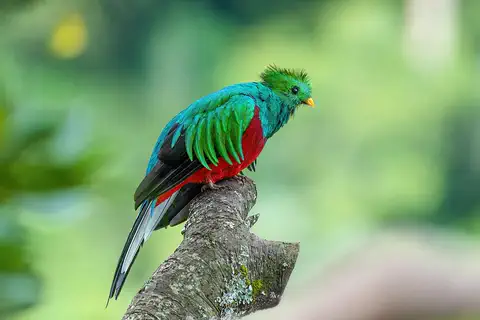
Costa Rica is a small country in Central America between the Caribbean Sea and the Pacific Ocean. Volcanoes and mountains run down its middle, its forests are full of wildlife, and many national parks protect them. Since 1949 it has had no army. About 5.2 million people lived there in 2025.
-
 Watch
 Country
Panama
Panama is a narrow country in Central America that joins North and South America. Since 1914 the Panama Canal has let ships cross from the Atlantic Ocean to the Pacific without sailing around South America. Panama has rainforests, more than 1,600 islands and about 4.6 million people (2025).
Explore next
-
 Watch
Animal
Giant anteater
The giant anteater is the biggest of the four kinds of anteater. It has no teeth at all, but its sticky tongue, about 60 centimeters long, flicks in and out up to 150 times a minute to slurp up ants and termites. Babies ride on their mothers' backs.
-
 Watch
Animal
Nine-banded armadillo
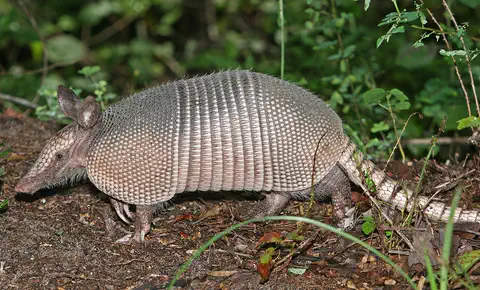
The nine-banded armadillo is a small, armored digger that lives from Argentina all the way to the United States. It sniffs out beetles and other bugs in the soil, can hold its breath for six minutes, and almost always has four identical babies at once.
-
 Watch
3D
Animal
Harpy eagle
Harpy eagles are among the largest and most powerful eagles in the world. They live in the lowland rainforests of Central and South America, where they hunt sloths and monkeys in the treetops. Forest loss and shooting have made them rare.
-
 Watch
3D
Animal
Jaguar
The jaguar is the largest cat in North and South America. It lives near rivers and swamps, swims well, and has such a powerful bite that it can crack a turtle's shell. Most jaguars live in the Amazon rainforest.
-
Watch
Country
Costa Rica
Costa Rica is a small country in Central America between the Caribbean Sea and the Pacific Ocean. Volcanoes and mountains run down its middle, its forests are full of wildlife, and many national parks protect them. Since 1949 it has had no army. About 5.2 million people lived there in 2025.
-
Watch
Country
Panama
Panama is a narrow country in Central America that joins North and South America. Since 1914 the Panama Canal has let ships cross from the Atlantic Ocean to the Pacific without sailing around South America. Panama has rainforests, more than 1,600 islands and about 4.6 million people (2025).
-
 Watch
Animal
Aardvark
The aardvark is a shy night digger of African savannas. It sniffs out ant and termite nests, rips them open with its spade-like claws and laps up the insects with a sticky tongue about 30 centimeters long. Its name means 'earth pig' in Afrikaans.
-
 Watch
Animal
African buffalo
The African buffalo is a huge, cow-like grazer with heavy, curving horns. It lives in herds that can number in the thousands, and a herd will rush to protect a calf in danger. It lives across much of Africa south of the Sahara, from open savannas to rainforests.
For parents & teachers
What children will learn
- Describe how the brown-throated sloth's claws, limbs and neck suit a life hanging in trees.
- Explain why a leaf diet leads to slow movement and saving energy.
- Locate the sloth's range in Central and South America.
- Explain why connected forests matter even for a species listed as Least Concern.
Recommended ages: 3 to 17 · About 15 minutes
Talk about it
- What are the good and bad sides of moving very slowly?
- Why might it be risky for a sloth to climb down to the ground?
- How could people help sloths cross from one patch of forest to another?
Try at home or in class
- Hang a soft toy from a broom handle using bent pipe cleaners as hooks and see how long it stays without any effort.
- Try moving across a room as slowly as you can for one minute and notice how hard it is to keep still and balanced.
Key vocabulary: canopy, herbivore, algae, camouflage, metabolism, vertebrae
Where these facts come from
- The IUCN Red List of Threatened Species , International Union for Conservation of Nature (IUCN terms of use (no redistribution of Red List data or range maps))
- GBIF Backbone Taxonomy and GBIF Occurrence Search , Global Biodiversity Information Facility (CC0 1.0 (backbone); occurrence counts are facts derived from records under CC0, CC BY and CC BY-NC)
- Bradypus variegatus (Brown-throated Sloth), Red List assessment 2022 , IUCN Red List of Threatened Species
- Sloth , Encyclopaedia Britannica
- Bradypus variegatus (brown-throated three-toed sloth) , Animal Diversity Web, University of Michigan Museum of Zoology
- Wikidata , Wikimedia Foundation (CC0 1.0)
- Wikimedia Commons , Wikimedia Foundation (Per file: Public domain, CC0, CC BY or CC BY-SA only (credited on each page))
Checked, not yet human-reviewed. Last updated October 24, 2026. Spotted a mistake? Tell us.