
Desert
Animals that live in the desert. Tap one to meet it.
35 to explore
-
 Watch
Animal
Arabian oryx
The Arabian oryx is a white desert antelope with long, straight horns and a black-and-white face. Hunting wiped it out in the wild, but animals kept in zoos were bred and returned to the deserts of Arabia. Today it lives wild again in five countries.
-
 Watch
Animal
Bactrian camel
The Bactrian camel is the two-humped camel of Central Asia's cold deserts and steppes. People tamed it thousands of years ago, and it carried goods along the Silk Road. Its wild cousin, the wild camel, is a separate species that is endangered.
-
 Watch
Animal
Black rhinoceros
The black rhinoceros is the smaller of Africa's two rhinos. It has two horns and a pointed, hooked upper lip that it uses to pick leaves and twigs from bushes. It is Critically Endangered, but thanks to rangers and conservationists its numbers have been climbing again.
-
 Watch
Animal
Bobcat
The bobcat is North America's most common wild cat, found from southern Canada across the United States to Mexico. It is bigger than a house cat, with a short tail, ear tufts and a spotted coat. It lives in forests, swamps, deserts and even some cities, and hunts mostly rabbits.
-
 Watch
Animal
Budgerigar
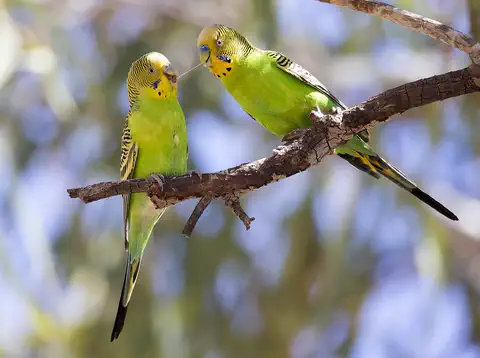
The budgerigar, or budgie, is a little parrot from the dry heart of Australia. Wild budgies are green and yellow with wavy black stripes. They are nomads that travel in flocks, they must find water every day, and they breed after good rain. Budgies are also popular pets all over the world.
-
 Watch
Animal
Burrowing owl
The burrowing owl is a small, sandy-brown owl with long legs and bright yellow eyes. Unlike most owls, it lives underground, in burrows dug by prairie dogs, ground squirrels or tortoises, or sometimes by the owls themselves. It lives in open grasslands and deserts from Canada to the tip of South America.
-
 Watch
Animal
Caracal
The caracal is a sleek, reddish-gold wild cat of Africa, the Middle East and Central Asia to India. Its name comes from a Turkish word meaning "black ears", for its black-backed ears with long tufts. It hunts on the ground, but it can leap two meters or more into the air to catch birds.
-
 Watch
Animal
Central bearded dragon
The central bearded dragon is a lizard of the dry woodlands, scrub and deserts of eastern inland Australia. It eats plants and small animals, basks on fence posts and logs, waves its arm and bobs its head to talk to other dragons, and puffs out a spiky beard to look big. It is also a very popular pet lizard.
-
 Watch
3D
Animal
Cheetah
The cheetah is the fastest land animal. It can go from standing still to 72 kilometers per hour in about two and a half seconds, and its top speed is around 100 kilometers per hour, as fast as a car on a highway. Cheetahs live mostly in Africa, with a very small group in Iran.
-
 Watch
3D
Animal
Cockatiel
The cockatiel is a small, slim parrot with a tall crest that lives wild in the dry inland of Australia. Flocks fly fast across open country, looking for grass seeds and water, and pairs nest in hollow trees after the rain.
-
 Watch
3D
Animal
Common ostrich
The common ostrich is the tallest and heaviest bird alive. It cannot fly, but it is the fastest runner on two legs, sprinting at about 70 kilometers an hour across the savannas and deserts of Africa. It also lays the biggest egg of any living animal.
-
 Watch
Animal
Common raven
The common raven is the biggest member of the crow family and the largest songbird. It lives across most of the Northern Hemisphere, from deserts to Arctic tundra. Ravens eat almost anything, play games in the air, and have solved puzzles that scientists designed to test how well they can plan ahead.
-
 Watch
3D
Animal
Coyote
The coyote is a clever, adaptable wild dog that lives from Alaska and Canada to Panama. It is smaller than a wolf and bigger than a fox. Coyotes eat mostly mice, voles and rabbits, howl and yip to keep in touch, and live everywhere from deserts and forests to city parks.
-
 Watch
Animal
Desert locust
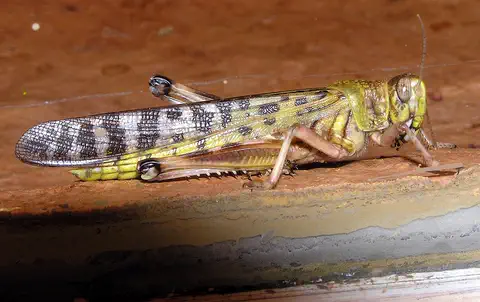
The desert locust is a large grasshopper of the deserts of Africa, the Middle East and Southwest Asia. Most of the time it lives alone. But after good rains, when locusts become crowded, they change their color and behavior and can gather into enormous swarms that fly long distances and eat farmers' crops.
-
 Watch
Animal
Desert tortoise
The desert tortoise, also called the Mojave desert tortoise, lives in the deserts of the south-western United States. It spends most of its life in underground burrows, stores water in its body, and can live for 50 years or more. Sadly, it is now critically endangered.
-
 Watch
Animal
Dingo
The dingo is Australia's wild dog and the country's largest meat-eating mammal. People brought its ancestors to Australia about 4,000 years ago. It hunts rabbits, kangaroos and wallabies, howls rather than barks, and scientists still argue about whether it is its own species or a very old kind of dog.
-
 Watch
3D
Animal
Dromedary camel
The dromedary, or Arabian camel, is the one-humped camel of the deserts of North Africa, the Middle East and India. Its hump stores fat, not water, and its body is full of tricks for saving water. People tamed dromedaries thousands of years ago, and today none live truly wild, except a large feral population in Australia.
-
 Watch
Animal
Fennec fox
The fennec fox is the smallest member of the dog family. It lives in the Sahara and other deserts of North Africa, sleeps in cool burrows by day, and uses its enormous ears to hear insects moving under the sand at night.
-
 Watch
Animal
Gila monster
The Gila monster (say HEE-luh) is the largest lizard native to the United States. Its bumpy black skin is patterned with pink or orange, it spends most of its life hidden underground, and it is one of the very few lizards with venom.
-
 Watch
Animal
Great horned owl
The great horned owl is a large, powerful owl with two long, earlike tufts of feathers on its head. It is one of the most common owls in North America and lives in almost any kind of semi-open place, from deserts and forests to city parks. It hunts mostly at night.
-
 Watch
Animal
Greater roadrunner
The greater roadrunner is a long-legged member of the cuckoo family that lives in deserts and scrubby country in the southwestern United States and Mexico. It flies only a little but runs fast, chasing lizards, insects and even snakes, and it has clever ways of coping with desert heat.
-
 Watch
Animal
Grévy's zebra
Grévy's zebra is the largest zebra, with narrow stripes, a white belly and big, round ears. It lives only in the dry grasslands and scrub of northern Kenya and Ethiopia, and it is endangered: only a few thousand are left in the wild.
-
 Watch
Animal
Honey badger
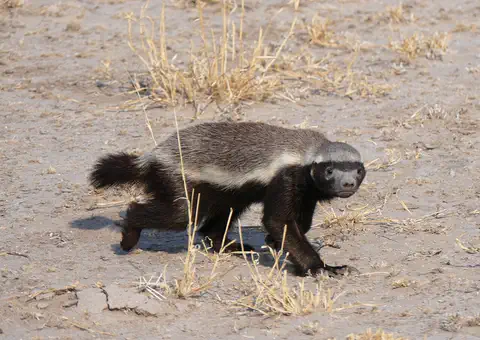
The honey badger, or ratel, is a stocky member of the weasel family that lives across Africa, the Middle East and India. Its gray or white back and black underside make it easy to spot. It digs with huge front claws, travels far to find food, and breaks into bees' nests for honey and bee grubs.
-
 Watch
Animal
Leopard gecko
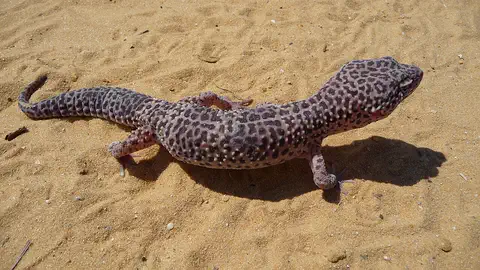
The leopard gecko is a spotted lizard from the rocky deserts and dry grasslands of Pakistan, Afghanistan, northwestern India and Nepal. It hunts insects and scorpions at night, stores fat in its thick tail, and has real eyelids. It is also one of the most popular pet lizards in the world.
-
 Watch
Animal
Meerkat
Meerkats are small members of the mongoose family that live in dry, open country in southern Africa. They live in groups called mobs, dig for insects all day, and take turns as lookouts, standing tall and calling out if an eagle or jackal comes near. Everyone helps raise the babies.
-
 Watch
Animal
Naked mole-rat
Naked mole-rats are almost hairless rodents that spend their whole lives in tunnels under the dry lands of eastern Africa. They live in big colonies where only one female, the queen, has babies, and they can live for around 30 years.
-
 Watch
3D
Animal
Puma
The puma, also called the cougar or mountain lion, is a big, slender cat with plain tan fur and a long tail. It lives in more of the Americas than any other wild cat, from Canada all the way to the southern tip of South America, in mountains, forests, deserts and swamps.
-
 Watch
Animal
Red kangaroo
The red kangaroo is the largest marsupial in the world, an animal whose babies grow up in a pouch. It lives on the dry plains of inland Australia, hops on powerful back legs that work like springs, and can get most of the water it needs from the plants it eats.
-
 Watch
3D
Animal
Ring-tailed lemur
The ring-tailed lemur is a primate that lives only on Madagascar, a big island off the coast of Africa. It has a striped tail with 13 black and white rings, sunbathes with its arms spread wide, and lives in groups where the females are in charge.
-
 Watch
3D
Animal
Saiga antelope
The saiga antelope is a goat-sized antelope with an amazing floppy nose. Huge herds roam the dry steppes of Central Asia. Saigas were once nearly wiped out by hunting, but thanks to protection there are now more than a million.
-
 Watch
Animal
Sand cat
The sand cat is a small wild cat of the deserts of North Africa, Arabia and Central Asia. Its sandy coat hides it on the dunes, its big ears hear prey moving under the sand, and thick fur on the soles of its feet protects it from scorching days and freezing nights.
-
 Watch
Animal
Short-beaked echidna
The short-beaked echidna is a spiny mammal that lays eggs. It lives all over Australia and in parts of New Guinea, digs into ant and termite nests with strong claws, and licks up the insects with a long, sticky tongue. It has no teeth at all.
-
 Watch
Animal
Sociable weaver
The sociable weaver is a sparrow-sized bird of the dry savannas of southern Africa. Whole colonies, sometimes hundreds of birds, build and share one enormous thatched nest with many separate rooms. It is among the largest nests built by any bird.
-
 Watch
Animal
Thorny devil
The thorny devil is a small Australian desert lizard covered in spikes from head to tail. Despite its fierce name it is slow and harmless, it eats nothing but ants, and tiny channels in its skin carry water to its mouth.
-
 Watch
Animal
Western diamondback rattlesnake
The western diamondback rattlesnake is a heavy-bodied snake of the deserts and dry grasslands of the southwestern United States and Mexico. It has diamond patterns, a black-and-white striped tail and a rattle that buzzes as a warning. It is venomous, so it is a snake to admire from far away, but it would much rather hide or slip away than meet a person.