
Animal
Chinese alligator
The Chinese alligator is a small alligator from China. It digs burrows and sleeps in them all winter.
The Chinese alligator is a small alligator that lives in ponds and wetlands near the Yangtze River in eastern China. It digs long burrows and spends the cold months asleep inside them. It is one of the most endangered crocodilians in the world: a 2015 survey estimated fewer than 200 in the wild, but thousands are raised in breeding centers.
Alligator sinensis (family Alligatoridae) is a small crocodilian of the lower Yangtze region of eastern China and, according to Smithsonian's National Zoo, the only member of its family living outside the Americas. Jiang and Wu assessed it as Critically Endangered for the IUCN Red List (assessed 31 July 2017, published 2018): the wild population survives in small, fragmented ponds in southeastern Anhui Province, while captive breeding centers hold many thousands.
Photo: J. Patrick Fischer, CC BY-SA 3.0, via Wikimedia Commons
Meet the Chinese alligator
The Chinese alligator is a small alligator.
It lives in ponds in China.
It has a short, wide snout and a bumpy back.
Most alligators live in the Americas, but this one lives in China. Smithsonian's National Zoo says it is the only member of the alligator family found outside the Americas.
It is much smaller than its cousin, the American alligator. Most grown-ups are about 1.5 meters long, a little shorter than a grown-up person is tall. Its head is sturdy, and its snout turns up slightly at the end.
The Animal Diversity Web names the American alligator (Alligator mississippiensis) as its closest relative. Smithsonian's National Zoo describes it as the only member of the family Alligatoridae living outside the Americas, and lists the differences from its American relative: it is smaller, with a more robust head and a slightly upturned snout, a bony plate in each eyelid, and bony plates (osteoderms) on the belly as well as the back.
The IUCN gives a maximum length of about 2 meters (Brazaitis 1973). The Animal Diversity Web records males up to 2.2 meters (average 1.5) and females up to 1.7 meters (average 1.4), and the National Zoo notes that the largest measured in recent times was 7 feet 1 inch (about 2.16 meters).
Quick facts
- Group
- Reptile
- Length
- 1.4 to 2.2 m
- Weight
- up to 38.5 kg
- Lifespan in the wild
- 70 years
Ponds among the rice fields
Chinese alligators live in ponds and wet places.
The ponds are near rice fields.
Lots of people live nearby.
Long ago, Chinese alligators lived in many lakes and marshes along the Yangtze River. Today wild ones are found in only a small area of eastern China. The IUCN says the wild alligators that are known live in southeastern Anhui Province; Smithsonian's National Zoo names Anhui and Zhejiang provinces.
They live in small ponds and wetlands in low valleys, often next to rice fields. Because they hide in burrows and are very secretive, they can live in places where many people live too.
The IUCN describes a historical range across the lower Changjiang (Yangtze) River system; today wild Alligator sinensis is known only from small fragments of southeastern Anhui Province, in the five counties of the Anhui National Nature Reserve for Chinese Alligator. Reports of a few wild animals in Zhejiang and Jiangsu have not been confirmed in recent years (IUCN lists those provinces as presence uncertain), while the National Zoo says the species is now limited to the lower Yangtze, primarily Anhui and Zhejiang: the sources differ.
The IUCN lists three main habitat types: remnant wetlands in broad valleys dominated by paddy fields, ponds in low hill valleys below about 100 meters with farming above them, and ponds at the upper edge of rice cultivation. Its burrows and very secretive habits let it live in densely populated areas.
Continent
Its habitat

Where can you find this animal?
- Lives here naturally · Countries and seas named by a scientific source
- Sightings recorded · Records of wild sightings (GBIF)
Lives here naturally · Countries and seas named by a scientific source
The IUCN lists the Chinese alligator as resident only in Anhui Province in eastern China, where wild alligators live in a few small ponds and wetlands, and as uncertain in Jiangsu and Zhejiang. It lives in only a tiny part of the country shaded. Captive-bred alligators have also been released at restored sites in Anhui and in Shanghai.
Places: China.
Source: iucn-red-list · checked October 2026
Sightings recorded · Records of wild sightings (GBIF)
Counts of GBIF records of wild observations (human and machine) and preserved specimens. Records include introduced populations, vagrants, escaped or released animals and misidentifications, so a country with records is not necessarily part of the native range.
Wild sightings have been recorded in China, United States, Japan and Nigeria.
Source: gbif · checked October 2026
Range maps show where scientists say an animal lives, often country by country. An animal may live in only part of a country shown, and sightings records can include animals that wandered far from home.
Snails, shellfish and fish
Chinese alligators eat snails, fish and bugs.
Their blunt teeth can crunch shells.
Chinese alligators eat whatever they can find, mostly snails, crustaceans (hard-shelled water animals), insects and fish. If they get the chance, they also catch young water birds and rodents.
Their teeth are blunt, which is good for crushing the hard shells of snails and clams. They mostly hunt at night. At Smithsonian's National Zoo, the alligators are fed small rats, mice and fish.
Smithsonian's National Zoo calls the Chinese alligator an opportunistic feeder: the diet is mostly snails, crustaceans, insects and fish, with young waterfowl and rodents taken when available, and its blunt teeth are well suited to crushing shelled prey. The Animal Diversity Web describes adults as nocturnal predators of fish, snails, clams, small mammals and waterfowl, with some speculation that they may also take turtles; younger alligators eat insects and other small invertebrates. In human care at the National Zoo they are fed small rats, mice and fish.
Did you know?
Chinese alligators can live up to 70 years at zoos.
In human care, Chinese alligators can live up to 70 years and can still have babies in their fifties.
Up to 70 years in human care, with reproduction into the fifties (National Zoo; ADW).
Armor from back to belly
Its back and belly have hard, bony bumps.
Its feet have five toes.
Babies have yellow stripes.
A Chinese alligator is yellowish gray, with black spots on its lower jaw. Bony plates called osteoderms grow in its skin, on its back and on its belly too. It even has a bony plate in each upper eyelid.
Its four short legs end in five toes with claws, partly joined by webbing, and its long, thick tail pushes it through the water. Babies look like small adults, but with yellow bands across the body and tail.
The Animal Diversity Web describes a yellowish-gray crocodilian with pronounced black spotting on the lower jaw; four short limbs, each with five partially webbed, claw-tipped toes; and a long, thick tail that provides most of the push in water. Osteoderms cover both the back and the underside, and, as in caimans but not American alligators, there is a bony plate in the upper eyelid. Unlike in crocodiles, the fourth tooth of the lower jaw fits into a socket in the upper jaw and is hidden when the mouth is closed.
Juveniles carry distinctive yellow bands, on average five on the body and eight on the tail, which become less conspicuous with age. Males are larger than females.
Nest mounds and caring mothers
The mother builds a nest from plants and mud.
She lays eggs inside and guards them.
She carries her babies to the water.
Chinese alligators mate in early summer. In July the female piles up plants and mud into a mound almost 1 meter high, lays 10 to 40 eggs on top and covers them. The warmth of the nest decides whether a baby is a girl or a boy.
She guards the nest for about 70 days. When the babies call from inside their eggs in September, she opens the nest, may gently help them crack out, and carries them to the water. They can stay with her through their first winter.
The Animal Diversity Web gives mating in June, bellowing and a musk gland under the lower jaw used by both sexes, and polygynous males. In July the female builds a mound of vegetation and mud just under 1 meter high, often near a burrow, and lays 10 to 40 eggs (IUCN: 10 to 40; National Zoo: up to four dozen, fewer than two dozen common). Incubation takes about 70 days; sex depends on temperature, with females below 28°C, males above 33°C and an even ratio at about 31°C. Hatchlings weigh about 30 grams and are just over 21 centimeters long.
The female guards the nest, opens it when the young call, may crack eggs gently in her mouth, carries the young to water and stays with them through their first winter. Maturity comes at 5 to 7 years (ADW; the National Zoo says females at about four to five), and in human care they can breed into their fifties.
Diggers that sleep through winter
Chinese alligators dig long tunnels.
They sleep in them all winter.
In spring they come out to lie in the sun.
Chinese alligators dig big tunnel systems. Their tunnels can have several rooms, entrances and even pools, and more than one alligator may share them. They spend the cold months, from late fall to early spring, resting inside.
In spring they come out to bask in the sun and warm up. As summer comes, they become active mostly at night. They call to each other with bellows, slap the water with their jaws, and snap their jaws as a warning.
The IUCN notes that, at a relatively high northern latitude, Chinese alligators spend much of the year dormant in complex burrows with above- and below-ground pools and many air holes (Chen et al. 1985); they emerge to bask in May and begin nocturnal activity in June. The Animal Diversity Web says they emerge in April and gives typical burrow dimensions of about 1 meter deep, 0.3 meters wide and 1.5 meters long, sometimes shared. The National Zoo says they are largely nocturnal because of human persecution and stay in their tunnels when people are near.
Both sexes bellow to signal their location, especially in the breeding season; they also slap the water with the lower jaw and snap their jaws as a warning, and juveniles call to keep their group together, with adults responding to their distress calls (National Zoo).
Did you know?
Baby Chinese alligators have yellow stripes.
Baby Chinese alligators have yellow bands: about five on the body and eight on the tail.
Juveniles have on average five yellow bands on the body and eight on the tail, fading with age (ADW).
Very few left in the wild
Very few Chinese alligators live in the wild.
Many live in special centers where babies are raised.
Some have been set free in ponds again.
The Chinese alligator is critically endangered. In the late 1970s there were probably about 1,000 in the wild; a survey in 2015 estimated only 136 to 173. Almost all of their old wetland home has been lost, and for many years people also hunted them.
China has given the species its highest legal protection since 1972. Breeding centers now raise thousands of alligators, and some have been released into restored ponds, where they have laid eggs and hatched babies in the wild.
Jiang and Wu assessed Alligator sinensis as Critically Endangered (A1b; B1ab(ii,v)+2ab(ii,v); C1+2a(i); assessed 31 July 2017, published 2018), citing its tiny range, very few adults (68 to 86 mature individuals) and a decline estimated at 99% over three generations. A 2015 survey saw 64 alligators and estimated 136 to 173 wild animals, down from about 1,000 in the late 1970s. From the 1950s to the 1990s, habitat loss and the killing of alligators were the main causes; today habitat loss is described as virtually complete, with pollution and low genetic diversity also of concern.
China listed it as a Class I protected species in 1972 and created a reserve in Anhui in 1982 (national since 1986). Captive breeding began in 1979: by 2016 the Anhui center held about 15,000 alligators and the Changxing center in Zhejiang about 5,500 (Manolis et al. 2016). Released captive-reared alligators have bred at Hongxing Reservoir, Gaojingmiao Forest Farm and Shanghai's Chongming Dongtan wetland.
IUCN Red List
How is the chinese alligator doing in the wild?
- Least Concern
- Near Threatened
- Vulnerable
- Endangered
- Critically Endangered (this animal)
- Extinct in the Wild
- Extinct
Critically Endangered
At extremely high risk of disappearing from the wild.
Amazing facts
-
Baby Chinese alligators have yellow stripes.
Baby Chinese alligators have yellow bands: about five on the body and eight on the tail.
Juveniles have on average five yellow bands on the body and eight on the tail, fading with age (ADW).
-
A warm nest makes boys. A cooler nest makes girls.
The warmth of the nest decides whether a baby alligator is a male or a female.
Temperature-dependent sex determination: females below 28°C, males above 33°C, an even ratio near 31°C (ADW).
-
A mother alligator carries her babies to the water.
When the babies call from their eggs, the mother opens the nest and carries the hatchlings to the water.
Females open the nest in response to hatchling calls, may crack eggs gently in the mouth, and carry the young to water (ADW; National Zoo).
-
Chinese alligators can live up to 70 years at zoos.
In human care, Chinese alligators can live up to 70 years and can still have babies in their fifties.
Up to 70 years in human care, with reproduction into the fifties (National Zoo; ADW).
Words to know
- crocodilian
- a member of the reptile group that includes alligators, caimans, crocodiles and gharials
- osteoderm
- a bony plate that grows in the skin of some reptiles, like armor
- burrow
- a tunnel or hole that an animal digs to live or rest in
- bask
- to lie in the sun to warm up
- captive breeding
- raising animals in zoos or centers so their numbers can grow
- critically endangered
- at extremely high risk of dying out in the wild
Discovery challenge
-
Where does the Chinese alligator live?
In which country do wild Chinese alligators live?
In which country is Alligator sinensis native?
- China
- Brazil
- Australia
Show the answer
China
China!
In a small area of eastern China near the Yangtze River.
China: resident only in southeastern Anhui today (IUCN).
-
What does a Chinese alligator do in winter?
How does a Chinese alligator spend the cold months?
How does Alligator sinensis survive the winter at its high northern latitude?
- It rests in a burrow it has dug
- It flies south
- It swims out to sea
Show the answer
It rests in a burrow it has dug
It sleeps in its burrow!
It rests in its tunnel from late fall to early spring.
It is dormant in complex burrows for much of the year (IUCN; ADW).
-
What do the blunt teeth crunch?
What kind of food are the Chinese alligator's blunt teeth good for?
Which prey is the Chinese alligator's blunt dentition suited to?
- Snails and shellfish
- Leaves and grass
- Nuts and seeds
Show the answer
Snails and shellfish
Snail shells!
Blunt teeth are good for crushing hard shells.
Shelled prey such as snails, crustaceans and clams (National Zoo; ADW).
-
Where is its bony armor?
Where does a Chinese alligator have bony plates in its skin?
Where are osteoderms found on Alligator sinensis?
- On its back and its belly
- Only on its tail
- Nowhere at all
Show the answer
On its back and its belly
Back and belly!
Both its back and its belly have bony plates.
Dorsal and ventral osteoderms, unlike the American alligator (ADW; National Zoo).
Places where you might see it
-
 Watch
 Country
China
China is the largest country in Asia, almost as big as all of Europe. The land steps down from the high, cold Plateau of Tibet in the west to plains and coasts in the east, and about 1.4 billion people live there, along with giant pandas in the mountains of south-central China.
-
 Watch
Natural wonder
Yangtze River
The Yangtze, called Chang Jiang (Long River) in China, is the longest river in Asia, about 6,300 kilometers. It starts in glacier meltwater on the Plateau of Tibet, cuts through deep gorges, passes huge cities like Chongqing, Wuhan and Nanjing, and reaches the East China Sea at Shanghai. Nearly a third of China's people live in its basin.
Explore next
-
 Watch
3D
Animal
American alligator
The American alligator is a large, armored reptile of the swamps, marshes and lakes of the southeastern United States. Alligator mothers guard their nests and carry their babies to the water, and the holes alligators dig help many other animals survive dry seasons.
-
 Watch
Animal
Spectacled caiman
The spectacled caiman is a medium-sized crocodilian that lives in rivers, lakes, swamps and marshes from southern Mexico to Peru and Brazil. A bony ridge in front of and between its eyes sets it apart from American alligators and crocodiles. It is very common: scientists think there are millions of them.
-
 Watch
Animal
Gharial
The gharial is a crocodile relative with a long, skinny snout full of sharp teeth, perfect for snapping up fish. It lives in a few big rivers of northern India and Nepal, and it is one of the most threatened crocodilians on Earth.
-
Watch
Country
China
China is the largest country in Asia, almost as big as all of Europe. The land steps down from the high, cold Plateau of Tibet in the west to plains and coasts in the east, and about 1.4 billion people live there, along with giant pandas in the mountains of south-central China.
-
Watch
Natural wonder
Yangtze River
The Yangtze, called Chang Jiang (Long River) in China, is the longest river in Asia, about 6,300 kilometers. It starts in glacier meltwater on the Plateau of Tibet, cuts through deep gorges, passes huge cities like Chongqing, Wuhan and Nanjing, and reaches the East China Sea at Shanghai. Nearly a third of China's people live in its basin.
-
 Watch
Animal
Aldabra giant tortoise
The Aldabra giant tortoise is one of the largest land tortoises on Earth. Wild ones live on Aldabra Atoll, a ring of coral islands in the Indian Ocean, where about 180,000 of them graze, browse and shape the land like elephants do in Africa. They can live for more than 100 years.
-
 Watch
Animal
Alligator snapping turtle
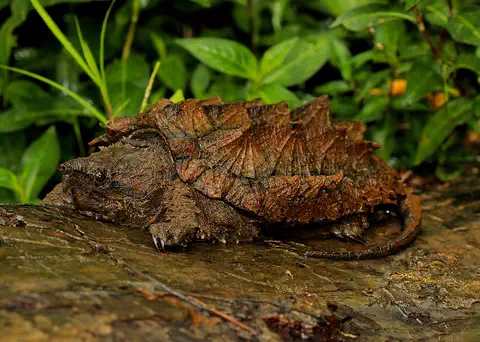
The alligator snapping turtle is the largest freshwater turtle in the United States. It lies still on the bottom of rivers and lakes with its mouth open, wiggling a worm-like lure on its tongue to trick fish into swimming close. Its numbers have fallen, and it is now endangered.
-
 Watch
Animal
American crocodile
The American crocodile is a large reptile of warm coasts and mangrove swamps, from the southern tip of Florida through Mexico, Central America, the Caribbean and northern South America. It is shy, it basks in the sun to warm up, and mother crocodiles carry their babies to the water.
For parents & teachers
What children will learn
- Describe how the Chinese alligator differs from the American alligator.
- Explain how burrows help the Chinese alligator survive cold winters.
- Explain how the temperature of a nest decides a baby alligator's sex.
- Describe how captive breeding and restored wetlands can help a rare animal.
Recommended ages: 3 to 17 · About 15 minutes
Talk about it
- Why might an animal that hides in burrows be able to live near many people?
- What happens to animals when wetlands are turned into farmland?
- Why is it not enough to raise many animals in breeding centers?
Try at home or in class
- Warm and cool: put one thermometer in a sunny spot and one in the shade, wait 15 minutes and compare. Talk about why a nest's warmth matters to alligator eggs.
- Map it: find the Yangtze River on a map of China and trace it to Shanghai, where some alligators have been released.
Key vocabulary: crocodilian, osteoderm, burrow, bask, captive breeding, critically endangered
Where these facts come from
- GBIF Backbone Taxonomy and GBIF Occurrence Search , Global Biodiversity Information Facility (CC0 1.0 (backbone); occurrence counts are facts derived from records under CC0, CC BY and CC BY-NC)
- Wikidata , Wikimedia Foundation (CC0 1.0)
- The IUCN Red List of Threatened Species , International Union for Conservation of Nature (IUCN terms of use (no redistribution of Red List data or range maps))
- Alligator sinensis (Jiang and Wu, assessed 31 July 2017, published 2018) , IUCN Red List of Threatened Species
- Alligator sinensis: justification, range, population, habitat, threats, use and trade, and conservation text , IUCN Red List of Threatened Species
- Alligator sinensis: IUCN Red List global assessment record (Jiang and Wu 2018), IUCN checklist on GBIF , GBIF
- Chinese alligator , Smithsonian's National Zoo and Conservation Biology Institute
- Alligator sinensis (Chinese alligator) , Animal Diversity Web, University of Michigan Museum of Zoology
- File:2011 China-Alligator 0491.JPG (30 December 2011, J. Patrick Fischer) , Wikimedia Commons
- Wikimedia Commons , Wikimedia Foundation (Per file: Public domain, CC0, CC BY or CC BY-SA only (credited on each page))
Checked, not yet human-reviewed. Last updated November 1, 2026. Spotted a mistake? Tell us.