
Wetlands
Animals that live in the wetlands. Tap one to meet it.
93 to explore · page 1 of 2
-
 Watch
Animal
African fish eagle
The African fish eagle is a big eagle of Africa's lakes, rivers and coasts, with a white head, chest and tail and a chestnut-brown body. It snatches fish from the surface of the water, and its loud, ringing call is one of the best-known sounds of Africa.
-
 Watch
Animal
African forest elephant
The African forest elephant is a separate species from the bigger bush elephant. It lives in the rainforests of central and western Africa, eats lots of fruit and spreads the seeds of forest trees in its dung. It is Critically Endangered.
-
 Watch
Animal
Alligator gar
The alligator gar is one of the largest freshwater fish in North America. It has a broad snout lined with teeth, armor-like scales, and a swim bladder that works like a lung, so it can gulp air in warm, still water. It lives in the big rivers, swamps and bayous of the southern United States, Mexico and Central America.
-
 Watch
Animal
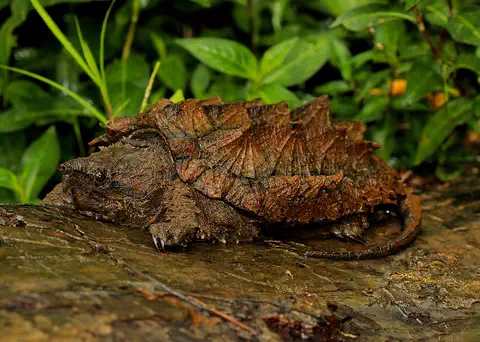
Alligator snapping turtle
The alligator snapping turtle is the largest freshwater turtle in the United States. It lies still on the bottom of rivers and lakes with its mouth open, wiggling a worm-like lure on its tongue to trick fish into swimming close. Its numbers have fallen, and it is now endangered.
-
 Watch
Animal
Amazon river dolphin
The Amazon river dolphin, or boto, is the largest river dolphin. Many adults are pink. It lives only in fresh water, in the Amazon and Orinoco river basins of South America, and its bendy neck and big flippers let it twist between tree trunks in flooded forests as it hunts fish using sound.
-
 Watch
3D
Animal
American alligator
The American alligator is a large, armored reptile of the swamps, marshes and lakes of the southeastern United States. Alligator mothers guard their nests and carry their babies to the water, and the holes alligators dig help many other animals survive dry seasons.
-
 Watch
3D
Animal
American bullfrog
The American bullfrog is the largest true frog in North America. It lives in warm, still ponds and lakes, sits and waits for food to come close, and the males' deep 'jug-o-rum' call carries more than a kilometer. Its tadpoles can take years to turn into frogs.
-
 Watch
Animal
American crocodile
The American crocodile is a large reptile of warm coasts and mangrove swamps, from the southern tip of Florida through Mexico, Central America, the Caribbean and northern South America. It is shy, it basks in the sun to warm up, and mother crocodiles carry their babies to the water.
-
 Watch
Animal
American flamingo
The American flamingo is a tall, bright pink wading bird of the Caribbean. It gets its color from pigments in the tiny water animals and algae it eats, and it feeds by filtering water through its bent bill with its head upside down. Flamingos live and nest in huge, noisy groups.
-
 Watch
Animal
Arapaima
The arapaima is one of the biggest freshwater fish in the world, longer than a grown-up is tall. It lives in the warm, slow rivers and flooded lakes of the Amazon, and it must swim up to the surface to gulp air every few minutes.
-
 Watch
3D
Animal
Atlantic blue crab
The Atlantic blue crab is a swimming crab with bright blue claws and back legs shaped like paddles. It lives along the Atlantic coast of the Americas, especially in bays where rivers meet the sea, like the Chesapeake Bay. A mother crab carries up to two million eggs in a spongy orange mass under her body.
-
 Watch
Animal
Atlantic mudskipper
The Atlantic mudskipper is a fish that spends much of its time out of the water. It lives on the muddy shores of mangrove swamps and river mouths along the coast of West and Central Africa, where it skips across the mud on its strong front fins and catches food on land.
-
 Watch
3D
Animal
Axolotl
The axolotl is a salamander from the canals and lakes of Mexico City. Unlike most amphibians, it keeps its baby features, such as feathery gills and a fin, its whole life. It can regrow lost legs and even parts of its heart, but in the wild it is critically endangered.
-
 Watch
3D
Animal
Bald eagle
The bald eagle is one of North America's biggest birds, with a white head and tail, a dark brown body and a huge yellow bill. It lives near lakes, rivers and coasts and eats mostly fish. Once rare because of hunting and pesticides, it has made an amazing comeback.
-
 Watch
Animal
Bar-tailed godwit
The bar-tailed godwit is a long-billed shorebird that breeds on Arctic tundra and spends the rest of the year on mudflats far to the south. Godwits from Alaska fly non-stop across the Pacific Ocean to New Zealand and Australia, and one young bird tracked in 2022 flew at least 13,560 kilometers without landing.
-
 Watch
3D
Animal
Barn swallow
The barn swallow is a small, speedy bird with a glossy blue back, a reddish throat and a long, deeply forked tail. It catches insects in the air, builds cup-shaped mud nests on barns and bridges, and makes long migrations between the Northern Hemisphere, where it nests, and the Southern Hemisphere, where it spends the winter.
-
 Watch
Animal
Black swan
The black swan is the only swan in the world that is almost entirely black. It has a bright red bill with a white band near the tip, and white flight feathers that flash when it flies. It is native to Australia and New Zealand, and people have taken it to other countries too.
-
 Watch
Animal
Bobcat
The bobcat is North America's most common wild cat, found from southern Canada across the United States to Mexico. It is bigger than a house cat, with a short tail, ear tufts and a spotted coat. It lives in forests, swamps, deserts and even some cities, and hunts mostly rabbits.
-
 Watch
3D
Animal
Brown rat
Brown rats are large rodents that came from East Asia and spread around the world with people, mainly on ships. They are smart, strong swimmers with a superb sense of smell. Wild rats can carry germs that make people sick, so they are best left alone.
-
 Watch
3D
Animal
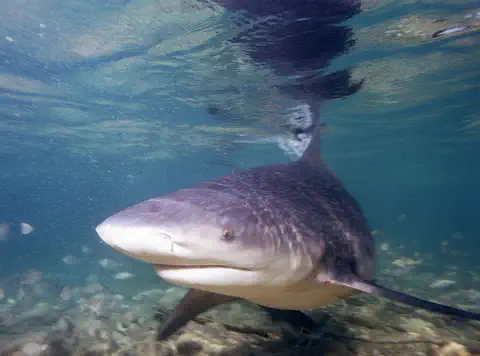
Bull shark
The bull shark is a large, stout shark of warm coasts around the world. It is one of very few sharks that can swim from the salty sea into fresh water, and it has been found thousands of kilometers up big rivers like the Amazon and the Mississippi.
-
 Watch
Animal
Burmese python
The Burmese python is one of the largest snakes in the world. In its home in South and Southeast Asia it has become rare because so many are caught, but in southern Florida, where people let pet pythons go, it has spread through the Everglades and eats many of the animals that live there.
-
 Watch
3D
Animal
Canada goose
The Canada goose is a big, black-necked goose with a white chinstrap, found near lakes, rivers, fields and parks across North America. Many migrate in noisy V-shaped flocks, but more and more stay all year on city lawns. People also brought Canada geese to Britain and other parts of Europe.
-
 Watch
3D
Animal
Capybara
The capybara is the largest rodent alive, a giant cousin of the guinea pig. It lives in groups beside rivers, lakes and marshes in South America, grazes on grass and water plants, and dives into the water to stay cool and safe.
-
 Watch
Animal
Caribbean hermit crab
The Caribbean hermit crab is a land hermit crab with a big purple claw and red legs. It lives near the coasts of Bermuda, Florida and the Caribbean, carries an empty snail shell for protection, and goes back to the sea only to release its eggs.
-
 Watch
Animal
Chinook salmon
The Chinook salmon, also called the king salmon, is the largest Pacific salmon. It hatches in a cold river, travels to the ocean to feed and grow for a few years, then swims back up its home river to lay eggs.
-
 Watch
Animal
Common basilisk
The common basilisk is a lizard of riversides and streams from Nicaragua to Venezuela. It climbs trees, swims well and, when it is startled, can sprint upright across the surface of the water on its big back feet before it sinks and swims.
-
 Watch
3D
Animal
Common carp
The common carp is a large, sturdy fish with big scales and little whisker-like barbels by its mouth. It comes from rivers and lakes of Europe and Central Asia, but people have carried it to every continent except Antarctica, where it can muddy the water and harm water plants. Koi are a colorful kind of carp.
-
 Watch
Animal
Common frog
The common frog is a familiar frog of ponds and gardens across Europe. It spends most of the year in damp grass, gardens and woods, and every spring it returns to ponds to lay clumps of frogspawn that grow into tadpoles and then little froglets.
-
 Watch
Animal
Common garter snake
The common garter snake is one of the most familiar snakes in North America. It has light stripes along a dark body, it lives almost everywhere from Canada to Florida, and it copes with cold better than most snakes. In spring, huge numbers come out of their winter dens together.
-
 Watch
Animal
Common green darner
The common green darner is one of North America's larger and best-known dragonflies, up to about 8 centimeters long. It begins life as an underwater nymph, then becomes a fast flier that catches insects in the air. Many green darners migrate, in a relay that takes at least three generations each year.
-
 Watch
Animal
Common hippopotamus
The common hippopotamus is one of the biggest animals on land, yet it spends most of the day resting in rivers and lakes to keep cool. At night it walks out to graze, and its special skin makes its own sunscreen.
-
 Watch
3D
Animal
Common kingfisher
The common kingfisher is a small, dazzling blue and orange bird of rivers, canals and lakes across Europe, Asia and North Africa. It watches from a perch, then dives headfirst into the water to catch small fish with its dagger-shaped bill.
-
 Watch
Animal
Common loon
The common loon is a big diving bird of northern lakes. In summer it wears a black head, a striped white necklace and a checkered back. It chases fish underwater, calls with eerie wails and yodels, and spends the winter on the coast.
-
 Watch
Animal
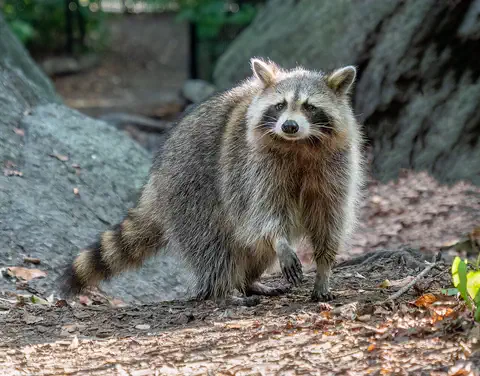
Common raccoon
The common raccoon is a clever night-time animal from North and Central America, famous for its black mask, ringed tail and nimble, hand-like front paws. It eats almost anything and lives in forests, wetlands, farms and even big cities. People have also brought raccoons to Europe and Japan, where they now live wild.
-
 Watch
3D
Animal
Common snapping turtle
The common snapping turtle is a big freshwater turtle of eastern North America. It hides in the mud of ponds and rivers with just its nose poking up, eats almost anything it finds, and can live for many decades. Each summer, mother turtles walk over land to dig nests in sand and gravel.
-
 Watch
Animal
Common toad
The common toad is a warty brown amphibian that lives across Europe and into Asia. It spends most of the year on land, hunting slugs, worms and insects at night, then travels back to the pond where it hatched to lay long strings of eggs each spring.
-
 Watch
Animal
Eastern tiger salamander
The eastern tiger salamander is one of North America's biggest land salamanders: dark and shiny, with yellow or olive blotches. It spends most of its life in burrows, then walks to fishless ponds on rainy nights to lay its eggs. Its babies live in water and breathe with feathery gills.
-
 Watch
Animal
Electric eel
The electric eel is a long, snake-shaped fish from South America that makes its own electricity. It uses weak pulses to find its way and talk, and strong ones to catch food. Despite its name, it is not a true eel at all.
-
 Watch
Animal
Fishing cat
The fishing cat is a stocky, spotted wild cat of the wetlands of South and Southeast Asia. It is an excellent swimmer and diver, and fish are its main food. It lives in marshes, swamps, mangroves and along rivers, and it is Vulnerable because so many of these wetlands are being lost.
-
 Watch
Animal
Gharial
The gharial is a crocodile relative with a long, skinny snout full of sharp teeth, perfect for snapping up fish. It lives in a few big rivers of northern India and Nepal, and it is one of the most threatened crocodilians on Earth.
-
 Watch
Animal
Giant anteater
The giant anteater is the biggest of the four kinds of anteater. It has no teeth at all, but its sticky tongue, about 60 centimeters long, flicks in and out up to 150 times a minute to slurp up ants and termites. Babies ride on their mothers' backs.
-
 Watch
Animal
Giant otter
The giant otter is the longest otter in the world, up to about 1.8 meters from nose to tail. It lives in the rivers and lakes of South America in noisy family groups that hunt fish together by day. It is endangered, and people are working to protect it.
-
 Watch
3D
Animal
Goldfish
The goldfish is a small member of the carp family that people in China tamed centuries ago, by the time of the Song dynasty (960–1279). Wild goldfish are greenish-brown, but careful breeding has made gold, white, black and spotted pets with fancy fins.
-
 Watch
Animal
Goliath frog
The Goliath frog of Cameroon and Equatorial Guinea is the largest frog in the world: its body can be over 30 centimeters long, and it can weigh more than 3 kilograms. It lives along fast, clean rainforest rivers, and scientists recently discovered that these giants build and guard little ponds for their eggs. Hunting has made it endangered.
-
 Watch
3D
Animal
Great blue heron
The great blue heron is the largest heron in North America. It wades slowly through marshes, rivers and ponds, or stands as still as a statue, then strikes like lightning with its dagger-shaped bill to catch fish, frogs and even small mammals.
-
 Watch
3D
Animal
Great egret
The great egret is a tall, all-white heron that lives in wetlands on every continent except Antarctica. It wades slowly through shallow water, waits, then strikes like lightning to catch fish. Once nearly wiped out in the United States by hunters who wanted its lacy feathers, it made a remarkable comeback.
-
 Watch
Animal
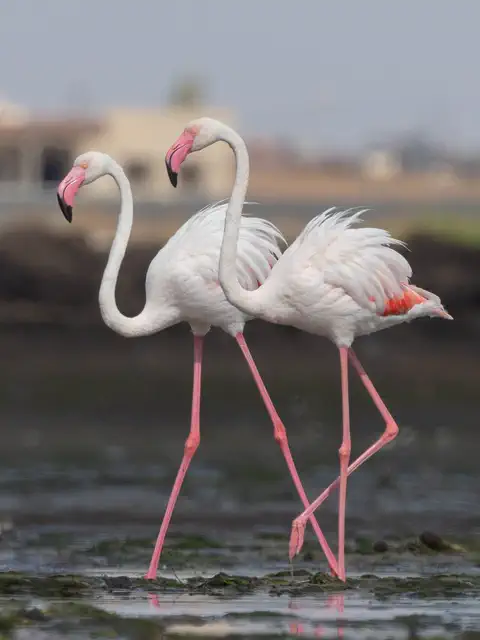
Greater flamingo
The greater flamingo is the tallest and heaviest flamingo, standing up to about 1.45 meters tall. It lives in salty lagoons and lakes across Africa, southern Europe, the Middle East and South Asia. It feeds by holding its bent bill upside down in the water and filtering out tiny animals, and it gets its pink color from what it eats.
-
 Watch
3D
Animal
Green anaconda
The green anaconda is one of the largest snakes on Earth. This olive-green, spotted boa lives in the rivers, swamps and flooded grasslands of northern South America, where it lies hidden in shallow water with only its eyes and nose showing.