
 Country
Asia
China
China is a very big country in East Asia. It has the Great Wall, giant pandas, tall mountains and long rivers.
China is the largest country in Asia, almost as big as all of Europe. The land steps down from the high, cold Plateau of Tibet in the west to plains and coasts in the east, and about 1.4 billion people live there, along with giant pandas in the mountains of south-central China.
China occupies nearly the whole East Asian landmass, about one-fourteenth of Earth's land, and descends in three broad steps from the Plateau of Tibet, the highest and largest plateau in the world, to eastern plains. Its 1,404.89 million people (end of 2025) make it the second most populous country, and its recorded history spans more than 4,000 years.
Photo: Photo by CEphoto, Uwe Aranas or alternatively © CEphoto, Uwe Aranas, CC BY-SA 3.0, via Wikimedia Commons
Discover China
China is a very big country in Asia.
It has high mountains, big deserts and long rivers. It has busy cities too. The capital city is called Beijing.
China is the largest country in Asia. It covers almost all of East Asia and is nearly as big as the whole of Europe. Its land is high in the west and low in the east, so its big rivers flow east toward the sea.
China has some of the highest mountains on Earth, very dry, desert-like lands in the northwest and a warm, rainy monsoon climate in the southeast. Its capital is Beijing. About 1.4 billion people lived in China at the end of 2025, yet some huge areas of the country have very few people.
China, officially the People's Republic of China, occupies nearly the entire East Asian landmass and covers about one-fourteenth of Earth's land area, almost as much as Europe. Britannica notes that its relief includes both the world's highest peak and one of its lowest places, and that its climate runs from extremely dry, desert-like conditions in the northwest to a tropical monsoon in the southeast, with the greatest north-south temperature contrast of any country.
The National Bureau of Statistics counted 1,404.89 million people at the end of 2025, 3.39 million fewer than a year earlier, and 67.9 percent of them lived in urban areas. Britannica reports that United Nations estimates showed India passing China in population in 2023. China has 22 provinces, 5 autonomous regions, 4 municipalities (Beijing, Shanghai, Tianjin and Chongqing) and 2 special administrative regions (Hong Kong and Macau), governed from Beijing.
Cities and famous places
Beijing is the capital of China.
In Beijing there is a huge old palace called the Forbidden City. The Great Wall winds over the hills. Near Xi'an, clay soldiers stand in long rows.
Beijing is China's capital and a center of culture. In the middle of the city is the Forbidden City, a huge palace built between 1406 and 1420, where 24 emperors took the throne over about 500 years. The Great Wall was built and rebuilt over nearly 2,000 years along China's northern border; with all its parts it is more than 20,000 kilometers long.
Near the city of Xi'an, workers built a giant tomb for China's first emperor, with thousands of life-size soldiers and horses made of baked clay, called terracotta. Shanghai, on the coast, is China's main industrial city.
Beijing, the capital, is also the country's cultural, economic and communications center; Shanghai is the main industrial city and Hong Kong the leading commercial center and port. The Forbidden City, built by the Ming emperor Zhu Di between 1406 and 1420, saw the enthronement of 14 Ming and 10 Qing emperors over 505 years (inscribed 1987). The Great Wall (inscribed 1987) was built continuously from the 3rd century BCE to the 17th century CE along the northern frontier, running from Shanhaiguan in Hebei to Jiayuguan in Gansu; UNESCO gives a total length of more than 20,000 km.
The Mausoleum of the First Qin Emperor near Xi'an, begun in 246 BCE, includes nearly 200 pits holding thousands of life-size terracotta soldiers and horses and bronze chariots; the historian Sima Qian wrote that workers from every province labored on it until the emperor's death in 210 BCE. The Grand Canal (inscribed 2014), built in sections from the 5th century BCE and joined into one system under the Sui dynasty in the 7th century CE, runs from Beijing to Zhejiang and is described by UNESCO as the largest civil engineering project before the Industrial Revolution.

Mountains, rivers and deserts
China has very tall mountains in the west.
The tallest mountain in the world is on its border. Long rivers flow from the mountains to the sea. In the northwest there are big, sandy deserts.
China's land is like a giant staircase. The top step is the Plateau of Tibet, on average more than 4,000 meters high, the highest plateau in the world. Mount Everest, the highest mountain on Earth, is on China's border with Nepal. The middle step has basins and plateaus, and the bottom step, in the east, is hills and plains near the sea.
The Yangtze, 6,300 kilometers long, is the longest river in Asia, and the Yellow River flows across the north. Winters are very different from north to south: in January it averages −28 °C in the far north but 22 °C on the southern coast of Hainan Island.
Britannica divides China's surface into three steps: the Plateau of Tibet, averaging well over 4,000 m, the loftiest highland in the world; a middle step of plateaus and basins (the Mongolian Plateau, Tarim Basin, Loess Plateau, Sichuan Basin and Yunnan-Guizhou Plateau) at about 900 to 1,800 m; and an eastern step of hills and plains mostly below 450 m. About one-third of China is mountains. Mount Everest (8,849 m in Wikidata) stands on the China-Nepal border, while Lake Ayding in the Turfan Depression lies 155 m below sea level. The northward push of the Indian plate beneath southern Asia raised the southwestern mountains and plateaus and makes much of China earthquake-prone.
The Yangtze, 6,300 km long, is the longest river in China and Asia and the third-longest in the world. In January the mean temperature falls from 22 °C on Hainan's southern coast to −28 °C in northern Heilongjiang, yet in July Guangzhou and Beijing differ by only about 3 °C. In the south, the South China Karst (inscribed 2007, with the Guilin Karst added in 2014) is UNESCO's world type area for karst landforms in the humid tropics and subtropics.

Animals of China
Giant pandas live in the mountains of China.
They are black and white bears. They eat lots and lots of bamboo. Many kinds of pheasants, a kind of bird, live in the mountains too.
Giant pandas are native to China. In the wild they live in a few mountain ranges in Sichuan, Shaanxi and Gansu provinces, in cool bamboo forests. A panda eats about 32 to 45 kilograms of bamboo a day and spends 10 to 16 hours a day finding food and eating it. As few as 1,864 live in the wild.
China's mountains, especially in Tibet and Sichuan, have a huge variety of animals, including many kinds of pheasants. Some animals that died out elsewhere still survive here, such as a small alligator in eastern and central China and a giant salamander in western China.
China's range of relief and vegetation, Britannica explains, has let animals survive there that are extinct elsewhere, among them a small alligator of eastern and central China and a giant salamander in western China, related to the Japanese giant salamander and the American hellbender. Diversity is perhaps greatest in the ranges and valleys of Tibet and Sichuan; the takin and many species of pheasants occur in all of China's mountain ranges.
The giant panda (Ailuropoda melanoleuca) lives in a few mountain ranges of south-central China, in Sichuan, Shaanxi and Gansu; the Smithsonian puts the wild population at as few as 1,864, with about 600 more in zoos and breeding centers. The Sichuan Giant Panda Sanctuaries (inscribed 2006) are the largest remaining contiguous area of panda habitat and also shelter red pandas, snow leopards and clouded leopards among 109 mammal species. The Chinese alligator (Alligator sinensis), critically endangered, lives in slow-moving fresh water of the lower Yangtze and usually grows to about 1.5 m.

People, languages and food
About 1.4 billion people live in China.
Many people speak Mandarin Chinese. People in China also speak many other languages. Many people drink tea every day.
About 1.4 billion people live in China. Most belong to the Han group, but about 55 other groups, called minorities, live across around three-fifths of the country. Mandarin, also called Putonghua, meaning 'common language', is the official language, and the written Chinese language is shared across regions where people speak differently.
Tea is part of daily life in homes, workplaces, tea houses and restaurants. China is the world's largest producer of rice and also grows a lot of wheat. In the warm Yangtze valley farmers usually grow two crops a year, but north of the Great Wall only one.
At the end of 2025, NBS counted 1,404.89 million people; 15.9 percent were 65 or older, and the population fell for another year as deaths (11.31 million) outnumbered births (7.92 million). The Han are the largest group and outnumber minorities in every province or autonomous region except Tibet and Xinjiang; some 55 minority groups live across about three-fifths of the land, speaking languages from the Sino-Tibetan, Altaic, Indo-European, Austroasiatic and Tai families. Mandarin (putonghua), based on the Beijing dialect, is the official language. Britannica notes that the government credits itself with raising minorities' living standards and promoting their languages, while some minorities, such as Tibetans, have faced varying degrees of repression.
China has no official religion; Britannica notes that many people practice both Chinese folk religion and Buddhism, which came from India. UNESCO added China's traditional tea processing to its Intangible Cultural Heritage list in 2022: producers make six categories of tea (green, yellow, dark, white, oolong and black), and with scented teas there are more than 2,000 tea products.

A long history
China has a very long history.
Long ago, emperors ruled China. They built palaces, canals and the Great Wall. Today the emperors are gone, and the capital is Beijing.
China has more than 4,000 years of recorded history. Its early civilization grew along the Yellow River in the north. In 221 BCE the ruler of the state of Qin united China and became its first emperor; his tomb holds the famous terracotta army.
For about 2,000 years after that, families of emperors called dynasties ruled China. They kept building the Great Wall and the Grand Canal, and built palaces such as the Forbidden City. From the mid-1800s, powerful foreign countries pressed China hard. In 1912 the last emperor's family gave up the throne and China became a republic, and in 1949 the People's Republic of China was founded.
With more than 4,000 years of recorded history, China is, in Britannica's words, unique in its longevity as a distinct political and cultural unit; its civilization and farming first developed along the middle and lower Huang He (Yellow River). The Qin state unified the country in 221 BCE, founding the first unified empire, which lasted until 207 BCE. Successive dynasties extended the Great Wall and the Grand Canal; Buddhism, introduced from India, was a major outside influence, and the provinces in their present form trace back to the Tang dynasty (618-907).
From the mid-19th century China faced technologically stronger foreign powers, a period Britannica describes as a century of decline. A revolution in 1911-12 ended the Qing dynasty: Sun Yat-sen became provisional president of the republic, and the Qing court issued its abdication decree in February 1912. Decades of conflict followed, including a civil war from 1945 to 1949, and in 1949 the Chinese Communist Party established the People's Republic, today a single-party state with one legislative house, the National People's Congress.

China on the map
Find China on the globe.
It is in Asia, next to the big Pacific Ocean. It is very wide. China has many neighbor countries.
China is in East Asia. It stretches about 5,250 kilometers from east to west and 5,500 kilometers from north to south. Its coast, about 14,000 kilometers long, faces the Yellow Sea, the East China Sea and the South China Sea.
China shares land borders with 14 countries: Mongolia to the north; Russia and North Korea to the northeast; Vietnam, Laos, Myanmar, India, Bhutan and Nepal to the south; Pakistan to the southwest; and Afghanistan, Tajikistan, Kyrgyzstan and Kazakhstan to the west.
China's land frontier is about 20,000 km long and its coastline about 14,000 km. Britannica lists 14 bordering countries and notes that China also faces South Korea and Japan across the Yellow Sea and the Philippines beyond the South China Sea. South of Hangzhou Bay the coast is rocky, with many harbors and islands; to the north it is mostly sandy and flat.
Taiwan has been under separate administration since 1949, when the Nationalist government moved there after the communist victory on the mainland. Britannica notes that the government in Beijing maintains that it has jurisdiction over Taiwan, while Taiwan is self-governing; this map, following Natural Earth, draws Taiwan as a separate shape.
- Size
- about 5,250 km east to west and 5,500 km north to south
- Land frontier
- about 20,000 km, with 14 neighboring countries
- Coastline
- about 14,000 km
- Highest and lowest
- Mount Everest; Lake Ayding, 155 m below sea level
Amazing facts
-
People in China make many kinds of tea.
Tea makers in China make six kinds of tea: green, yellow, dark, white, oolong and black. Counting flower-scented teas, there are more than 2,000 tea products.
UNESCO's 2022 listing of China's traditional tea processing describes six categories of tea and, with reprocessed teas such as flower-scented ones, more than 2,000 tea products.
-
The first emperor had an army made of clay.
Near Xi'an, nearly 200 pits around the first emperor's tomb hold thousands of life-size clay soldiers and horses.
The Mausoleum of the First Qin Emperor, begun in 246 BCE, has nearly 200 accompanying pits with thousands of life-size terracotta soldiers and horses, bronze chariots and weapons.
-
Pandas eat bamboo for a very long time each day.
A giant panda eats about 32 to 45 kilograms of bamboo a day and spends 10 to 16 hours a day finding food and eating.
Because pandas digest bamboo poorly, the Smithsonian notes, they eat 70 to 100 pounds (about 32 to 45 kg) of it a day, foraging and eating for 10 to 16 hours.
-
China has very high places and very low places.
China has the highest mountain in the world on its border, and Lake Ayding, 155 meters below sea level, in the northwest.
China's relief spans Mount Everest on the China-Nepal border and Lake Ayding in the Turfan Depression of Xinjiang, 155 m below sea level.
-
In winter, the north of China is icy and the south is warm.
In January it averages −28 °C in the far north of China, but 22 °C on the southern coast of Hainan Island.
Mean January temperatures run from 22 °C on Hainan's southern coast to −28 °C in northern Heilongjiang; in July, Guangzhou and Beijing differ by only about 3 °C.
Words to know
- plateau
- a large area of high, fairly flat land
- dynasty
- a family of rulers who keep power for many generations
- emperor
- a ruler of an empire, a large state made of many lands and peoples
- terracotta
- clay that has been shaped and baked hard
- karst
- land made of rock such as limestone that water has worn into hills, towers and caves
- minority
- a smaller group of people within a larger population
- World Heritage Site
- a place UNESCO lists as important to all people, to be protected
Discovery challenge
-
What is the capital city of China?
Which city is the capital of China?
Which city, home of the Forbidden City, is China's capital and its cultural and communications center?
- Beijing
- Shanghai
- Hong Kong
Show the answer
Beijing
Beijing is the capital of China.
Beijing is the capital. Shanghai is the main industrial city, and Hong Kong is a big port.
Beijing is the capital and cultural, economic and communications center; Shanghai is the main industrial city and Hong Kong the leading commercial center and port.
-
What do giant pandas eat most?
Which plant do giant pandas eat for 10 to 16 hours a day?
Giant pandas eat 70 to 100 pounds a day of which plant, because they digest it poorly?
- Bamboo
- Rice
- Seaweed
Show the answer
Bamboo
Giant pandas eat bamboo, lots and lots of it.
Giant pandas eat bamboo, about 32 to 45 kilograms every day.
A panda's digestive system is closer to a carnivore's, so it must eat 70 to 100 pounds of bamboo a day to get enough nutrients.
-
Which is the longest river in China?
Which river is the longest in China and in all of Asia?
Which river, 6,300 km long, is the longest in Asia and the third-longest in the world?
- Yangtze
- Yellow River
- Mekong
Show the answer
Yangtze
The Yangtze is the longest river in China.
The Yangtze flows 6,300 kilometers. It is the longest river in Asia.
Britannica gives the Yangtze 6,300 km, the longest river in China and Asia and the third-longest in the world.
-
How long is the Great Wall, with all its parts?
With all its parts, about how long is the Great Wall?
UNESCO measures the Great Wall, built from the 3rd century BCE to the 17th century CE, at what total length?
- More than 20,000 km
- About 2,000 km
- About 200 km
Show the answer
More than 20,000 km
The Great Wall is very, very long: more than 20,000 kilometers.
With all its walls, towers and passes, the Great Wall is more than 20,000 kilometers long.
UNESCO gives a total length of more than 20,000 km, running from Shanhaiguan in Hebei to Jiayuguan in Gansu.
-
Which is the tallest mountain in the world?
Which mountain on China's border with Nepal is the highest on Earth?
Which peak, on the China-Nepal border, marks the top of China's three-step relief and is the highest on Earth?
- Mount Everest
- Mount Fuji
- Kanchenjunga
Show the answer
Mount Everest
Mount Everest is the tallest mountain in the world.
Mount Everest is the highest mountain on Earth. It stands on the border between China and Nepal.
Mount Everest (Qomolangma) is on the China-Nepal border; Wikidata gives 8,849 m, and Britannica 8,850 m.
Places to discover in China
-
Watch
City
Beijing
Beijing, the capital of China, has been the country's capital for most of the last 600 years. At its heart is the Forbidden City, the emperors' palace. About 21.8 million people lived in the Beijing municipality at the end of 2024.
-
 Watch
City
Hong Kong
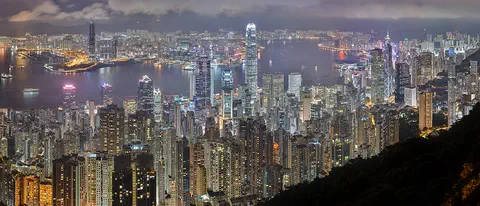
Hong Kong, on the south coast of China, grew around one of the world's great natural harbors. It was a British colony for 156 years and has been a special administrative region of China since 1997. About 7.5 million people lived there in mid-2026.
-
Watch
City
Shanghai
Shanghai is China's most populous city, on the coast where the great Yangtze River meets the East China Sea. Once a small fishing village, it grew into one of the world's busiest seaports. About 24.9 million people lived in Shanghai in 2020, and the towers of Pudong rise across the Huangpu River.
-
Watch
Landmark
Forbidden City
The Forbidden City in Beijing was built between 1406 and 1420 as the palace of China's emperors. Over about 500 years, 24 emperors came to the throne there. High walls and a wide moat surround it. Since 1925 it has been the Palace Museum, and it became a World Heritage Site in 1987.
-
 Watch
Landmark
Great Wall of China
The Great Wall is not one wall but many walls, built over about 2,000 years across northern China. The best-kept part, built under the Ming emperors, runs about 8,850 kilometers, with watchtowers, gates and signal towers along the way.
-
 Watch
Landmark
Potala Palace
The Potala Palace rises from Red Mountain in Lhasa, high on the Tibetan Plateau, 3,700 meters above sea level. Its White Palace was finished in 1648 and its Red Palace in 1694. With more than 1,000 rooms, it was home to the Dalai Lamas and the seat of Tibet's government.
-
Watch
Landmark
Terracotta Army
In 1974, farmers digging a well near Xi'an, China, found pieces of clay soldiers. Archaeologists uncovered an army of about 8,000 life-size soldiers and horses, made for the tomb of Qin Shi Huang, the first emperor of a united China, who died in 210 BCE. The figures were once brightly painted, and each has its own face.
-
 Watch
Landmark
Three Gorges Dam
The Three Gorges Dam crosses the Yangtze River in central China. It is 2,335 meters long and 185 meters high, and it can make more electricity than any other hydroelectric dam in the world. It also lets big ships travel far up the river, but building it meant that more than a million people had to move.
-
 Watch
Natural wonder
Mount Everest
Mount Everest, in the Himalayas on the border of Nepal and China, is what Britannica calls the highest mountain in the world. In 2020 China and Nepal announced its height as 8,848.86 meters. It grew as two giant plates of Earth's crust pushed together, and it is still rising a tiny bit each year.
-
 Watch
Natural wonder
Himalayas
The Himalayas are a giant wall of mountains in Asia, between the high Plateau of Tibet and the plains of India. They hold the highest mountains in the world, including Mount Everest. They rose when the land carrying India crashed into Asia, and their snow and ice feed great rivers such as the Ganges and the Indus.
-
Watch
Natural wonder
Yangtze River
The Yangtze, called Chang Jiang (Long River) in China, is the longest river in Asia, about 6,300 kilometers. It starts in glacier meltwater on the Plateau of Tibet, cuts through deep gorges, passes huge cities like Chongqing, Wuhan and Nanjing, and reaches the East China Sea at Shanghai. Nearly a third of China's people live in its basin.
-
 Watch
Natural wonder
Gobi Desert
The Gobi is a giant desert stretching across Mongolia and China. Britannica says its name comes from a Mongolian word meaning waterless place. Much of it is bare rock and gravel rather than sand, winters are bitterly cold and summers hot, and its rocks hold remarkable dinosaur fossils, including the first dinosaur eggs known to science.
-
 Watch
Natural wonder
K2
K2 is the world's second highest mountain, 8,611 meters tall, in the Karakoram Range of Asia. It got its short name in 1856, when a surveyor marked it as the second peak he measured in the Karakoram. It is one of the hardest mountains to climb, and its summit was first reached in 1954.
Animals of China
-
Watch
Animal
Giant panda
The giant panda is a black-and-white bear that lives in misty mountain forests in China. About 99 percent of its food is bamboo, and it spends up to 16 hours a day eating. Pandas were once endangered, but protecting their forests has helped them, and they are now listed as Vulnerable.
-
 Watch
Animal
Pallas's cat
Pallas's cat, or the manul, is a small wild cat of the cold, dry grasslands and mountains of Central Asia. Its long, thick fur makes it look bigger than it really is, and its flat face and low, round ears help it peek over rocks without being seen. It hunts pikas and other small animals.
-
 Watch
3D
Animal
Goldfish
The goldfish is a small member of the carp family that people in China tamed centuries ago, by the time of the Song dynasty (960–1279). Wild goldfish are greenish-brown, but careful breeding has made gold, white, black and spotted pets with fancy fins.
-
 Watch
Animal
Asian black bear
The Asian black bear is a black bear with a cream crescent on its chest, shaped like a new moon. It lives in forests and mountains from Iran and Pakistan across the Himalayas and Southeast Asia to China, Korea, Japan and the Russian Far East. It eats mostly plants, especially fruit and nuts, and in cold places it sleeps through the winter.
-
 Watch
Animal
Common pheasant
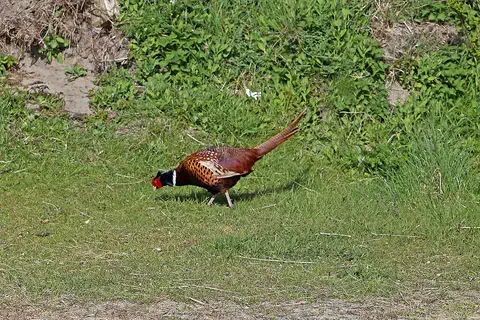
The common pheasant is a long-tailed ground bird. Its wild home is Asia, from the Caspian Sea to China and Korea, but people have taken it to Europe, North America, New Zealand and other places. Males are bright and coppery with a red face; females are mottled brown.
-
 Watch
Animal
Red-crowned crane
The red-crowned crane is one of the world's largest cranes, white with a black neck and a bright red crown. Pairs bow, bob and leap in a courtship dance. It nests in wetlands of eastern Russia, China and Japan, and it is Vulnerable because those wetlands are disappearing.
-
 Watch
3D
Animal
Brown rat
Brown rats are large rodents that came from East Asia and spread around the world with people, mainly on ships. They are smart, strong swimmers with a superb sense of smell. Wild rats can carry germs that make people sick, so they are best left alone.
-
 Watch
3D
Animal
Domestic silk moth
The domestic silk moth is an insect people have kept for thousands of years. Its caterpillar, the silkworm, eats mulberry leaves and spins a cocoon from one long silk thread. People unwind those threads to make silk cloth. Silk moths now live only with people: the adults cannot even fly.
-
 Watch
Animal
Mandarin duck
The mandarin duck is a small, very colorful duck from East Asia. The male has orange 'sail' feathers on his back and orange whiskers on his face, while the female is soft gray and brown. Mandarins nest in holes in trees, and the ducklings jump down to the ground soon after hatching.
-
 Watch
3D
Animal
Northern giant hornet
The northern giant hornet, once called the Asian giant hornet, is the world's largest hornet. It lives in forests of eastern Asia, where each colony is started by one queen in an underground nest. Its workers hunt other insects, including honey bees, to feed the young hornets.
Explore next
-
Watch
Landmark
Great Wall of China
The Great Wall is not one wall but many walls, built over about 2,000 years across northern China. The best-kept part, built under the Ming emperors, runs about 8,850 kilometers, with watchtowers, gates and signal towers along the way.
-
Watch
Landmark
Forbidden City
The Forbidden City in Beijing was built between 1406 and 1420 as the palace of China's emperors. Over about 500 years, 24 emperors came to the throne there. High walls and a wide moat surround it. Since 1925 it has been the Palace Museum, and it became a World Heritage Site in 1987.
-
Watch
Landmark
Terracotta Army
In 1974, farmers digging a well near Xi'an, China, found pieces of clay soldiers. Archaeologists uncovered an army of about 8,000 life-size soldiers and horses, made for the tomb of Qin Shi Huang, the first emperor of a united China, who died in 210 BCE. The figures were once brightly painted, and each has its own face.
-
Watch
City
Beijing
Beijing, the capital of China, has been the country's capital for most of the last 600 years. At its heart is the Forbidden City, the emperors' palace. About 21.8 million people lived in the Beijing municipality at the end of 2024.
-
Watch
Natural wonder
Yangtze River
The Yangtze, called Chang Jiang (Long River) in China, is the longest river in Asia, about 6,300 kilometers. It starts in glacier meltwater on the Plateau of Tibet, cuts through deep gorges, passes huge cities like Chongqing, Wuhan and Nanjing, and reaches the East China Sea at Shanghai. Nearly a third of China's people live in its basin.
-
Watch
Natural wonder
Mount Everest
Mount Everest, in the Himalayas on the border of Nepal and China, is what Britannica calls the highest mountain in the world. In 2020 China and Nepal announced its height as 8,848.86 meters. It grew as two giant plates of Earth's crust pushed together, and it is still rising a tiny bit each year.
-
Watch
Animal
Giant panda
The giant panda is a black-and-white bear that lives in misty mountain forests in China. About 99 percent of its food is bamboo, and it spends up to 16 hours a day eating. Pandas were once endangered, but protecting their forests has helped them, and they are now listed as Vulnerable.
-
Watch
Animal
Pallas's cat
Pallas's cat, or the manul, is a small wild cat of the cold, dry grasslands and mountains of Central Asia. Its long, thick fur makes it look bigger than it really is, and its flat face and low, round ears help it peek over rocks without being seen. It hunts pikas and other small animals.
For parents & teachers
What children will learn
- Locate China and describe its three steps of land, from the Plateau of Tibet to the eastern plains.
- Name China's great rivers and explain why its rivers flow east.
- Describe some of China's wildlife, languages and foods without treating them as one single culture.
- Outline China's history from Qin unification in 221 BCE to the republic of 1912 and the People's Republic of 1949.
Recommended ages: 3 to 17 · About 15 minutes
Talk about it
- On the map, many of China's big cities are in the east. Why might that be?
- Pandas need huge amounts of bamboo. Why might protecting forests be the best way to protect pandas?
- The Great Wall and the Grand Canal took many generations to build. What big project near you took a long time?
Try at home or in class
- Stack three books like a staircase and roll a marble from the top: see how water, like China's rivers, would flow from the high west to the low east.
- Look at a tea bag or loose tea with a grown-up and compare its color and smell with another kind, then read about China's six categories of tea.
Key vocabulary: plateau, dynasty, emperor, terracotta, karst, minority, World Heritage Site
Where these facts come from
- Wikidata , Wikimedia Foundation (CC0 1.0)
- Natural Earth vector data , Natural Earth (NACIS) (Public domain)
- UNESCO World Heritage List , UNESCO World Heritage Centre (Linked as a reference; site facts come from Wikidata)
- Statistical Communiqué of the People's Republic of China on the 2025 National Economic and Social Development , National Bureau of Statistics of China
- Population, total (SP.POP.TOTL): India, Australia, China , World Bank
- China , Encyclopaedia Britannica
- China: Relief , Encyclopaedia Britannica
- China: Temperature , Encyclopaedia Britannica
- China: Animal life, Ethnic groups and Languages , Encyclopaedia Britannica
- China: The Qin empire (221-207 BCE) , Encyclopaedia Britannica
- China: The Chinese Revolution (1911-12) , Encyclopaedia Britannica
- China: Establishment of the People's Republic , Encyclopaedia Britannica
- Yangtze River , Encyclopaedia Britannica
- Taiwan (introduction, quick facts, land, relief, drainage) , Encyclopaedia Britannica
- The Great Wall , UNESCO World Heritage Centre
- Imperial Palaces of the Ming and Qing Dynasties in Beijing and Shenyang , UNESCO World Heritage Centre
- Mausoleum of the First Qin Emperor , UNESCO World Heritage Centre
- Summer Palace, an Imperial Garden in Beijing , UNESCO World Heritage Centre
- The Grand Canal , UNESCO World Heritage Centre
- Sichuan Giant Panda Sanctuaries - Wolong, Mt Siguniang and Jiajin Mountains , UNESCO World Heritage Centre
- South China Karst , UNESCO World Heritage Centre
- Traditional tea processing techniques and associated social practices in China , UNESCO Intangible Cultural Heritage
- Giant panda , Smithsonian's National Zoo and Conservation Biology Institute
- Chinese alligator , Smithsonian's National Zoo and Conservation Biology Institute
- PlayOwl region table, version 1 , PlayOwl (PlayOwl original data)
- flag-icons 7.5.0 , Panayiotis Lipiridis and contributors (MIT)
- Wikimedia Commons , Wikimedia Foundation (Per file (public domain, CC0, CC BY or CC BY-SA); see each media record)
Checked, not yet human-reviewed. Last updated October 24, 2026. Spotted a mistake? Tell us.
Picture credits
- Photo: Photo by CEphoto, Uwe Aranas or alternatively © CEphoto, Uwe Aranas, CC BY-SA 3.0, via Wikimedia Commons · source · license
- Photo: Han Zheng, CC BY-SA 2.0, via Wikimedia Commons · source · license
- Photo: Tan Wei Liang Byorn, CC BY 3.0, via Wikimedia Commons · source · license
- Photo: Jeff Kubina, public domain, via Wikimedia Commons · source
- Photo: MasaneMiyaPA, CC BY-SA 4.0, via Wikimedia Commons · source · license
- Photo: xiquinhosilva, CC BY 2.0, via Wikimedia Commons · source · license
- Photo: shrimpo1967 derivative work: Papa Lima Whiskey 2, CC BY-SA 2.0, via Wikimedia Commons · source · license
- Photo: File Upload Bot (Colegota) (uploader), CC BY-SA 2.5 ES, via Wikimedia Commons · source · license
- Photo: Shujianyang, CC0 1.0, via Wikimedia Commons · source · license
- Photo: Jmhullot, CC BY 3.0, via Wikimedia Commons · source · license
- Photo: J. Patrick Fischer, CC BY-SA 3.0, via Wikimedia Commons · source · license
- Photo: Petr Hamerník, CC BY-SA 4.0, via Wikimedia Commons · source · license
- Photo: Photo by CEphoto, Uwe Aranas or alternatively © CEphoto, Uwe Aranas, CC BY-SA 3.0, via Wikimedia Commons · source · license
- Photo: xiquinhosilva, CC BY 2.0, via Wikimedia Commons · source · license
- Photo: IcaN, public domain, via Wikimedia Commons · source
- Photo: FISU, CC BY 3.0, via Wikimedia Commons · source · license