Reptiles
Scaly animals such as lizards, snakes, turtles and crocodiles.
41 to explore
-
 Watch
Animal
Aldabra giant tortoise
The Aldabra giant tortoise is one of the largest land tortoises on Earth. Wild ones live on Aldabra Atoll, a ring of coral islands in the Indian Ocean, where more than 100,000 of them graze, browse and shape the land like elephants do in Africa. They can live for more than 100 years.
-
 Watch
Animal
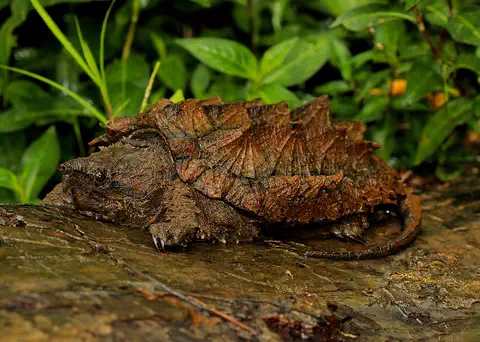
Alligator snapping turtle
The alligator snapping turtle is the largest freshwater turtle in the United States. It lies still on the bottom of rivers and lakes with its mouth open, wiggling a worm-like lure on its tongue to trick fish into swimming close. Its numbers have fallen, and it is now endangered.
-
 Watch
3D
Animal
American alligator
The American alligator is a large, armored reptile of the swamps, marshes and lakes of the southeastern United States. Alligator mothers guard their nests and carry their babies to the water, and the holes alligators dig help many other animals survive dry seasons.
-
 Watch
Animal
American crocodile
The American crocodile is a large reptile of warm coasts and mangrove swamps, from the southern tip of Florida through Mexico, Central America, the Caribbean and northern South America. It is shy, it basks in the sun to warm up, and mother crocodiles carry their babies to the water.
-
 Watch
Animal
Black mamba
The black mamba is a long, slender, very fast snake of the savannas and rocky hills of sub-Saharan Africa. It is gray to brown, gets its name from its inky-black mouth, hunts small mammals by day, and is shy: it would almost always rather slip away from people. It is also highly venomous, so it is a snake to admire from far away.
-
 Watch
Animal
Boa constrictor
The boa constrictor is a large, heavy snake of South America. Of all the boas, it lives in the greatest variety of places, from rainforests to dry scrub and farms. It catches food by squeezing, it has no venom, and mothers give birth to live babies.
-
 Watch
Animal
Burmese python
The Burmese python is one of the largest snakes in the world. In its home in South and Southeast Asia it has become rare because so many are caught, but in southern Florida, where people let pet pythons go, it has spread through the Everglades and eats many of the animals that live there.
-
 Watch
Animal
Central bearded dragon
The central bearded dragon is a lizard of the dry woodlands, scrub and deserts of eastern inland Australia. It eats plants and small animals, basks on fence posts and logs, waves its arm and bobs its head to talk to other dragons, and puffs out a spiky beard to look big. It is also a very popular pet lizard.
-
 Watch
Animal
Common basilisk
The common basilisk is a lizard of riversides and streams from Nicaragua to Venezuela. It climbs trees, swims well and, when it is startled, can sprint upright across the surface of the water on its big back feet before it sinks and swims.
-
 Watch
Animal
Common garter snake
The common garter snake is one of the most familiar snakes in North America. It has light stripes along a dark body, it lives almost everywhere from Canada to Florida, and it copes with cold better than most snakes. In spring, huge numbers come out of their winter dens together.
-
 Watch
3D
Animal
Common snapping turtle
The common snapping turtle is a big freshwater turtle of eastern North America. It hides in the mud of ponds and rivers with just its nose poking up, eats almost anything it finds, and can live for many decades. Each summer, mother turtles walk over land to dig nests in sand and gravel.
-
 Watch
Animal
Corn snake
The corn snake is a slender, colorful snake of the pine woods, fields and old barns of the southeastern United States. It has red blotches outlined in black and a black-and-white checkered belly. It has no venom: it catches mice and rats by squeezing them, and it spends much of its time hidden in burrows.
-
 Watch
Animal
Desert tortoise
The desert tortoise, also called the Mojave desert tortoise, lives in the deserts of the south-western United States. It spends most of its life in underground burrows, stores water in its body, and can live for 50 years or more. Sadly, it is now critically endangered.
-
 Watch
3D
Animal
Eastern box turtle
The eastern box turtle is a small land turtle of eastern North America with a high, domed shell splashed with yellow and orange. A hinge on the bottom shell lets it close up almost completely, like a box with a lid. It eats mushrooms, berries, worms and slugs and can live for decades.
-
 Watch
3D
Animal
Flatback sea turtle
The flatback sea turtle is named for its flat, smooth shell. It stays in shallow coastal seas around northern Australia, eats soft sea animals such as sea cucumbers and jellyfish, and nests only on Australian beaches, where its big hatchlings dash for the waves at night.
-
 Watch
Animal
Frilled lizard
The frilled lizard is a dragon lizard of the warm woodlands of northern Australia and southern New Guinea. It spends most of its life in trees, and when it is cornered it pops open a huge frill around its neck, opens its bright mouth and hisses, a bluff that makes it look much bigger than it is.
-
 Watch
Animal
Gharial
The gharial is a crocodile relative with a long, skinny snout full of sharp teeth, perfect for snapping up fish. It lives in a few big rivers of northern India and Nepal, and it is one of the most threatened crocodilians on Earth.
-
 Watch
Animal
Gila monster
The Gila monster (say HEE-luh) is the largest lizard native to the United States. Its bumpy black skin is patterned with pink or orange, it spends most of its life hidden underground, and it is one of the very few lizards with venom.
-
 Watch
3D
Animal
Green anaconda
The green anaconda is one of the largest snakes on Earth. This olive-green, spotted boa lives in the rivers, swamps and flooded grasslands of northern South America, where it lies hidden in shallow water with only its eyes and nose showing.
-
 Watch
3D
Animal
Green iguana
The green iguana is a large lizard from the forests of Central and South America. It climbs high into trees to bask in the sun, eats leaves, flowers and fruit, and dives into rivers to get away from danger. It can grow to about 2 meters long, tail included.
-
 Watch
Animal
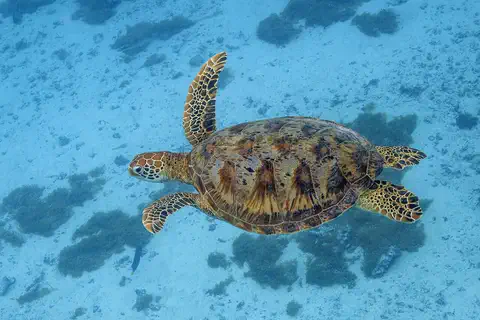
Green sea turtle
The green sea turtle is the largest sea turtle with a hard shell. It lives in warm seas around the world and, unlike other sea turtles, grown-ups eat mostly seagrass and algae. Females swim hundreds or even thousands of kilometers to lay their eggs on the beaches where they hatched long ago.
-
 Watch
3D
Animal
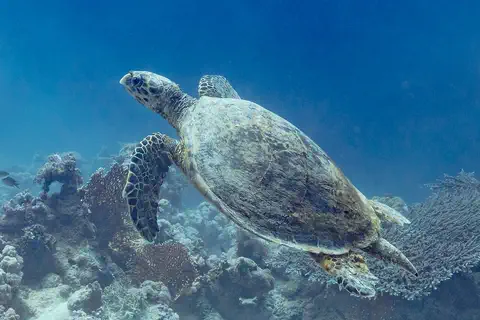
Hawksbill sea turtle
The hawksbill sea turtle lives in warm seas around the world, mostly near coral reefs. Its pointed, hawk-like beak reaches into cracks in the reef to find sponges, its favorite food. Its beautiful patterned shell once made it a target for hunters, and today it is critically endangered.
-
 Watch
Animal
Indian cobra
The Indian cobra, or spectacled cobra, lives across South Asia, from Pakistan to Sri Lanka. It raises its head and spreads a hood marked with a pattern like a pair of glasses, it eats lots of rats and mice, and it is venomous, so it is an animal to admire from far away.
-
 Watch
Animal
King cobra
The king cobra is the largest venomous snake in the world, growing to more than 5 meters long. It lives in forests and near streams in South and Southeast Asia, eats mainly other snakes, and the mother builds a nest of leaves and guards her eggs.
-
 Watch
3D
Animal
Komodo dragon
The Komodo dragon is the largest lizard alive today. It lives only on a handful of Indonesian islands, where it tracks food with its flicking yellow tongue, rests in burrows in the heat and spends its first years safely up in the trees.
-
 Watch
Animal
Leatherback sea turtle
The leatherback sea turtle is the largest turtle on Earth. Instead of a hard shell it has tough, rubbery skin over a layer of tiny bones. It eats jellyfish, dives deeper than any other turtle and swims thousands of kilometers between feeding waters and the beaches where it lays its eggs.
-
 Watch
Animal
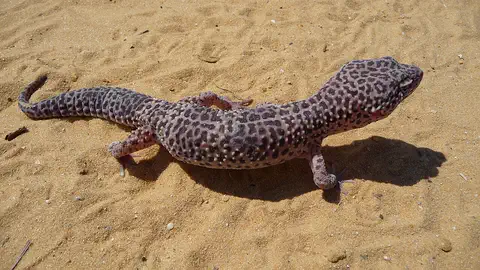
Leopard gecko
The leopard gecko is a spotted lizard from the rocky deserts and dry grasslands of Pakistan, Afghanistan, northwestern India and Nepal. It hunts insects and scorpions at night, stores fat in its thick tail, and has real eyelids. It is also one of the most popular pet lizards in the world.
-
 Watch
Animal
Loggerhead sea turtle
The loggerhead sea turtle is named for its huge head and powerful jaws, which crush crabs, conchs and other hard-shelled animals. Babies hatch on sandy beaches, ride the open ocean for years and may cross an entire ocean before coming home to nest.
-
 Watch
Animal
Marine iguana
The marine iguana is the only lizard in the world that finds its food in the sea. It lives only on the rocky shores of the Galápagos Islands, where it grazes on seaweed, warms up on black lava rocks and sneezes out extra salt.
-
 Watch
Animal
Nile crocodile
The Nile crocodile is Africa's largest crocodile. It lives in rivers, lakes and swamps across much of eastern, central and southern Africa and Madagascar. It eats mostly fish, basks on sunny banks and is a surprisingly caring parent.
-
 Watch
Animal
Painted turtle
The painted turtle is one of the most common turtles in North America. Its dark shell and skin are decorated with bright red and yellow markings, and on sunny days dozens may pile onto one log to bask. It lives in ponds, marshes and slow streams from Canada to northern Mexico.
-
 Watch
Animal
Panther chameleon
The panther chameleon is a lizard famous for its brilliant colors. It lives on the island of Madagascar, grips branches with tong-shaped feet and a curling tail, looks two ways at once, and catches insects with a lightning-fast tongue. Males change their colors to send messages.
-
 Watch
3D
Animal
Red-eared slider
The red-eared slider is a freshwater turtle from the central United States and northeastern Mexico, named for the red stripe behind each eye. It basks on logs, swims with webbed feet and eats both plants and small animals. Because so many were sold as pets and later let go, sliders now live wild in many other countries too, where they can harm native turtles.
-
 Watch
Animal
Reticulated python
The reticulated python lives in the forests, riversides and even towns of Southeast Asia. It can grow longer than any other kind of snake, it is covered in a net-like pattern, and it is such a good swimmer that it has reached many small islands across the sea.
-
 Watch
Animal
Saltwater crocodile
The saltwater crocodile is the largest reptile alive today. It lives in rivers, swamps and estuaries from India to northern Australia, can cope with fresh water and seawater, and sometimes swims far out across the open ocean to reach distant islands.
-
 Watch
Animal
Santa Cruz giant tortoise
The Santa Cruz giant tortoise lives only on the western side of Santa Cruz Island in the Galápagos. It has a big, dome-shaped shell, eats grass, leaves and cactus, walks between the dry lowlands and the misty highlands, and can live for well over a century.
-
 Watch
Animal
Thorny devil
The thorny devil is a small Australian desert lizard covered in spikes from head to tail. Despite its fierce name it is slow and harmless, it eats nothing but ants, and tiny channels in its skin carry water to its mouth.
-
 Watch
Animal
Tokay gecko
The tokay gecko is one of the biggest geckos in the world, a blue-gray lizard covered in orange spots. It lives in forests and on houses across South and Southeast Asia, hunts insects at night, climbs walls and ceilings with special toe pads, and gets its name from the male's loud to-kay call.
-
 Watch
Animal
Tuatara
The tuatara looks like a spiny lizard, but it is not one. It is the last living member of a group of reptiles that lived alongside the dinosaurs. Today wild tuatara live only on small islands off New Zealand, where they come out at night, grow very slowly and can live for around 100 years.
-
 Watch
3D
Animal
Veiled chameleon
The veiled chameleon lives in the dry mountains of Yemen and Saudi Arabia. It has a tall helmet-like casque on its head, eyes that can look two ways at once, feet that grip like hands and a super-fast sticky tongue. It changes color to show its mood, not to hide.
-
 Watch
Animal
Western diamondback rattlesnake
The western diamondback rattlesnake is a heavy-bodied snake of the deserts and dry grasslands of the southwestern United States and Mexico. It has diamond patterns, a black-and-white striped tail and a rattle that buzzes as a warning. It is venomous, so it is a snake to admire from far away, but it would much rather hide or slip away than meet a person.