
Animal
American alligator
The American alligator is a big reptile with bumpy skin, a long tail and a wide snout. It lives in swamps and lakes in the United States.
The American alligator is a large, armored reptile of the swamps, marshes and lakes of the southeastern United States. Alligator mothers guard their nests and carry their babies to the water, and the holes alligators dig help many other animals survive dry seasons.
Alligator mississippiensis is a crocodilian of freshwater wetlands in the southeastern United States. Hunted close to extinction, it was listed as endangered in 1967 and recovered so well that it was removed from the endangered list in 1987. Today the IUCN lists it as Least Concern, and it is considered a keystone species of the Everglades.
Photo: Skeetdeloach at English Wikipedia, public domain, via Wikimedia Commons
Meet the alligator
The American alligator is a big reptile.
It has bumpy skin, short legs and a long, strong tail. Its snout is wide and round at the end. It spends lots of time in the water.
The American alligator is a large reptile called a crocodilian, a cousin of crocodiles and caimans. Its back is covered in bony plates, its legs are short and its tail is flat and muscular.
You can tell an alligator from a crocodile by its smile. An alligator's snout is wide and rounded, and when its mouth is closed, the big fourth tooth in its lower jaw fits into a socket and is hidden. Male alligators grow bigger than females.
Alligator mississippiensis is a large crocodilian. Adults have an armored back of bony plates called osteoderms, a broad, rounded snout and a muscular, laterally flattened tail. On average adult females are about 2.6 meters long and males about 3.4 meters, and exceptionally large males approach 454 kilograms.
The classic way to tell it from a crocodile is the jaw: the enlarged fourth tooth of the lower jaw sits in a socket in the upper jaw and is hidden when the mouth is shut. Like all crocodilians, it is more closely related to birds than to lizards and snakes.
Quick facts
- Group
- Reptile
- Length
- 2.6 to 3.4 m
- Weight
- up to 454 kg
- Lifespan in the wild
- 50 years
Where it lives
Alligators live in the southeast of the United States.
They like swamps, marshes, lakes and slow rivers. They mostly live in fresh water, not the salty sea.
American alligators live only in the southeastern United States, from North Carolina to Florida and west into Texas and southeastern Oklahoma. Florida has more alligators than anywhere else.
They live in freshwater swamps, marshes, lakes and slow-moving rivers. Alligators can visit slightly salty water near mangroves for a short time, but unlike crocodiles they have no salt glands to get rid of extra salt, so they do not stay long.
The species ranges across the southeastern United States, from North Carolina and Florida in the east to southeastern Oklahoma and eastern Texas in the west; Everglades National Park lies at the southern extreme of its range. It mainly inhabits freshwater swamps, marshes, lakes and slow rivers.
Alligators lack the salt-secreting glands of crocodiles, so they tolerate brackish water only for short periods. In dry seasons they excavate 'alligator holes' that keep water when the surrounding marsh dries, and in cold weather they shelter in dens, sometimes tunnels up to 20 meters long, that other animals later use.
Continent
Its habitat

Where can you find this animal?
- Lives here naturally · Countries and seas named by a scientific source
- Sightings recorded · Records of wild sightings (GBIF)
Lives here naturally · Countries and seas named by a scientific source
Freshwater swamps, marshes, lakes and slow rivers of the southeastern United States, from North Carolina and Florida west to eastern Texas and southeastern Oklahoma. It lives only in the southeast, not across the whole country shaded.
Places: United States.
Source: iucn-red-list · checked October 2026
Sightings recorded · Records of wild sightings (GBIF)
Counts of GBIF records of wild observations (human and machine) and preserved specimens. Records include introduced populations, vagrants, escaped or released animals and misidentifications, so a country with records is not necessarily part of the native range.
Wild sightings have been recorded in United States, Japan, Belize, Denmark, Germany, Mexico, South Africa, Australia and 8 more places.
Source: gbif · checked October 2026
Range maps show where scientists say an animal lives, often country by country. An animal may live in only part of a country shown, and sightings records can include animals that wandered far from home.
What it eats
Alligators eat other animals.
Baby alligators eat bugs, little fish and frogs. Big alligators eat fish, turtles, snakes and birds. They swallow small food in one gulp.
Alligators are carnivores and eat whatever is easy to find. Young alligators mostly catch insects, frogs, snails and small fish. As they grow, they move on to bigger fish, turtles, snakes, birds and small mammals that come to the water's edge.
Their jaws are strong enough to crack a turtle shell. Small food is swallowed whole. Alligators eat only when the water is warm; when it gets chilly, they stop feeding until warmer days return.
American alligators are opportunistic carnivores whose diet tracks what is abundant and accessible. Juveniles take mainly insects, amphibians, small fish and other invertebrates; adults take fish, turtles, snakes, birds and small mammals, and other reptiles, including small alligators.
Feeding depends on temperature. The Florida Fish and Wildlife Conservation Commission reports that alligators are most active at about 28 to 33 °C, stop feeding below about 21 °C and become dormant below about 13 °C. Their jaws can crack turtle shells; small prey is swallowed whole, and larger prey is broken into pieces before swallowing.
Did you know?
Alligators are cousins of birds!
Crocodilians, including alligators, are more closely related to birds than to lizards, snakes or turtles.
Crocodilians and dinosaurs, including the ancestors of birds, share a common ancestor more recent than the one they share with other reptiles.
Armor, teeth and a sneaky snout
An alligator's nose and eyes are on top of its head.
It can hide in the water and still breathe and look around. It has lots of teeth, and new ones grow when old ones wear out.
An alligator's nostrils sit on the very end of its snout, pointing up, and its eyes are high on its head. That means it can float with almost all of its body underwater and still breathe and see.
Its back is armored with bony plates called scutes. It has about 74 to 80 teeth at a time, and worn teeth are replaced, so an alligator may use up to 3,000 teeth in its life. At night, a flashlight makes alligator eyes shine red.
Upward-facing nostrils at the tip of the snout let the alligator breathe while the rest of the body is submerged. The dorsal skin is reinforced with osteoderms. The front feet have five toes and the hind feet four. The mouth holds 74 to 80 teeth at a time, continually replaced, for up to about 3,000 over a lifetime.
Unlike most reptiles, crocodilians have a four-chambered heart, as birds and mammals do, plus a shunt that lets them mix blood and slow their metabolism on long dives. A reflective layer behind the retina, the tapetum lucidum, improves vision in dim light and causes the red eyeshine.
A caring mother
A mother alligator builds a nest out of plants and mud.
She lays her eggs inside and stays close by. When the babies call, she helps them out and carries them to the water in her mouth.
In early summer the female builds a big mound nest of plants, mud and soil and lays about 32 to 46 eggs inside. The temperature inside the nest decides whether each baby will be male or female.
After about two months, the babies squeak from inside their eggs. Their mother opens the nest and gently carries a few at a time to the water in her mouth. The young stay close to her in groups called pods, often for a year or more.
Courtship begins in April and mating follows in May or June. In late June or early July the female builds a mound nest of vegetation and soil above the water line and lays a clutch averaging 32 to 46 eggs. Incubation lasts roughly two months (58 to 68 days, depending on the source), and sex is set by temperature: the Everglades National Park reports that 90 to 93 °F (32 to 34 °C) produced males and 82 to 86 °F (28 to 30 °C) females, with mixed sexes in between.
Hatchlings call from the egg; the female opens the nest and carries 8 to 10 at a time to the water in her mouth. Juveniles stay in pods near her, usually for a year and sometimes two or three. Florida's wildlife agency says nearly all alligators mature by about 2.1 meters (7 feet), though females can mature at 1.8 meters; females take 10 to 15 years to reach these lengths and males 8 to 12.

Sunbathing and gator holes
Alligators lie in the sun to get warm.
When they are too hot, they slide into the cool water. In dry times they dig water holes, and many other animals use them too.
Alligators are ectotherms, which means their body heat comes from their surroundings. They bask in the sun to warm up and slip into water or shade to cool down. In cold winter weather they rest in dens and hardly move at all.
Alligators also change their homes. In the dry season they dig out 'gator holes' that stay full of water. Fish, turtles, birds and other animals gather there. The National Park Service calls the alligator a keystone species of the Everglades.
As ectotherms, alligators regulate body temperature behaviorally: basking, moving between warmer and cooler water or air, and becoming dormant in winter dens, emerging to bask on warm days. In spring, males bellow (roar) to attract females and to warn off other males.
The National Park Service calls the alligator a keystone species of the Everglades. Alligator holes hold water through the dry season, becoming refuges for fish, turtles, wading birds and other wildlife, and abandoned and active nests are used by other reptiles, such as the Florida red-bellied turtle, for their own eggs.
Did you know?
Baby alligators have bright yellow stripes.
Young alligators have bright yellow bands on a black body that help them hide. The stripes fade as they grow.
The yellow cross-bands of juveniles provide camouflage and fade with maturity; adult color varies with habitat, greener in algae-rich water and darker under tannin-stained water.
A comeback story
Long ago, there were very few alligators left.
People made laws to protect them, and now there are many again. If you see an alligator, stay far back from the water's edge and never feed it.
By the 1960s alligators had become rare because people hunted them for their skins and their wetland homes were being lost. In 1967 they were listed as endangered, and hunting was stopped. The alligators bounced back, and in 1987 they were taken off the endangered list.
Today they are protected by careful rules, and losing wetlands is their biggest problem. Alligators are wild animals: always stay well back from the water's edge, keep pets close, and never feed them, which is against the law.
Hunting for hides and habitat loss drove the species down until it was listed as endangered in 1967. Hunting bans, controls on the movement of hides and the growth of alligator farming let wild populations rebound, and it was delisted in 1987. The IUCN assessed it as Least Concern in 2018. Federal law still lists it as threatened by 'similarity of appearance' to the endangered American crocodile, so that hunters do not confuse the two.
The Smithsonian names habitat destruction, including water management and mercury and dioxin pollution, as the main threat today. Serious conflicts with people are rare; the National Park Service links most incidents to illegal feeding, which makes alligators lose their wariness.
IUCN Red List
How is the american alligator doing in the wild?
- Least Concern (this animal)
- Near Threatened
- Vulnerable
- Endangered
- Critically Endangered
- Extinct in the Wild
- Extinct
Least Concern
Not at risk of disappearing from the wild right now.
See the IUCN Red List assessment · The IUCN Red List of Threatened Species 2022.2
Amazing facts
-
An alligator can use up to 3,000 teeth in its life.
Alligators have 74 to 80 teeth at a time, and worn teeth are replaced, up to about 3,000 in a lifetime.
Continuous tooth replacement means an alligator may go through roughly 3,000 teeth, though only 74 to 80 are in the mouth at once.
-
Alligators are cousins of birds!
Crocodilians, including alligators, are more closely related to birds than to lizards, snakes or turtles.
Crocodilians and dinosaurs, including the ancestors of birds, share a common ancestor more recent than the one they share with other reptiles.
-
Baby alligators squeak inside their eggs to call their mom.
Just before hatching, baby alligators make high-pitched calls inside their eggs, and their mother opens the nest.
Hatchlings call from inside the egg; the female responds by opening the nest and carrying them to water, 8 to 10 at a time, in a pouch formed by lowering her tongue.
-
Baby alligators have bright yellow stripes.
Young alligators have bright yellow bands on a black body that help them hide. The stripes fade as they grow.
The yellow cross-bands of juveniles provide camouflage and fade with maturity; adult color varies with habitat, greener in algae-rich water and darker under tannin-stained water.
Words to know
- crocodilian
- the group of reptiles that includes alligators, crocodiles, caimans and gharials
- scutes
- hard, bony plates in the skin that work like armor
- ectotherm
- an animal whose body warmth comes from its surroundings, such as the sun
- keystone species
- an animal that many other living things in its home depend on
- pod
- a group of young alligators that stay together
- basking
- lying in the sun to warm up
Discovery challenge
-
Why are an alligator's nose and eyes on top of its head?
How does having its nostrils and eyes on top of its head help an alligator?
What is the advantage of the alligator's dorsal nostrils and high-set eyes?
- It can breathe and see while hiding in water
- It can smell flowers in trees
- It can sleep standing up
Show the answer
It can breathe and see while hiding in water
It can hide in the water and still breathe and look around.
With only its nostrils and eyes above water, an alligator can breathe and watch while almost hidden.
They allow breathing and vision while the rest of the body stays submerged.
-
How does a mother alligator carry her babies to the water?
How does a female alligator move her hatchlings to the water?
How does a female American alligator transport hatchlings from the nest?
- On her tail
- In her mouth
- She leaves them to find it
Show the answer
In her mouth
She carries them gently in her mouth.
She opens the nest and carries a few babies at a time in her mouth.
She carries 8 to 10 at a time in her mouth, lowering her tongue to form a pouch.
-
What decides if a baby alligator is a boy or a girl?
What decides whether an alligator egg hatches as a male or a female?
What determines the sex of an American alligator hatchling?
- How warm the nest is
- How big the egg is
- What the mother eats
Show the answer
How warm the nest is
Warm nests and cooler nests make different babies.
The nest temperature decides: in the Everglades, the warmest eggs hatch as males and cooler eggs as females.
Incubation temperature: about 32 to 34 °C produced males and 28 to 30 °C females, with mixed sexes in between.
-
If you see an alligator, what should you do?
What is the safe thing to do if you see a wild alligator?
Which behavior near alligators fits the National Park Service's safety advice?
- Feed it
- Walk up close
- Stay well back and never feed it
Show the answer
Stay well back and never feed it
Stay far back from the water and tell a grown-up.
Keep well back from the water's edge and never feed an alligator; feeding them is against the law.
Most incidents are linked to illegal feeding, which makes alligators bolder; the right choice is to keep your distance and never feed them.
Places where you might see it
-
 Watch
 Country
United States
The United States is a large country in North America made of 50 states, from icy Alaska to the warm islands of Hawaii. It has the Grand Canyon, the Mississippi River and Yellowstone, and about 342 million people live there.
-
 Watch
Natural wonder
Everglades National Park
Everglades National Park covers 1.5 million acres at the southern tip of Florida. It protects marshes of sawgrass, forests of mangroves and pines, and shallow bays, all fed by fresh water flowing slowly south. It is home to alligators and crocodiles, the rare Florida panther and hundreds of kinds of birds, but invasive Burmese pythons have caused serious harm to its wildlife.
-
Watch
Natural wonder
Mississippi River
The Mississippi River flows about 3,770 kilometers from Lake Itasca in Minnesota to the Gulf of Mexico, through the middle of the United States. Its basin drains about 40 percent of the continental United States. Long ago Native Americans paddled canoes on it; later came steamboats, and today huge barges carry grain and fuel. Millions of birds follow it when they migrate.
Explore next
-
 Watch
Animal
American crocodile
The American crocodile is a large reptile of warm coasts and mangrove swamps, from the southern tip of Florida through Mexico, Central America, the Caribbean and northern South America. It is shy, it basks in the sun to warm up, and mother crocodiles carry their babies to the water.
-
Watch
Country
United States
The United States is a large country in North America made of 50 states, from icy Alaska to the warm islands of Hawaii. It has the Grand Canyon, the Mississippi River and Yellowstone, and about 342 million people live there.
-
 Watch
Animal
Nile crocodile
The Nile crocodile is Africa's largest crocodile. It lives in rivers, lakes and swamps across much of eastern, central and southern Africa and Madagascar. It eats mostly fish, basks on sunny banks and is a surprisingly caring parent.
-
Watch
Natural wonder
Everglades National Park
Everglades National Park covers 1.5 million acres at the southern tip of Florida. It protects marshes of sawgrass, forests of mangroves and pines, and shallow bays, all fed by fresh water flowing slowly south. It is home to alligators and crocodiles, the rare Florida panther and hundreds of kinds of birds, but invasive Burmese pythons have caused serious harm to its wildlife.
-
 Watch
Animal
Nine-banded armadillo
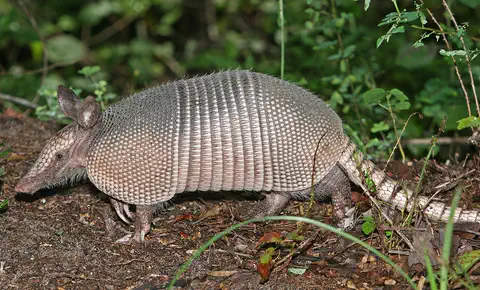
The nine-banded armadillo is a small, armored digger that lives from Argentina all the way to the United States. It sniffs out beetles and other bugs in the soil, can hold its breath for six minutes, and almost always has four identical babies at once.
-
 Watch
3D
Animal
Red swamp crayfish
The red swamp crayfish is a dark red freshwater crustacean with long claws covered in bright red bumps. It comes from the swamps and streams of the southern United States and northern Mexico, where it digs burrows in the mud. People have carried it around the world for food, and in many new places it harms the plants and animals that already live there.
-
 Watch
Animal
Saltwater crocodile
The saltwater crocodile is the largest reptile alive today. It lives in rivers, swamps and estuaries from India to northern Australia, can cope with fresh water and seawater, and sometimes swims far out across the open ocean to reach distant islands.
-
 Watch
Animal
Burmese python
The Burmese python is one of the largest snakes in the world. In its home in South and Southeast Asia it has become rare because so many are caught, but in southern Florida, where people let pet pythons go, it has spread through the Everglades and eats many of the animals that live there.
For parents & teachers
What children will learn
- Describe how the alligator's body suits life in shallow water (nostrils, eyes, armor, teeth).
- Explain what an ectotherm is and how alligators control their body temperature.
- Describe the alligator's nest, temperature-dependent sex and parental care.
- Explain how protection helped the alligator recover and why it is a keystone species.
Recommended ages: 3 to 17 · About 15 minutes
Talk about it
- Why might an animal that warms itself in the sun need much less food than a mammal of the same size?
- How do alligator holes help other animals during a dry season?
- What rules could help people and alligators share the same lakes safely?
Try at home or in class
- Measure 3.4 meters with string or tape to see how long an average male alligator is, and lie beside it.
- Put a dark and a light cloth in the sun for 15 minutes and feel which warms up more, like an alligator basking.
Key vocabulary: crocodilian, scutes, ectotherm, keystone species, pod, basking
Where these facts come from
- The IUCN Red List of Threatened Species , International Union for Conservation of Nature (IUCN terms of use (no redistribution of Red List data or range maps))
- GBIF Backbone Taxonomy and GBIF Occurrence Search , Global Biodiversity Information Facility (CC0 1.0 (backbone); occurrence counts are facts derived from records under CC0, CC BY and CC BY-NC)
- Wikidata , Wikimedia Foundation (CC0 1.0)
- Alligator mississippiensis (American Alligator), Red List assessment 2018 , IUCN Red List of Threatened Species
- American alligator , Smithsonian's National Zoo and Conservation Biology Institute
- American Alligator: Species Profile , Everglades National Park, U.S. National Park Service
- Alligator facts , Florida Fish and Wildlife Conservation Commission
- Wikimedia Commons , Wikimedia Foundation (Per file: Public domain, CC0, CC BY or CC BY-SA only (credited on each page))
Checked, not yet human-reviewed. Last updated October 27, 2026. Spotted a mistake? Tell us.