
Animal
Eastern bluebird
The eastern bluebird is a small bird with a bright blue back and an orange chest. It loves to sit on fences and swoop down to catch bugs.
The eastern bluebird is a small thrush of open fields and parks in eastern North America, south to Central America. Males are bright blue with a rusty orange chest. Bluebirds watch from wires and fence posts, flutter down to catch insects, and nest in tree holes and in nest boxes that people put up for them.
Sialia sialis is a small thrush (family Turdidae) found from southern Canada through the eastern and central United States to Nicaragua. It hunts insects from perches, nests in cavities, and lost many of its nest holes to introduced starlings and house sparrows in the early twentieth century before nest-box 'bluebird trails' helped it recover; it is now Least Concern and increasing.
Photo: Bettina Arrigoni, CC BY 2.0, via Wikimedia Commons
Meet the eastern bluebird
This is the eastern bluebird.
The daddy bird is bright blue on top, with an orange chest. The mommy bird is grayer, with blue on her wings and tail. Bluebirds have big, round heads and big eyes.
The eastern bluebird is a small member of the thrush family, related to the American robin but only about two-thirds its size. It has a big, round head, large eyes, a plump body and a short, straight bill.
A male is a vivid royal blue on his head, back, wings and tail, with a rusty red-brown throat and chest. A female is grayer above, with blue in her wings and tail and a softer orange chest. Watch out: in dull light or from far away, even a male can look plain gray-brown.
Sialia sialis is one of three North American bluebirds and a member of the thrush family, Turdidae. Adults are 16 to 21 centimeters long with a 25 to 32 centimeter wingspan and weigh only 28 to 32 grams.
The sexes differ: males are deep blue above with a rusty or brick-red throat and breast and a white belly, while females are grayish above with bluish wings and tail and a subdued orange-brown breast. Juveniles are heavily spotted, with traces of blue. As Cornell notes, blue in birds always depends on the light, so a male can look gray-brown at a distance. The oldest known wild eastern bluebird lived at least 10 years and 6 months.
Quick facts
- Group
- Bird
- Length
- 0.16 to 0.21 m
- Wingspan
- 0.25 to 0.32 m
- Weight
- 0.03 to 0.03 kg
- Lifespan in the wild
- up to 10.5 years
Where it lives
Eastern bluebirds live in North America.
They like open fields with some trees, like farms, parks, backyards and golf courses.
Eastern bluebirds live across eastern North America, from southern Canada through the eastern and central United States, and south through Mexico and Central America as far as Nicaragua.
They like open country with scattered trees and short grass: meadows, farm fields, pastures, parks, backyards and golf courses. In many southern areas bluebirds stay all year. In the north they arrive early in spring and leave late in fall.
The IUCN's global assessment lists the species in seven countries: Canada, the United States, Mexico, Guatemala, El Salvador, Honduras and Nicaragua (plus Bermuda), at elevations up to about 2,700 meters. Northern birds migrate, while in many southern areas bluebirds are permanent residents; outside the nesting season they roam the countryside in small flocks.
They need open ground with little undergrowth, perches and nest holes. Cornell suggests their original habitats probably included frequently burned pine savannas, beaver ponds and openings in mature woods; today they are commonest along pastures, farm fields, suburban parks, backyards and golf courses.
Continent
Its habitats


Where can you find this animal?
- Lives here naturally · Countries and seas named by a scientific source
- Sightings recorded · Records of wild sightings (GBIF)
Lives here naturally · Countries and seas named by a scientific source
Open country with scattered trees from southern Canada through the eastern and central United States and Mexico to Nicaragua. Northern birds migrate south for the winter; many southern birds stay all year.
Places: Canada, United States, Mexico, Guatemala, El Salvador, Honduras and Nicaragua.
Source: iucn-red-list · checked October 2026
Sightings recorded · Records of wild sightings (GBIF)
Counts of GBIF records of wild observations (human and machine) and preserved specimens. Records include introduced populations, vagrants, escaped or released animals and misidentifications, so a country with records is not necessarily part of the native range.
Wild sightings have been recorded in United States, Canada, Mexico, Guatemala, Honduras, Nicaragua, El Salvador, Belize and 3 more places.
Source: gbif · checked October 2026
Range maps show where scientists say an animal lives, often country by country. An animal may live in only part of a country shown, and sightings records can include animals that wandered far from home.
What it eats
Bluebirds eat bugs and berries.
A bluebird sits on a fence and watches the grass. When it sees a bug, it flutters down and grabs it!
For most of the year, a bluebird's main food is insects it catches on the ground: caterpillars, beetles, crickets and grasshoppers, plus spiders. It sits on a wire or fence post, watches the grass, then flutters down to grab its prey and flies back up. Sometimes it catches insects in midair.
In fall and winter, when insects are hard to find, bluebirds eat lots of fruit and berries, such as blueberries, dogwood berries, wild holly and juniper berries.
Ground-dwelling insects are the main food for much of the year, especially caterpillars, beetles, crickets and grasshoppers, along with spiders, earthworms and snails. Bluebirds hunt from a perch, flutter to the ground to seize prey, and sometimes hawk insects in midair or hover to pick them from foliage; Cornell notes they can spot tiny prey 60 feet (about 18 meters) or more away.
In fall and winter they switch heavily to fruit, including mistletoe, sumac, blueberries, black cherry, dogwood, holly, honeysuckle and juniper. Rarely they take larger prey such as salamanders, shrews, snakes, lizards and tree frogs. At backyard feeders they come mainly for mealworms.
Did you know?
A daddy bluebird shows off his nest hole.
To attract a mate, a male bluebird carries nest material in and out of a hole and waves his wings, but the female builds the whole nest.
The male's cavity display is essentially his only contribution to nest building; the female builds alone and incubates the eggs.
An amazing body
Bluebirds have big eyes.
They can spot a tiny bug from far, far away. Their legs are short, and their wings are long.
A bluebird's large eyes are great for hunting. Cornell reports that a bluebird can spot a tiny insect 60 feet (about 18 meters) away.
Its wings are long, but its tail and legs are fairly short. Bluebirds fly low to the ground with fast, uneven wingbeats. Blue in birds depends on the light, so from a distance even a bright male can look plain gray-brown.
The eastern bluebird has the thrush family's rounded head and large eye, a short, straight bill, long wings and fairly short tail and legs. Cornell notes it can detect small prey from 60 feet or more away as it hunts from perches.
Flight is low, with fast but irregular wingbeats. The color difference between the sexes is clear: males are deep blue above and brick-red below; females are grayer, with blue mainly in the wings and tail. Because blue plumage depends on the light, males can look gray-brown at a distance.
Growing up
Bluebirds nest in a hole in a tree or in a nest box.
The mother builds the nest and lays pale blue eggs. Mom and dad bring bugs to the babies. Sometimes big brothers and sisters help feed them too!
A male bluebird shows off a nest hole to a female by carrying bits of grass in and out and waving his wings. If she likes it, she does all the building, weaving grasses and pine needles into a cup.
She lays usually 4 or 5 pale blue eggs and keeps them warm for about two weeks. The chicks hatch almost bare, with their eyes closed. Both parents feed them, and young birds from an earlier brood sometimes help. The chicks leave the nest at about 17 to 21 days old, and a pair can raise two or even three broods in a year.
Males attract females with a display at a cavity, carrying nest material in and out and fluttering above it. The female alone builds a loose cup of grasses and pine needles lined with fine grass and sometimes hair or feathers, and she incubates the eggs. Nests are in natural cavities, usually old woodpecker holes, or in nest boxes.
Clutches range from 2 to 7 pale blue (rarely white) eggs, most often 4 or 5. Cornell gives incubation of 11 to 19 days and a nestling period of 17 to 21 days; Audubon notes that young from an earlier brood sometimes help feed nestlings. Pairs raise one to three broods a year. Young from early nests usually leave in summer, but those from late nests often stay with their parents through the winter.
Perches, partners and nest holes
Bluebirds sit up tall on wires and fence posts.
Mom and dad bluebirds often stay together for more than one year. Daddy bluebirds guard their nest holes from other birds.
Bluebirds perch upright on wires, posts and low branches, watching the ground. They call with a short, wavering voice.
To court a female, a male may sing and flutter in front of her with his wings and tail spread. Pairs often stay together for several seasons and may even preen each other's feathers. Nest holes are precious, so males defend them and chase away other birds, from house sparrows and starlings to tree swallows.
Eastern bluebirds hold territories in the breeding season. Males chase rival males at high speed, and they drive away many other species from nest sites, including house sparrows, European starlings, tree swallows and great crested flycatchers, as well as robins and blue jays.
Pair bonds are typically formed when the female enters the male's chosen cavity and often last several seasons, although studies suggest roughly one egg in every four or five has a parent from outside the pair. Courtship includes song, fluttering with wings and tail partly spread, mutual preening and the male feeding the female. Outside the breeding season bluebirds form small roaming flocks.
Did you know?
Big brother and sister bluebirds sometimes help feed the babies.
Young bluebirds from an earlier nest sometimes help their parents feed the next batch of chicks.
Helpers at the nest occur: young from a previous brood sometimes feed their younger siblings.
A bluebird comeback
Long ago, bluebirds had trouble finding nest holes.
Then people built thousands of nest boxes for them. Now there are more and more bluebirds!
Early in the 1900s, eastern bluebirds became scarce. Starlings and house sparrows, birds that people had brought from Europe, took over the tree holes bluebirds needed for nesting, and bluebirds also lost some of their habitat.
In the 1960s and 1970s people began putting up long lines of nest boxes called bluebird trails, many of them designed to keep starlings out. It worked: bluebird numbers have been climbing ever since, and today many eastern bluebirds nest in boxes made especially for them.
Populations fell in the early twentieth century as introduced European starlings and house sparrows took over nest cavities, and Audubon also cites loss of habitat and nest sites. From the 1960s and 1970s, nest-box campaigns and 'bluebird trails', especially boxes designed to exclude the larger starling, reduced the competition.
Numbers increased between 1966 and 2019 according to the North American Breeding Bird Survey. The IUCN assessed the species as Least Concern in November 2020 with an increasing population of about 23 million mature individuals, matching the Partners in Flight estimate of the breeding population.
IUCN Red List
How is the eastern bluebird doing in the wild?
- Least Concern (this animal)
- Near Threatened
- Vulnerable
- Endangered
- Critically Endangered
- Extinct in the Wild
- Extinct
Least Concern
Not at risk of disappearing from the wild right now.
See the IUCN Red List assessment · The IUCN Red List of Threatened Species 2021.3
Amazing facts
-
Bluebirds can see a tiny bug from very far away.
An eastern bluebird can spot a tiny insect 60 feet (about 18 meters) away.
Cornell reports that bluebirds detect small prey from 60 feet or more.
-
Big brother and sister bluebirds sometimes help feed the babies.
Young bluebirds from an earlier nest sometimes help their parents feed the next batch of chicks.
Helpers at the nest occur: young from a previous brood sometimes feed their younger siblings.
-
A daddy bluebird shows off his nest hole.
To attract a mate, a male bluebird carries nest material in and out of a hole and waves his wings, but the female builds the whole nest.
The male's cavity display is essentially his only contribution to nest building; the female builds alone and incubates the eggs.
-
A blue bird can look gray in the shade.
Blue in birds depends on the light, so from far away a bright blue male bluebird can look plain gray-brown.
Perceived blue plumage depends on lighting, which is why distant males can appear gray-brown.
Words to know
- thrush
- a family of songbirds that includes bluebirds and robins
- nest box
- a small wooden house that people put up for birds to nest in
- bluebird trail
- a line of nest boxes put up to help bluebirds
- cavity
- a hole, like an old woodpecker hole in a tree, used for a nest
- brood
- a family of chicks hatched at the same time
- introduced species
- an animal that people brought to a new place
Discovery challenge
-
Where do bluebirds make their nests?
Where do eastern bluebirds build their nests?
What kind of nest site do eastern bluebirds use?
- On the open ground
- In a tree hole or nest box
- On a floating raft of reeds
Show the answer
In a tree hole or nest box
They nest in a hole in a tree or in a nest box.
They use old woodpecker holes and other tree cavities, and nest boxes people put up.
They are cavity nesters, using old woodpecker holes and other cavities or nest boxes.
-
What do bluebirds eat most of the year?
What is a bluebird's main food for most of the year?
Which food makes up most of the eastern bluebird's diet outside fall and winter?
- Fish
- Seeds from pine cones
- Insects from the ground
Show the answer
Insects from the ground
They eat bugs! In winter they eat berries too.
Insects caught on the ground are their main food; in fall and winter they eat lots of berries.
Ground insects such as caterpillars, beetles, crickets and grasshoppers; fruit becomes important in fall and winter.
-
What did people build to help bluebirds?
What helped eastern bluebirds make a comeback?
Which action did most to reverse the bluebird's early twentieth-century decline?
- Nest boxes made for bluebirds
- Big bird feeders full of seeds
- Ponds for swimming
Show the answer
Nest boxes made for bluebirds
People built little bird houses just for bluebirds.
Lines of nest boxes called bluebird trails, designed to keep starlings out, gave bluebirds places to nest.
Nest-box campaigns and bluebird trails from the 1960s, using boxes that exclude starlings, reduced competition for cavities.
-
Which bird family is the bluebird in?
The eastern bluebird belongs to which family of birds?
To which family does Sialia sialis belong?
- Owls
- Thrushes
- Ducks
Show the answer
Thrushes
It is in the thrush family, like the robin.
Bluebirds are small thrushes, related to the American robin.
Turdidae, the thrushes, which also includes the American robin.
Places where you might see it
-
 Watch
 Country
United States
The United States is a large country in North America made of 50 states, from icy Alaska to the warm islands of Hawaii. It has the Grand Canyon, the Mississippi River and Yellowstone, and about 342 million people live there.
-
 Watch
 Country
Canada
Canada is the second-largest country in the world, stretching across the north of North America from the Atlantic to the Pacific and up into the Arctic. It has the Rocky Mountains, thousands of islands and about 42 million people, who speak English, French and many other languages.
-
 Watch
 Country
Mexico
Mexico is a large country in southern North America, between the Pacific Ocean and the Gulf of Mexico. It has smoking volcanoes, ancient cities built by the Maya and other peoples, and about 132 million people, many of them in and around Mexico City.
Explore next
-
 Watch
3D
Animal
American robin
The American robin is a very familiar bird over most of North America, with a gray-brown back, a warm orange breast and a cheery song. It runs across lawns pulling up earthworms, eats lots of berries in winter, and builds a mud-lined nest for its sky-blue eggs.
-
Watch
Country
United States
The United States is a large country in North America made of 50 states, from icy Alaska to the warm islands of Hawaii. It has the Grand Canyon, the Mississippi River and Yellowstone, and about 342 million people live there.
-
Watch
Country
Canada
Canada is the second-largest country in the world, stretching across the north of North America from the Atlantic to the Pacific and up into the Arctic. It has the Rocky Mountains, thousands of islands and about 42 million people, who speak English, French and many other languages.
-
Watch
Country
Mexico
Mexico is a large country in southern North America, between the Pacific Ocean and the Gulf of Mexico. It has smoking volcanoes, ancient cities built by the Maya and other peoples, and about 132 million people, many of them in and around Mexico City.
-
 Watch
3D
Animal
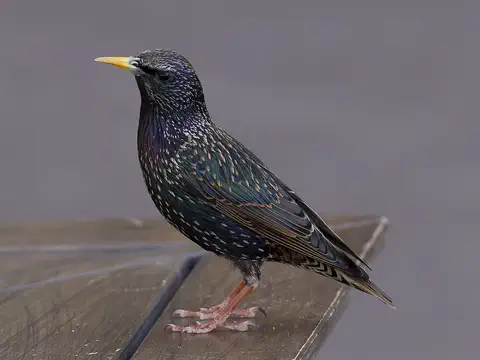
Common starling
The common starling, also called the European starling, is a glossy, spotted songbird from Europe, Asia and North Africa. It is a brilliant copycat that can imitate other birds and even car alarms, and in winter huge flocks swirl through the evening sky in shows called murmurations. People also carried starlings to North America, Australia and other places, where they now live in the wild.
-
 Watch
Animal
House sparrow
The house sparrow is one of the most widespread songbirds in the world. It is native to Europe, Asia and North Africa, but people released it in many other places, and now it lives in towns and farms almost everywhere people do. Its numbers have fallen sharply in some places, including Britain and North America.
-
 Watch
Animal
Blue jay
The blue jay is a large, crested songbird of eastern and central North America, blue above and white below with a black necklace. It is clever and loud, can copy the calls of hawks, and can bury thousands of acorns in a single fall. Its acorn burying is credited with helping oak trees spread.
-
 Watch
3D
Animal
Barn swallow
The barn swallow is a small, speedy bird with a glossy blue back, a reddish throat and a long, deeply forked tail. It catches insects in the air, builds cup-shaped mud nests on barns and bridges, and makes long migrations between the Northern Hemisphere, where it nests, and the Southern Hemisphere, where it spends the winter.
For parents & teachers
What children will learn
- Identify male and female eastern bluebirds by their colors.
- Describe how bluebirds hunt insects from perches and switch to berries in winter.
- Explain how introduced starlings and house sparrows affected bluebirds.
- Describe how nest boxes and bluebird trails helped the species recover.
Recommended ages: 3 to 17 · About 15 minutes
Talk about it
- Why would a bird that nests in holes have trouble if other birds take the holes first?
- Why do you think bluebird nest boxes were designed to keep starlings out?
- What could your school or family do to help birds nesting nearby?
Try at home or in class
- Measure 18 meters (60 feet) outdoors and place a small object at the end: could you spot it as a bluebird spots an insect?
- Look up a bluebird nest box plan with an adult and talk about why the entrance hole size matters.
Key vocabulary: thrush, nest box, bluebird trail, cavity, brood, introduced species
Where these facts come from
- The IUCN Red List of Threatened Species , International Union for Conservation of Nature (IUCN terms of use (no redistribution of Red List data or range maps))
- GBIF Backbone Taxonomy and GBIF Occurrence Search , Global Biodiversity Information Facility (CC0 1.0 (backbone); occurrence counts are facts derived from records under CC0, CC BY and CC BY-NC)
- Sialia sialis (Eastern Bluebird), Red List assessment 2020 , IUCN Red List of Threatened Species
- Eastern Bluebird overview , Cornell Lab of Ornithology, All About Birds
- Eastern Bluebird identification , Cornell Lab of Ornithology, All About Birds
- Eastern Bluebird life history , Cornell Lab of Ornithology, All About Birds
- Eastern Bluebird , National Audubon Society, Guide to North American Birds
- Wikidata , Wikimedia Foundation (CC0 1.0)
- Wikimedia Commons , Wikimedia Foundation (Per file: Public domain, CC0, CC BY or CC BY-SA only (credited on each page))
Checked, not yet human-reviewed. Last updated October 27, 2026. Spotted a mistake? Tell us.