
Animal
European stag beetle
The stag beetle is a big, shiny brown beetle. The boy beetles have huge jaws that look like a deer's antlers.
The European stag beetle is one of Europe's biggest beetles. Males have giant jaws shaped like a stag's antlers, which they use to wrestle other males. Stag beetles spend most of their lives underground as larvae, eating rotting wood for about four years, and live only a few weeks as adults.
Lucanus cervus is the largest saproxylic (dead-wood) beetle in Europe. Its larvae feed for three to six years in rotting wood at or below ground level, while the adults live for a few weeks to about three months. It is listed in Annex II of the EU Habitats Directive and as Near Threatened on the 2010 European Red List of saproxylic beetles, chiefly because old trees and dead wood are disappearing.
Photo: No machine-readable author provided. Esv assumed (based on copyright claims)., public domain, via Wikimedia Commons
Meet the stag beetle
The stag beetle is a big beetle with a shiny brown back.
Boy stag beetles have giant jaws. They look like the antlers of a deer, called a stag. Girl stag beetles have small jaws.
The European stag beetle is named after the male's enormous jaws, which look like the antlers of a male deer, or stag. Including those jaws, a big male can be almost 9 centimeters long, about as long as a grown-up's finger. Females are smaller and have short jaws.
Stag beetles have hard, dark wing cases that shine in the light. Underneath are thin wings for flying. Most of a stag beetle's life is hidden: it spends years underground as a larva before it ever crawls out as a beetle.
Lucanus cervus belongs to the family Lucanidae, which has about 1,700 species worldwide. A 2017 monitoring guide by Bardiani and colleagues in the journal Nature Conservation calls it the largest saproxylic beetle in Europe: a beetle whose life depends on dead or decaying wood.
Adults measure 25 to 89 millimeters including the mandibles: about 25 to 49 millimeters in females and 30 to 89 millimeters in males. The male's antler-like mandibles vary greatly in size from one individual to another. The European Stag Beetle Monitoring Network notes that the jaws are used to impress and fight rival males, and sometimes to scare off predators.
Quick facts
- Group
- Invertebrate
- Length
- 2.5 to 8.9 cm
- Lifespan in the wild
- 6 to 14 weeks
Where it lives
Stag beetles live in Europe.
They like old oak woods. They also live in parks, gardens and orchards that have old logs and tree stumps.
European stag beetles live across much of Europe, from southern England and southern Sweden down to the north of Spain and Portugal, central Italy and Greece, and east into Türkiye.
Their favorite home is an old oak forest with plenty of rotting wood on the ground. But scientists have also found stag beetle larvae in old orchards, parks, gardens, roadside trees and even old wooden railroad ties: anywhere damp, rotting wood has stayed in the soil for a long time.
Bardiani and colleagues describe the range as most of Europe, reaching north to the southernmost counties of Great Britain and Sweden and south to the northern Iberian Peninsula, central Italy, the Greek mainland and Anatolia; the eastern and southeastern limits are not well known because the status of Near and Middle Eastern populations is unresolved.
The species is typical of mature deciduous forests, especially lowland and mid-altitude oak woods with rotten dead wood at ground level. The European Stag Beetle Monitoring Network stresses habitat continuity: stag beetles persist where dead wood has been continuously available over past centuries, which is why they also turn up in old orchards, parks and gardens.
Continents
Its habitat

Where can you find this animal?
- Lives here naturally · Countries and seas named by a scientific source
- Sightings recorded · Records of wild sightings (GBIF)
Lives here naturally · Countries and seas named by a scientific source
Most of Europe, from southern Great Britain and southern Sweden to northern Iberia, central Italy, the Greek mainland and Anatolia. The eastern and southeastern edges of the range are not well known. Stag beetles live only where old dead wood is available, so they are patchy within each country.
Places: UK, France, Sweden, Germany, Netherlands, Switzerland, Italy, Spain and 21 more places.
Source: https://natureconservation.pensoft.net/article_preview.php?id=12687 · checked October 2026
Sightings recorded · Records of wild sightings (GBIF)
Counts of GBIF records of wild observations (human and machine) and preserved specimens. Records include introduced populations, vagrants, escaped or released animals and misidentifications, so a country with records is not necessarily part of the native range.
Wild sightings have been recorded in UK, France, Sweden, Germany, Netherlands, Switzerland, Italy, Spain and 39 more places.
Source: gbif · checked October 2026
Range maps show where scientists say an animal lives, often country by country. An animal may live in only part of a country shown, and sightings records can include animals that wandered far from home.
What it eats
Baby stag beetles eat rotting wood.
They live inside old logs and stumps under the ground. Grown-up stag beetles only lick sweet tree sap and juice from old fruit.
A stag beetle larva eats rotting wood. It lives in damp, moldy wood that touches the soil, such as old stumps, fallen logs and the roots of dead trees. Oak is a favorite.
Adult stag beetles cannot chew food with their big jaws. Instead, they lick up sweet sap that oozes from damaged trees, or juice from rotten fruit, with their tongue.
The larvae are xylophagous: they feed on rotten dead wood at ground level, under stumps and fallen logs or among the roots of standing dead trees. Oaks, especially English oak (Quercus robur), seem to be favorites, and larvae can also develop in the introduced northern red oak. A large stump can feed several generations of larvae for years, until it has completely broken down.
Adults cannot use their mandibles for eating. Both sexes take sap runs on tree trunks and other sugary substances, such as rotten fruit, which the Young People's Trust for the Environment describes them lapping up with their tongue.
Did you know?
A stag beetle baby can be longer than the grown-up beetle.
A fully grown stag beetle larva can reach 10 to 11 centimeters, longer than most adult stag beetles.
The last larval instar reaches 10 to 11 centimeters, exceeding the 2.5 to 8.9 centimeter length of adults.
Antlers and armor
A stag beetle has hard, shiny wing covers.
It has six legs and two bent feelers. The boy's big jaws are for pushing other boys, not for eating.
A stag beetle has two hard, shiny wing cases, called elytra, that cover the wings it flies with. Its antennae bend in the middle like an elbow and end in a little comb.
The male's huge jaws are its mandibles. They are so heavy that a flying male holds its body almost upright to stay balanced. Males use their jaws to wrestle other males, and sometimes to scare away predators.
The dark, violet-brown elytra cover the flight wings, and the large head of the male carries the reddish-brown, antler-like mandibles, whose size varies greatly from one male to the next.
Those mandibles shape behavior. Males with large mandibles fly slowly in nearly straight lines with the body close to vertical, which Bardiani and colleagues explain balances the weight of the head; females, with small heads and short mandibles, fly with the body much less upright. When more than one male finds a female they fight, though the largest male does not always win the mating.
Years underground
A stag beetle grows up under the ground.
A mother lays eggs deep in the soil next to old wood. The babies eat wood for years and years. Then they change into beetles and climb out.
After mating, a female digs down as deep as about a meter into the soil and lays her round, ivory-colored eggs next to rotting wood. The larvae hatch and eat, growing from just half a centimeter to about 10 centimeters long. They are blind and creamy white.
A larva usually spends about four years eating wood. Then it makes a cocoon underground and turns into a pupa. By autumn it is a beetle, but it waits underground all winter and comes out in spring. Males live about 6 to 10 weeks as adults, and females about 8 to 14.
Females dig galleries up to 70 to 100 centimeters deep near suitable wood and lay clutches of about 20 eggs (range 15 to 36), up to 50 to 100 eggs in all, before dying underground after the last clutch. The eggs are about 4 millimeters across.
The larvae, which have no eyes, grow from about 5 millimeters to 10 to 11 centimeters over usually four years (three to six; occasionally two). The pupal stage lasts on average 44 days (28 to 60) in late summer. The adult is fully formed by autumn but overwinters in its cocoon and emerges in spring, usually in May, with males about a week ahead of females. Harvey and colleagues (2011), with data from nine countries, report an adult active period of about 8 weeks for males (6 to 10) and 12 for females (8 to 14).
Summer evening flights
On warm summer evenings, boy stag beetles fly.
They whirr slowly through the air, looking for girl beetles. They fly standing almost upright, because their jaws are so heavy!
Stag beetles are most active at dusk. On warm early-summer evenings, males fly around looking for females, buzzing slowly and clumsily with their bodies held almost upright. Females usually stay near the ground.
Many animals catch adult stag beetles, including foxes, magpies, crows, woodpeckers, kestrels and owls. Underground, wild boars and badgers dig up the larvae and pupae.
Adults are crepuscular, with a seasonal peak of activity, between late May and late June depending on the region, when males swarm at dusk in search of females. Males are often seen flying up to the canopy, while females mostly stay at ground level. Rink and Sinsch (2007) found that stag beetles fly between about 11 and 26 °C and inferred that flight is hindered above 27 °C.
Predators of adults include shrews, foxes, magpies, hooded crows, woodpeckers, kestrels and owls; wild boar and badgers are the main predators of larvae and pupae, and mites can attack beetles still in their emergence galleries. Researchers even monitor populations by counting the remains of beetles eaten by birds and mammals.
Did you know?
Stag beetles do not like to fly when it is too hot.
Stag beetles fly when it is about 11 to 26 °C. Above 27 °C, flying gets harder for them.
Rink and Sinsch (2007) recorded flight between 11 and 26 °C and inferred that flight is hindered above 27 °C, a concern as summers warm.
Protecting stag beetles
Stag beetles need old wood to grow up in.
When old trees and logs are cleared away, they lose their homes. Old logs and stumps in parks and gardens can be homes for them.
Stag beetles have become rare in some places. Their larvae need old, rotting wood in the ground, and many forests are now cut while the trees are still young, so there is less dead wood left. Hot, dry summers may also make life harder for them.
Stag beetles are protected by European Union law, and scientists have worked out ways to count them so they can tell whether numbers are rising or falling. Their larvae can grow up in parks, orchards and gardens wherever old wood is left in the soil for many years.
The species is listed in Annex II of the EU Habitats Directive, so member states must report on its conservation status every six years, and it is classed as Near Threatened on the European Red List of saproxylic beetles (Nieto and Alexander 2010). Its IUCN Red List assessments are regional rather than worldwide, and they differ: Near Threatened for Europe (2010) and Least Concern for the Mediterranean region (2017). Italy's national red list also rates it Least Concern.
Bardiani and colleagues name the main threat as the falling average age of trees in forests, due to intensive management and overexploitation, especially in eastern Europe, which removes the old trees and dead wood the life cycle requires. Rising predation by magpies, jays and crows near people, and warmer, drier summers that hinder flight and emergence, are further concerns. Standardized monitoring, such as dusk transect counts, now tracks populations.
Did you know?
Scientists count stag beetles on summer evenings.
Scientists have tested ways to count stag beetles, such as walking a path at dusk and counting the beetles they see.
Standardized monitoring compared dusk transects, predation-remains counts, captures and baited traps to track populations.
Amazing facts
-
A stag beetle baby can be longer than the grown-up beetle.
A fully grown stag beetle larva can reach 10 to 11 centimeters, longer than most adult stag beetles.
The last larval instar reaches 10 to 11 centimeters, exceeding the 2.5 to 8.9 centimeter length of adults.
-
Boy stag beetles fly standing almost straight up.
Males fly with their bodies held nearly upright to balance their heavy jaws.
Large-jawed males fly slowly with the body close to vertical, balancing the weight of the head.
-
Stag beetles do not like to fly when it is too hot.
Stag beetles fly when it is about 11 to 26 °C. Above 27 °C, flying gets harder for them.
Rink and Sinsch (2007) recorded flight between 11 and 26 °C and inferred that flight is hindered above 27 °C, a concern as summers warm.
-
Scientists count stag beetles on summer evenings.
Scientists have tested ways to count stag beetles, such as walking a path at dusk and counting the beetles they see.
Standardized monitoring compared dusk transects, predation-remains counts, captures and baited traps to track populations.
Words to know
- mandible
- an insect's jaw
- elytra
- the hard wing cases that cover a beetle's flying wings
- larva
- the young stage of an insect, before it changes into an adult
- saproxylic
- living on or in dead and rotting wood
- dusk
- the time of evening when it is getting dark
- pupa
- the resting stage when a larva changes into an adult insect
Discovery challenge
-
What do baby stag beetles eat?
What do stag beetle larvae eat?
What do Lucanus cervus larvae feed on?
- Rotting wood
- Flowers
- Other insects
Show the answer
Rotting wood
They eat old, rotting wood under the ground.
They eat damp, rotting wood in stumps, logs and roots, often oak.
They are xylophagous, feeding on rotten dead wood at ground level, especially oak.
-
What do boy stag beetles use their big jaws for?
What do male stag beetles use their huge jaws for?
What is the main use of the male's enlarged mandibles?
- Chewing leaves
- Wrestling other males
- Digging tunnels
Show the answer
Wrestling other males
They push and wrestle other boys with them.
Males use their jaws to impress and fight rivals. Adults cannot eat with them.
Contests between males over females, and sometimes defense; adults cannot feed with the mandibles.
-
How long does a stag beetle stay a baby under the ground?
About how long does a stag beetle usually spend as a larva?
How long does larval development usually last?
- A few days
- One month
- About four years
Show the answer
About four years
About four years! That is a long time to eat wood.
Usually about four years, sometimes three to six.
Usually four years (range three to six; occasionally two), far longer than the 6 to 14 week adult life.
-
What do stag beetles need to grow up?
Why have stag beetles become rare in some places?
What is the main threat to Lucanus cervus in Europe?
- Less old wood and old trees
- Too much rain
- Too many flowers
Show the answer
Less old wood and old trees
They need old wood. When it is cleared away, they have nowhere to grow.
Forests are cut younger, so there are fewer old trees and less rotting wood for the larvae.
The falling average age of forest trees under intensive management removes the old trees and dead wood the life cycle requires.
Places where you might see it
-
 Watch
 Country
United Kingdom
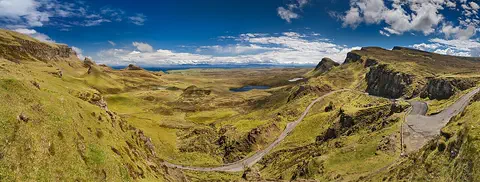
The United Kingdom, or UK, lies on islands off the northwest coast of Europe. It is made up of four parts, England, Scotland, Wales and Northern Ireland, and about 69.5 million people live there. Its capital is London.
-
 Watch
 Country
France
France is a country in northwestern Europe, between the Atlantic Ocean and the Mediterranean Sea. It has high mountains such as the Alps and the Pyrenees, long rivers such as the Loire and the Seine, and about 69.1 million people (2026). Its capital is Paris.
-
 Watch
 Country
Germany
Germany is a country in north-central Europe. The land rises from flat plains by the North Sea and the Baltic Sea to forested hills and, in the far south, the Alps. About 83.5 million people (2025) live there, and its capital is Berlin.
Explore next
-
 Watch
3D
Animal
Seven-spot ladybird
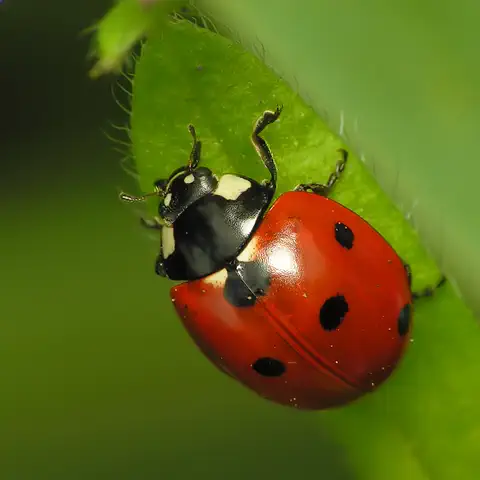
The seven-spot ladybird, or ladybug, is a domed red beetle with seven black spots. Both the young and the adults hunt aphids, small insects that suck plant juices, so gardeners and farmers are glad to see them. Its bright colors warn predators that it tastes horrible.
-
 Watch
3D
Animal
European mantis
The European mantis is the best-known praying mantis. It sits very still with its spiky front legs folded, then snatches insects that come close. It is native to Europe, Africa and much of Asia, and people brought it to North America more than 100 years ago.
-
 Watch
3D
Animal
Northern giant hornet
The northern giant hornet, once called the Asian giant hornet, is the world's largest hornet. It lives in forests of eastern Asia, where each colony is started by one queen in an underground nest. Its workers hunt other insects, including honey bees, to feed the young hornets.
-
Watch
Country
United Kingdom
The United Kingdom, or UK, lies on islands off the northwest coast of Europe. It is made up of four parts, England, Scotland, Wales and Northern Ireland, and about 69.5 million people live there. Its capital is London.
-
Watch
Country
France
France is a country in northwestern Europe, between the Atlantic Ocean and the Mediterranean Sea. It has high mountains such as the Alps and the Pyrenees, long rivers such as the Loire and the Seine, and about 69.1 million people (2026). Its capital is Paris.
-
Watch
Country
Germany
Germany is a country in north-central Europe. The land rises from flat plains by the North Sea and the Baltic Sea to forested hills and, in the far south, the Alps. About 83.5 million people (2025) live there, and its capital is Berlin.
-
 Watch
Animal
Hercules beetle
The Hercules beetle is one of the largest beetles in the world: the biggest males can reach 18 centimeters, horns included. It lives in rainforests from southern Mexico to Bolivia and on a few Caribbean islands. Its huge grubs spend more than a year eating rotting wood before they turn into beetles.
-
 Watch
3D
Animal
Bull-headed dung beetle
The bull-headed dung beetle is a shiny black beetle about 1 centimeter long. Large males have two long, curved horns on their heads, like a bull. These beetles dig tunnels under cow dung and pack dung into balls for their young, which cleans up pastures and helps the soil. They came from Europe and now also live in North America and Australia.
For parents & teachers
What children will learn
- Describe the stag beetle's life cycle and why most of it is spent underground.
- Name the main parts of a beetle, including mandibles and elytra.
- Explain why dead wood matters for some animals.
- Explain how scientists monitor a species and why it is protected.
Recommended ages: 3 to 17 · About 15 minutes
Talk about it
- Why might an animal spend four years as a larva but only a few weeks as an adult?
- Why is a 'messy' wood with fallen logs good for wildlife?
- How could a park or school ground keep some old wood for insects?
Try at home or in class
- Measure 9 centimeters and 11 centimeters on paper: draw a big male beetle and a full-grown larva side by side.
- With a grown-up, gently look under an old log in a park or garden, notice what lives there, and put the log back exactly as it was.
Key vocabulary: mandible, elytra, larva, saproxylic, dusk, pupa
Where these facts come from
- GBIF Backbone Taxonomy and GBIF Occurrence Search , Global Biodiversity Information Facility (CC0 1.0 (backbone); occurrence counts are facts derived from records under CC0, CC BY and CC BY-NC)
- Wikidata , Wikimedia Foundation (CC0 1.0)
- Guidelines for the monitoring of Lucanus cervus (Bardiani et al. 2017) , Nature Conservation (Pensoft)
- European stag beetle , European Stag Beetle Monitoring Network
- Stag beetle factsheet , Young People's Trust for the Environment (Better Planet Education)
- Lucanus cervus (Europe assessment, 2010) , IUCN Red List of Threatened Species
- Lucanus cervus (Mediterranean assessment, 2017) , IUCN Red List of Threatened Species
- The IUCN Red List of Threatened Species , International Union for Conservation of Nature (IUCN terms of use (no redistribution of Red List data or range maps))
- Wikimedia Commons , Wikimedia Foundation (Per file: Public domain, CC0, CC BY or CC BY-SA only (credited on each page))
Checked, not yet human-reviewed. Last updated October 28, 2026. Spotted a mistake? Tell us.