
Animal
Bull-headed dung beetle
The bull-headed dung beetle is a small, shiny black beetle. Big males have two curved horns, like a bull. It cleans up cow dung in fields.
The bull-headed dung beetle is a shiny black beetle about 1 centimeter long. Large males have two long, curved horns on their heads, like a bull. These beetles dig tunnels under cow dung and pack dung into balls for their young, which cleans up pastures and helps the soil. They came from Europe and now also live in North America and Australia.
Onthophagus taurus is a tunneling (paracoprid) scarab of European and Mediterranean origin, now established in North America and Australia. It buries cattle dung in brood balls below the pat, completes egg-to-adult development in about two months, and is famous for its male dimorphism: major males grow long horns and fight, while minor males have tiny horns and sneak.
Photo: Lee Cain, CC BY 4.0, via Wikimedia Commons
Meet the bull-headed dung beetle
The bull-headed dung beetle is a small black beetle.
It is shiny, like a black button. Big daddy beetles have two curved horns on their heads, like a bull.
The bull-headed dung beetle is a small, shiny black beetle, only about 1 centimeter long. It gets its name from the horns of the males: large males grow two long, curved horns, a bit like a bull's. Females have no horns at all.
Dung beetles are nature's cleanup crew. They bury the droppings of cows and other animals, which keeps pastures clean and puts nutrients back into the soil.
Onthophagus taurus belongs to the scarab family Scarabaeidae (order Coleoptera, class Insecta). Adults are shiny black, 8 to 10 millimeters long and 5 to 6 millimeters wide (Cornell IPM). The Dung Beetle Ecosystem Engineers project in Australia notes that males have long, curved horns while females have none, and that females are shinier with a rounded front edge to the pronotum.
Dung beetles recycle dung, improve soil and help reduce pest flies such as horn flies and face flies (Cornell IPM). Clark University reports that dung beetle activity is estimated to be worth about $6 billion a year to the economy of the United States.
Quick facts
- Group
- Invertebrate
- Length
- 8 to 10 mm
Where it lives
These beetles first lived in Europe.
People brought them to America and Australia. They live in fields where cows eat grass.
The bull-headed dung beetle comes from Europe and the lands around the Mediterranean Sea. In the 1970s it reached Florida, in the United States, by accident, and it has since spread north as far as Massachusetts.
It was also introduced to Australia, where it helps dispose of livestock dung. Today it lives in pastures and fields where cattle graze, and it seems to like sandy soils best.
Cornell IPM gives a European origin, and Clark University describes the species as native to the Mediterranean. It was accidentally introduced to Florida in the 1970s and has expanded steadily northward across the United States to Massachusetts; Cornell lists its present North American range as eastern North America.
In Australia it is one of several introduced dung beetles that help dispose of livestock dung, and it is found in Western Australia, South Australia, Victoria, Tasmania and New South Wales. The Dung Beetle Ecosystem Engineers project reports that it prefers cattle dung and is generally more abundant on sandier soils.
Continents
Its habitat

Where can you find this animal?
- Brought here by people · Countries and seas named by a scientific source
- Brought here by people · Countries and seas named by a scientific source
- Lives here naturally · Countries and seas named by a scientific source
- Sightings recorded · Records of wild sightings (GBIF)
Brought here by people · Countries and seas named by a scientific source
Accidentally introduced to Florida in the 1970s; it has spread north across the eastern United States to Massachusetts.
Places: United States.
Source: https://www.clarku.edu/research-highlights/of-dung-beetle-hookups-and-climate-ch · checked October 2026
Brought here by people · Countries and seas named by a scientific source
Introduced to Australia, where it helps dispose of livestock dung; found in Western Australia, South Australia, Victoria, Tasmania and New South Wales.
Places: Australia.
Source: https://dungbeetles.com.au/species/onthophagus-taurus.html · checked October 2026
Lives here naturally · Countries and seas named by a scientific source
Europe and the Mediterranean region. The map shades the whole continent; exact native countries are not listed by the sources used, so Mediterranean North Africa and western Asia are not shaded.
Places: Europe.
Source: https://www.clarku.edu/research-highlights/of-dung-beetle-hookups-and-climate-ch · checked October 2026
Sightings recorded · Records of wild sightings (GBIF)
Counts of GBIF records of wild observations (human and machine) and preserved specimens. Records include introduced populations, vagrants, escaped or released animals and misidentifications, so a country with records is not necessarily part of the native range.
Wild sightings have been recorded in Spain, Australia, France, Portugal, Switzerland, United States, Hungary, Türkiye and 34 more places.
Source: gbif · checked October 2026
Range maps show where scientists say an animal lives, often country by country. An animal may live in only part of a country shown, and sightings records can include animals that wandered far from home.
What it eats
Dung beetles eat dung.
Dung is the droppings, or poop, of animals like cows. The beetles help clean up the fields.
Bull-headed dung beetles feed on dung, the droppings of animals. They especially like cattle dung.
The young beetles eat dung too. Mother beetles carry pieces of dung down into tunnels under the dung pile and pack them into balls. Each young beetle grows up inside its own ball, with all the food it needs.
Like other dung beetles, O. taurus feeds on dung, and in Australia it shows a preference for cattle dung (Dung Beetle Ecosystem Engineers). Females bring parcels of dung underground into chambers, where the offspring feed on them.
By moving dung below ground, the beetles break it down, aerate the soil and transfer nutrients into it (Clark University), and they help control pest flies that breed in dung pats (Cornell IPM).
Did you know?
Dung beetles help make fewer flies.
By burying dung, dung beetles help control pest flies such as horn flies and face flies.
Burial of dung pats removes breeding material for pest flies, one reason dung beetles are part of integrated pest management (Cornell IPM).
A beetle up close
A beetle has a hard, shiny back.
Its wing covers keep its flying wings safe underneath. It has six legs for digging.
Like all insects, this beetle has six legs and a body in three parts. Its head is wide and flat, like a little shovel, and it has short antennae with fan-like tips.
Behind the head is a big, shiny shield called the pronotum. The hard wing covers, called elytra, protect the flying wings folded underneath. Its legs are spiny, as you can see in the photo.
The head and the large, shiny pronotum dominate the front of the body, and the hardened forewings (elytra) cover the folded flight wings. In the photograph, the broad head, the clubbed antennae, the pronotum, the grooved elytra and a spiny leg are visible.
Horns are the species' best-known trait. The Dung Beetle Ecosystem Engineers project describes long, curved horns in major males, sometimes several millimeters long, very short horns rising from the back of the head in minor males, and none in females.
A ball for every baby
The mother beetle digs a tunnel under the dung.
She makes little balls of dung and lays one egg in each. The baby grows inside its ball and turns into a beetle.
Dung beetles go through complete metamorphosis: egg, larva, pupa and adult. Bull-headed dung beetles are tunnelers. The female digs tunnels under a dung pile and builds brood balls out of dung, laying an egg in each one.
The larva grows inside its ball, eating the dung around it, then becomes a pupa and finally an adult beetle. The whole journey from egg to adult takes about two months, so there can be two or more generations in a single year.
As a paracoprid (tunneler), O. taurus constructs brood balls in tunnels beneath the dung pat and lays its eggs in them (Cornell IPM). Development from egg to adult takes a couple of months and needs no winter chilling, so the species completes at least two generations a year; in southern Australia activity peaks in October and March (Dung Beetle Ecosystem Engineers).
Cornell IPM reports that it overwinters as an adult or a pupa. The project in Australia notes it is thought that sandier soils make it easier for the beetles to tunnel and build chambers for their offspring.
Big horns and sneaky tricks
Big males use their horns to push other males away.
Small males have tiny horns. They are clever and sneak around instead!
Bull-headed dung beetles are active in the daytime and fly during the warm months. The males have two ways of winning a mate.
Large males with long horns fight off other males that try to reach their partner. But many males have only tiny horns. Instead of pushing, these small males sneak past the big males or dig their own side tunnels to reach the female.
The species is day-active and, in southern Australia, active from spring to autumn. Males show striking alternative tactics: according to the Dung Beetle Ecosystem Engineers project, long horns help major males fight off rivals, while a large proportion of males have very short horns and instead sneak past major males or dig side tunnels to reach females.
This horn dimorphism has made O. taurus a model species in research. Clark University researchers are studying whether its sexual selection traits and tactics have changed as it has expanded northward in the United States.
Did you know?
These beetles can grow up in about two months.
A bull-headed dung beetle goes from egg to adult in about two months, so there can be two or more generations a year.
With egg-to-adult development of a couple of months and no chilling requirement, O. taurus produces at least two generations a year in southern Australia.
Helpers and newcomers
Farmers like dung beetles.
The beetles bury dung, help the soil and make fewer flies. Scientists also watch how they get along with other beetles.
The bull-headed dung beetle is not in danger. In fact, it has spread to new places. Farmers value it because it buries dung, which improves the soil and helps control pest flies.
But it is a newcomer in North America and Australia. Scientists are studying whether it takes space and food from the dung beetles that already lived there.
There is no IUCN Red List assessment for the species. It is valued as a beneficial insect in pastures (Cornell IPM), and dung beetles as a whole are estimated to be worth about $6 billion a year to the U.S. economy (Clark University).
As an introduced species, it also raises questions. Clark University researchers ask why the introduced species is the most abundant dung beetle in some populations, and one is studying whether its expansion in Massachusetts has affected native dung beetles.
Did you know?
Only male bull-headed dung beetles have horns.
Large males grow long, curved horns, small males have tiny ones, and females have none at all.
Horn length is dimorphic among males: major males bear long curved horns, while a large proportion of males have very short horns.
Amazing facts
-
Only male bull-headed dung beetles have horns.
Large males grow long, curved horns, small males have tiny ones, and females have none at all.
Horn length is dimorphic among males: major males bear long curved horns, while a large proportion of males have very short horns.
-
Small males can sneak around big males.
Small-horned males sneak past big males or dig side tunnels to reach a female.
Minor males avoid fights with major males by sneaking or digging side tunnels into the female's burrow (Dung Beetle Ecosystem Engineers).
-
Dung beetles help make fewer flies.
By burying dung, dung beetles help control pest flies such as horn flies and face flies.
Burial of dung pats removes breeding material for pest flies, one reason dung beetles are part of integrated pest management (Cornell IPM).
-
These beetles can grow up in about two months.
A bull-headed dung beetle goes from egg to adult in about two months, so there can be two or more generations a year.
With egg-to-adult development of a couple of months and no chilling requirement, O. taurus produces at least two generations a year in southern Australia.
Words to know
- dung
- the droppings of animals
- brood ball
- a ball of dung where a dung beetle lays one egg
- elytra
- the hard front wings of a beetle that cover its flying wings
- larva
- the young, worm-like stage of an insect, such as a grub
- pasture
- a grassy field where cows or sheep eat
- introduced
- brought by people to a place where it did not live before
Discovery challenge
-
What does this beetle eat?
What do bull-headed dung beetles feed on?
Which food do O. taurus adults and larvae depend on?
- Flower nectar
- Animal dung
- Tree leaves
Show the answer
Animal dung
It eats dung, the droppings of animals like cows.
They feed on dung, especially cattle dung, and pack it into balls for their young.
Dung, with a preference for cattle dung; larvae feed on dung provisioned in brood balls.
-
Which beetles have long horns?
Which bull-headed dung beetles have long, curved horns?
Which individuals bear long, curved horns in Onthophagus taurus?
- Large males
- Females
- Larvae
Show the answer
Large males
Big daddy beetles have long horns.
Large males have long horns; small males have tiny horns and females have none.
Major males; minor males have very short horns and females are hornless.
-
Where does the mother beetle put her eggs?
Where does a female bull-headed dung beetle lay her eggs?
Where does O. taurus place its eggs?
- On flower petals
- In a pond
- In balls of dung in tunnels under the dung
Show the answer
In balls of dung in tunnels under the dung
She puts each egg in a little ball of dung underground.
She builds brood balls of dung in tunnels below the dung pile and lays an egg in each.
In brood balls constructed in tunnels beneath the dung pat, typical of paracoprid beetles.
-
How big is this beetle?
About how long is a bull-headed dung beetle?
What is the typical adult length of O. taurus?
- About 1 centimeter
- About 10 centimeters
- About 1 meter
Show the answer
About 1 centimeter
It is tiny, about as long as your fingernail is wide.
It is 8 to 10 millimeters long, about one centimeter.
Adults are 8 to 10 millimeters long and 5 to 6 millimeters wide.
Places where you might see it
Explore next
-
 Watch
3D
Animal
European stag beetle
The European stag beetle is one of Europe's biggest beetles. Males have giant jaws shaped like a stag's antlers, which they use to wrestle other males. Stag beetles spend most of their lives underground as larvae, eating rotting wood for about four years, and live only a few weeks as adults.
-
 Watch
3D
Animal
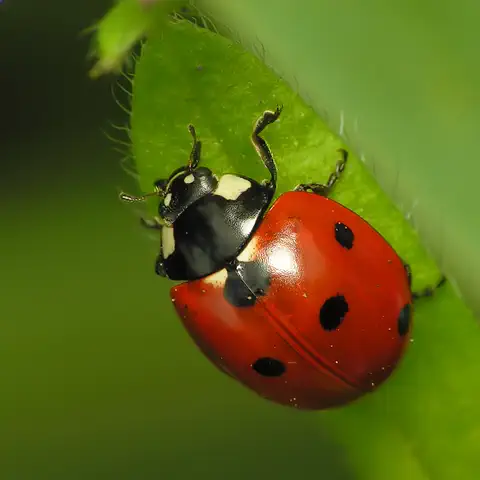
Seven-spot ladybird
The seven-spot ladybird, or ladybug, is a domed red beetle with seven black spots. Both the young and the adults hunt aphids, small insects that suck plant juices, so gardeners and farmers are glad to see them. Its bright colors warn predators that it tastes horrible.
-
 Watch
3D
Animal
Cattle
Cattle are large farm animals that people tamed from wild oxen long ago. They eat grass and digest it with a stomach that has four parts. Farmers around the world keep cattle for milk, meat and leather, and in some places oxen still pull plows and carts.
-
 Watch
3D
Animal
Housefly
The housefly is a small gray fly with two big red eyes and one pair of see-through wings. It cannot chew, so it soaks up liquid food with a mouth like a sponge. Houseflies started out in central Asia and now live almost everywhere that people live. Their eggs hatch in less than a day, and the young grow up fast.
-
 Watch
 Country
Australia
Australia is a country and the smallest continent, surrounded by ocean in the Southern Hemisphere. Much of its middle is dry and flat, most people live near the coast, and its animals include kangaroos, koalas and the platypus, a mammal that lays eggs.
-
 Watch
Animal
Goliath beetle
The Goliath beetle is one of the largest beetles on Earth, from about 5 to 11 centimeters long. It lives in the rainforests of central and eastern Africa, where the adults drink tree sap. Its huge grubs need protein-rich food to grow, and they may even hunt other small animals.
-
 Watch
Animal
American lobster
The American lobster is a big crustacean that lives on the rocky sea floor of the northwest Atlantic Ocean. It has two very different claws, one for crushing and one for tearing, and it must climb out of its hard shell again and again to grow.
-
 Watch
3D
Animal
Antarctic krill
Antarctic krill are small, shrimp-like crustaceans about 6 centimeters long that live in the icy Southern Ocean around Antarctica. They gather in enormous swarms, and almost all the bigger animals of the Antarctic, from penguins to blue whales, depend on them for food.
For parents & teachers
What children will learn
- Explain how dung beetles recycle dung and help soil and pastures.
- Describe a beetle's body parts, including pronotum and elytra.
- Describe how male bull-headed dung beetles use two different tactics to find mates.
- Understand what an introduced species is and why scientists study its effects.
Recommended ages: 3 to 17 · About 15 minutes
Talk about it
- What might happen to a pasture if nothing buried or broke down the dung?
- Why might it be useful for some males to sneak instead of fight?
- A beetle brought to help farmers might also affect other beetles. How could scientists find out?
Try at home or in class
- Measure 1 centimeter on a ruler and draw a beetle that size, then add horns to make a major male.
- Mix some soil and sand in two cups and try digging a small tunnel in each with a pencil: which is easier?
Key vocabulary: dung, brood ball, elytra, larva, pasture, introduced
Where these facts come from
- GBIF Backbone Taxonomy and GBIF Occurrence Search , Global Biodiversity Information Facility (CC0 1.0 (backbone); occurrence counts are facts derived from records under CC0, CC BY and CC BY-NC)
- Onthophagus taurus: Bull-headed Dung Beetles (Visual Guide to Dung Beetles) , Cornell Integrated Pest Management, Cornell University
- Of dung beetle hookups and climate change , Clark University
- Onthophagus taurus (species profile) , Dung Beetle Ecosystem Engineers (Australia)
- Onthophagus taurus, the bullhorned dung beetle , Dung Beetle Ecosystem Engineers (Australia)
- Wikidata , Wikimedia Foundation (CC0 1.0)
- Wikimedia Commons , Wikimedia Foundation (Per file: Public domain, CC0, CC BY or CC BY-SA only (credited on each page))
Checked, not yet human-reviewed. Last updated October 28, 2026. Spotted a mistake? Tell us.