
Animal
Great blue heron
The great blue heron is a tall gray-blue bird with long legs. It stands very still in the water. Then it catches a fish with its sharp beak!
The great blue heron is the largest heron in North America. It wades slowly through marshes, rivers and ponds, or stands as still as a statue, then strikes like lightning with its dagger-shaped bill to catch fish, frogs and even small mammals.
Ardea herodias is a large wading bird of the family Ardeidae, found from Canada through Central America and the Caribbean to northern South America and the Galápagos. A patient stalk-and-strike hunter of fish and other small animals, it nests in tree colonies called heronries and is listed as Least Concern, with an increasing population.
Photo: Rhododendrites, CC BY-SA 4.0, via Wikimedia Commons
Meet the great blue heron
The great blue heron is a very tall bird.
Its feathers look blue-gray. It has long legs, a long bendy neck and a sharp, pointed beak. It can stand still for a long time.
The great blue heron is the largest heron in North America. From bill to tail it can be longer than a meter, and its broad wings stretch up to about 2 meters.
From far away it looks blue-gray, with a wide black stripe over each eye. It moves slowly and gracefully, but it can strike like lightning. In flight it tucks its neck into an S shape and lets its long legs trail out behind.
Ardea herodias is a heron of the family Ardeidae. Cornell's All About Birds gives adults a length of 97 to 137 centimeters, a wingspan of 167 to 201 centimeters and a weight of 2.1 to 2.5 kilograms; hollow bones, a feature all birds share, help keep such a large bird light.
Not every great blue heron is blue. A white form known as the 'great white heron' lives almost only in shallow coastal waters of southern Florida, the Yucatán Peninsula and the Caribbean. Where the two forms meet in Florida, intermediate birds called 'Wurdemann's herons' have a blue-gray body with a white head and neck.
Quick facts
- Group
- Bird
- Length
- 0.97 to 1.37 m
- Wingspan
- 1.67 to 2.01 m
- Weight
- 2.1 to 2.5 kg
Where it lives
Great blue herons live in North America and nearby lands.
They hunt at marshes, rivers, lakes and beaches. Some even visit garden fish ponds!
Great blue herons live across North America and Central America, on Caribbean islands and in the north of South America. You can find them all year round somewhere in North America.
They hunt in both fresh water and salt water: along coasts, marshes, riverbanks, lakes and ponds. They also stalk through grassy meadows and farm fields. Their nesting colonies, called heronries, are often on islands or in quiet swamps.
The IUCN's 2020 global assessment lists the great blue heron as native from Canada and the United States through Mexico, Central America and the Caribbean to Colombia, Venezuela and the Galápagos Islands of Ecuador, with non-breeding birds in places such as Costa Rica and Jamaica and rare vagrants as far as Europe.
Cornell describes the species in freshwater and saltwater habitats, from open coasts and marshes to backyard goldfish ponds, as well as grasslands and farmland. Most breeding colonies lie within 2 to 4 miles (about 3 to 6 kilometers) of feeding areas, often in isolated swamps or on islands. In the northeastern United States and southern Canada, herons have benefited from the return of beavers, whose dams create swamps and meadows.
Continents
Its habitat

Where can you find this animal?
- Lives here naturally · Countries and seas named by a scientific source
- Sightings recorded · Records of wild sightings (GBIF)
- Visits for part of the year · Countries and seas named by a scientific source
Lives here naturally · Countries and seas named by a scientific source
Wetlands and coasts from Canada and the United States through Mexico, Central America and the Caribbean to Colombia and Venezuela, plus the Galápagos Islands of Ecuador. Herons live in only part of many countries shown.
Places: Bahamas, Belize, Canada, Colombia, Cuba, Dominican Rep., Ecuador, El Salvador and 10 more places.
Source: iucn-red-list · checked October 2026
Sightings recorded · Records of wild sightings (GBIF)
Counts of GBIF records of wild observations (human and machine) and preserved specimens. Records include introduced populations, vagrants, escaped or released animals and misidentifications, so a country with records is not necessarily part of the native range.
Wild sightings have been recorded in United States, Canada, Mexico, Costa Rica, Belize, Cuba, Panama, Guatemala and 28 more places.
Source: gbif · checked October 2026
Visits for part of the year · Countries and seas named by a scientific source
Countries the IUCN lists for great blue herons outside the breeding season only.
Places: Costa Rica and Jamaica.
Source: iucn-red-list · checked October 2026
Range maps show where scientists say an animal lives, often country by country. An animal may live in only part of a country shown, and sightings records can include animals that wandered far from home.
A patient hunter
Herons mostly eat fish.
They also catch frogs, snakes, bugs, small furry animals and even other birds. A heron waits and waits. Then, zip! It grabs its food.
A great blue heron will eat almost anything it can reach: fish, frogs, snakes, small mammals, insects and even other birds. It wades slowly or stands perfectly still, watching the water.
When prey comes close, the heron shoots out its neck. It grabs small animals in its bill, or stabs bigger fish with its pointed beak. It may shake a spiny fish before swallowing it whole. Herons can hunt in the day and at night.
The diet includes fish, amphibians, reptiles, small mammals, insects and other birds; in fields herons stalk frogs and mammals such as gophers. Smaller prey is seized between the mandibles, while larger fish are impaled on the dagger-like bill and often shaken to break or relax their spines before being swallowed whole.
Specially shaped neck vertebrae let the heron strike at prey some distance away, and a high proportion of rod photoreceptors in its eyes improves night vision, so it can forage by day or night. At fish hatcheries, one study found that herons took mostly diseased fish, which spent more time near the surface and would soon have died anyway.

Built for wading
Long legs let the heron walk in deep water.
A long neck helps it reach fish fast. Its eyes can see well, even at night.
Everything about a heron's body helps it fish. Long legs let it wade belly-deep in the water. A long neck, with specially shaped bones, lets it strike far and fast.
Herons even have a built-in washcloth. Special 'powder down' feathers on the chest keep growing and fraying into a powder. The heron combs it with a fringed claw on its middle toe and uses it to clean fish slime off its feathers.
The long legs and neck suit a wader that hunts in shallow water, and specialized neck vertebrae allow a rapid strike at a distance. In flight the neck folds into a tight S, the broad, rounded wings beat slowly, and the legs trail well beyond the tail.
On the chest, powder down feathers grow continually and fray. The heron combs this powder with a fringed claw on its middle toe and works it into its plumage like a washcloth, removing fish slime and oils; powder applied to the underparts protects the feathers from the slime and oils of swamps. Breeding adults grow long, shaggy plumes on the back and neck.
Nests high in the trees
Herons build big stick nests high up in trees.
The eggs are pale blue. The chicks hatch fluffy and gray. They stay in the nest for many weeks as they grow.
Males arrive at the colony first and claim a nest site. The male brings sticks to the female, and she weaves them into a platform with a soft lining of moss, grass or pine needles. Some nests are used for several years.
The female lays 2 to 6 pale blue eggs, which hatch after 27 to 29 days. The chicks are covered in gray fluff, and their eyes are open. They stay in the nest for about 7 to 11 weeks.
Males arrive at the colony, settle on nest sites and court passing females. The male gathers most of the material, from the ground, nearby trees and even unguarded nests, and the female weaves a platform and saucer-shaped cup. A nest may be a simple platform 20 inches (about 50 centimeters) across or a structure reused for years that reaches 4 feet (about 1.2 meters) across.
Cornell gives a clutch of 2 to 6 pale blue eggs, 1 to 2 broods, incubation of 27 to 29 days and a nestling period of 49 to 81 days. Chicks hatch with open eyes and pale gray down and can already call. The oldest recorded great blue heron, found in Texas, was at least 24 years 6 months old.
Alone, then together
Herons usually hunt alone.
But they nest together in big groups called colonies. In the colony they greet each other, pass sticks and clap their beaks.
Away from the nest, a great blue heron usually hunts on its own and drives other herons away from its fishing spot with a display. It throws its head back, spreads its wings and points its bill at the sky.
At nesting time herons gather in colonies of several hundred pairs. Partners greet each other, pass sticks and clatter their bill tips together. Pairs stay together for one season, then choose new partners the next year.
Great blue herons usually forage alone and defend feeding territories with a dramatic display: the head thrown back, wings outstretched and bill pointed skyward. Gulls and even people can be targets of this display.
In the breeding season they nest colonially; Cornell notes colonies of 500 or more nests, sometimes several per tree and 100 feet (about 30 meters) or more above the ground. Pair bonding includes a ritualized greeting, stick transfers and a nest-relief ceremony in which the birds raise their plumes and 'clapper' their bill tips. Pairs are mostly monogamous within a season but take new partners each year. On the Pacific coast, herons sometimes stand on floating kelp to fish.
Did you know?
One heron lived to be more than 24 years old.
The oldest recorded great blue heron, found in Texas, was at least 24 years and 6 months old.
The longevity record is a bird of at least 24 years 6 months, found in Texas (Bird Banding Laboratory data, via Cornell).
Keeping wetlands healthy
There are lots of great blue herons.
They need clean water and quiet places to nest. Keeping wetlands clean helps herons and their fish.
Great blue herons are listed as Least Concern, and their numbers in the United States grew between 1966 and 2019. One estimate counts about 700,000 breeding birds.
Herons still need help. They depend on wetlands for food and on quiet places for nesting, so losing wetlands, logging, traffic and noisy boats can harm them. Dirty water is a problem too. The white 'great white heron' birds of southern Florida have declined in some places.
The IUCN lists the great blue heron as Least Concern (global assessment, 2020), with an increasing trend and between 500,000 and 4,999,999 mature individuals. Cornell reports that U.S. numbers increased between 1966 and 2019 (North American Breeding Bird Survey) and cites a Partners in Flight global breeding estimate of 700,000.
Because herons need wetlands for feeding and undisturbed sites for breeding, habitat loss and disturbance from traffic, logging and motorboats can disrupt colonies. Pollutants such as PCBs and DDT, and newer industrial chemicals, still affect heron habitats. Notable declines have occurred in the great white heron group of southern Florida, where Cornell says high mercury levels may be a factor.
IUCN Red List
How is the great blue heron doing in the wild?
- Least Concern (this animal)
- Near Threatened
- Vulnerable
- Endangered
- Critically Endangered
- Extinct in the Wild
- Extinct
Least Concern
Not at risk of disappearing from the wild right now.
See the IUCN Red List assessment · The IUCN Red List of Threatened Species 2021.3
Amazing facts
-
Herons have a built-in washcloth made of powdery feathers.
Special chest feathers fray into 'powder down', which herons comb with a toe claw to clean fish slime off their feathers.
Continually growing powder down is combed with a fringed middle-toe claw and used to remove fish slime and oils during preening.
-
Some great blue herons are all white.
A pure white form, the 'great white heron', lives mainly in the shallow coastal waters of southern Florida and the Caribbean.
The white morph is found almost only in shallow marine waters of southern Florida, the Yucatán and the Caribbean; intermediates are called Wurdemann's herons.
-
Herons can hunt at night.
Great blue herons have lots of light-sensitive rod cells in their eyes, so they can hunt by day and by night.
A high percentage of rod photoreceptors improves night vision, allowing round-the-clock foraging.
-
One heron lived to be more than 24 years old.
The oldest recorded great blue heron, found in Texas, was at least 24 years and 6 months old.
The longevity record is a bird of at least 24 years 6 months, found in Texas (Bird Banding Laboratory data, via Cornell).
Words to know
- wading bird
- a long-legged bird that walks through shallow water to find food
- heronry
- a colony where many herons nest together
- prey
- an animal that is hunted and eaten by another animal
- powder down
- special feathers that crumble into a fine powder a bird uses to clean itself
- colony
- a group of animals of the same kind living or nesting close together
- wetland
- land that is soaked or covered with shallow water, like a marsh or swamp
Discovery challenge
-
How does a heron catch a fish?
How does a great blue heron usually hunt?
Which hunting method does the great blue heron mainly use?
- It stands still, then strikes fast
- It dives from high in the sky
- It chases fish underwater
Show the answer
It stands still, then strikes fast
It waits very still, then grabs the fish fast.
Herons wade slowly or stand still, then shoot out their neck to grab or stab prey.
It stalks or waits motionless, then strikes with a rapid thrust of the neck and bill.
-
Where do herons build their nests?
Where do most great blue herons build their nests?
Where do great blue herons mainly nest?
- Underground
- High in trees
- Floating on the water
Show the answer
High in trees
They build big stick nests high in trees.
They nest mainly in trees, in colonies called heronries.
Mainly in trees, sometimes 30 meters or more up, though they also nest on the ground, in bushes or on structures.
-
What does a heron clean its feathers with?
What do herons use to clean fish slime off their feathers?
What do great blue herons use to remove fish slime and oils from their plumage?
- Sand
- Powder down
- Leaves
Show the answer
Powder down
Powdery feathers on its chest work like a washcloth.
Powder down feathers on the chest fray into a powder that the heron combs through its feathers.
Powder down, combed with a fringed claw on the middle toe.
-
When can herons hunt?
When can great blue herons hunt?
When do great blue herons forage?
- Only in the morning
- Only in winter
- In the day and at night
Show the answer
In the day and at night
They can hunt in the day and at night.
Their eyes see well in dim light, so they can hunt by day and night.
Many rod photoreceptors give good night vision, so they forage day and night.
Places where you might see it
-
 Watch
 Country
United States
The United States is a large country in North America made of 50 states, from icy Alaska to the warm islands of Hawaii. It has the Grand Canyon, the Mississippi River and Yellowstone, and about 342 million people live there.
-
 Watch
 Country
Canada
Canada is the second-largest country in the world, stretching across the north of North America from the Atlantic to the Pacific and up into the Arctic. It has the Rocky Mountains, thousands of islands and about 42 million people, who speak English, French and many other languages.
Explore next
-
 Watch
3D
Animal
Great egret
The great egret is a tall, all-white heron that lives in wetlands on every continent except Antarctica. It wades slowly through shallow water, waits, then strikes like lightning to catch fish. Once nearly wiped out in the United States by hunters who wanted its lacy feathers, it made a remarkable comeback.
-
 Watch
Animal
Whooping crane
The whooping crane is the tallest bird in North America, snowy white with a red cap and black wingtips. In 1941 only about 21 were left. After decades of careful protection, scientists estimated about 540 cranes from the wild flock that flies between Canada and Texas in its main Texas winter home in 2025–2026.
-
 Watch
Animal
American flamingo
The American flamingo is a tall, bright pink wading bird of the Caribbean. It gets its color from pigments in the tiny water animals and algae it eats, and it feeds by filtering water through its bent bill with its head upside down. Flamingos live and nest in huge, noisy groups.
-
 Watch
3D
Animal
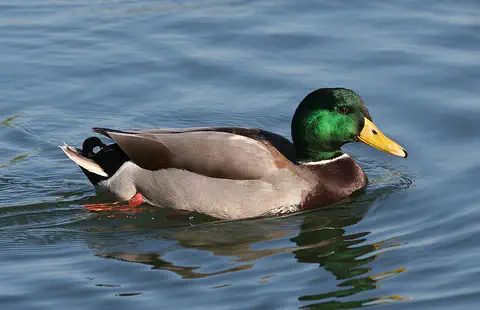
Mallard
The mallard is perhaps the most familiar duck in the world, found on ponds, lakes, rivers and city parks across North America, Europe and Asia. Males have glossy green heads; females are mottled brown. Almost all farm ducks are descended from mallards.
-
Watch
Country
United States
The United States is a large country in North America made of 50 states, from icy Alaska to the warm islands of Hawaii. It has the Grand Canyon, the Mississippi River and Yellowstone, and about 342 million people live there.
-
Watch
Country
Canada
Canada is the second-largest country in the world, stretching across the north of North America from the Atlantic to the Pacific and up into the Arctic. It has the Rocky Mountains, thousands of islands and about 42 million people, who speak English, French and many other languages.
-
 Watch
Animal
Shoebill
The shoebill is a tall gray bird of African swamps, named for its enormous bill shaped like a wooden shoe. It stands as still as a statue among the papyrus, then lunges forward to grab big, slippery fish such as lungfish.
-
 Watch
Animal
Scarlet ibis
The scarlet ibis is a bright red wading bird of South America, red all over except for black wingtips. It probes mud and shallow water with its long, curved bill for crabs, crayfish and insects, and its color comes from pigments in its food.
For parents & teachers
What children will learn
- Describe how a great blue heron's bill, neck, legs and eyes help it hunt.
- Explain what herons eat and how they catch and swallow prey.
- Describe how herons nest in colonies and raise their chicks.
- Explain why healthy wetlands and undisturbed nesting sites matter for herons.
Recommended ages: 3 to 17 · About 15 minutes
Talk about it
- Why might standing very still be a good way to catch a fish?
- Why might herons nest together in colonies but hunt alone?
- What might happen to herons if a marsh near you were drained?
Try at home or in class
- Hold a long kitchen spoon at arm's length over a bowl of floating cereal and try to scoop a piece in one quick move, like a heron's strike.
- Measure 2 meters along the floor with tape to see how wide a big heron's wings can spread.
Key vocabulary: wading bird, heronry, prey, powder down, colony, wetland
Where these facts come from
- The IUCN Red List of Threatened Species , International Union for Conservation of Nature (IUCN terms of use (no redistribution of Red List data or range maps))
- GBIF Backbone Taxonomy and GBIF Occurrence Search , Global Biodiversity Information Facility (CC0 1.0 (backbone); occurrence counts are facts derived from records under CC0, CC BY and CC BY-NC)
- Wikidata , Wikimedia Foundation (CC0 1.0)
- Ardea herodias (Great Blue Heron), Red List global assessment 2020 , IUCN Red List of Threatened Species
- Great Blue Heron overview , Cornell Lab of Ornithology, All About Birds
- Great Blue Heron identification , Cornell Lab of Ornithology, All About Birds
- Great Blue Heron life history , Cornell Lab of Ornithology, All About Birds
- Wikimedia Commons , Wikimedia Foundation (Per file: Public domain, CC0, CC BY or CC BY-SA only (credited on each page))
Checked, not yet human-reviewed. Last updated October 24, 2026. Spotted a mistake? Tell us.