
Animal
American flamingo
The American flamingo is a tall pink bird with long legs and a long neck. It eats with its head upside down in the water!
The American flamingo is a tall, bright pink wading bird of the Caribbean. It gets its color from pigments in the tiny water animals and algae it eats, and it feeds by filtering water through its bent bill with its head upside down. Flamingos live and nest in huge, noisy groups.
Phoenicopterus ruber is a highly social filter-feeder of shallow saline lagoons and estuaries, with almost its entire population of about 200,000 in the Caribbean and a small, distinct group in the Galápagos. Carotenoid pigments in its food color its plumage, comblike lamellae in its bill strain out invertebrates, and parents feed chicks a 'milk' made in the digestive tract.
Photo: Adrian Pingstone, public domain, via Wikimedia Commons
Meet the American flamingo
The American flamingo is a tall, pink bird.
It has very long legs, a long bendy neck and a bill that bends down in the middle. Flamingos love to be together in big groups.
The American flamingo is a tall wading bird, about 1.2 to 1.45 meters long from bill to tail, with stilt-like legs, a very long neck and a bill that looks bent in half. It is the brightest of the world's flamingos, colored red, pink or orange on its feathers, legs, bill and face.
When it flies, a flamingo stretches its neck out in front and its legs out behind, showing black and pink wings. Flocks often fly in a V shape.
Phoenicopterus ruber is treated as a species by the IUCN and Cornell; San Diego Zoo Wildlife Alliance lists it among six flamingos but also calls it a subspecies of the greater flamingo. Cornell gives a length of 120 to 145 centimeters and a weight of 2.1 to 4.1 kilograms.
San Diego Zoo describes American flamingos as the brightest flamingos, with red, pink or orange on their legs, bills and faces. To take off they run a few paces into the wind; in flight the long neck is extended forward and the legs trail behind, revealing the black and red or pink wing pattern shared, with variations, by all flamingos.
Quick facts
- Group
- Bird
- Length
- 1.2 to 1.45 m
- Wingspan
- 1.53 m
- Weight
- 2.1 to 4.1 kg
Where it lives
American flamingos live in warm places by the sea.
They wade in shallow, salty lagoons. Many live on Caribbean islands, and a few live on the Galápagos Islands.
American flamingos live around the Caribbean Sea: in the Bahamas, Cuba, Haiti and the Dominican Republic, the Turks and Caicos Islands, islands such as Bonaire and Curaçao, the coasts of Colombia and Venezuela, and parts of the United States and Mexico. A small group of 400 to 500 lives far away on the Galápagos Islands.
They live in shallow, salty lagoons and estuaries, where rivers meet the sea. Some fly a long way for food: birds nesting on the island of Bonaire may fly about 90 kilometers each day to feed along the coast of Venezuela.
The IUCN's 2020 global assessment lists resident populations in the Bahamas, Cuba, the Dominican Republic, Haiti, the Turks and Caicos, Aruba, Bonaire, Curaçao, Trinidad and Tobago, Colombia, Venezuela, Guyana, Suriname, the United States and Ecuador (Galápagos), with non-breeding birds in Mexico, Jamaica and Puerto Rico; it is extinct in Antigua and Barbuda and reintroduced in the British Virgin Islands.
Cornell estimates that nearly the whole population, about 200,000 birds, is in the Caribbean, with an isolated Galápagos population of 400 to 500 that is shorter, lays smaller eggs, builds rock nests and is somewhat genetically distinct. Storms can scatter birds widely: after Hurricane Idalia in 2023, flamingos turned up in 17 U.S. states.
Continents
Its habitat

Where can you find this animal?
- Lives here naturally · Countries and seas named by a scientific source
- Sightings recorded · Records of wild sightings (GBIF)
Lives here naturally · Countries and seas named by a scientific source
Shallow salty lagoons and estuaries around the Caribbean, including Aruba, Bonaire, Curaçao and the Turks and Caicos (no separate map shapes), and the Galápagos Islands of Ecuador. In Mexico, Jamaica and Puerto Rico the IUCN lists only non-breeding birds. Flamingos live only in coastal parts of the countries shown.
Places: Bahamas, Colombia, Cuba, Dominican Rep., Ecuador, Guyana, Haiti, Jamaica and 6 more places.
Source: iucn-red-list · checked October 2026
Sightings recorded · Records of wild sightings (GBIF)
Counts of GBIF records of wild observations (human and machine) and preserved specimens. Records include introduced populations, vagrants, escaped or released animals and misidentifications, so a country with records is not necessarily part of the native range.
Wild sightings have been recorded in South Africa, Spain, United States, Mexico, Ecuador, Cuba, Venezuela, Colombia and 57 more places.
Source: gbif · checked October 2026
Range maps show where scientists say an animal lives, often country by country. An animal may live in only part of a country shown, and sightings records can include animals that wandered far from home.
Eating upside down
Flamingos eat tiny shrimp, little shelled animals and bits of plants.
They put their heads upside down in the water. Their bills work like a strainer to catch food.
Flamingos eat small water animals such as tiny shrimp and other crustaceans, mollusks (soft-bodied animals, many with shells) and insect larvae, plus some seeds and algae. They feed with their heads underwater and their bills upside down, walking slowly through shallow water.
Inside the bill are rows of comb-like plates called lamellae. The flamingo's big tongue pumps water in and out, and the lamellae catch the food, a bit like the way some whales strain food through their baleen.
The diet is mainly crustaceans, mollusks, insect larvae and other aquatic invertebrates, with some seeds, plant material and algae. Foraging birds stride slowly with the head submerged and the bill held upside down.
The large tongue pumps water through comblike lamellae lining the bill, which trap small food items, a mechanism Cornell compares to baleen whales straining crustaceans. San Diego Zoo explains that the pink-to-red color comes from carotenoid pigments in the algae and small crustaceans flamingos eat; zoo flamingos receive a diet with added pigment to keep their color.
Did you know?
A storm once carried flamingos far away.
After Hurricane Idalia in 2023, American flamingos turned up in 17 U.S. states, including Kansas and Wisconsin.
Storm-driven displacement after Hurricane Idalia (2023) produced records in 17 U.S. states, far outside the usual range.
Long legs and a bent bill
A flamingo's long legs let it walk in deep water.
Its pink color comes from its food. Flamingos often stand on one leg. Scientists are still not sure why!
Long legs let flamingos wade into deeper water than most birds when they look for food. To feed, a flamingo holds its bent bill upside down in the water.
A flamingo's pink color comes from its food, which is full of colorful pigments called carotenoids, the same kind of pigment that makes carrots orange. Flamingos often rest standing on one leg. Scientists aren't sure why: tucking up a leg saves heat, but flamingos do it in hot places too.
Stilt-like legs allow flamingos to forage in deeper water than most wading birds, and the strongly bent bill functions upside down as a filter. Plumage color depends on dietary carotenoids, the pigment group found in carrots and beets.
Why flamingos stand on one leg is unresolved. San Diego Zoo notes that tucking a leg against the body reduces heat loss, yet the behavior also occurs in hot climates, and it may simply be a comfortable resting posture. Flamingos are long-lived: the oldest American flamingo on record, banded in the Bahamas in 1970 and recovered in 2019, was at least 49 years old.
Mud nests and flamingo milk
Flamingo parents build a nest out of mud.
It looks like a little volcano. The chick is gray and fluffy. Its parents feed it a special milk.
Both parents build a nest on a mud flat: a cone of mud shaped like a little volcano, with a shallow cup on top. The female usually lays just one white egg, and both parents keep it warm for 27 to 31 days.
The chick hatches with gray, fluffy down. Its parents feed it 'flamingo milk', a special liquid made in their digestive tract. After a week or two the chick joins a big group of chicks called a creche, watched by a few adults, but its own parents still feed it.
Pairs are thought to be monogamous. Both sexes build the nest, a volcano-shaped mud cone with a shallow cup on top on mud or salt flats (rocks and debris in the Galápagos); San Diego Zoo notes cones can reach about 0.6 meters. Females nearly always lay a single egg, incubated by both parents for 27 to 31 days.
Chicks hatch with gray down and a straight, pink bill. Both parents feed them crop milk from the upper digestive tract, a secretion that can drain the parents' own color. After 5 to 12 days on the nest mound, chicks join creches watched by a few adults; parents find their own chick by its call and keep feeding it. Cornell gives a nestling period of 65 to 90 days.
Life in a flock
Flamingos live in big, noisy flocks.
Sometimes thousands of flamingos are together. They call loudly, feed in groups and fly together.
American flamingos are very social. They feed in noisy flocks of hundreds or even thousands of birds, and they nest in huge, crowded colonies. One colony in Cuba had about 80,000 birds!
Flamingos also show off together. In one display, called the wing salute, a flamingo stretches out its neck, cocks its tail and shows off the contrasting colors of its wings. Parents and chicks know each other's calls, so they can find each other in a big, noisy crowd.
The species is highly gregarious, foraging in flocks of hundreds to thousands and nesting in dense colonies; Cornell cites a Cuban colony of 80,000 birds. After breeding, birds disperse to lagoons and estuaries, and some make long daily commutes to feeding areas.
Group displays include the 'wing salute', in which a bird cocks its tail, stretches its neck and opens its wings to show their contrasting colors. Flocks usually fly in V or other formations. Vocal recognition lets parents and chicks find one another within creches of many young.

Flamingos and people
There are many American flamingos.
They need quiet lagoons to live in. People help by keeping these wet places safe and clean.
The American flamingo is listed as Least Concern. About 180,000 adults breed in the wild, mostly around the Caribbean.
Flamingos still face problems. Roads and houses built near their lagoons can take away places to feed and nest. In 1989, about 100 flamingos in Mexico's Yucatán died from swallowing lead shot from hunters' guns, so lead shot is now banned there.
The IUCN assessed the American flamingo as Least Concern in 2020. Partners in Flight, quoted by Cornell, estimates about 180,000 breeding individuals and rates it a species of fairly low conservation concern.
San Diego Zoo notes that habitat loss from road construction and housing development is threatening some populations. In 1989 about 100 Caribbean flamingos died of lead poisoning on Mexico's Yucatán Peninsula after swallowing lead shot, which is now prohibited there.
IUCN Red List
How is the american flamingo doing in the wild?
- Least Concern (this animal)
- Near Threatened
- Vulnerable
- Endangered
- Critically Endangered
- Extinct in the Wild
- Extinct
Least Concern
Not at risk of disappearing from the wild right now.
See the IUCN Red List assessment · The IUCN Red List of Threatened Species 2021.3
Amazing facts
-
Flamingos are pink because of the food they eat.
A flamingo's pink color comes from pigments called carotenoids in the algae and tiny crustaceans it eats.
Plumage color depends on dietary carotenoids, so zoo flamingos are fed added pigment to stay pink.
-
Baby flamingos have straight bills.
A flamingo chick hatches with a straight pink bill and swollen pink legs, which turn black within a week.
Chicks hatch with a straight, pink bill and swollen pink legs, both of which turn black within a week.
-
Flamingo parents make milk for their chicks.
Flamingo parents feed their chicks 'flamingo milk' made in their digestive tract, something pigeons and doves do too.
Crop milk from the upper digestive tract is produced by both sexes; San Diego Zoo notes its nutrition is similar to mammal milk.
-
A storm once carried flamingos far away.
After Hurricane Idalia in 2023, American flamingos turned up in 17 U.S. states, including Kansas and Wisconsin.
Storm-driven displacement after Hurricane Idalia (2023) produced records in 17 U.S. states, far outside the usual range.
Words to know
- wading bird
- a long-legged bird that walks in shallow water to find food
- lagoon
- a shallow body of salty water near the sea
- lamellae
- comb-like plates inside a flamingo's bill that strain food from water
- carotenoids
- orange, red and yellow pigments found in foods like carrots
- creche
- a group of young animals watched over together
- estuary
- a place where a river meets the sea
Discovery challenge
-
Why are flamingos pink?
What gives flamingos their pink color?
What is the source of flamingo plumage color?
- The food they eat
- The sunshine
- Pink paint
Show the answer
The food they eat
Their food makes them pink.
Carotenoid pigments in the algae and tiny crustaceans they eat.
Dietary carotenoids from algae and small crustaceans.
-
How does a flamingo hold its head when it eats?
How do flamingos feed?
How does a flamingo collect its food?
- Upside down in the water
- Up in the trees
- Digging in sand dunes
Show the answer
Upside down in the water
It eats with its head upside down in the water.
It holds its bill upside down in the water and strains out tiny food.
With the bill inverted underwater, the tongue pumps water through lamellae that trap prey.
-
What do flamingos build their nests from?
What is a flamingo nest made of?
What do Caribbean flamingos build their nests from?
- Mud
- Sticks in a tree
- Snow
Show the answer
Mud
They make a nest of mud.
A volcano-shaped cone of mud with a cup on top.
A mud cone on mud or salt flats; Galápagos birds use rocks and debris instead.
-
What do flamingo chicks drink?
What do flamingo parents feed their young chicks?
What do flamingos first feed their chicks?
- Flamingo milk
- Orange juice
- Seawater only
Show the answer
Flamingo milk
Their parents feed them flamingo milk.
A special 'milk' made in the parents' digestive tract.
Crop milk from the upper digestive tract, produced by both parents.
Places where you might see it
-
 Watch
 Country
Cuba
Cuba is the largest island in the Caribbean, a long, narrow country with about 1,600 smaller islands and cays around it. It has mountains, green valleys, coral reefs and the old city of Havana, its capital. About 9.4 million people lived there at the end of 2025, and Spanish is the main language.
-
 Watch
 Country
Haiti
Haiti covers the western third of the island of Hispaniola in the Caribbean. Its name comes from an old word meaning mountainous land. In 1804, after enslaved people freed themselves, Haiti became independent, and its people created their own language, art and music. About 11.9 million people lived there in 2024.
Experiments to try
Explore next
-
 Watch
Animal
Greater flamingo
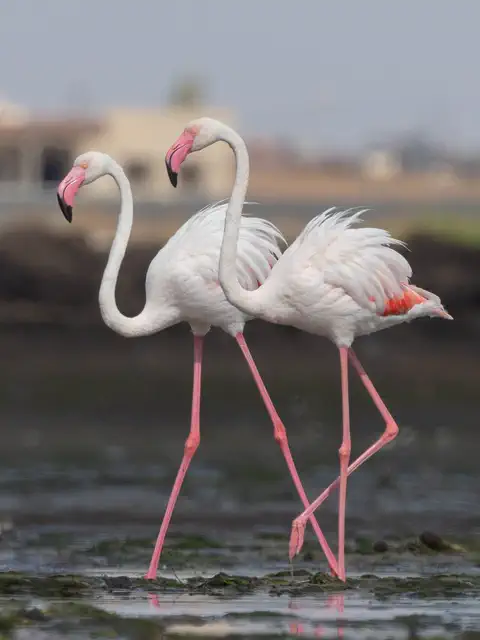
The greater flamingo is the tallest and heaviest flamingo, standing up to about 1.45 meters tall. It lives in salty lagoons and lakes across Africa, southern Europe, the Middle East and South Asia. It feeds by holding its bent bill upside down in the water and filtering out tiny animals, and it gets its pink color from what it eats.
-
 Watch
3D
Animal
Mallard
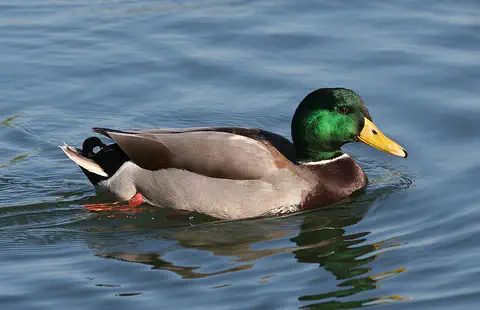
The mallard is perhaps the most familiar duck in the world, found on ponds, lakes, rivers and city parks across North America, Europe and Asia. Males have glossy green heads; females are mottled brown. Almost all farm ducks are descended from mallards.
-
 Watch
3D
Animal
Atlantic puffin
The Atlantic puffin is a small seabird of the North Atlantic, often called the clown of the sea because of its huge, colorful bill. It spends most of its life far out on the ocean and comes ashore only in summer to nest in burrows on islands and cliff tops. Underwater, its small wings work like flippers.
-
Watch
Country
Cuba
Cuba is the largest island in the Caribbean, a long, narrow country with about 1,600 smaller islands and cays around it. It has mountains, green valleys, coral reefs and the old city of Havana, its capital. About 9.4 million people lived there at the end of 2025, and Spanish is the main language.
-
 Watch
3D
Animal
Great blue heron
The great blue heron is the largest heron in North America. It wades slowly through marshes, rivers and ponds, or stands as still as a statue, then strikes like lightning with its dagger-shaped bill to catch fish, frogs and even small mammals.
-
 Watch
3D
Animal
Lesser flamingo
The lesser flamingo is the smallest flamingo. Millions live on salty, soda-rich lakes in Africa and India, where they sweep their upside-down bills through the water to filter out tiny algae, which help give them their pink color.
-
 Watch
3D
Animal
Roseate spoonbill
The roseate spoonbill is a bright pink wading bird with a long, flat bill shaped like a spoon. It sweeps its bill from side to side through shallow water and grabs the shrimp or small fish it feels. Its pink color comes from the food it eats.
-
Watch
Country
Haiti
Haiti covers the western third of the island of Hispaniola in the Caribbean. Its name comes from an old word meaning mountainous land. In 1804, after enslaved people freed themselves, Haiti became independent, and its people created their own language, art and music. About 11.9 million people lived there in 2024.
For parents & teachers
What children will learn
- Explain how a flamingo's bill filters food and why flamingos are pink.
- Describe flamingo nests, chicks and creches.
- Describe where American flamingos live and how they gather in flocks.
- Identify threats to flamingos and how people have reduced some of them.
Recommended ages: 3 to 17 · About 15 minutes
Talk about it
- Why might it help young flamingos to wait in a big group while their parents feed?
- What could happen to a flamingo's color if its food changed?
- Scientists aren't sure why flamingos stand on one leg. What do you think, and how could you test it?
Try at home or in class
- Mix rice or lentils into a bowl of water and try to strain them out with a comb or a tea strainer, like flamingo lamellae.
- Try standing on one leg for a minute, then on two, and talk about which feels more comfortable.
Key vocabulary: wading bird, lagoon, lamellae, carotenoids, creche, estuary
Where these facts come from
- The IUCN Red List of Threatened Species , International Union for Conservation of Nature (IUCN terms of use (no redistribution of Red List data or range maps))
- GBIF Backbone Taxonomy and GBIF Occurrence Search , Global Biodiversity Information Facility (CC0 1.0 (backbone); occurrence counts are facts derived from records under CC0, CC BY and CC BY-NC)
- Wikidata , Wikimedia Foundation (CC0 1.0)
- Phoenicopterus ruber (American Flamingo), Red List global assessment 2020 , IUCN Red List of Threatened Species
- American Flamingo overview , Cornell Lab of Ornithology, All About Birds
- American Flamingo life history , Cornell Lab of Ornithology, All About Birds
- American Flamingo identification , Cornell Lab of Ornithology, All About Birds
- Flamingo , San Diego Zoo Wildlife Alliance
- Wikimedia Commons , Wikimedia Foundation (Per file: Public domain, CC0, CC BY or CC BY-SA only (credited on each page))
Checked, not yet human-reviewed. Last updated October 28, 2026. Spotted a mistake? Tell us.