
Animal
Lilac-breasted roller
The lilac-breasted roller is a bird with feathers of many colors: purple, blue, green and orange. It lives in Africa and does flips in the air!
The lilac-breasted roller is a dazzling bird of the open woodlands and savannas of eastern and southern Africa. It sits on high perches watching for insects, swoops down to catch them, and gets its name from the rolling, tumbling flights it makes in the breeding season.
Coracias caudatus is a common roller (family Coraciidae, order Coraciiformes) of eastern and southern Africa. A perch-hunting predator of large insects and small vertebrates, it is known for aerial rolling displays used in courtship and territorial defense. The IUCN (2024) lists it as Least Concern with a stable population.
Photo: Giles Laurent, CC BY-SA 4.0, via Wikimedia Commons
Meet the lilac-breasted roller
The lilac-breasted roller is a very colorful bird.
It has a pinkish-purple chest, a green head and bright blue wings. Two long, thin feathers stick out of its tail.
The lilac-breasted roller is a dazzlingly colorful African bird. Its throat and chest are lilac, a soft pinkish purple, its cheeks are orange-brown, and its wings flash bright blue and deep purple-blue when it flies. Adults have two long, thin streamers at the edges of the tail.
Male and female look the same. Rollers belong to the same big group of birds as kingfishers. They got their name from the way they roll from side to side in flight.
Coracias caudatus belongs to the rollers (Coraciidae), in the order Coraciiformes with the kingfishers. Joseph Forshaw describes adults of both sexes as identical: olive-green crown and nape, olive-brown back tinged blue, cobalt-blue rump, white forehead and chin, lilac-rufous cheeks, a lilac throat and breast streaked with white, and azure to deep purple-blue flight feathers. The outermost tail feathers end in long, narrow tips.
Two subspecies are recognized: the resident C. c. caudatus of the south, and the migratory C. c. lorti of northeastern Africa, which has a lilac throat but an azure-blue breast. Juveniles are duller and lack the tail streamers.
Quick facts
- Group
- Bird
- Length
- up to 0.3 m
Where it lives
Lilac-breasted rollers live in Africa.
They like open places with a few trees, where they can sit up high and look around.
Lilac-breasted rollers live in eastern and southern Africa, from Ethiopia and Somalia down through Kenya, Tanzania, Zambia and Zimbabwe to Botswana, Namibia and South Africa.
They like open country: dry woodlands, grasslands with scattered trees, scrub, and even farms and gardens. They can live in places with no trees at all if there are fences or telephone wires to perch on. In some parts of their range they are very common.
The IUCN's 2024 assessment lists 19 range countries, from Ethiopia and Somalia through East and Central Africa (Kenya, Uganda, Tanzania, Rwanda, Burundi, both Congos) to Angola, Zambia, Malawi, Mozambique, Zimbabwe, Botswana, Namibia, Eswatini, Lesotho and South Africa, with vagrants recorded in Eritrea, Oman and Yemen.
Forshaw notes an unusually broad habitat tolerance: dry open woodland, grassland with scattered trees, subdesert scrub, light forest, riverine woodland, gardens and cultivated fields, and even treeless grassland where fences or wires offer perches. In the south it tends to avoid denser woodland, where the racket-tailed roller replaces it.
Continent
Its habitats


Where can you find this animal?
- Lives here naturally · Countries and seas named by a scientific source
- Sightings recorded · Records of wild sightings (GBIF)
Lives here naturally · Countries and seas named by a scientific source
Open woodlands, savannas, scrub and farmland of eastern and southern Africa, from Ethiopia and Somalia to South Africa. Vagrants have been recorded in Eritrea, Oman and Yemen (not shaded).
Places: Ethiopia, Somalia, Kenya, Uganda, Tanzania, Rwanda, Burundi, Congo and 11 more places.
Source: iucn-red-list · checked October 2026
Sightings recorded · Records of wild sightings (GBIF)
Counts of GBIF records of wild observations (human and machine) and preserved specimens. Records include introduced populations, vagrants, escaped or released animals and misidentifications, so a country with records is not necessarily part of the native range.
Wild sightings have been recorded in South Africa, Kenya, Tanzania, Namibia, Botswana, Zimbabwe, Zambia, Mozambique and 28 more places.
Source: gbif · checked October 2026
Range maps show where scientists say an animal lives, often country by country. An animal may live in only part of a country shown, and sightings records can include animals that wandered far from home.
What it eats
Rollers sit on a high branch and watch the ground.
When they see a grasshopper or beetle, they swoop down and catch it!
Lilac-breasted rollers are watch-and-wait hunters. A roller sits on a high perch, sometimes the same favorite perch for weeks, and scans the ground. When it spots prey, it swoops down and grabs it in its bill. It may even catch insects in midair.
Its favorite foods are big insects such as grasshoppers, locusts, crickets, beetles and caterpillars. It also eats spiders, scorpions, snails and small lizards. Rollers gather near grass fires to catch insects escaping the flames.
Forshaw lists favored prey as large grasshoppers, locusts, crickets, beetles, moths and their larvae (including hairy caterpillars) and some butterflies, with spiders, scorpions, centipedes, snails, small reptiles and occasionally small birds also taken. Prey is seized on the ground after a swoop from a vantage perch and either eaten there or carried back and struck against the perch before being swallowed.
Rollers are drawn to bush fires, joining mixed groups of birds at the fire front where fleeing insects and small animals are easy to catch. London Zoo notes their agility in flight lets them catch insects in the air.
Did you know?
Rollers are cousins of kingfishers.
Rollers belong to the same order of birds as kingfishers, the Coraciiformes.
The roller family Coraciidae sits in the order Coraciiformes alongside the kingfishers; syndactyl feet are characteristic of rollers.
Colors and gripping feet
The roller has a strong black beak for catching bugs.
Its feet hold on tight to branches. Its wings flash bright blue when it flies.
A roller's strong, black bill is good for grabbing and holding insects. Its feet are special: some of the toes are joined together, which London Zoo says gives the bird better grip and balance on a perch. This kind of foot is a trait of the roller family.
When the roller opens its wings, you see bright turquoise and deep purple-blue feathers. The long tail streamers help make its shape easy to spot in the air.
The feet are syndactyl, with some toes fused, which London Zoo describes as improving grip and stability when perching and as a trait of the roller family. The bill is black and the iris dark brown (Forshaw).
In flight the wing shows cobalt blue at the bend, bluish-green coverts and flight feathers that shade from azure near the body to deep purple-blue at the tips. Flight is fairly fast and direct with rapid, shallow wingbeats, and the elongated outer tail feathers give a distinctive silhouette.
Growing up
Rollers nest in a hole in a tree.
The mother lays two to four white eggs. Both parents keep them warm and feed the babies.
Lilac-breasted rollers nest in holes in trees or in hollow branches, and sometimes in a hole in a termite mound. The female lays two to four white eggs on a thin bed of grass. Both parents take turns keeping the eggs warm for about 23 days.
The chicks hatch with no feathers. By five days old they have gray fluff, and by about 19 days they are fully feathered. About 35 days after hatching, the young rollers leave the nest. Young birds are duller than their parents and have no long tail streamers yet.
Breeding runs from March to July in the north of the range and from August to December in the south (Forshaw). Nests are in a hollow limb or tree hole, less often in a cavity in a termite mound, with two to four white eggs laid on a sparse layer of grass over decayed debris.
Both sexes incubate for about 23 days, and both parents feed the chicks. Hatchlings are naked, gain gray down at five days and are fully feathered at 19 days; they leave the nest about 35 days after hatching. Juveniles have cinnabar-brown, buff-streaked throats and breasts and lack the elongated outer tail feathers.
Rolling in the sky
When it is time to find a mate, rollers do tricks in the sky.
They fly up high, then tumble down, rolling from side to side. They call "rak, rak!"
When the breeding season starts, rollers put on an amazing air show. A bird flies up 10 to 15 meters above the treetops, tips forward and dives with its wings closed, then speeds up and rolls from side to side as it swoops. Then it climbs and does it again.
These rolling flights help attract a mate and warn other rollers to stay out of the bird's territory. Rollers are bold and noisy. They often sit in plain view on treetops, fences and wires, calling "rak, rak" and chasing away intruders.
Forshaw describes the display: birds presumed to be males climb 10 to 15 meters above the treetops, tip forward and fall with wings closed, gain speed with strong wingbeats, then level out while twisting and rolling alternately right and left, before sweeping up to repeat. The displays serve both courtship and territorial advertisement, and have been seen after copulation and from pairs drawing attention away from nests or new fledglings. London Zoo also links the name to these courtship displays.
The species is quarrelsome and territorial, chasing intruders with strident calls. The contact call is a guttural "rak... rak"; during the rolling display it leads to a harsh "kaaa... kaarsh".
Did you know?
A roller may sit on the same favorite branch for weeks.
A roller often has a favorite lookout perch and may use it day after day for weeks.
Individuals may keep a favored vantage perch for weeks on end, often a treetop, fence or telegraph wire.
A common bird
Lots of lilac-breasted rollers live in Africa.
They are not in danger.
Good news: the lilac-breasted roller is not in danger. Scientists list it as Least Concern because it lives across a huge area of Africa and its numbers seem to be steady. In many places it is common and easy to see.
Like all wild birds, rollers need open places to hunt, and trees or termite mounds with holes to nest in.
BirdLife International's 2024 assessment for the IUCN Red List classifies Coracias caudatus as Least Concern: its range is extremely large, the population, though not quantified, is described as abundant, common or frequent, and the trend is suspected to be stable in the absence of evidence of declines or substantial threats. The species has been Least Concern or Lower Risk in every assessment since 1988.
It appears in international trade at low prevalence, recorded in two of seven trade datasets evaluated. It is also one of the rollers most often kept and bred in captivity, especially in South Africa (Forshaw).
IUCN Red List
How is the lilac-breasted roller doing in the wild?
- Least Concern (this animal)
- Near Threatened
- Vulnerable
- Endangered
- Critically Endangered
- Extinct in the Wild
- Extinct
Least Concern
Not at risk of disappearing from the wild right now.
See the IUCN Red List assessment · The IUCN Red List of Threatened Species 2021.3
Amazing facts
-
Rollers come close to grass fires to catch bugs running away.
Lilac-breasted rollers gather near bush fires to catch insects and small animals fleeing the flames.
Forshaw describes rollers joining mixed groups of birds at the edge of advancing fires, where fleeing or injured insects, small reptiles and mammals are easy prey.
-
A roller may sit on the same favorite branch for weeks.
A roller often has a favorite lookout perch and may use it day after day for weeks.
Individuals may keep a favored vantage perch for weeks on end, often a treetop, fence or telegraph wire.
-
Rollers are cousins of kingfishers.
Rollers belong to the same order of birds as kingfishers, the Coraciiformes.
The roller family Coraciidae sits in the order Coraciiformes alongside the kingfishers; syndactyl feet are characteristic of rollers.
-
Roller chicks hatch with no feathers at all.
Roller chicks hatch naked, grow gray fluff in five days and have all their feathers by about 19 days old.
Chicks are naked at hatching, downy at five days and fully feathered by 19 days, fledging at about 35 days.
Words to know
- lilac
- a soft, pinkish-purple color
- perch
- a branch or other place where a bird sits
- display
- a special show an animal makes to attract a mate or warn rivals
- territory
- an area an animal defends against others of its kind
- syndactyl
- having some toes joined together
- savanna
- a warm, grassy land with scattered trees
Discovery challenge
-
How did the roller get its name?
Where does the roller's name come from?
Which behavior gives rollers their common name?
- It rolls along the ground like a ball
- It rolls from side to side when it flies
- It rolls its eggs out of the nest
Show the answer
It rolls from side to side when it flies
It rolls in the sky when it shows off!
In its display flight it dives and rolls from side to side.
The aerial display: a closed-wing dive followed by alternating rolls, used in courtship and territorial advertisement.
-
What does a roller like to eat?
What are a lilac-breasted roller's favorite foods?
Which prey does Forshaw list as favored by the lilac-breasted roller?
- Big insects like grasshoppers and beetles
- Grass and leaves
- Fish from the sea
Show the answer
Big insects like grasshoppers and beetles
Rollers love grasshoppers and beetles.
It eats large insects such as grasshoppers, locusts, crickets and beetles, plus some small animals.
Large grasshoppers, locusts, crickets, beetles, moths and larvae, with other arthropods and small vertebrates.
-
How does a roller hunt?
How does a roller usually catch its food?
What hunting method does the lilac-breasted roller mainly use?
- It digs underground
- It swims after it
- It watches from a high perch, then swoops down
Show the answer
It watches from a high perch, then swoops down
It sits up high, watches, then swoops down!
It waits on a high perch, scanning the ground, then swoops to grab prey.
Perch-and-pounce: scanning from a vantage perch, swooping to the ground and returning to beat prey against the perch.
-
Is the lilac-breasted roller in danger?
What is the conservation status of the lilac-breasted roller?
How does the IUCN's 2024 assessment classify Coracias caudatus?
- Endangered
- Least Concern
- Extinct in the wild
Show the answer
Least Concern
No, there are lots of them in Africa.
It is Least Concern: it lives over a huge area and its numbers seem steady.
Least Concern: an extremely large range and a population suspected to be stable.
Places where you might see it
-
 Watch
 Country
Namibia
Namibia lies on the southwestern coast of Africa. The Namib, a desert of huge dunes kept alive by sea fog, runs along its coast, a high plateau with farms and wildlife fills its middle, and the dry Kalahari lies to the east. Namibia became independent in 1990.
-
 Watch
 Country
Kenya
Kenya is a country in East Africa, crossed by the equator. It has the snow-capped Mount Kenya, the deep Great Rift Valley, Lake Victoria and a long Indian Ocean coast, and about 54 million people live there, many of them speaking Swahili.
-
 Watch
 Country
Botswana
Botswana is a landlocked country in the middle of southern Africa. Deep Kalahari sand covers most of it, but in the north the Okavango River spreads into a huge green delta full of wildlife. Botswana became independent in 1966 and has grown more prosperous, helped by diamonds.
Explore next
-
 Watch
3D
Animal
Common kingfisher
The common kingfisher is a small, dazzling blue and orange bird of rivers, canals and lakes across Europe, Asia and North Africa. It watches from a perch, then dives headfirst into the water to catch small fish with its dagger-shaped bill.
-
 Watch
3D
Animal
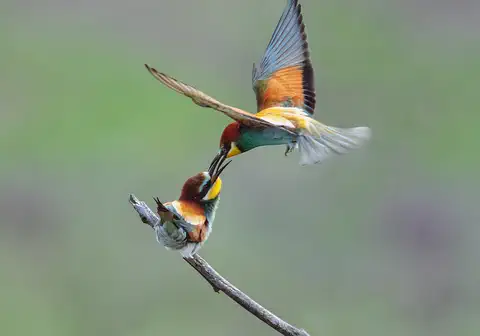
European bee-eater
The European bee-eater is one of the most colorful birds in Europe. It catches bees, dragonflies and other flying insects in midair, knocks out the stings on a branch, and digs a long tunnel in a sandy bank for its nest. Every autumn it flies to Africa for the winter.
-
Watch
Country
Namibia
Namibia lies on the southwestern coast of Africa. The Namib, a desert of huge dunes kept alive by sea fog, runs along its coast, a high plateau with farms and wildlife fills its middle, and the dry Kalahari lies to the east. Namibia became independent in 1990.
-
Watch
Country
Kenya
Kenya is a country in East Africa, crossed by the equator. It has the snow-capped Mount Kenya, the deep Great Rift Valley, Lake Victoria and a long Indian Ocean coast, and about 54 million people live there, many of them speaking Swahili.
-
Watch
Country
Botswana
Botswana is a landlocked country in the middle of southern Africa. Deep Kalahari sand covers most of it, but in the north the Okavango River spreads into a huge green delta full of wildlife. Botswana became independent in 1966 and has grown more prosperous, helped by diamonds.
-
 Watch
Animal
Great hornbill
The great hornbill is a very large bird of Asia's forests, with a long tail, broad black-and-white wings and an enormous curved yellow bill topped by a helmet called a casque. It eats mostly figs, and the female seals herself inside a tree hole to raise her chick.
-
 Watch
Animal
Adélie penguin
The Adélie penguin is a medium-sized penguin, about 70 centimeters tall, with a black back, a white front and a bright white ring around each eye. It breeds in summer on rocky, ice-free ground all around Antarctica, building nests of pebbles, and spends the winter far out at sea among the pack ice.
-
 Watch
Animal
African fish eagle
The African fish eagle is a big eagle of Africa's lakes, rivers and coasts, with a white head, chest and tail and a chestnut-brown body. It snatches fish from the surface of the water, and its loud, ringing call is one of the best-known sounds of Africa.
For parents & teachers
What children will learn
- Identify the lilac-breasted roller's colors and features, including syndactyl feet.
- Describe its perch-and-swoop hunting and its insect diet.
- Explain what a display flight is and why birds perform them.
- Locate its range in eastern and southern Africa.
Recommended ages: 3 to 17 · About 12 minutes
Talk about it
- Why might a bird that hunts by watching need a high perch?
- Why do you think rollers gather near fires?
- Why might bright colors help a bird, and how might they be a risk?
Try at home or in class
- Sit very still in a park or yard for five minutes and watch the ground like a roller. Count the insects you notice.
- Color a roller using the real colors: lilac breast, orange-brown cheeks, turquoise and purple wings.
Key vocabulary: lilac, perch, display, territory, syndactyl, savanna
Where these facts come from
- The IUCN Red List of Threatened Species , International Union for Conservation of Nature (IUCN terms of use (no redistribution of Red List data or range maps))
- GBIF Backbone Taxonomy and GBIF Occurrence Search , Global Biodiversity Information Facility (CC0 1.0 (backbone); occurrence counts are facts derived from records under CC0, CC BY and CC BY-NC)
- Coracias caudatus (Lilac-breasted Roller), Red List assessment (BirdLife International 2024) , IUCN Red List of Threatened Species
- Bold and Beautiful: Lilac-breasted Roller in Field and Aviary (Forshaw, J. M., 2000) , AFA Watchbird (American Federation of Aviculture), via Texas A&M University Libraries
- Keeping and breeding the Lilac-breasted Roller (Sweeney, R.) , AFA Watchbird (American Federation of Aviculture), via Texas A&M University Libraries
- Lilac-breasted roller , London Zoo (ZSL)
- Wikidata , Wikimedia Foundation (CC0 1.0)
- Wikimedia Commons , Wikimedia Foundation (Per file: Public domain, CC0, CC BY or CC BY-SA only (credited on each page))
Checked, not yet human-reviewed. Last updated October 27, 2026. Spotted a mistake? Tell us.