
Animal
Northern fulmar
The northern fulmar is a gray and white seabird. It nests on cliffs by cold northern seas. It can spit smelly oil to keep others away from its nest.
The northern fulmar is a stocky gray and white seabird of the cold North Atlantic, North Pacific and Arctic oceans. It is related to albatrosses and has raised tube-shaped nostrils on top of its thick bill. Fulmars nest on sea cliffs, lay one egg and defend their nests by spitting foul-smelling oil.
Fulmarus glacialis is a petrel (order Procellariiformes) that breeds from Japan and the United Kingdom north to the high Arctic. Its North Atlantic population has spread dramatically over the last 250 years. BirdLife International assessed it as Least Concern for the IUCN Red List (assessed 2018, published 2018), with an increasing trend and an estimated 7 million pairs (Carboneras et al. 2016).
Photo: Charles J. Sharp, CC BY-SA 4.0, via Wikimedia Commons
Meet the northern fulmar
The northern fulmar is a seabird. It is gray on top and white underneath.
It has a thick beak with little tubes on top.
The northern fulmar looks a little like a gull, but it is a petrel, related to albatrosses. It is 43 to 53 centimeters long, its wings spread 1 to 1.1 meters, and it weighs 650 grams to 1.1 kilograms.
Many fulmars are light gray above and white below, but their colors vary a lot: some are much darker. Its thick yellow bill has raised, tube-shaped nostrils on top. Males and females look alike.
Kaufman (Audubon, 1996) describes a stocky, big-headed bird like a shearwater, 43 to 53 centimeters long, 1 to 1.1 meters across the wings and 650 grams to 1.1 kilograms, with a very thick yellow bill. The sexes are similar, and color is highly variable, with dark and light morphs and many intermediates. The RSPB, which gives 45 to 50 centimeters, describes light gray upperparts, white underparts, a yellow bill with raised nostrils on top, and notes that the fulmar is related to the albatrosses.
The BTO's ringing data give an average adult mass of 772.4 grams and wing lengths of about 31 to 35 centimeters.
Quick facts
- Group
- Bird
- Length
- 0.43 to 0.53 m
- Wingspan
- 1 to 1.1 m
- Weight
- 0.65 to 1.1 kg
- Lifespan in the wild
- 41.9 years
Cliffs by cold seas
Fulmars live over cold seas in the far north.
They nest on cliffs by the sea.
Northern fulmars breed all around the North Atlantic and North Pacific, from Japan and the United Kingdom in the south to the high Arctic in the north. In North America they breed mainly in Arctic Canada and on islands in the Bering Sea.
They spend most of their lives offshore. Birds from the far north fly south when the sea freezes over, while birds farther south wander widely but usually stay out of warm water. In winter, some commonly reach as far south as New England and southern California.
The IUCN describes breeding throughout the North Atlantic and North Pacific, from Japan and the United Kingdom to the high Arctic. Northern populations are migratory, moving south as the sea freezes; southern populations are more dispersive but do not usually reach warm water, and young birds may cross whole oceans and wander farther than adults (del Hoyo et al. 1992). Kaufman (Audubon, 1996) places North American breeding mainly in high Arctic Canada and on Bering Sea islands, with winter birds commonly reaching New England and southern California in numbers that vary greatly from year to year. He describes a bird of cold waters, including the edges of the Arctic pack ice, often concentrated over the outer continental shelf and upwellings.
In Britain and Ireland, the BTO says fulmars breed around almost the entire coastlines of Scotland, Wales and Ireland and in south-west and north-east England, and most leave the colonies abruptly in September.
Continents
Its habitat

Where can you find this animal?
- Lives here naturally · Countries and seas named by a scientific source
- Sightings recorded · Records of wild sightings (GBIF)
- Visits for part of the year · Countries and seas named by a scientific source
Lives here naturally · Countries and seas named by a scientific source
Coasts, cliffs and seas of the North Atlantic, North Pacific and Arctic, from Japan and the United Kingdom north to the high Arctic: the coasts of these countries, not their inland areas. The Faroe Islands, Svalbard and Jan Mayen and Saint Pierre and Miquelon are also in the range but have no separate map shape. The IUCN list also names Mexico, China and Puerto Rico; they are not shaded here.
Places: UK, Ireland, Iceland, Greenland, Germany, Norway, Denmark, Sweden and 8 more places.
Source: iucn-red-list · checked October 2026
Sightings recorded · Records of wild sightings (GBIF)
Counts of GBIF records of wild observations (human and machine) and preserved specimens. Records include introduced populations, vagrants, escaped or released animals and misidentifications, so a country with records is not necessarily part of the native range.
Wild sightings have been recorded in UK, United States, Norway, Ireland, Iceland, Denmark, Canada, Netherlands and 32 more places.
Source: gbif · checked October 2026
Visits for part of the year · Countries and seas named by a scientific source
The Netherlands and Portugal, where the IUCN lists northern fulmars only outside the breeding season.
Places: Netherlands and Portugal.
Source: iucn-red-list · checked October 2026
Range maps show where scientists say an animal lives, often country by country. An animal may live in only part of a country shown, and sightings records can include animals that wandered far from home.
Feeding at the surface
Fulmars eat fish, squid and tiny sea animals.
They swim and grab food from the top of the water.
Fulmars eat fish, squid, crustaceans, marine worms and other sea creatures, as well as dead animals such as whale blubber. They also follow fishing boats to eat scraps.
Most of their food is grabbed from the surface while they swim. They can also plunge in and dive, pushing themselves underwater with their feet and half-opened wings, to about 3.7 meters or more. They may feed by day or by night.
The IUCN lists fish, squid and zooplankton (especially amphipods) in variable amounts, plus fish offal and carrion such as whale blubber, taken mostly by surface-seizing but also by plunging (del Hoyo et al. 1992). Kaufman (Audubon, 1996) adds crustaceans, marine worms and, in the North Pacific, jellyfish; fulmars follow fishing boats and other ships for offal, scraps and refuse, and dive to 12 feet (about 3.7 meters) or more, driven by the feet and half-opened wings, by day or night.
Tracking at Bear Island, Norway, showed breeders foraging close to the colony over the continental shelf at first, then farther away as their chicks grew, until they regularly made long trips to the Norwegian coast (Weimerskirch et al. 2001, cited by the IUCN).
Did you know?
Some fulmars nest on houses by the sea!
Fulmars usually nest on cliffs, but some nest near people, even on houses along the seafront of towns.
The IUCN notes nesting near human habitation, sometimes on occupied seafront houses.
Tube nose and stiff wings
A fulmar flies with stiff wings and quick flaps.
It glides low over the waves.
A fulmar's bill has raised tubes on top: these are its nostrils. Fulmars are related to the albatrosses.
Fulmars fly with quick wingbeats and glides on stiff, straight wings, often swinging up in high arcs over the waves. Near their nesting cliffs they fly high up the cliff face, riding rising air.
The RSPB identifies the fulmar by its yellow bill with raised nostrils on top, its gray upperparts and white underparts, and its flight: low over the sea on stiff wings with shallow wingbeats, gliding and turning, and high up the cliff face at breeding sites, riding updrafts. Kaufman (Audubon, 1996) describes fast flight with quick wingbeats and stiff-winged glides, wings held flat and straight, often swinging up in high arcs over the waves in strong winds, and notes that the stubby bill and flight style separate it from gulls.
The BTO's measurements of live adults give a mean wing length of 331.7 millimeters, with males (339.5 millimeters) averaging a little longer-winged than females (330.1 millimeters).
One egg on a ledge
A fulmar lays one white egg on a cliff ledge.
Both parents keep the egg warm and feed the chick.
Fulmars nest in colonies on cliff ledges or in hollows on slopes. On bare rock they build no nest at all. Each nest has one white egg, and both parents keep it warm, usually for 49 to 53 days, about 7 weeks.
Both parents feed the chick by bringing up food from their stomachs. The chick usually first flies 46 to 51 days after hatching. Young fulmars then spend their first four or five years at sea.
Nests are on cliff ledges or in hollows in banks or slopes; on rock there is no nest, and on soil a shallow scrape, sometimes lined with pebbles (Kaufman 1996). The IUCN adds that fulmars occasionally nest on flatter ground up to 1 kilometer inland, near people, and even on occupied seafront houses. The clutch is one white egg (BTO: typically one, one or two observed), incubated by both sexes, usually for 49 to 53 days (Kaufman) or typically 52 to 53 days (BTO).
One parent usually stays with the chick for its first two weeks, and both feed it by regurgitation. First flight comes at 41 to 57 days, usually 46 to 51 (Kaufman; BTO 46 to 51). Young birds spend four or five years at sea before visiting colonies; Kaufman gives first breeding at 6 to 12 years, the BTO typically at 9. The oldest ringed fulmar recorded by the BTO was 41 years, 11 months and 17 days old (2019).
Oil-spitting defenders
A fulmar on its nest can spit smelly oil.
Even the chick can do it!
Fulmars defend their nests by spitting: both adults and chicks can spit a foul-smelling oil at intruders.
Unlike many of their relatives, fulmars are active around their colonies in daylight. At the nest, a bird may open its bill wide and wave its head back and forth while calling, and partners nibble each other's head and bill. While feeding they make chuckling and grunting notes.
Both adults and young can defend the nest by spitting foul-smelling oil at intruders (Kaufman 1996; RSPB). Unlike many related birds, fulmars are active at colonies in daylight. Displays at the nest site include opening the bill wide and waving the head back and forth while calling; mated pairs nibble at each other's head and bill. Calls are chuckling and grunting notes when feeding and various guttural calls in the breeding season (Kaufman 1996).
The IUCN describes the species as congregatory and dispersive and a full migrant; the RSPB notes that fulmars feed in flocks at sea. The BTO gives a typical life expectancy of 44 years for a bird that reaches breeding age, with an adult survival rate of 0.972 a year.
Did you know?
One fulmar lived to be almost 42 years old.
The oldest ringed fulmar in Britain and Ireland was 41 years, 11 months and 17 days old.
BTO ringing record: 41 years, 11 months, 17 days (set in 2019).
A seabird that spread
There are millions of fulmars.
Some swallow bits of plastic in the sea.
The northern fulmar is listed as least concern, and its numbers are going up: there are about 7 million pairs. Over the last 250 years, fulmars in the North Atlantic spread from two islands, St Kilda and one off Iceland, to many coasts of Iceland, Britain, Ireland, north-west France and Norway. The BTO says the reasons are unclear.
Plastic in the sea is a problem for them. In a study published in 2011, about 95 out of every 100 fulmars found washed up on North Sea beaches had plastic inside them.
BirdLife International assessed Fulmarus glacialis as Least Concern for the IUCN Red List (assessed 7 August 2018, published 2018): increasing trend, about 7 million pairs or 20 million individuals (Carboneras et al. 2016). The BTO says the North Atlantic population was once limited to St Kilda and an island off Iceland and has spread over 250 years for unclear reasons; Kaufman (1996) says the spread is possibly linked to following ships for offal. In the UK, fulmars are Amber-listed; numbers rose 77% between 1969-70 and 1985-88, and after the early 2000s fell slightly, though they remain above 1969-70 levels (JNCC 2022, via the BTO).
The IUCN names plastic ingestion (about 95% of beached North Sea birds, over 40% in the eastern Canadian Arctic, 87% on Svalbard; effect on the population unknown), bycatch in longline, trawl and gill-net fisheries, oil pollution, low-level predation by invasive mammals at some colonies and hunting in Alaska, Greenland, Iceland, Svalbard and the Faroe Islands. Bycatch and hunting are not thought to cause a significant decline, oil seems to have only minor effects on breeding, and the effect of plastic on the population is unknown.
IUCN Red List
How is the northern fulmar doing in the wild?
- Least Concern (this animal)
- Near Threatened
- Vulnerable
- Endangered
- Critically Endangered
- Extinct in the Wild
- Extinct
Least Concern
Not at risk of disappearing from the wild right now.
Listen to a fulmar pair
Listen to the sound at the start of this page.
It is a real pair of fulmars on an island in Wales.
At the start of this page you can play a real recording of a pair of northern fulmars. It was made on Skokholm, an island off the coast of Pembrokeshire in Wales, in May 1965, and is kept by the British Library.
Audubon's guide describes various guttural calls in the breeding season.
The recording on this page was made by Lawrence Shove on Skokholm Island, off Pembrokeshire, Wales, in May 1965 (British Library, shelfmark W1CDR0001409 BD2, shared on Wikimedia Commons). Its notes describe a pair of northern fulmars.
Kaufman (Audubon, 1996) describes chuckling and grunting notes when feeding and various guttural calls during the breeding season; at the nest, calling birds open the bill wide and wave the head back and forth.
Did you know?
Young fulmars live at sea for years before they come to land.
Young fulmars spend their first four or five years at sea before they visit a colony.
Juveniles spend four or five years at sea before visiting colonies and typically breed at 9 (BTO).
Amazing facts
-
Even a baby fulmar can spit smelly oil!
Both adult fulmars and their chicks can spit foul-smelling oil at intruders.
Both adult and young can defend against intruders by spitting foul-smelling oil (Kaufman 1996).
-
One fulmar lived to be almost 42 years old.
The oldest ringed fulmar in Britain and Ireland was 41 years, 11 months and 17 days old.
BTO ringing record: 41 years, 11 months, 17 days (set in 2019).
-
Some fulmars nest on houses by the sea!
Fulmars usually nest on cliffs, but some nest near people, even on houses along the seafront of towns.
The IUCN notes nesting near human habitation, sometimes on occupied seafront houses.
-
Young fulmars live at sea for years before they come to land.
Young fulmars spend their first four or five years at sea before they visit a colony.
Juveniles spend four or five years at sea before visiting colonies and typically breed at 9 (BTO).
Words to know
- nostril
- an opening an animal breathes and smells through
- colony
- a group of birds nesting in the same place
- regurgitate
- to bring food back up from the stomach, for example to feed a chick
- morph
- one of two or more color forms of the same kind of animal
- bycatch
- animals caught by accident in fishing gear meant for other fish
- offal
- the inside parts of a fish or animal that people throw away
Discovery challenge
-
What can a fulmar spit at others to keep them away?
How does a fulmar defend its nest from intruders?
Which defense do nesting northern fulmars and their chicks use against intruders?
- Smelly oil
- Sand
- Seawater
Show the answer
Smelly oil
Smelly oil!
Adults and chicks spit foul-smelling oil.
Spitting foul-smelling oil, by both adults and young (Kaufman 1996; RSPB).
-
What is special about a fulmar's beak?
What is on top of a fulmar's bill?
Which feature sits on top of the northern fulmar's bill?
- Tube-shaped nostrils
- A big pouch
- Long whiskers
Show the answer
Tube-shaped nostrils
It has little tubes on top: its nose holes.
Raised, tube-shaped nostrils.
Raised tubular nostrils on top of the bill (RSPB).
-
How many eggs does a fulmar lay?
How many eggs does a northern fulmar usually lay?
What is the typical clutch size of Fulmarus glacialis?
- One
- Six
- Twelve
Show the answer
One
Just one white egg.
One white egg, kept warm by both parents.
Typically one (BTO; one or two observed), incubated usually 49 to 53 days (Kaufman 1996).
-
Where do fulmars make their nests?
Where do northern fulmars usually nest?
Which nest sites does the northern fulmar typically use?
- On cliff ledges by the sea
- In holes in trees
- In the desert sand
Show the answer
On cliff ledges by the sea
On cliffs by the sea.
On ledges of sea cliffs, or in hollows on slopes.
Cliffs and rock faces, occasionally flatter ground up to 1 kilometer inland or seafront houses (IUCN).
Places where you might see it
-
 Watch
 Country
Iceland
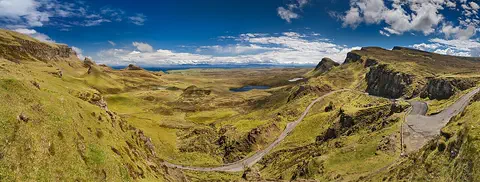
Iceland is an island country in the North Atlantic, close to the Arctic Circle. It sits on the border between two giant plates of Earth's crust and has about 200 volcanoes, many hot springs and huge glaciers, and about 396,500 people lived there in mid-2026.
-
 Watch
 Country
United Kingdom
The United Kingdom, or UK, lies on islands off the northwest coast of Europe. It is made up of four parts, England, Scotland, Wales and Northern Ireland, and about 69.5 million people live there. Its capital is London.
-
 Watch
Natural wonder
Giant's Causeway
The Giant's Causeway, on the north coast of Northern Ireland, is made of some 40,000 columns of dark basalt rock, many of them six-sided, packed together like a honeycomb. They formed about 60 million years ago, when a deep pool of lava cooled slowly, shrank and cracked into columns.
Explore next
-
 Watch
Animal
Northern gannet
The northern gannet is a large seabird of the North Atlantic Ocean, with wings that spread 1.7 to 2 meters. It catches fish by plunging headfirst into the sea, sometimes from more than 30 meters up. Gannets nest packed together in big colonies on sea cliffs and islands, and each pair raises just one chick a year.
-
 Watch
3D
Animal
Atlantic puffin
The Atlantic puffin is a small seabird of the North Atlantic, often called the clown of the sea because of its huge, colorful bill. It spends most of its life far out on the ocean and comes ashore only in summer to nest in burrows on islands and cliff tops. Underwater, its small wings work like flippers.
-
 Watch
Animal
Snow petrel
The snow petrel is a pure white seabird that lives only around Antarctica. It nests in rocky cracks on the frozen continent and nearby icy islands, sometimes hundreds of kilometers inland and as high as 2,400 meters. At sea it stays close to the pack ice, where it catches krill, fish and squid.
-
 Watch
Animal
Wandering albatross
The wandering albatross has the largest known wingspan of any living bird, up to about 3.4 meters from tip to tip. It soars over the stormy Southern Ocean using the wind, catching squid and fish at the surface, and comes ashore only to breed on remote islands. A pair raises one chick at most every two years.
-
Watch
Country
Iceland
Iceland is an island country in the North Atlantic, close to the Arctic Circle. It sits on the border between two giant plates of Earth's crust and has about 200 volcanoes, many hot springs and huge glaciers, and about 396,500 people lived there in mid-2026.
-
Watch
Country
United Kingdom
The United Kingdom, or UK, lies on islands off the northwest coast of Europe. It is made up of four parts, England, Scotland, Wales and Northern Ireland, and about 69.5 million people live there. Its capital is London.
-
Watch
Natural wonder
Giant's Causeway
The Giant's Causeway, on the north coast of Northern Ireland, is made of some 40,000 columns of dark basalt rock, many of them six-sided, packed together like a honeycomb. They formed about 60 million years ago, when a deep pool of lava cooled slowly, shrank and cracked into columns.
-
 Watch
Animal
European herring gull
The European herring gull is a large, noisy gull of European coasts, with a pale gray back, pink legs and a yellow bill marked with a red spot. It eats almost anything, from crabs and fish to scraps people throw away, and many now nest on rooftops in towns. Even so, its numbers are falling in many places.
For parents & teachers
What children will learn
- Locate the North Atlantic, North Pacific and Arctic oceans where fulmars live.
- Describe the features that help identify a fulmar, such as its tube nostrils and stiff-winged flight.
- Explain how fulmars defend their nests.
- Describe what scientists found when they checked beached fulmars for swallowed plastic.
Recommended ages: 3 to 17 · About 15 minutes
Talk about it
- Why might a bird that lays only one egg a year need to live a long time?
- Why might plastic floating in the sea be mistaken for food?
- Fulmars spread to many new coasts over 250 years, and scientists are not sure why. How could they find out?
Try at home or in class
- Cut a paper bird 48 centimeters long with wings 1.05 meters across to see a fulmar's size.
- Collect the plastic litter from one beach walk or park visit (with gloves and a grown-up) and sort it by type.
Key vocabulary: nostril, colony, regurgitate, morph, bycatch, offal
Where these facts come from
- GBIF Backbone Taxonomy and GBIF Occurrence Search , Global Biodiversity Information Facility (CC0 1.0 (backbone); occurrence counts are facts derived from records under CC0, CC BY and CC BY-NC)
- Wikidata , Wikimedia Foundation (CC0 1.0)
- The IUCN Red List of Threatened Species , International Union for Conservation of Nature (IUCN terms of use (no redistribution of Red List data or range maps))
- Fulmarus glacialis (BirdLife International, assessed 7 August 2018, published 2018) , IUCN Red List of Threatened Species
- Fulmarus glacialis: range, population, ecology and threats text , IUCN Red List of Threatened Species
- Fulmarus glacialis: IUCN Red List global assessment record (BirdLife International 2018), IUCN checklist on GBIF , GBIF
- Northern Fulmar (Kenn Kaufman, Lives of North American Birds, 1996) , National Audubon Society
- Fulmar (BirdFacts) , British Trust for Ornithology (BTO)
- Fulmar , RSPB
- File:Fulmar (Fulmarus glacialis) on water.jpg (off Skomer Island, Pembrokeshire, Wales, 19 June 2021, Charles J. Sharp) , Wikimedia Commons
- File:Northern Fulmar (Fulmarus glacialis) (W1CDR0001409 BD2).ogg (Skokholm Island, May 1965, Lawrence Shove, British Library) , Wikimedia Commons
- Wikimedia Commons , Wikimedia Foundation (Per file: Public domain, CC0, CC BY or CC BY-SA only (credited on each page))
Checked, not yet human-reviewed. Last updated November 1, 2026. Spotted a mistake? Tell us.