
Animal
Red kangaroo
The red kangaroo is the biggest kangaroo. It hops on its strong back legs, and its baby grows in a pouch.
The red kangaroo is the largest marsupial in the world, an animal whose babies grow up in a pouch. It lives on the dry plains of inland Australia, hops on powerful back legs that work like springs, and can get most of the water it needs from the plants it eats.
Osphranter rufus, the largest living marsupial, is a grazing macropod of Australia's arid and semi-arid interior. Elastic energy storage in its tendons makes fast hopping remarkably economical, and its reproduction, including embryonic diapause, is finely tuned to unpredictable rainfall.
Photo: PotMart186, CC BY-SA 4.0, via Wikimedia Commons
Meet the red kangaroo
The red kangaroo is a big hopping animal from Australia.
It has strong back legs, big feet and a long, thick tail. A mother kangaroo carries her baby in a pouch on her tummy.
The red kangaroo is the biggest kangaroo and the largest marsupial alive today. Marsupials are mammals whose babies are born very tiny and finish growing in a pouch.
A big male can stand about 2 meters tall and weigh up to about 92 kilograms, more than twice as heavy as a female. Males are usually orange-red, and females are often blue-gray. You can recognize a red kangaroo by the black and white patches on its cheeks and the white stripe from the corner of its mouth toward its ear.
Osphranter rufus (formerly Macropus rufus) is the largest living marsupial and a member of the kangaroo family, Macropodidae. The Australian Museum gives a head-and-body length up to 1.4 meters plus a tail up to 1 meter; males weigh up to about 92 kilograms and females up to about 39, so males are roughly double the weight of females. Britannica gives large males a standing height of about 2 meters.
The sexes often differ in color, males orange-red and females blue-gray, both paler beneath. Black-and-white cheek patches and a broad white stripe from mouth to ear separate it from other kangaroos.
Quick facts
- Group
- Mammal
- Length
- up to 1.4 m
- Height
- up to 2 m
- Weight
- up to 92 kg
- Top speed
- up to 64 km/h
- Lifespan in the wild
- up to 22 years
Where it lives
Red kangaroos live in Australia.
They live in the dry middle of the country, called the outback. They like wide, open plains with grass and a few trees.
Red kangaroos live only in Australia, across the dry and semi-dry inland parts of the mainland.
They like open plains with only a few trees: grassland, shrubland, desert, woodland and open forest. They are most common in open, grassy woodland. Rain is rare and unpredictable in the outback, so the number of red kangaroos in an area rises and falls with how much grass there is.
The species occurs throughout the arid and semi-arid regions of mainland Australia, favoring sparsely wooded or open plains: grassland, shrubland, desert, woodland and open forest, and most common in open savanna woodland.
In this environment rainfall is irregular, and the Australian Museum notes that food abundance is a determining factor in the red kangaroo's life cycle; populations suffer in droughts as food supplies shrink. The map shades all of Australia because the range is given by country; red kangaroos live in the arid and semi-arid interior, not everywhere in it.
Continent
Its habitats


Where can you find this animal?
- Lives here naturally · Countries and seas named by a scientific source
- Sightings recorded · Records of wild sightings (GBIF)
Lives here naturally · Countries and seas named by a scientific source
Arid and semi-arid inland mainland Australia, on open plains, grassland, shrubland and open woodland.
Places: Australia.
Source: Australian Museum · checked October 2026
Sightings recorded · Records of wild sightings (GBIF)
Counts of GBIF records of wild observations (human and machine) and preserved specimens. Records include introduced populations, vagrants, escaped or released animals and misidentifications, so a country with records is not necessarily part of the native range.
Wild sightings have been recorded in Australia, United States, Germany, Japan and UK.
Source: gbif · checked October 2026
Range maps show where scientists say an animal lives, often country by country. An animal may live in only part of a country shown, and sightings records can include animals that wandered far from home.
What it eats
Red kangaroos eat grass.
They also eat small plants and leaves. They hardly need to drink, because their food has water inside.
Red kangaroos are herbivores. They mostly graze on grasses, but they also eat small flowering plants and the leaves of shrubs.
In the dry outback, water can be hard to find. Red kangaroos can survive when water is scarce, because the plants they eat give them most of the water they need. Their stomach has several chambers, which helps them break down tough plant food.
Red kangaroos are grazing herbivores, feeding mainly on grasses, with forbs and shrub foliage. Their herbage and foliage provide most of their water as well as nutrition, allowing them to persist where surface water is scarce.
Britannica notes a chambered stomach that aids the breakdown of fibrous plant material. In drought, as green growth disappears, body condition and breeding decline, so populations track rainfall closely.
Did you know?
A kangaroo mom can make her next baby wait.
A mother kangaroo can pause the growth of her next baby until the joey in her pouch has moved out.
Embryonic diapause delays the birth of the next young until the previous joey has left the pouch.
Built to hop
A kangaroo hops on its two big back legs.
Its long tail helps it balance. Hopping is a great way to travel far across the outback.
A red kangaroo's back legs are huge and powerful, with long feet. When it hops, stretchy tendons in its legs store energy as it lands and release it on the next jump, like a spring or a pogo stick.
That is why hopping is so efficient. Scientists found that a red kangaroo actually uses less energy hopping at about 10 kilometers an hour than at 6.5, and even less at higher speeds. Its long, heavy tail helps it balance while it hops.
Hopping is energetically unusual. Britannica reports that a red kangaroo uses less energy at 10.1 kilometers per hour than at 6.5, and less still at higher speeds, the opposite of most running mammals. The explanation is the storage of elastic strain energy in tendons and muscles, which are stretched on landing and recoil on take-off; the swinging tail also contributes.
The long, heavy tail acts as a counterbalance during hopping. The forelimbs are small, and the hind feet are long and narrow, built for bounding across open plains.
Life in a pouch
A baby kangaroo is called a joey.
When it is born, it is as small as a jellybean! It crawls into its mother's pouch, drinks milk and grows.
A red kangaroo is pregnant for only about 33 days. The newborn joey is about the size of a jellybean. It climbs straight into its mother's pouch, where it drinks milk and grows.
Until it is about eight months old, a joey dives back into the pouch when it is scared. As it grows, its head and feet often poke out. It leaves the pouch for good at about 235 days old but keeps drinking milk until it is about a year old.
Gestation lasts about 33 days, producing a single jellybean-sized young that climbs unaided into the pouch and attaches to a teat. The joey retreats to the pouch when threatened until about eight months, leaves it permanently at about 235 days and continues to suckle until about 12 months.
Red kangaroos breed year-round, with most births in spring and summer, but reproduction is highly sensitive to conditions. Through embryonic diapause a female can pause the development of an embryo until her previous joey leaves the pouch, so she can quickly replace young lost in drought and take advantage of good seasons.
Life on the plains
Red kangaroos live in groups called mobs.
A mob is mostly mothers and their joeys, with one or a few males. They rest in the shade by day and eat when it is cooler.
Red kangaroos live in small groups called mobs, usually about 10 kangaroos. A mob is mostly females and their young, with one or several males, and females stay in the mob they were born into. Where the grass is very good, huge gatherings of up to about 1,500 kangaroos have been seen.
Red kangaroos are most active at dusk, dawn and night, resting in the shade during the day. Most of their active time is spent grazing.
Mobs average about 10 animals, mainly females with offspring and one or several males; females are philopatric, remaining in their natal mob. Aggregations of up to about 1,500 can form on exceptional forage.
The species is mostly crepuscular and nocturnal, resting in shade by day. Many populations keep well-defined home ranges, but red kangaroos may travel widely when conditions are poor; one was recorded moving 216 kilometers. Large kangaroos can reach about 64 kilometers per hour, with leaps up to 8 meters long, though 1.2 to 1.9 meters is typical. At slow speeds they use a five-limbed gait, balancing on forelimbs and tail while swinging the hind legs forward.

Doing well in the outback
There are lots of red kangaroos.
They are not in danger. But long dry times called droughts can make life hard for them.
The IUCN lists the red kangaroo as Least Concern, because it is common across a huge area of Australia. It is one of the country's most famous animals.
Nature still tests it. In long droughts, when there is little grass, many kangaroos can die and fewer joeys are born. When the rain returns, red kangaroos can recover quickly, thanks to their special way of pausing a baby's growth until conditions are good.
The red kangaroo is assessed as Least Concern by the IUCN and remains widespread across arid and semi-arid Australia. Its numbers fluctuate strongly with rainfall: drought reduces food supply and survival, while good seasons allow rapid recovery through year-round breeding and embryonic diapause.
Because populations rise and fall with conditions, long-term monitoring matters for understanding how changes in land use, water availability and climate affect inland Australia's grazing animals.
IUCN Red List
How is the red kangaroo doing in the wild?
- Least Concern (this animal)
- Near Threatened
- Vulnerable
- Endangered
- Critically Endangered
- Extinct in the Wild
- Extinct
Least Concern
Not at risk of disappearing from the wild right now.
See the IUCN Red List assessment · The IUCN Red List of Threatened Species 2022.2
Amazing facts
-
A newborn kangaroo is as small as a jellybean.
A red kangaroo joey is born after only about 33 days and is about the size of a jellybean.
After a gestation of about 33 days the neonate is jellybean-sized and completes development in the pouch.
-
Kangaroo legs work like springs.
A red kangaroo uses less energy hopping faster, because its stretchy tendons work like springs.
Energy cost falls as hopping speed rises from 6.5 to 10.1 km/h, thanks to elastic energy storage in tendons and muscles.
-
A kangaroo mom can make her next baby wait.
A mother kangaroo can pause the growth of her next baby until the joey in her pouch has moved out.
Embryonic diapause delays the birth of the next young until the previous joey has left the pouch.
-
Red kangaroos hardly need to drink.
Red kangaroos get most of the water they need from the plants they eat.
Herbage and foliage supply both water and nutrients, letting red kangaroos live where surface water is scarce.
Words to know
- marsupial
- a mammal whose babies finish growing in a pouch
- joey
- a baby kangaroo
- pouch
- a pocket of skin on a mother marsupial's belly where her baby grows
- tendon
- a strong, stretchy band that joins a muscle to a bone
- mob
- a group of kangaroos
- drought
- a long time with little or no rain
Discovery challenge
-
Where does a baby kangaroo grow?
Where does a joey grow after it is born?
Where does a red kangaroo finish most of its development after a gestation of only about 33 days?
- In its mother's pouch
- In a nest of sticks
- In an egg
Show the answer
In its mother's pouch
It grows in its mother's pouch.
A tiny joey climbs into the pouch, drinks milk and grows there for months.
A 33-day gestation is followed by months of development in the pouch.
-
How does a kangaroo move fast?
Why is hopping so efficient for a red kangaroo?
What explains the low energy cost of fast hopping?
- Its legs work like springs
- It has wheels
- It flies
Show the answer
Its legs work like springs
Its strong legs bounce like springs.
Stretchy tendons store energy on landing and release it on the next hop.
Elastic strain energy stored in tendons and muscles is returned each hop.
-
What do red kangaroos eat?
What do red kangaroos mostly eat?
What makes up most of the red kangaroo's diet, and also supplies most of its water?
- Grass
- Fish
- Insects only
Show the answer
Grass
They eat grass.
Mostly grasses, plus small plants and shrub leaves.
Grasses, with some forbs and shrub leaves; this food meets most of the kangaroo's water needs, so it can live where surface water is scarce.
-
Where do red kangaroos live?
Where do red kangaroos live in the wild?
Which describes the red kangaroo's range?
- Australia
- Antarctica
- Europe
Show the answer
Australia
They live in Australia.
Only in Australia, in the dry inland parts of the mainland.
Arid and semi-arid mainland Australia, mostly on open plains.
Places where you might see it
-
 Watch
 Country
Australia
Australia is a country and the smallest continent, surrounded by ocean in the Southern Hemisphere. Much of its middle is dry and flat, most people live near the coast, and its animals include kangaroos, koalas and the platypus, a mammal that lays eggs.
-
 Watch
Natural wonder
Uluru
Uluru is a huge sandstone rock in the desert of central Australia, rising 348 meters above the plain, with a base 9.4 kilometers around. The Anangu are its Traditional Owners, and the national park around it is run by Anangu and Parks Australia together.
Explore next
-
 Watch
Animal
Eastern grey kangaroo
The eastern grey kangaroo is a big, woolly gray kangaroo of eastern Australia and Tasmania. It hops on powerful back legs, balances with its long tail and grazes on grass in groups called mobs. Its joey is born weighing less than a gram and grows up in its mother's pouch.
-
 Watch
Animal
Koala
The koala is a tree-living marsupial from eastern Australia. It eats almost nothing but eucalyptus leaves, sleeps up to 20 hours a day to save energy, and carries its jellybean-sized baby in a pouch that opens toward its back legs.
-
 Watch
Animal
Dingo
The dingo is Australia's wild dog and the country's largest meat-eating mammal. People brought its ancestors to Australia about 4,000 years ago. It hunts rabbits, kangaroos and wallabies, howls rather than barks, and scientists still argue about whether it is its own species or a very old kind of dog.
-
 Watch
Animal
Thorny devil
The thorny devil is a small Australian desert lizard covered in spikes from head to tail. Despite its fierce name it is slow and harmless, it eats nothing but ants, and tiny channels in its skin carry water to its mouth.
-
 Watch
Animal
Budgerigar
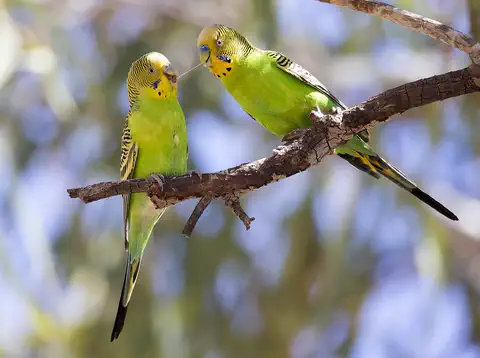
The budgerigar, or budgie, is a little parrot from the dry heart of Australia. Wild budgies are green and yellow with wavy black stripes. They are nomads that travel in flocks, they must find water every day, and they breed after good rain. Budgies are also popular pets all over the world.
-
 Watch
Animal
Quokka
The quokka is one of the smallest wallabies, a cat-sized marsupial of south-western Australia. Most quokkas now live on two small islands, Rottnest and Bald Island, because foxes and land clearing made them rare on the mainland.
-
 Watch
Animal
Platypus
The platypus is one of the strangest mammals on Earth. It has a soft bill, webbed feet and a flat tail, lives in the rivers and streams of eastern Australia, finds food underwater with its eyes shut, and is one of the only mammals that lays eggs.
-
Watch
Country
Australia
Australia is a country and the smallest continent, surrounded by ocean in the Southern Hemisphere. Much of its middle is dry and flat, most people live near the coast, and its animals include kangaroos, koalas and the platypus, a mammal that lays eggs.
For parents & teachers
What children will learn
- Explain what a marsupial is and how a joey develops.
- Describe how tendons let kangaroos hop efficiently.
- Explain how red kangaroos survive in a dry, unpredictable climate.
- Describe how kangaroo numbers change with rainfall.
Recommended ages: 3 to 17 · About 15 minutes
Talk about it
- Why might pausing a baby's growth help a mother kangaroo in a place where rain is unpredictable?
- Hopping is cheap at high speed for kangaroos. What do you think makes running tiring for us?
- Why might kangaroos rest in the shade during the hottest part of the day?
Try at home or in class
- Spring test: drop a rubber ball and a beanbag from the same height and compare how they bounce. Talk about how kangaroo tendons store and return energy like the ball.
- Measure 2 meters up a wall with tape to see how tall a big male red kangaroo can stand.
Key vocabulary: marsupial, joey, pouch, tendon, mob, drought
Where these facts come from
- The IUCN Red List of Threatened Species , International Union for Conservation of Nature (IUCN terms of use (no redistribution of Red List data or range maps))
- GBIF Backbone Taxonomy and GBIF Occurrence Search , Global Biodiversity Information Facility (CC0 1.0 (backbone); occurrence counts are facts derived from records under CC0, CC BY and CC BY-NC)
- Red Kangaroo , Australian Museum
- Red kangaroo , Encyclopaedia Britannica
- Macropus rufus (red kangaroo) , Animal Diversity Web, University of Michigan Museum of Zoology
- Wikidata , Wikimedia Foundation (CC0 1.0)
- Wikimedia Commons , Wikimedia Foundation (Per file: Public domain, CC0, CC BY or CC BY-SA only (credited on each page))
Checked, not yet human-reviewed. Last updated October 24, 2026. Spotted a mistake? Tell us.