
Animal
Dingo
The dingo is Australia's wild dog. It has ginger fur, pointy ears and a bushy tail. Dingoes howl to call each other.
The dingo is Australia's wild dog and the country's largest meat-eating mammal. People brought its ancestors to Australia about 4,000 years ago. It hunts rabbits, kangaroos and wallabies, howls rather than barks, and scientists still argue about whether it is its own species or a very old kind of dog.
The dingo is a wild canid that reached Australia with people about 4,000 years ago, from early domestic dogs of Southeast Asia. Its name is debated: Canis dingo, Canis lupus dingo and Canis familiaris have all been used. Australia's largest mammalian carnivore, it is now threatened mainly by interbreeding with other domestic dogs.
Photo: Charles J. Sharp, CC BY-SA 4.0, via Wikimedia Commons
Meet the dingo
The dingo is a wild dog that lives in Australia.
Most dingoes have ginger fur and white feet. They have pointy ears that stand up and a bushy tail.
The dingo is Australia's wild dog. It weighs about 12 to 24 kilograms and stands about 44 to 62 centimeters tall at the shoulder. It is the largest meat-eating mammal in Australia.
Most dingoes are ginger with white feet. In deserts their fur is more golden yellow, and in forests it can be dark tan or even black. A dingo has a broad head, upright ears, a long, tapered muzzle, short body fur and a bushy tail.
The Australian Museum gives a shoulder height of 440 to 620 millimeters, body length of 860 to 1,230 millimeters, a 260- to 380-millimeter tail and a mass of 12 to 24 kilograms, and calls the dingo Australia's largest mammalian carnivore. Its canine teeth are longer than a domestic dog's, and its muzzle is longer and more tapered.
Coat color tracks habitat: ginger with white feet is the standard, golden yellow in deserts, darker tan to black in forests. Animal Diversity Web adds that black-and-tan and black-and-white patterns occur in purebred animals, and that Southeast Asian dingoes are smaller than Australian ones.
Quick facts
- Group
- Mammal
- Length
- 86 to 123 cm
- Height
- 44 to 62 cm
- Weight
- 12 to 24 kg
- Lifespan in the wild
- up to 10 years
Where it lives
Dingoes live in Australia.
They live in woods, grasslands and deserts. They always need to be able to find water to drink.
Dingoes can live almost anywhere on the Australian mainland, as long as they can reach water. They like woodlands and grasslands best, especially near the edges of forests, and they also live in deserts.
They arrived about 4,000 years ago but never reached the island of Tasmania. After European settlers began farming, people tried hard to remove dingoes from farm areas, so today they are missing from large parts of south-eastern Australia but common across much of the rest.
Dingoes occupy a wide range of mainland Australian habitats, preferring woodland and grassland near forest edges, and are limited mainly by access to water. They never reached Tasmania. Following European colonization and the spread of pastoralism, removal campaigns left them mostly absent from much of New South Wales, Victoria, the south-eastern third of South Australia and the far south of Western Australia.
Animal Diversity Web also describes dingoes in scattered groups across Southeast Asia, with the main wild populations in Australia and Thailand. This topic's map shows Australia only, where the dingo was carried by people in prehistory.
Continent

Where can you find this animal?
- Brought here by people · Countries and seas named by a scientific source
- Sightings recorded · Records of wild sightings (GBIF)
Brought here by people · Countries and seas named by a scientific source
Mainland Australia, where people brought dingoes about 4,000 years ago; never on Tasmania, and mostly absent from many farming areas of the south-east after removal campaigns. Animal Diversity Web also lists scattered dingo groups in Southeast Asia, which are not shown.
Places: Australia.
Source: https://australian.museum/learn/animals/mammals/dingo/ · checked October 2026
Sightings recorded · Records of wild sightings (GBIF)
Counts of GBIF records of wild observations (human and machine) and preserved specimens. Records include introduced populations, vagrants, escaped or released animals and misidentifications, so a country with records is not necessarily part of the native range.
Wild sightings have been recorded in Australia, Norway and United States.
Source: gbif · checked October 2026
Range maps show where scientists say an animal lives, often country by country. An animal may live in only part of a country shown, and sightings records can include animals that wandered far from home.
What it eats
Dingoes eat meat.
They catch rabbits, kangaroos and wallabies. Sometimes they eat lizards, birds and bugs too.
Dingoes are meat-eaters that take whatever food they can find. Mammals make up most of their diet, especially rabbits, kangaroos, wallabies and wombats. When wild food is scarce, they may catch farm animals, which makes them unpopular with many farmers. They also eat reptiles, birds and insects.
A dingo often hunts alone, especially at night, but dingoes join together into larger packs to hunt bigger game. By eating rabbits and feral pigs, dingoes help keep these farm pests down.
Dingoes are opportunistic carnivores. Animal Diversity Web reports that mammals make up about 60 percent of the Australian diet, with birds and reptiles making up the rest, and that small animals, especially the introduced European rabbit, dominate; kangaroos, wallabies, sheep and calves are taken at times.
They often forage alone at night but form packs to hunt larger game. The Australian Museum notes that they help suppress rabbits, feral pigs and other pests, but that when native prey is scarce they take livestock. It also reports the idea that competition from dingoes contributed to the extinction of the thylacine on the mainland.
Did you know?
Dingoes hardly ever bark. They howl instead.
Dingoes rarely bark. They howl, especially at night, to find their pack or warn other dingoes away.
Dingo communication relies on howling and scent marking; barking is rare.
A wild dog's body
Dingoes have tall, pointy ears to listen.
They have long noses and strong teeth. Their color can be ginger, golden, tan or black.
Dingoes look a lot like pet dogs, but with some differences. Their canine teeth are longer than a pet dog's, and their muzzle is longer and narrows to a point. Their ears always stand upright.
Their coat matches where they live: golden in the desert, ginger on grasslands and darker in forests. The fur on the body is short, but the tail is thick and bushy. The Australian Museum notes that dingoes adapted quickly to very different environments.
Compared with domestic dogs, dingoes have longer canines and a longer, more tapered muzzle on a relatively broad head, with erect ears. The body coat is short and the tail bushy. Coat color varies with environment, from golden yellow in deserts to darker shades in forest.
Animal Diversity Web gives average Australian body lengths of about 920 millimeters for males and 885 for females, with males weighing 11.8 to 19.4 kilograms and females 9.6 to 16.0, a little lighter than the Australian Museum's 12 to 24 kilograms. Size also differs between regions: Southeast Asian dingoes are smaller.
Growing up
Baby dingoes are called pups.
They are born in a hollow log, a rocky cave or an old burrow. Mom and dad both help look after them.
Pure dingoes breed once a year, between March and June. About nine weeks later, the mother has a litter of usually four to six pups in a hollow log, a rock shelter, an old rabbit warren or a wombat burrow. Both parents help raise them.
The pups stop drinking milk at about two months old. Some leave then, and others stay with their parents for about a year. Dingoes are fully grown at seven months, and they can live for up to 10 years.
Pure dingoes breed once a year, between March and June according to the Australian Museum. Gestation is about nine weeks, similar to domestic dogs, and litters are usually four to six pups; Animal Diversity Web gives a 63-day gestation and an average of 5.4. Dens are in hollow logs, rock shelters, rabbit warrens or wombat burrows, and both parents rear the young.
In established packs only the dominant pair breeds, and other members help feed the pups. Pups are weaned at about two months and may then leave or stay with the parents for about a year. They are fully grown by seven months; males mature at about one year and most females by two. Dingoes can interbreed with other domestic dogs.
Howls, not barks
Dingoes hardly ever bark.
They howl instead, mostly at night. A howl can call the pack together or tell other dingoes to keep away.
Dingoes rarely bark. They howl, especially at night, to call pack members or to warn other dingoes to stay away. They also leave scent marks on objects to show where their territory ends.
Each dingo or pack keeps to its own clearly marked territory and defends it from other dingoes. Young adults often live alone outside the breeding season but may team up to hunt large animals. Other dingoes live in steady packs of 3 to 12.
Dingoes rarely bark; howling, mostly at night, gathers pack members and warns off intruders. Territories are clearly defined, rarely left and defended against other dingoes, with scent-rubbing, feces and urine marking boundaries; territory can be shared when dingoes join to hunt.
Animal Diversity Web describes young adults as often solitary outside the mating season and stable packs of 3 to 12 animals with varying social interaction. Dominant pairs tend to mate for life.
Did you know?
Dingoes help farmers by eating rabbits.
Dingoes help keep down rabbits and feral pigs, animals that cause problems on farms.
The Australian Museum notes dingoes help suppress rabbits, feral pigs and other agricultural pests, even as they are controlled for taking livestock.
What is a dingo?
Scientists still argue about what a dingo is.
Some say it is its own kind of animal. Others say it is a very old kind of dog. Everyone agrees dingoes are special to Australia.
Scientists disagree about how to name the dingo. Over the years it has been called Canis dingo, Canis lupus dingo and Canis familiaris dingo. Some scientists have proposed that it is a species of its own. Scientists at the Australian Museum think it is a wild-living population of a very old breed of domestic dog.
Whatever its name, the biggest danger to dingoes today is mixing with other pet and farm dogs, which slowly changes pure dingoes. In some areas dingoes are also controlled because they take livestock.
The dingo's taxonomy has been disputed since it was first described by European scientists in 1792. Names used include Canis dingo, Canis antarticus, Canis lupus dingo, Canis familiaris and Canis familiaris dingo. Some scientists have proposed recognizing Canis dingo again as a full species; Australian Museum researchers, reviewing morphological, genetic and ecological data, conclude instead that it is a feral population of an ancient breed of domestic dog, while stressing that this does not reduce its ecological and cultural importance.
Animal Diversity Web reports that dingoes are not considered threatened, are protected only in national parks and reserves, and are controlled as pests elsewhere. Both sources identify interbreeding with other domestic dogs as the main threat to pure dingoes.
Did you know?
Desert dingoes are golden. Forest dingoes can be dark.
A dingo's coat depends on where it lives: golden yellow in deserts, ginger in many places, and dark tan to black in forests.
Coat color varies with habitat, from golden yellow in arid areas to dark tan or black in forest.
Amazing facts
-
Dingoes hardly ever bark. They howl instead.
Dingoes rarely bark. They howl, especially at night, to find their pack or warn other dingoes away.
Dingo communication relies on howling and scent marking; barking is rare.
-
Dingoes never lived on the island of Tasmania.
Although dingoes spread across mainland Australia, they never reached the island of Tasmania.
Dingoes colonized much of the mainland after arriving about 4,000 years ago but never reached Tasmania.
-
Desert dingoes are golden. Forest dingoes can be dark.
A dingo's coat depends on where it lives: golden yellow in deserts, ginger in many places, and dark tan to black in forests.
Coat color varies with habitat, from golden yellow in arid areas to dark tan or black in forest.
-
Dingoes help farmers by eating rabbits.
Dingoes help keep down rabbits and feral pigs, animals that cause problems on farms.
The Australian Museum notes dingoes help suppress rabbits, feral pigs and other agricultural pests, even as they are controlled for taking livestock.
Words to know
- feral
- living wild, though its ancestors were tame
- territory
- an area an animal lives in and defends
- taxonomy
- the science of naming and grouping living things
- interbreed
- when two different kinds of animal have young together
- opportunistic
- eating whatever food it can find
- pastoralist
- a farmer who raises animals such as sheep and cattle
Discovery challenge
-
What sound does a dingo make most?
How do dingoes mostly call to each other?
Which vocalization do dingoes mainly use?
- Lots of barking
- Howling
- Purring
Show the answer
Howling
Dingoes howl. They hardly ever bark.
They howl, especially at night, and rarely bark.
Howling, used to gather pack members and warn off intruders; barking is rare.
-
How did dingoes get to Australia?
How did dingoes first come to Australia?
How did the dingo's ancestors reach Australia?
- People brought them by sea
- They walked from Africa
- They swam from Antarctica
Show the answer
People brought them by sea
People brought them on boats long ago.
They were probably carried by seafarers from Southeast Asia about 4,000 years ago.
With people, probably Asian seafarers, about 4,000 years ago; the oldest undisputed bones are about 3,250 years old.
-
What do dingoes like to eat?
Which animals make up most of a dingo's diet?
Which prey group dominates the Australian dingo's diet?
- Grass and seeds
- Mammals like rabbits and kangaroos
- Only fish
Show the answer
Mammals like rabbits and kangaroos
Dingoes eat meat, like rabbits and kangaroos.
Mammals, especially rabbits, kangaroos, wallabies and wombats.
Mammals, about 60 percent of the diet per Animal Diversity Web, especially the introduced rabbit.
-
Do scientists all agree what a dingo is?
What do scientists think about the dingo's classification?
What is the current state of the dingo's taxonomy?
- They all agree
- They still disagree
- Nobody has studied it
Show the answer
They still disagree
No. Scientists are still talking about it.
Some say it is its own species; others say it is a very old breed of dog that went wild.
Disputed: some scientists have proposed Canis dingo as a species, while Australian Museum researchers classify it as a feral ancient domestic dog breed.
Places where you might see it
-
 Watch
 Country
Australia
Australia is a country and the smallest continent, surrounded by ocean in the Southern Hemisphere. Much of its middle is dry and flat, most people live near the coast, and its animals include kangaroos, koalas and the platypus, a mammal that lays eggs.
-
 Watch
Natural wonder
K'gari
K'gari, off the coast of Queensland in Australia, is the largest sand island in the world. Sand dunes rise up to about 250 meters, rainforest grows right on the sand, and about half of the world's perched dune lakes sparkle among the dunes. Once called Fraser Island, it was officially renamed K'gari, the Butchulla people's name for it, in 2023.
-
 Watch
Natural wonder
Kakadu National Park
Kakadu, in Australia's Northern Territory, is the country's largest national park. It stretches from a high sandstone cliff called the escarpment down to floodplains, mangroves and the sea. Aboriginal people have lived here for tens of thousands of years, and their rock paintings, some up to 20,000 years old, record their way of life.
-
 Watch
Natural wonder
Uluru
Uluru is a huge sandstone rock in the desert of central Australia, rising 348 meters above the plain, with a base 9.4 kilometers around. The Anangu are its Traditional Owners, and the national park around it is run by Anangu and Parks Australia together.
Explore next
-
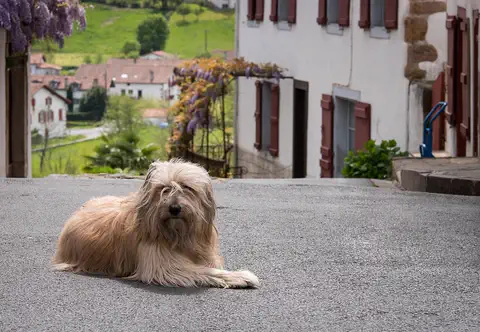 Watch
3D
Animal
Domestic dog
The domestic dog has lived with people for more than 12,000 years. Dogs came from gray wolves, and today there are more than 400 breeds, from tiny Chihuahuas to giant Irish wolfhounds. They live with people all over the world as pets, helpers and friends.
-
 Watch
3D
Animal
Gray wolf
The gray wolf is the largest member of the dog family and the wild ancestor of pet dogs. Wolves live in family packs that hunt big animals like elk and moose together, and their howls can carry about 10 kilometers. After being wiped out in many places, wolves are coming back in parts of North America and Europe.
-
 Watch
3D
Animal
Coyote
The coyote is a clever, adaptable wild dog that lives from Alaska and Canada to Panama. It is smaller than a wolf and bigger than a fox. Coyotes eat mostly mice, voles and rabbits, howl and yip to keep in touch, and live everywhere from deserts and forests to city parks.
-
Watch
Country
Australia
Australia is a country and the smallest continent, surrounded by ocean in the Southern Hemisphere. Much of its middle is dry and flat, most people live near the coast, and its animals include kangaroos, koalas and the platypus, a mammal that lays eggs.
-
 Watch
Animal
Red kangaroo
The red kangaroo is the largest marsupial in the world, an animal whose babies grow up in a pouch. It lives on the dry plains of inland Australia, hops on powerful back legs that work like springs, and can get most of the water it needs from the plants it eats.
-
 Watch
3D
Animal
European rabbit
The European rabbit is the wild rabbit that all pet and farm rabbits come from. It lives in groups in big underground tunnel homes called warrens. Its numbers have fallen in its first home in Spain, Portugal and France, but people have carried it to many other places, where it became a pest.
-
 Watch
Animal
Tasmanian devil
The Tasmanian devil is the world's largest surviving meat-eating marsupial. It lives only on the island of Tasmania, comes out at night, and has jaws strong enough to eat a whole meal, bones and all. Its loud screeches sound fierce, but many of its displays are bluff.
-
Watch
Natural wonder
K'gari
K'gari, off the coast of Queensland in Australia, is the largest sand island in the world. Sand dunes rise up to about 250 meters, rainforest grows right on the sand, and about half of the world's perched dune lakes sparkle among the dunes. Once called Fraser Island, it was officially renamed K'gari, the Butchulla people's name for it, in 2023.
For parents & teachers
What children will learn
- Describe the dingo's appearance, diet and family life.
- Explain how dingoes came to Australia with people thousands of years ago.
- Understand that scientists can disagree about how to classify an animal, and why.
- Explain why interbreeding is the main threat to pure dingoes.
Recommended ages: 3 to 17 · About 15 minutes
Talk about it
- If an animal came with people long ago and has lived wild for thousands of years, should we call it wild, tame or something else?
- Why might dingoes help some farmers and cause problems for others?
- Why do you think scientists care so much about an animal's name?
Try at home or in class
- Make a chart comparing a dingo and a pet dog: ears, muzzle, teeth, sound and food.
- Draw dingoes in three coat colors and match each to a habitat: desert, grassland and forest.
Key vocabulary: feral, territory, taxonomy, interbreed, opportunistic, pastoralist
Where these facts come from
- GBIF Backbone Taxonomy and GBIF Occurrence Search , Global Biodiversity Information Facility (CC0 1.0 (backbone); occurrence counts are facts derived from records under CC0, CC BY and CC BY-NC)
- Dingo , Australian Museum
- Just what is Australia's Dingo? , Australian Museum (Dr Mark Eldridge)
- Canis lupus dingo , Animal Diversity Web, University of Michigan Museum of Zoology
- Wikidata , Wikimedia Foundation (CC0 1.0)
- Wikimedia Commons , Wikimedia Foundation (Per file: Public domain, CC0, CC BY or CC BY-SA only (credited on each page))
Checked, not yet human-reviewed. Last updated October 24, 2026. Spotted a mistake? Tell us.