Animals of Australia and Oceania
Tap an animal to meet it: where it lives, what it eats, how it grows, and a narrated adventure with Olly.
73 to explore · page 1 of 2
-
 Watch
Animal
Arctic tern
The Arctic tern is a small, graceful seabird with a black cap, a red bill and red legs. Every year it flies from its nesting grounds in the Arctic to the edge of the ice around Antarctica and back again. Scientists who tracked terns from Greenland and Iceland found that they flew an average of 70,900 kilometers in one year.
-
 Watch
Animal
Australian box jellyfish
The Australian box jellyfish has a clear, box-shaped bell with bunches of long tentacles at each of its four corners. Unlike most jellyfish it swims on purpose, it has 24 eyes but no brain, and it grows very fast after leaving the tiny polyp it started from. Its sting is very dangerous, so people in northern Australia swim carefully in stinger season.
-
 Watch
Animal
Bar-tailed godwit
The bar-tailed godwit is a long-billed shorebird that breeds on Arctic tundra and spends the rest of the year on mudflats far to the south. Godwits from Alaska fly non-stop across the Pacific Ocean to New Zealand and Australia, and one young bird tracked in 2022 flew at least 13,560 kilometers without landing.
-
 Watch
Animal
Barn owl
The barn owl is a pale, ghostly owl with a heart-shaped face that works like a dish to collect sound. It hunts mice and voles at night over fields and grassland, finding them by hearing alone if it has to. Barn owls live on every continent except Antarctica.
-
 Watch
3D
Animal
Barn swallow
The barn swallow is a small, speedy bird with a glossy blue back, a reddish throat and a long, deeply forked tail. It catches insects in the air, builds cup-shaped mud nests on barns and bridges, and makes long migrations between the Northern Hemisphere, where it nests, and the Southern Hemisphere, where it spends the winter.
-
 Watch
Animal
Big-belly seahorse
The big-belly seahorse lives in the cool coastal waters of southeastern Australia and New Zealand. It is one of the largest seahorses, usually 18 to 28 centimeters long. It grips seaweed and jetties with its curly tail and sucks up tiny shrimp through its snout. As in all seahorses, the male carries the eggs in a pouch on his belly and gives birth to hundreds of babies.
-
 Watch
Animal
Black swan
The black swan is the only swan in the world that is almost entirely black. It has a bright red bill with a white band near the tip, and white flight feathers that flash when it flies. It is native to Australia and New Zealand, and people have taken it to other countries too.
-
 Watch
3D
Animal
Brown rat
Brown rats are large rodents that came from East Asia and spread around the world with people, mainly on ships. They are smart, strong swimmers with a superb sense of smell. Wild rats can carry germs that make people sick, so they are best left alone.
-
 Watch
Animal
Budgerigar
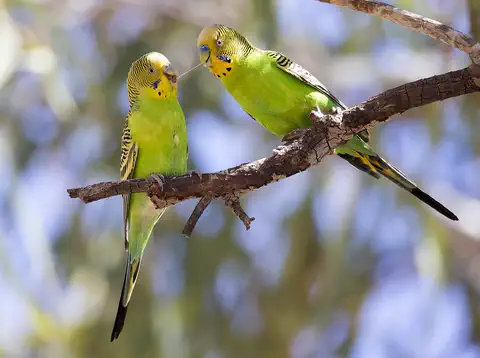
The budgerigar, or budgie, is a little parrot from the dry heart of Australia. Wild budgies are green and yellow with wavy black stripes. They are nomads that travel in flocks, they must find water every day, and they breed after good rain. Budgies are also popular pets all over the world.
-
 Watch
3D
Animal
Bull-headed dung beetle
The bull-headed dung beetle is a shiny black beetle about 1 centimeter long. Large males have two long, curved horns on their heads, like a bull. These beetles dig tunnels under cow dung and pack dung into balls for their young, which cleans up pastures and helps the soil. They came from Europe and now also live in North America and Australia.
-
 Watch
3D
Animal
Cattle
Cattle are large farm animals that people tamed from wild oxen long ago. They eat grass and digest it with a stomach that has four parts. Farmers around the world keep cattle for milk, meat and leather, and in some places oxen still pull plows and carts.
-
 Watch
Animal
Central bearded dragon
The central bearded dragon is a lizard of the dry woodlands, scrub and deserts of eastern inland Australia. It eats plants and small animals, basks on fence posts and logs, waves its arm and bobs its head to talk to other dragons, and puffs out a spiky beard to look big. It is also a very popular pet lizard.
-
 Watch
3D
Animal
Chicken
The chicken is a domesticated bird: people raise it on farms and in backyards all over the world for eggs and meat. Its wild ancestor is the red junglefowl of the forests of southern and Southeast Asia, and scientists think chickens were first domesticated about 3,500 years ago near rice fields in Southeast Asia.
-
 Watch
3D
Animal
Cockatiel
The cockatiel is a small, slim parrot with a tall crest that lives wild in the dry inland of Australia. Flocks fly fast across open country, looking for grass seeds and water, and pairs nest in hollow trees after the rain.
-
 Watch
Animal
Common blackbird
The common blackbird is a thrush found in gardens, parks and woods across Europe, North Africa and parts of Asia. Males are glossy black with a bright yellow-orange bill and eye-ring, females are brown, and on summer evenings males sing a mellow, fluting song from high perches.
-
 Watch
Animal
Common pheasant
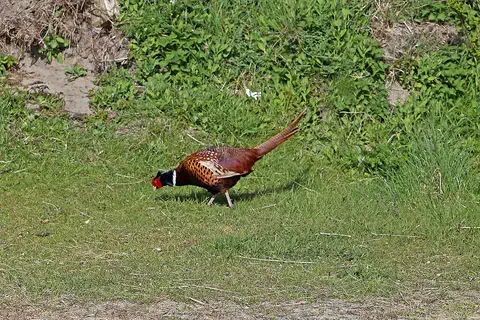
The common pheasant is a long-tailed ground bird. Its wild home is Asia, from the Caspian Sea to China and Korea, but people have taken it to Europe, North America, New Zealand and other places. Males are bright and coppery with a red face; females are mottled brown.
-
 Watch
3D
Animal
Common starling
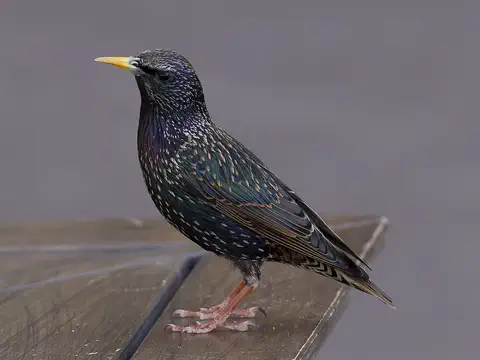
The common starling, also called the European starling, is a glossy, spotted songbird from Europe, Asia and North Africa. It is a brilliant copycat that can imitate other birds and even car alarms, and in winter huge flocks swirl through the evening sky in shows called murmurations. People also carried starlings to North America, Australia and other places, where they now live in the wild.
-
 Watch
Animal
Common wombat
The common wombat, or bare-nosed wombat, is a stocky, barrel-shaped marsupial of south-eastern Australia and Tasmania. It is one of the world's largest burrowing animals, spends about two thirds of its life underground and leaves cube-shaped poop to mark its patch.
-
 Watch
Animal
Dingo
The dingo is Australia's wild dog and the country's largest meat-eating mammal. People brought its ancestors to Australia about 4,000 years ago. It hunts rabbits, kangaroos and wallabies, howls rather than barks, and scientists still argue about whether it is its own species or a very old kind of dog.
-
 Watch
3D
Animal
Domestic cat
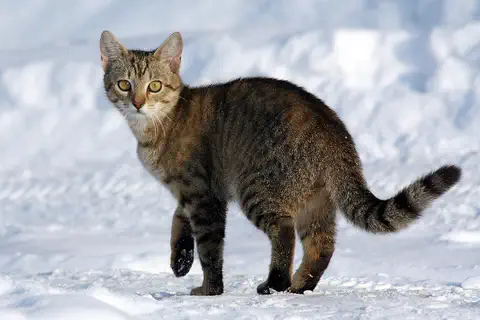
The domestic cat is one of the world's favorite pets. Cats live with people in homes, farms and towns in almost every country on Earth. Long ago they came from a small wildcat of the Middle East and Africa, and they still have the sharp senses and soft paws of a wild hunter.
-
 Watch
3D
Animal
Domestic dog
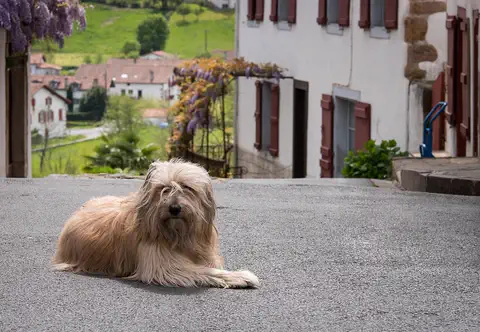
The domestic dog has lived with people for more than 12,000 years. Dogs came from gray wolves, and today there are more than 400 breeds, from tiny Chihuahuas to giant Irish wolfhounds. They live with people all over the world as pets, helpers and friends.
-
 Watch
3D
Animal
Domestic goat
Domestic goats are lively farm animals that came from a wild goat of Asia. They reach up to nibble leaves, twigs and weeds that other farm animals leave behind, and people keep them for milk, cheese, meat, wool and leather.
-
 Watch
3D
Animal
Domestic pig
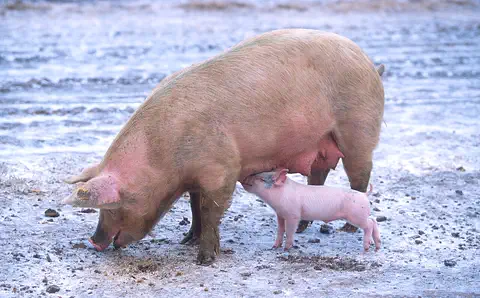
Domestic pigs live with people on every continent except Antarctica. Their ancestor is the wild boar, which people began taming about 9,000 years ago. Pigs are among the smartest farm animals, with a super-sensitive snout for digging up food.
-
 Watch
3D
Animal
Domestic sheep
Domestic sheep are farm animals that people tamed in western Asia thousands of years ago. They graze on grass, digest it with a four-part stomach and stick together in flocks. People keep sheep for wool, meat, milk and leather.
-
 Watch
3D
Animal
Donkey
Donkeys are domesticated members of the horse family, bred from the African wild ass more than 6,000 years ago. With their long ears, sure feet and great strength, they have carried loads for people on rough, dry land ever since, and in many countries they still do that work today.
-
 Watch
3D
Animal
Dromedary camel
The dromedary, or Arabian camel, is the one-humped camel of the deserts of North Africa, the Middle East and India. Its hump stores fat, not water, and its body is full of tricks for saving water. People tamed dromedaries thousands of years ago, and today none live truly wild, except a large feral population in Australia.
-
 Watch
Animal
Eastern grey kangaroo
The eastern grey kangaroo is a big, woolly gray kangaroo of eastern Australia and Tasmania. It hops on powerful back legs, balances with its long tail and grazes on grass in groups called mobs. Its joey is born weighing less than a gram and grows up in its mother's pouch.
-
 Watch
Animal
Emu
The emu is Australia's tallest native bird and the second-largest bird in the world, after the ostrich. It cannot fly, but it can sprint at about 48 kilometers an hour. Emus are famous fathers: the male sits on the eggs for about eight weeks without eating, then looks after the striped chicks.
-
 Watch
3D
Animal
Epaulette shark
The epaulette shark is a small, slender shark of Australia's Great Barrier Reef. It has a big black spot ringed with white above each front fin, and it can 'walk' along the reef, and even out of the water, by wriggling and pushing with its paddle-shaped fins. It can survive for a while in water with very little oxygen.
-
 Watch
3D
Animal
European rabbit
The European rabbit is the wild rabbit that all pet and farm rabbits come from. It lives in groups in big underground tunnel homes called warrens. Its numbers have fallen in its first home in Spain, Portugal and France, but people have carried it to many other places, where it became a pest.
-
 Watch
3D
Animal
Flatback sea turtle
The flatback sea turtle is named for its flat, smooth shell. It stays in shallow coastal seas around northern Australia, eats soft sea animals such as sea cucumbers and jellyfish, and nests only on Australian beaches, where its big hatchlings dash for the waves at night.
-
 Watch
Animal
Frilled lizard
The frilled lizard is a dragon lizard of the warm woodlands of northern Australia and southern New Guinea. It spends most of its life in trees, and when it is cornered it pops open a huge frill around its neck, opens its bright mouth and hisses, a bluff that makes it look much bigger than it is.
-
 Watch
Animal
Garden snail
The garden snail is a land snail with a brown-banded shell about 3 centimeters wide. It glides on a muscular foot over a carpet of slime, comes out mostly at night and after rain, and eats almost any garden plant. It first lived in western Europe and around the Mediterranean, but people have carried it around the world.
-
 Watch
3D
Animal
Goldfish
The goldfish is a small member of the carp family that people in China tamed centuries ago, by the time of the Song dynasty (960–1279). Wild goldfish are greenish-brown, but careful breeding has made gold, white, black and spotted pets with fancy fins.
-
 Watch
3D
Animal
Great egret
The great egret is a tall, all-white heron that lives in wetlands on every continent except Antarctica. It wades slowly through shallow water, waits, then strikes like lightning to catch fish. Once nearly wiped out in the United States by hunters who wanted its lacy feathers, it made a remarkable comeback.
-
 Watch
Animal
Greater bird-of-paradise
The greater bird-of-paradise is a rainforest bird of southern New Guinea and the Aru Islands. Males have a yellow head, a green throat, long tail wires and huge golden flank plumes, which they show off in group dances high in tall trees to win a female.
-
 Watch
Animal
Guinea pig
The guinea pig is not a pig and does not come from Guinea. It is a rodent, first tamed thousands of years ago by people in the Andes mountains of South America. Today it is a popular pet around the world, and in parts of Peru, Ecuador and Bolivia it is still raised for food.
-
 Watch
3D
Animal
Horse
Horses are grazing animals built for running, with long legs that end in a single hard hoof. People tamed wild horses about 6,000 years ago on the grasslands of Europe and Asia, and horses changed history: they pulled plows, carried riders and connected faraway places.
-
 Watch
3D
Animal
House mouse
House mice are small rodents that first lived in Europe, Asia and North Africa. By living alongside people, they have spread to every continent except Antarctica. They are quick runners and can have babies when only a few weeks old.
-
 Watch
Animal
House sparrow
The house sparrow is one of the most widespread songbirds in the world. It is native to Europe, Asia and North Africa, but people released it in many other places, and now it lives in towns and farms almost everywhere people do. Its numbers have fallen sharply in some places, including Britain and North America.
-
 Watch
3D
Animal
Housefly
The housefly is a small gray fly with two big red eyes and one pair of see-through wings. It cannot chew, so it soaks up liquid food with a mouth like a sponge. Houseflies started out in central Asia and now live almost everywhere that people live. Their eggs hatch in less than a day, and the young grow up fast.
-
 Watch
Animal
Kākāpō
The kākāpō is a large, moss-green parrot from New Zealand with an owl-like face. It cannot fly, it is active at night, and it eats only plants. It nearly died out, but careful work by New Zealand's Department of Conservation has grown the population to 325 birds (September 2026).
-
 Watch
Animal
Kea
The kea is a big, olive-green parrot found only on the South Island of New Zealand. It lives in mountain forests and alpine meadows, digs for food with its long, curved beak, nests on the ground and is famous for being curious, playful and clever.
-
 Watch
Animal
Koala
The koala is a tree-living marsupial from eastern Australia. It eats almost nothing but eucalyptus leaves, sleeps up to 20 hours a day to save energy, and carries its jellybean-sized baby in a pouch that opens toward its back legs.
-
 Watch
Animal
Laughing kookaburra
The laughing kookaburra is one of the larger members of the kingfisher family. It lives in the woodlands of eastern Australia, pounces on insects, worms and small animals, and lives in family groups. Its famous 'laugh' is really a territorial call that warns other birds to stay away.
-
 Watch
3D
Animal
Leafy seadragon
The leafy seadragon is a relative of the seahorse covered in leaf-shaped flaps of skin. It drifts among seaweed so well that it almost disappears. It sucks up tiny shrimp through its long snout, and the father carries the eggs on his tail.
-
 Watch
3D
Animal
Little penguin
The little penguin is the smallest penguin in the world, only about 33 centimeters long and about 1 kilogram. It lives along the coasts of southern Australia and New Zealand, where it is also called the fairy penguin, the blue penguin or kororā. It fishes at sea by day and comes ashore after dark to its burrow.
-
 Watch
3D
Animal
Monarch butterfly
The monarch butterfly is famous for its bright orange wings and its amazing journey. Each fall, monarchs from eastern North America fly up to 3,000 miles to mountain forests in Mexico, where they spend the winter clustered together on fir trees. Their caterpillars eat only milkweed, which makes them taste bad to predators.