
Animal
Wallace's flying frog
This big green frog has huge webbed feet. It can glide from tree to tree like a parachute!
Wallace's flying frog is a big, bright green frog of the rainforests of Southeast Asia. Its fingers and toes are joined by wide webs of skin, partly black, and it uses them to glide from tree to tree. It lives high in the trees and comes down only to breed, laying its eggs in a foam nest that hangs over a rain pool.
Rhacophorus nigropalmatus (family Rhacophoridae) lives in lowland evergreen rainforest, up to 600 m, on the Thai-Malay Peninsula, Borneo, Sumatra and in southern Myanmar. It is arboreal and glides on its webbed hands and feet, descending to forest pools to breed in foam nests. The IUCN SSC Amphibian Specialist Group listed it as Least Concern (assessed 3 February 2021, published 2022), with a decreasing trend as lowland forest is cleared.
Photo: Rushenb, CC BY-SA 4.0, via Wikimedia Commons
Meet Wallace's flying frog
This frog is big and bright green.
Its sides and feet are yellow.
Its toes are joined by black and yellow webs.
Wallace's flying frog is a large tree frog, about 10 centimeters long from the snout to the end of the body. Its back and legs are a bright, vivid green and its sides are yellow. Its big eyes have pupils shaped like a flat line.
You can tell it from other flying frogs by its large size and by the black color in the webbing of all four feet. It is named after the naturalist Alfred Russel Wallace.
Ecology Asia gives a snout-vent length of about 10 cm for both sexes; dorsum and legs vivid green, flanks yellow; large eyes with horizontal pupils; distinguished from other flying frogs by its large size and black webbing on all four feet. Each finger and toe ends in an expanded pad that lets it cling to vertical surfaces (ADW). The IUCN uses the English name Abah River flying frog.
Quick facts
- Group
- Amphibian
- Length
- 0.1 m
High in the rainforest
This frog lives in rainforests.
It stays high up in the trees.
It comes down to pools to lay eggs.
Wallace's flying frogs live in lowland rainforests up to about 600 meters above sea level. They are found mostly in old, evergreen forest, sometimes in forest that is growing back, but not in open country.
They spend their lives high in the trees, mostly in the middle layer of the forest, and come down to the ground only to mate and build their nests. Because of this, people rarely see them, except at the pools where many gather to breed.
IUCN: typically primary evergreen rainforest, also secondary forest and old shifting cultivation, not open areas; sea level to 600 m. It is rarely encountered because it is seen only when it comes down from the trees to breeding aggregations, where it can be locally common (Grandison 1972, Dring 1979). Ecology Asia places it mainly at mid-canopy level, descending to ground level to mate and build its bubble nest.
Continent
Its habitat

Where can you find this animal?
- Lives here naturally · Countries and seas named by a scientific source
- Sightings recorded · Records of wild sightings (GBIF)
Lives here naturally · Countries and seas named by a scientific source
The Thai-Malay Peninsula from Ranong in southern Thailand to Endau-Rompin in Malaysia, Borneo, Sumatra, and Tanintharyi in southern Myanmar (IUCN); it probably lives in more places between known sites. In Indonesia only on Sumatra and in Kalimantan. Similar frogs from northern Thailand, Laos, Vietnam and China are for now placed in another species.
Places: Thailand, Malaysia, Brunei, Indonesia and Myanmar.
Source: iucn-red-list · checked November 2026
Sightings recorded · Records of wild sightings (GBIF)
Counts of GBIF records of wild observations (human and machine) and preserved specimens. Records include introduced populations, vagrants, escaped or released animals and misidentifications, so a country with records is not necessarily part of the native range.
Wild sightings have been recorded in Malaysia, Thailand, Indonesia, Brunei and Myanmar.
Source: gbif · checked October 2026
Range maps show where scientists say an animal lives, often country by country. An animal may live in only part of a country shown, and sightings records can include animals that wandered far from home.
Insects in the treetops
This frog eats insects.
Some snakes that climb trees eat this frog.
Wallace's flying frogs eat insects and other small animals without backbones. They live mainly in the middle layer of the rainforest, high above the ground, and come down only to breed.
They have enemies too. Snakes that can climb trees are known to catch and eat them.
Diet: insects and other small invertebrates (ADW). Known to fall prey to tree-climbing snakes (Ecology Asia). Lives mainly at mid-canopy level (Ecology Asia).
Did you know?
Its tadpoles can be big, too!
A tadpole about 5 centimeters long, found in Malaysia, was identified as probably being a Wallace's flying frog.
A tadpole of about 5 cm from Johor identified 'with reasonable confidence' as this species (Ecology Asia).
Built for gliding
Its big webbed feet work like a parachute.
It spreads its feet and glides through the air!
Wallace's flying frog does not fly like a bird: it glides. Its hands and feet are huge and fully webbed, and it has flaps of skin along its sides. When it leaps and spreads its fingers and toes, the webs catch the air like little sails, so it can glide from tree to tree.
As it comes in to land, it makes a long, low approach to slow down, then grips the bark with its sticky toe pads.
Huge, fully webbed hands and feet and skin along the sides of the body increase the surface area, allowing glides from high perches when the digits are spread; glides of up to about 15 m (50 ft) have been reported; the frog makes a long, low final approach to slow down and grips with its toe pads on landing (ADW). The extensive webbing allows long glides from tree to tree (Ecology Asia).
A foam nest over the water
The mother frog makes a nest of foam.
It hangs over a pool of water.
The tadpoles drop into the water!
To breed, the frogs come down from the trees to forest pools, rain pools and muddy wallows made by animals. The female makes a liquid and beats it into foam with her back legs, then lays her eggs inside the foam nest, which hangs from low plants over the water.
When the eggs have turned into tadpoles, the nest breaks apart and the tadpoles drop into the pool below. Big tadpoles can be about 5 centimeters long.
Breeding aggregations form in vegetation near forest pools, rain pools and animal wallows; egg masses are usually attached to low vegetation in foam nests overhanging the water (IUCN). The female beats a secreted fluid into foam with her hind legs and lays the eggs as the male fertilizes them; when the embryos have become tadpoles the nest breaks down and they fall into the water (ADW). A tadpole of about 5 cm was identified 'with reasonable confidence' as this species (Ecology Asia).
Life in the canopy
This frog lives up in the trees.
It leaps and glides from branch to branch.
Wallace's flying frogs live almost all their lives up in the forest trees, leaping and gliding between branches. Even though they are big, they can hold on to thin twigs without trouble.
They gather in groups when it is time to breed, at pools on or near the forest floor. In Borneo, a pair was seen clinging to plants about 3 meters above a flooded roadside ditch.
Mainly mid-canopy; descends to the ground to mate and build its bubble nest; adults cling to slender twigs despite their size; a pair was photographed about 3 m above a flooded roadside ditch in Danum Valley, Sabah (Ecology Asia). Breeding aggregations at forest pools and wallows (IUCN).
Did you know?
This frog can glide through the air!
When it leaps and spreads its huge webbed feet, Wallace's flying frog can glide from tree to tree. Glides of about 15 meters have been reported.
Gliding on webbed hands and feet and lateral skin; glides up to about 15 m reported (ADW).
Saving lowland rainforest
This frog needs its rainforest home.
Keeping forests safe helps it.
Wallace's flying frog is listed as least concern because it lives across a wide area and there are probably many of them. But its numbers are thought to be going down, because lowland rainforest is being cut down for timber and for oil palm plantations.
A few are caught for the pet trade, but not enough to be a big threat. It lives in several national parks and reserves in Sumatra, Borneo and Peninsular Malaysia.
Least Concern (IUCN SSC Amphibian Specialist Group; Global; assessed 3 February 2021, published 2022; trend decreasing): wide distribution, presumed large population; population inferred to be decreasing with ongoing habitat decline. Main threat: rapid clear-cutting of lowland rainforest in forest concessions and for oil palm. A small national and international pet trade is not considered a major threat. Protected areas include Kerinci Seblat and Bukit Barisan Selatan National Parks (Sumatra), Gunung Palung National Park (Kalimantan) and Gunung Panti Forest Reserve (Peninsular Malaysia); effective preservation of lowland forest is needed (IUCN).
IUCN Red List
How is the wallace's flying frog doing in the wild?
- Least Concern (this animal)
- Near Threatened
- Vulnerable
- Endangered
- Critically Endangered
- Extinct in the Wild
- Extinct
Least Concern
Not at risk of disappearing from the wild right now.
Amazing facts
-
This frog can glide through the air!
When it leaps and spreads its huge webbed feet, Wallace's flying frog can glide from tree to tree. Glides of about 15 meters have been reported.
Gliding on webbed hands and feet and lateral skin; glides up to about 15 m reported (ADW).
-
Its eggs grow inside a ball of foam.
The female whips a liquid into foam with her back legs, then lays her eggs inside it.
Foam nest made by the female's hind legs (ADW), on low vegetation over pools (IUCN).
-
People rarely see this frog.
Wallace's flying frogs are seldom seen, because they live high in the trees and only come down to breed.
Rarely encountered except at breeding aggregations (IUCN).
-
Its tadpoles can be big, too!
A tadpole about 5 centimeters long, found in Malaysia, was identified as probably being a Wallace's flying frog.
A tadpole of about 5 cm from Johor identified 'with reasonable confidence' as this species (Ecology Asia).
Words to know
- glide
- to move smoothly through the air without flapping, slowly coming down
- webbing
- thin skin stretched between fingers or toes
- canopy
- the upper layer of a forest, made of treetops
- foam nest
- a frothy mass that some frogs make to hold and protect their eggs
- wallow
- a muddy pool where large animals roll and bathe
- least concern
- not currently at serious risk of dying out in the wild
Discovery challenge
-
How does this frog travel between trees?
How does Wallace's flying frog get from tree to tree?
Which form of locomotion lets Rhacophorus nigropalmatus move between trees?
- It glides
- It flaps wings
- It swims
Show the answer
It glides
It glides!
It spreads its huge webbed hands and feet and glides through the air.
Gliding on extensive webbing and lateral skin flaps (ADW; Ecology Asia).
-
Where does this frog lay its eggs?
Where does Wallace's flying frog lay its eggs?
What kind of nest does Rhacophorus nigropalmatus make for its eggs?
- In a foam nest over water
- In a hole in the sand
- On its father's back
Show the answer
In a foam nest over water
In a foam nest!
The eggs are laid in a foam nest that hangs from plants over a pool.
Foam nests attached to low vegetation overhanging pools (IUCN).
-
What color are the webs on its feet?
What color helps tell Wallace's flying frog from other flying frogs?
Which feature distinguishes R. nigropalmatus from other flying frogs?
- Black in the webbing of all four feet
- Red spots on its back
- A blue tail
Show the answer
Black in the webbing of all four feet
Black!
Its large size and black webbing on all four feet set it apart.
Large size and black webbing on all four feet (Ecology Asia).
-
What is the biggest danger to this frog?
What is the main threat to Wallace's flying frog?
What is the principal threat identified in the 2022 IUCN assessment?
- Cutting down rainforest
- Too much snow
- Ocean waves
Show the answer
Cutting down rainforest
Losing its forest.
Lowland rainforest is being cleared for timber and oil palm plantations.
Rapid clear-cutting of lowland rainforest for concessions and oil palm (IUCN).
Places where you might see it
-
 Watch
 Country
Malaysia
Malaysia is a country in Southeast Asia, just north of the Equator. One part is on the Malay Peninsula and the other is on the island of Borneo. It has rainforests, huge caves, Mount Kinabalu and the city of Kuala Lumpur, with about 34.4 million people (2026).
-
 Watch
 Country
Thailand
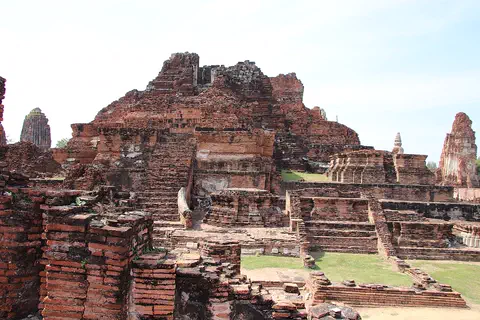
Thailand is a tropical country in the middle of mainland Southeast Asia, with forested mountains in the north, rice fields on its central plains and a long, narrow peninsula in the south. Its capital is Bangkok, and about 65.8 million people were on its civil register at the end of 2025.
-
 Watch
 Country
Indonesia
Indonesia is a country of about 17,500 islands in Southeast Asia, spread across the Equator between the Indian and Pacific oceans. It has more than 100 active volcanoes, rainforests full of wildlife, and about 286 million people (2025).
Explore next
-
 Watch
Animal
Red-eyed tree frog
The red-eyed tree frog lives in the rainforests of Central America. By day it sleeps folded up on a leaf, looking plain green. When something disturbs it, it flashes huge red eyes, orange feet and blue-and-yellow sides.
-
 Watch
3D
Animal
Bornean orangutan
The Bornean orangutan is a shaggy red great ape that spends almost all its life in the treetops of Borneo's rainforests. It eats mostly ripe fruit, builds a new leafy bed every night, and lives a quieter, more solitary life than other great apes.
-
 Watch
Animal
Rhinoceros hornbill
The rhinoceros hornbill is a huge rainforest bird with black feathers, a black-banded white tail and an enormous yellow and orange-red beak topped by an upturned horn called a casque. It lives in tall forests of the Malay Peninsula, Sumatra, Java and Borneo and eats mostly fruit, especially figs. It is vulnerable because its forests are being cut down and it is hunted.
-
Watch
Country
Malaysia
Malaysia is a country in Southeast Asia, just north of the Equator. One part is on the Malay Peninsula and the other is on the island of Borneo. It has rainforests, huge caves, Mount Kinabalu and the city of Kuala Lumpur, with about 34.4 million people (2026).
-
Watch
Country
Thailand
Thailand is a tropical country in the middle of mainland Southeast Asia, with forested mountains in the north, rice fields on its central plains and a long, narrow peninsula in the south. Its capital is Bangkok, and about 65.8 million people were on its civil register at the end of 2025.
-
Watch
Country
Indonesia
Indonesia is a country of about 17,500 islands in Southeast Asia, spread across the Equator between the Indian and Pacific oceans. It has more than 100 active volcanoes, rainforests full of wildlife, and about 286 million people (2025).
-
 Watch
Animal
Long-nosed horned frog
The long-nosed horned frog lives on the floor of rainforests in Southeast Asia. With its brown colors, a pointed snout and a sharp point above each eye, it looks so much like the dead leaves around it that you are unlikely to see it unless it moves. It sits still and waits for small animals to come close, then snatches them.
-
 Watch
Animal
Vietnamese mossy frog
The Vietnamese mossy frog is a tree frog from the forests of Vietnam, southern China and Laos. Its green skin, black spots and little bumps and spines make it look like a clump of moss. It hides in water-filled holes and rock crevices, often with only its eyes showing, and it eats large insects.
For parents & teachers
What children will learn
- Explain how Wallace's flying frog glides.
- Describe how this frog uses a foam nest.
- Locate Southeast Asia's rainforests on a map.
- Explain why clearing lowland rainforest affects this frog.
Recommended ages: 3 to 17 · About 15 minutes
Talk about it
- Why might a frog that lives high in the trees be hard for scientists to count?
- Why might gliding be useful for an animal that lives in tall trees?
- Why might a foam nest over a pool be a good place for eggs?
Try at home or in class
- Paper gliders: cut two paper frog shapes, one with wide 'webbed' feet and one with thin feet. Drop both from the same height. Which floats down more slowly?
- Foam nest: whisk a little water with a drop of dish soap into foam in a bowl and see how bubbles can hold small beads, like eggs in a nest.
Key vocabulary: glide, webbing, canopy, foam nest, wallow, least concern
Where these facts come from
- GBIF Backbone Taxonomy and GBIF Occurrence Search , Global Biodiversity Information Facility (CC0 1.0 (backbone); occurrence counts are facts derived from records under CC0, CC BY and CC BY-NC)
- Wikidata , Wikimedia Foundation (CC0 1.0)
- The IUCN Red List of Threatened Species , International Union for Conservation of Nature (IUCN terms of use (no redistribution of Red List data or range maps))
- Rhacophorus nigropalmatus (IUCN SSC Amphibian Specialist Group, assessed 3 February 2021, published 2022) , IUCN Red List of Threatened Species
- Rhacophorus nigropalmatus: taxonomy, justification, range, population, habitat, threats and conservation text , IUCN Red List of Threatened Species
- Rhacophorus nigropalmatus: IUCN Red List global assessment record (IUCN SSC Amphibian Specialist Group 2022), IUCN checklist on GBIF , GBIF
- Wallace's Flying Frog , Ecology Asia
- Rhacophorus nigropalmatus (Don Abbey) , Animal Diversity Web, University of Michigan Museum of Zoology
- File:Rhacophorus nigropalmatus.jpg (Rushenb, 6 September 2016, Khao Sok National Park) , Wikimedia Commons
- Wikimedia Commons , Wikimedia Foundation (Per file: Public domain, CC0, CC BY or CC BY-SA only (credited on each page))
Checked, not yet human-reviewed. Last updated November 1, 2026. Spotted a mistake? Tell us.