
Tropical Asian rainforest
Animals that live in the tropical asian rainforest. Tap one to meet it.
20 to explore
-
 Watch
Animal
Asian black bear
The Asian black bear is a black bear with a cream crescent on its chest, shaped like a new moon. It lives in forests and mountains from Iran and Pakistan across the Himalayas and Southeast Asia to China, Korea, Japan and the Russian Far East. It eats mostly plants, especially fruit and nuts, and in cold places it sleeps through the winter.
-
 Watch
3D
Animal
Asian elephant
The Asian elephant is the largest land animal in Asia. It is a little smaller than its African cousins, with smaller ears, a head shaped like two domes and a trunk with one finger-like tip. It lives in forests and grassy clearings in 13 countries of South and Southeast Asia.
-
 Watch
Animal
Atlas moth
The atlas moth is one of the largest moths in the world, with wings up to about 24 centimeters across. It lives in tropical and subtropical forests of southern and Southeast Asia. Its caterpillars eat a lot and spin silk cocoons, and the adults cannot eat at all: they live for only about a week.
-
 Watch
3D
Animal
Bornean orangutan
The Bornean orangutan is a shaggy red great ape that spends almost all its life in the treetops of Borneo's rainforests. It eats mostly ripe fruit, builds a new leafy bed every night, and lives a quieter, more solitary life than other great apes.
-
 Watch
Animal
Burmese python
The Burmese python is one of the largest snakes in the world. In its home in South and Southeast Asia it has become rare because so many are caught, but in southern Florida, where people let pet pythons go, it has spread through the Everglades and eats many of the animals that live there.
-
 Watch
Animal
Clouded leopard
The clouded leopard is a forest cat of mainland Southeast Asia and the Himalayan foothills. It is named for the cloud-shaped patches on its coat, and it is an amazing climber that can creep headfirst down a tree trunk. It is Vulnerable, and fewer of them are left each year.
-
 Watch
Animal
Great hornbill
The great hornbill is a very large bird of Asia's forests, with a long tail, broad black-and-white wings and an enormous curved yellow bill topped by a helmet called a casque. It eats mostly figs, and the female seals herself inside a tree hole to raise her chick.
-
 Watch
Animal
Indian cobra
The Indian cobra, or spectacled cobra, lives across South Asia, from Pakistan to Sri Lanka. It raises its head and spreads a hood marked with a pattern like a pair of glasses, it eats lots of rats and mice, and it is venomous, so it is an animal to admire from far away.
-
 Watch
Animal
King cobra
The king cobra is the largest venomous snake in the world, growing to more than 5 meters long. It lives in forests and near streams in South and Southeast Asia, eats mainly other snakes, and the mother builds a nest of leaves and guards her eggs.
-
 Watch
Animal
Large flying fox
The large flying fox is a giant fruit bat of Southeast Asia, with wings about 1.5 meters across. It flies out at night to eat fruit, flowers and nectar, spreading seeds and pollinating trees. Because of hunting and forest loss, it is now Endangered.
-
 Watch
3D
Animal
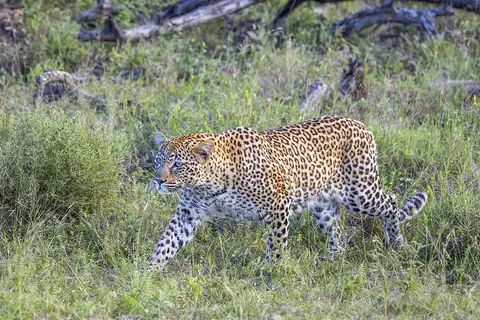
Leopard
The leopard is a strong, spotted big cat and the best climber of them all. It can carry its food high up into a tree, away from lions and hyenas. Leopards live in more kinds of places than any other big cat, from deserts to rainforests, across Africa and Asia.
-
 Watch
Animal
Orchid mantis
The orchid mantis is a praying mantis from the rainforests of Southeast Asia that looks like a flower. Its white and pink colors fool bees and other insects that visit flowers, and the mantis catches them. Its leg flaps look like petals, and scientists recently found that they also help young mantises glide through the air.
-
 Watch
Animal
Philippine eagle
The Philippine eagle is one of the largest and rarest eagles in the world. It lives only in the mountain rainforests of four Philippine islands, where it hunts monkeys, civets, flying squirrels and other forest animals. It is the national bird of the Philippines, and it is critically endangered.
-
 Watch
Animal
Proboscis monkey
The proboscis monkey is named for the grown-up male's huge, drooping nose. It lives only on Borneo, in forests along rivers, swamps and coasts. It eats mostly leaves and fruit, sleeps by the river every night and is a strong swimmer.
-
 Watch
Animal
Reticulated python
The reticulated python lives in the forests, riversides and even towns of Southeast Asia. It can grow longer than any other kind of snake, it is covered in a net-like pattern, and it is such a good swimmer that it has reached many small islands across the sea.
-
 Watch
Animal
Sloth bear
The sloth bear is a shaggy, black bear of the forests and grasslands of India, Nepal and Sri Lanka. It is a bear that specializes in eating termites and ants: it digs open their nests with long claws and sucks them up through a gap in its front teeth. Mother sloth bears carry their cubs on their backs.
-
 Watch
Animal
Sumatran orangutan
The Sumatran orangutan is a shaggy red great ape that lives almost all its life in the treetops of northern Sumatra, in Indonesia. Its hair is longer and lighter than its Bornean cousin's, and a mother has a baby only every eight or nine years.
-
 Watch
Animal
Sun bear
The sun bear is the smallest of the world's eight kinds of bear, and it has the longest tongue. It lives in the forests of Southeast Asia, climbs trees with long curved claws, and rips open logs to find insects and honey. Every bear has its own chest patch, like a fingerprint.
-
 Watch
3D
Animal
Tiger
The tiger is a huge cat with orange fur and dark stripes that help it hide in tall grass and forest shadows. It lives alone, hunts deer and wild pigs, and loves to swim. Wild tigers live only in Asia, and they are endangered.
-
 Watch
Animal
Tokay gecko
The tokay gecko is one of the biggest geckos in the world, a blue-gray lizard covered in orange spots. It lives in forests and on houses across South and Southeast Asia, hunts insects at night, climbs walls and ceilings with special toe pads, and gets its name from the male's loud to-kay call.