
Animal
West Indian manatee
The West Indian manatee is a big, gentle sea animal that eats plants. It swims slowly in warm rivers and seas, and people call it a sea cow.
The West Indian manatee is a large, slow, plant-eating marine mammal nicknamed the sea cow. It lives in warm coasts, rivers and springs from Florida and the Caribbean to Brazil, grazing on seagrass and other water plants for up to 8 hours a day. It cannot stand cold water for long, and being hit by boats is one of the dangers it faces.
Trichechus manatus is a herbivorous sirenian with two subspecies, the Florida and Antillean manatees. It lives in marine, brackish and fresh water across the western Atlantic and Caribbean, cannot tolerate water below about 20 °C for long, and is listed by the IUCN as Vulnerable; threats include watercraft strikes and the loss of seagrass and warm-water refuges.
Photo: Galen Rathbun, public domain, via Wikimedia Commons
Meet the manatee
The manatee is a big, gray, gentle animal.
It has two flippers and a round, flat tail. It has whiskers on its nose. People call it a sea cow because it eats plants.
The West Indian manatee is a large marine mammal. Most adults are about 2.7 to 3 meters long and weigh around 450 kilograms, and a few grow to about 4 meters and as much as 1,590 kilograms. Its gray-brown body tapers to a big, flat, paddle-shaped tail.
It has two flippers, each with three or four nails, and a wrinkled face with whiskers on its snout. Manatees are nicknamed 'sea cows' because they graze on plants. Surprisingly, their closest relatives on land are elephants and the hyrax, a small mammal about the size of a gopher.
Trichechus manatus is a sirenian, related to the African and Amazonian manatees and the dugong; its closest living relatives outside the sirenians are elephants and hyraxes. There are two subspecies: the Florida manatee (T. m. latirostris) and the Antillean manatee (T. m. manatus).
Adults are typically 9 to 10 feet (2.7 to 3 meters) and about 1,000 pounds (450 kilograms), but can exceed 13 feet and 3,500 pounds. The gray-brown body carries sparse hairs, with stiff bristles around the muzzle, and ends in a paddle-shaped tail. The flippers, with three to four nails, are used to steer and to hold vegetation.
Quick facts
- Group
- Mammal
- Length
- 2.7 to 4 m
- Weight
- 450 to 1,590 kg
- Top speed
- up to 24 km/h
- Lifespan in the wild
- up to 60 years
Warm water, please
Manatees live in warm water.
They swim in rivers, bays and along the coast. In winter, Florida manatees gather in warm springs to stay cozy.
Manatees live in salt water, fresh water and the brackish water in between, in rivers, bays, canals and along coasts. They like shallow places with lots of seagrass, near deeper channels where they can escape if they feel threatened.
They cannot stay for long in water colder than about 20 °C. Florida manatees spread north and west along the U.S. coast in summer, but in winter they gather in warm natural springs and in the warm water flowing out of power plants. Other manatees live along the coasts of Mexico, Central America, the Caribbean islands and northern South America to Brazil.
West Indian manatees use marine, brackish and freshwater systems in coastal and riverine areas, favoring nearshore beds of submerged vegetation next to deeper channels. The IUCN's global assessment lists them as resident in 21 countries and territories, from the United States through Mexico, Central America and the Greater Antilles to Brazil; hunting eliminated them from Guadeloupe and other Lesser Antilles islands.
They cannot tolerate temperatures below about 68 °F (20 °C) for long. In winter Florida manatees concentrate in peninsular Florida at natural springs, power-plant outfalls and passive thermal basins; in summer some range to Texas and north to Massachusetts. Antillean manatees have a patchy distribution from northern Mexico to northeastern Brazil and may travel hundreds of miles a year along channels and shorelines.
Continents
Its habitat

Where can you find this animal?
- Lives here naturally · Countries and seas named by a scientific source
- Sightings recorded · Records of wild sightings (GBIF)
Lives here naturally · Countries and seas named by a scientific source
Warm coasts, bays, rivers and springs from the southeastern United States through the Gulf coast of Mexico, Central America and the Caribbean to northeastern Brazil. Manatees stay close to shore and in rivers, not across whole countries.
Places: Atlantic Ocean, United States, Mexico, Guatemala, Belize, Honduras, Nicaragua, Costa Rica and 13 more places.
Source: iucn-red-list · checked October 2026
Sightings recorded · Records of wild sightings (GBIF)
Counts of GBIF records of wild observations (human and machine) and preserved specimens. Records include introduced populations, vagrants, escaped or released animals and misidentifications, so a country with records is not necessarily part of the native range.
Wild sightings have been recorded in Brazil, United States, Mexico, Cuba, Colombia, Belize, Puerto Rico, Suriname and 17 more places.
Source: gbif · checked October 2026
Range maps show where scientists say an animal lives, often country by country. An animal may live in only part of a country shown, and sightings records can include animals that wandered far from home.
Grazing all day
Manatees eat plants, like seagrass.
They eat for hours and hours every day. Their teeth wear out, so new teeth keep growing in!
Manatees are herbivores, which means they eat plants. They graze on seagrass and other plants that grow in the sea, in marshes and in rivers, and they can eat plants that float, stick up out of the water or grow underwater.
A manatee spends up to 8 hours a day eating and can eat up to 10 percent of its body weight. For a 450-kilogram manatee, that is up to 45 kilograms of plants a day. Its food can wear down its teeth, so its molars are replaced again and again throughout its life.
Manatees are herbivores that feed on floating, emergent and submerged vegetation in fresh, brackish and salt water, especially seagrasses; small fish and invertebrates are occasionally swallowed with plants. They feed for up to 8 hours a day and may eat up to 10 percent of their body weight daily.
Their diet includes plants and other material that can wear teeth down, and manatees continually replace their molars throughout life, an adaptation the U.S. Fish and Wildlife Service calls unique. Despite their size they carry relatively little body fat and have a low metabolic rate for a marine mammal; researchers believe manatees affected by cold cannot produce enough metabolic heat to make up for what they lose.

A slow, gentle body
A manatee swims slowly with its big, flat tail.
It uses its flippers to steer and to hold its food. It comes up to breathe every few minutes.
A manatee pushes itself through the water with its powerful, paddle-shaped tail. It usually swims slowly, about 5 to 8 kilometers per hour, but it can put on short bursts of about 24 kilometers per hour. Its flippers help it steer and hold plants while it eats.
Manatees are mammals, so they must come to the surface to breathe air. They usually breathe every three to five minutes, but a resting manatee can stay underwater for up to 20 minutes.
Propulsion comes from the large, paddle-shaped tail; usual swimming speeds are about 3 to 5 miles per hour, with short bursts of 15 to 20. The flippers steer and manipulate vegetation, and the muzzle bears stiff bristles.
Manatees typically surface every three to five minutes, as often as every 30 seconds when active, and can stay down up to 20 minutes while resting. They cannot tolerate water below about 20 °C for long periods. Age can be read from annual growth layers in their ear bones.
Growing up
A manatee mom has one baby, called a calf.
The calf drinks milk from behind its mom's flipper. It stays with its mom for one to two years.
A manatee mother is pregnant for about a year and usually has one calf. A newborn is about 1.2 meters long and weighs about 30 kilograms, and it can swim to the surface by itself right after birth.
The calf drinks milk from teats just behind its mother's flippers and starts nibbling plants after a few weeks. It swims right beside her, just behind her flipper, for one to two years while she teaches it where to find food and warm water. Manatees are grown up at about five years old.
Manatees have no permanent pair bonds; a female in breeding condition may be followed by a mating herd of a dozen or more males. Births can occur year-round, with a broad spring-summer peak. Gestation is about a year, twins are rare, and a calf of about 120 centimeters and 30 kilograms is born every two to five years.
Calves can swim to the surface unaided, nurse underwater from teats behind the mother's flippers, and begin eating plants within weeks. Mother and calf stay together for one to two years, during which the calf learns migration routes, warm-water sites, feeding areas and freshwater sources. Maturity comes at about five years; manatees may live 60 years or more, though few wild animals live past 30.
Quiet chirps and squeaks
Manatees are gentle and calm.
They spend their day eating, resting and swimming. Moms and babies call to each other with squeaks.
Manatees are gentle, slow-moving animals that spend most of their time eating, resting and traveling. Adults often swim in single file, but a calf always swims beside its mother.
Manatees talk with chirps, squeaks and grunts. The calls help them stay in touch, especially in murky water, and the most common calls are between mothers and calves. If a calf loses its mother, it cries loudly until she answers. A mother protects her calf by swimming between it and anyone who comes too close.
Manatees are slow and non-aggressive, dividing their time among feeding, resting and travel. They produce chirps, squeaks and grunts that maintain contact, particularly in turbid water, and may express fear or anger; they are not thought to be used for navigation. Mother-calf exchanges are the most frequent, and a fleeing mother and calf call back and forth in a duet.
Adults often travel in single file, while a calf travels parallel to its mother, just behind her flipper. Females defend calves not by attacking but by placing themselves between the intruder and the calf, or fleeing if the threat seems severe. In winter, many manatees gather at the same warm springs.
Did you know?
Scientists can tell a manatee's age from its ear bones.
Manatee ear bones grow a new layer every year, a bit like tree rings, so scientists can count them to tell a manatee's age.
Age is estimated from annual growth layer groups in the ear bones.
Protecting manatees
Boats can hurt manatees, so in many places boats must go slowly.
Some places that are important to manatees are closed to boats. In Florida, there are now many more manatees than before.
The West Indian manatee is listed as Vulnerable. Some manatees are hurt or killed when boats hit them. Others lose the seagrass they eat or the warm water they need, get tangled in fishing line, or are caught in floodgates and canal locks.
People are helping. Manatees are protected by law, and in Florida special zones make boats slow down where manatees swim. When surveys began in 1991, scientists counted at least 1,267 manatees in Florida; a more careful survey in 2021 and 2022 estimated at least 8,350. The Antillean manatees farther south are fewer, though: a rough estimate is under 7,000.
The IUCN's global assessment (assessed 2023, published 2024) lists Trichechus manatus as Vulnerable, with about 8,200 to 11,300 mature individuals and an unknown overall trend. The U.S. Fish and Wildlife Service estimates at least 13,000 West Indian manatees range-wide. In Florida, the minimum count was 1,267 when aerial surveys began in 1991; the FWC's 2021–2022 statewide survey, using more robust methods, estimated 8,350 to 11,730. The species was reclassified from endangered to threatened under the U.S. Endangered Species Act in 2017, while the Antillean subspecies, roughly under 7,000, is declining in most of its range.
Threats include watercraft collisions, loss of forage and warm-water habitat, entanglement in fishing gear and debris, entrapment and crushing in locks and water-control structures, cold snaps and red tide. Protection rests on the Endangered Species Act, the Marine Mammal Protection Act and Florida's Manatee Sanctuary Act, under which the FWC sets manatee protection zones that limit boat speeds and, in especially important areas, entry.
IUCN Red List
How is the west indian manatee doing in the wild?
- Least Concern
- Near Threatened
- Vulnerable (this animal)
- Endangered
- Critically Endangered
- Extinct in the Wild
- Extinct
Vulnerable
At high risk of disappearing from the wild.
See the IUCN Red List assessment · The IUCN Red List of Threatened Species 2022.2
Amazing facts
-
A manatee's cousins include elephants.
The manatee's closest relatives on land are elephants and hyraxes, small mammals about the size of a gopher.
Outside the sirenians, the manatee's closest living relatives are elephants and hyraxes.
-
Manatees grow new teeth all their lives.
A manatee's food can wear down its molars, so new ones keep replacing them throughout the manatee's life.
The U.S. Fish and Wildlife Service calls continual molar replacement a unique adaptation to a diet that can wear teeth down.
-
Scientists can tell a manatee's age from its ear bones.
Manatee ear bones grow a new layer every year, a bit like tree rings, so scientists can count them to tell a manatee's age.
Age is estimated from annual growth layer groups in the ear bones.
-
Baby manatees squeak to their moms.
Manatee calves call loudly when they cannot find their mothers, and keep calling until she answers.
Mother-calf calls are the most common manatee vocalizations; separated calves cry until the mother responds.
Words to know
- herbivore
- an animal that eats only plants
- seagrass
- a plant with long leaves that grows underwater in shallow seas
- brackish
- a mix of fresh water and salt water
- spring
- a place where water flows up from underground
- sea cow
- a nickname for manatees and dugongs, which graze on plants
- calf
- a baby manatee
Discovery challenge
-
What do manatees eat?
What is the main food of manatees?
What makes up almost all of the West Indian manatee's diet?
- Plants like seagrass
- Fish and squid
- Insects
Show the answer
Plants like seagrass
Manatees eat plants, like seagrass.
They are herbivores that graze on seagrass and other water plants.
A herbivore feeding on floating, emergent and submerged vegetation.
-
Where do Florida manatees go in winter?
Where do many Florida manatees gather when the water gets cold?
Which sites do Florida manatees depend on in winter?
- Warm springs and other warm-water places
- Icy seas near the North Pole
- Mountain lakes
Show the answer
Warm springs and other warm-water places
They go to warm springs to stay cozy.
They gather at natural springs and warm water flowing from power plants.
Natural springs, power-plant outfalls and passive thermal basins.
-
What is one big danger to manatees?
Which of these is a major threat to manatees?
Which human impact threatens West Indian manatees?
- Being hit by boats
- Sharp rocks on mountains
- Snowstorms in the desert
Show the answer
Being hit by boats
Boats can hit manatees, so boats go slowly where they live.
Boat strikes hurt and kill many manatees.
Watercraft collisions, along with loss of forage and warm-water habitat.
-
Which animal is a manatee's cousin?
Which land animal is one of the manatee's closest relatives?
Outside the sirenians, which animal is one of the manatee's closest relatives?
- The elephant
- The cow
- The seal
Show the answer
The elephant
Elephants are manatee cousins!
Despite the name 'sea cow', its closest land relatives are elephants and hyraxes.
Elephants and hyraxes.
Places where you might see it
-
 Watch
 Country
United States
The United States is a large country in North America made of 50 states, from icy Alaska to the warm islands of Hawaii. It has the Grand Canyon, the Mississippi River and Yellowstone, and about 342 million people live there.
-
 Watch
 Country
Brazil
Brazil covers about half of South America and is the fifth-largest country in the world. It holds most of the Amazon River basin and much of the world's largest rainforest, and about 214 million people lived there in 2026, most of them near the Atlantic coast.
-
 Watch
Natural wonder
Everglades National Park
Everglades National Park covers 1.5 million acres at the southern tip of Florida. It protects marshes of sawgrass, forests of mangroves and pines, and shallow bays, all fed by fresh water flowing slowly south. It is home to alligators and crocodiles, the rare Florida panther and hundreds of kinds of birds, but invasive Burmese pythons have caused serious harm to its wildlife.
-
 Watch
 Country
Cuba
Cuba is the largest island in the Caribbean, a long, narrow country with about 1,600 smaller islands and cays around it. It has mountains, green valleys, coral reefs and the old city of Havana, its capital. About 9.4 million people lived there at the end of 2025, and Spanish is the main language.
Explore next
-
Watch
Country
United States
The United States is a large country in North America made of 50 states, from icy Alaska to the warm islands of Hawaii. It has the Grand Canyon, the Mississippi River and Yellowstone, and about 342 million people live there.
-
Watch
Country
Brazil
Brazil covers about half of South America and is the fifth-largest country in the world. It holds most of the Amazon River basin and much of the world's largest rainforest, and about 214 million people lived there in 2026, most of them near the Atlantic coast.
-
 Watch
Animal
Dugong
The dugong is a large, slow marine mammal that grazes on seagrass meadows in warm, shallow coastal seas from East Africa to the western Pacific. It is a relative of the manatee and, surprisingly, more closely related to elephants than to cows. It has a whale-like tail, a big bristly snout and very good hearing.
-
 Watch
3D
Animal
American alligator
The American alligator is a large, armored reptile of the swamps, marshes and lakes of the southeastern United States. Alligator mothers guard their nests and carry their babies to the water, and the holes alligators dig help many other animals survive dry seasons.
-
Watch
Natural wonder
Everglades National Park
Everglades National Park covers 1.5 million acres at the southern tip of Florida. It protects marshes of sawgrass, forests of mangroves and pines, and shallow bays, all fed by fresh water flowing slowly south. It is home to alligators and crocodiles, the rare Florida panther and hundreds of kinds of birds, but invasive Burmese pythons have caused serious harm to its wildlife.
-
 Watch
3D
Animal
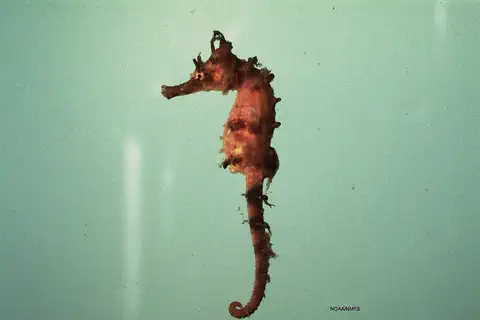
Lined seahorse
The lined seahorse is a small fish of the western Atlantic Ocean, from Canada and the United States down to Brazil. It has a horse-shaped head, a long snout with no teeth and a tail that grips seagrass. The male carries the eggs in a pouch until tiny seahorses are born.
-
 Watch
Animal
Smalltooth sawfish
The smalltooth sawfish is a giant ray with a shark-like body and a long, flat snout edged with teeth, called a rostrum or saw. It swings the saw to stun fish and uses it to sense their tiny electric signals. Young sawfish grow up among mangroves. Once found on both sides of the Atlantic, it is now Critically Endangered.
-
Watch
Country
Cuba
Cuba is the largest island in the Caribbean, a long, narrow country with about 1,600 smaller islands and cays around it. It has mountains, green valleys, coral reefs and the old city of Havana, its capital. About 9.4 million people lived there at the end of 2025, and Spanish is the main language.
For parents & teachers
What children will learn
- Describe the manatee's body and how it moves, breathes and eats.
- Explain why manatees need warm water and where they go in winter.
- Describe how manatee mothers raise their calves.
- Understand the main threats to manatees and how people protect them.
Recommended ages: 3 to 17 · About 12 minutes
Talk about it
- Why might a big animal with little body fat struggle in cold water?
- How can boaters share rivers and bays with manatees safely?
- Why might a slow-breeding animal take a long time to recover?
Try at home or in class
- Measure 3 meters on the floor to see how long an adult manatee is, then lie down beside it.
- Fill two cups with warm water, put one in the fridge, and check after 20 minutes how quickly it cools, like a manatee losing heat in cold water.
Key vocabulary: herbivore, seagrass, brackish, spring, sea cow, calf
Where these facts come from
- The IUCN Red List of Threatened Species , International Union for Conservation of Nature (IUCN terms of use (no redistribution of Red List data or range maps))
- GBIF Backbone Taxonomy and GBIF Occurrence Search , Global Biodiversity Information Facility (CC0 1.0 (backbone); occurrence counts are facts derived from records under CC0, CC BY and CC BY-NC)
- West Indian manatee (Trichechus manatus) , U.S. Fish and Wildlife Service
- Manatee , Florida Fish and Wildlife Conservation Commission
- FWC's third update to the statewide Florida manatee abundance estimate , Florida Fish and Wildlife Conservation Commission
- Manatee protection zones , Florida Fish and Wildlife Conservation Commission
- Manatee facts , Save the Manatee Club
- Trichechus manatus (West Indian Manatee), 2024 global assessment , IUCN Red List of Threatened Species
- Wikidata , Wikimedia Foundation (CC0 1.0)
- Wikimedia Commons , Wikimedia Foundation (Per file: Public domain, CC0, CC BY or CC BY-SA only (credited on each page))
Checked, not yet human-reviewed. Last updated October 24, 2026. Spotted a mistake? Tell us.