
Animal
Dugong
The dugong is a big, gentle sea animal that eats seagrass. It lives in warm, shallow seas and has a tail like a whale's.
The dugong is a large, slow marine mammal that grazes on seagrass meadows in warm, shallow coastal seas from East Africa to the western Pacific. It is a relative of the manatee and, surprisingly, more closely related to elephants than to cows. It has a whale-like tail, a big bristly snout and very good hearing.
Dugong dugon is the only living member of the family Dugongidae and a mainly marine sirenian of the tropical Indo-Pacific. A specialist grazer of seagrass with a very low reproductive rate, it is listed by the IUCN as Vulnerable, threatened by bycatch, boat strikes, habitat loss and hunting.
Photo: Julien Willem, CC BY-SA 3.0, via Wikimedia Commons
Meet the dugong
The dugong is a big, gray sea animal.
It has two flippers and a tail shaped like a whale's tail. It has a big, bristly nose. People call it a sea cow, and it eats seagrass.
The dugong is a large, gray marine mammal. Adults are about 2.4 to 4 meters long and weigh 230 to 400 kilograms. It has short, paddle-like flippers and a whale-like tail with two flukes, but no fin on its back.
Dugongs are nicknamed 'sea cows', and they spend their days grazing on seagrass. Their relatives include the manatees of the Americas, and despite the nickname they are more closely related to elephants than to cows. Manatees often live in fresh water, but dugongs are mainly sea animals.
Dugong dugon is a sirenian and the only living species in the family Dugongidae; its only other known member, Steller's sea cow (Hydrodamalis gigas) of the North Pacific, was hunted to extinction in the 1700s. Adults are 2.4 to 4 meters long and 230 to 400 kilograms, with no external differences between the sexes apart from tusks.
Unlike manatees, whose tails are paddle-shaped, the dugong has a fluked, whale-like tail with a straight or concave trailing edge, which ADW likens to a propeller. The thick skin is brownish-gray and can look different when algae grow on it, and bristles cover the body. Manatees also use rivers and fresh water (ADW calls them mostly freshwater), while dugongs are primarily marine.
Quick facts
- Group
- Mammal
- Length
- 2.4 to 4 m
- Weight
- 230 to 400 kg
- Lifespan in the wild
- from 70 years
Where it lives
Dugongs live in warm, shallow seas.
They like quiet bays where seagrass grows. Many dugongs live near Australia.
Dugongs live in warm, shallow seas from the east coast of Africa, across the Indian Ocean, to islands in the western Pacific such as Vanuatu. Their range touches at least 48 countries and about 140,000 kilometers of coastline.
They like sheltered places such as quiet bays, wide mangrove channels and the calm water beside islands, where seagrass meadows grow. The largest population lives in northern Australia, between Shark Bay in Western Australia and Moreton Bay in Queensland. The second-largest population lives in the Arabian Gulf.
The range is broad but fragmented, covering tropical coastal waters from East Africa to Vanuatu, roughly between 26 degrees north and south, across at least 48 countries and some 140,000 kilometers of coastline. The IUCN lists it as extant in 39 countries and territories and extinct around the main island of Mauritius and Taiwan.
Dugongs usually stay in water about 10 meters deep, occasionally diving to 39 meters to feed, in protected bays, mangrove channels and the lee of inshore islands where seagrass grows. They also use deeper water where the continental shelf is wide and sheltered. Northern Australia, between Shark Bay and Moreton Bay, holds the largest population and the Arabian Gulf the second largest, and WWF-Australia describes the seagrass plains of the northern Great Barrier Reef as home to one of the largest populations in the world.
Its habitat

Where can you find this animal?
- Lives here naturally · Countries and seas named by a scientific source
- Sightings recorded · Records of wild sightings (GBIF)
Lives here naturally · Countries and seas named by a scientific source
Warm, shallow coastal seas with seagrass, from East Africa and the Red Sea across the Indian Ocean to Southeast Asia, northern Australia and western Pacific islands such as Vanuatu. Dugongs live in the sea near the coast, not inland, and only along some coasts of each country.
Places: Indian Ocean, Pacific Ocean, Australia, New Caledonia, Papua New Guinea, Vanuatu, Egypt, Indonesia and 25 more places.
Source: iucn-red-list · checked October 2026
Sightings recorded · Records of wild sightings (GBIF)
Counts of GBIF records of wild observations (human and machine) and preserved specimens. Records include introduced populations, vagrants, escaped or released animals and misidentifications, so a country with records is not necessarily part of the native range.
Wild sightings have been recorded in Australia, New Caledonia, Papua New Guinea, Vanuatu, Egypt, Indonesia, Philippines, China and 28 more places.
Source: gbif · checked October 2026
Range maps show where scientists say an animal lives, often country by country. An animal may live in only part of a country shown, and sightings records can include animals that wandered far from home.
Seagrass gardeners
Dugongs eat seagrass that grows on the sandy seafloor.
They pull up whole plants with their big lips. They leave a trail behind them in the sand.
Dugongs are herbivores, and they eat mostly seagrass, a plant that looks like grass growing on the sandy seafloor. They prefer soft, easy-to-digest kinds. When seagrass is scarce they also eat seaweed.
A dugong uses its strong, flexible upper lip to rip whole seagrass plants out of the sand, roots and all. As it feeds, it leaves long trails in the seagrass meadow that can be seen from the surface. Its droppings help fertilize the seagrass so it can grow back.
Dugongs are primary consumers; ADW describes them as the only completely herbivorous marine mammals, and the Australian Museum says they feed exclusively on seagrasses. They favor low-fiber, nitrogen-rich, easily digested seagrasses of genera such as Halophila and Halodule, turn to algae when seagrass is scarce, and may also take small invertebrates living among the plants.
The muscular, cleft upper lip uproots whole plants where possible, leaving feeding furrows visible from the surface. A long intestine and low metabolism suit this diet. Grazing stirs sediment and recycles nutrients, and dung helps seagrass regrow, though intense grazing can reduce fish nursery habitat in the short term.

A snout made for grazing
A dugong has a big, round nose with bristles.
Its nostrils are on top of its head. It closes them when it dives. Dugongs cannot see well, but they hear very well.
A dugong's snout is large and rounded and ends in a split, muscular upper lip that hangs over its mouth. Sensitive bristles on the lip help it feel for seagrass, which is useful because dugongs have poor eyesight. They make up for it with very good hearing.
Two nostrils sit on top of the head, and little valves close them when the dugong dives. It must come up to breathe every few minutes. All dugongs have tusks, but usually only adult males and old females have tusks that poke out through the skin.
The large, down-turned snout ends in a cleft, muscular upper lip covered with sensory bristles that help locate and grasp seagrass. Eyesight is poor, but hearing is thought to be acute; the ears lack external flaps. Paired nostrils on top of the head close with valves during dives; dugongs surface to breathe every few minutes, and WWF-Australia reports grazing dives of up to 10 minutes.
Tusks are elongated incisors present in all dugongs but usually erupt only in mature males and old females; growth layers in the tusks are used to estimate age. Dugong vocalizations include chirps, whistles, barks and trills; 'chirp-squeaks' of about 3 to 18 kilohertz have been recorded during foraging and territorial patrols.
Growing up slowly
A dugong mom has one baby at a time.
The baby stays very close to its mom. Sometimes it rides on her back! Dugongs can live a very long time.
A dugong mother is pregnant for 13 to 14 months, longer than a year. She gives birth to one calf, which weighs about 30 kilograms and is about 1.2 meters long. The calf drinks milk from teats under her flippers for about 18 months, though it can nibble seagrass soon after birth.
The calf stays very close to its mother, swimming just beneath her by her flipper or riding on her back. Dugongs grow up slowly and can live for 70 years or more. A mother has a new calf only every few years.
Gestation lasts about 13 to 14 months, and a single calf of about 30 kilograms and 1.2 meters is born. Calves can eat seagrass almost immediately but suckle from teats under the mother's flippers for about 18 months, staying in near-constant contact, swimming below her by the flipper or riding on her back.
Females may first calve between 6 and 17 years of age and then give birth only every 2.5 to 7 years, depending on location. ADW estimates that even if every female bred at its full potential, a population could grow by at most about 5 percent a year. Lifespans of 70 years or more have been estimated from tusk growth layers.
Shy and social
Dugongs are shy and gentle.
Many swim with a partner or in a group. They move slowly from one seagrass meadow to another.
Dugongs can be found in pairs, usually a mother and calf, or in groups, and herds of up to 200 have been seen. They are shy: if they are disturbed they quickly swim away, and if a diver or boat comes near, they may look from a distance but stay back.
Dugongs move around to find good seagrass. Some travel long distances, while others stay in one area for most of their lives. Because they live in cloudy water and are hard to watch, scientists still have a lot to learn about their behavior.
Dugongs are social, occurring as mother-calf pairs up to rare herds of 200, which seagrass beds cannot support for long. They are semi-nomadic: some travel long distances between seagrass beds as food quality and quantity change, while others remain in one area for most of their lives.
Mating systems vary by place: in Moreton Bay, Queensland, males compete aggressively for receptive females, while in Western Australia males gather on display grounds called leks. Shy, living in turbid water and hard to keep in captivity, dugongs remain poorly studied. They have very few natural predators, although sharks, crocodiles and killer whales prey on young dugongs.
Did you know?
Scientists can tell a dugong's age from its tusks.
Dugong tusks grow in layers, so scientists can count them to estimate a dugong's age, sometimes 70 years or more.
Growth layers in the tusks are used to estimate age; lifespans of 70 years or more have been estimated this way.
Protecting dugongs and seagrass
Dugongs need healthy seagrass to eat.
Some get caught in fishing nets or hit by boats. People protect the places where they live and look after the seagrass.
Dugongs are listed as Vulnerable. They can get tangled in fishing nets and shark nets, be hit by boats, choke on marine debris, and lose their seagrass meadows to pollution and coastal building.
In Australia dugongs are protected by law, and some areas with seagrass and calving grounds have been set aside for them. An international agreement under the Convention on Migratory Species covers dugongs and their habitats across their range. In the Great Barrier Reef, WWF-Australia is working to remove the last commercial gill nets from key dugong areas and with farmers to keep run-off from harming seagrass.
The IUCN's global assessment (2015, amended 2019) lists Dugong dugon as Vulnerable with a decreasing population. Threats include entanglement in gill, mesh and shark nets, boat strikes, marine debris and ghost nets, hunting, and loss of seagrass to pollution and run-off; WWF-Australia links the highest recorded dugong strandings to seagrass damage after Queensland's 2010–11 floods. A maximum population growth rate of about 5 percent a year makes recovery slow.
The dugong is listed on CITES Appendix I, and a Memorandum of Understanding under the Convention on Migratory Species covers its conservation and habitats throughout its range. In Australia it is legally protected by all states and the federal government, while some Indigenous peoples regard hunting dugongs as an integral part of their traditions. WWF-Australia is working toward a net-free northern Great Barrier Reef, starting with a 385-square-kilometer haven in Princess Charlotte Bay.
IUCN Red List
How is the dugong doing in the wild?
- Least Concern
- Near Threatened
- Vulnerable (this animal)
- Endangered
- Critically Endangered
- Extinct in the Wild
- Extinct
Vulnerable
At high risk of disappearing from the wild.
See the IUCN Red List assessment · The IUCN Red List of Threatened Species 2022.2
Amazing facts
-
Dugongs are cousins of elephants.
Even though they are called sea cows, dugongs are more closely related to elephants than to cows.
Despite the nickname 'sea cow', dugongs are more closely related to elephants than to cows; they belong to the order Sirenia.
-
Baby dugongs sometimes ride on their mom's back.
A dugong calf stays so close to its mother that it sometimes rides on her back.
Calves stay in near-constant contact with their mothers, swimming beneath them by the flipper or riding on their backs.
-
Scientists can tell a dugong's age from its tusks.
Dugong tusks grow in layers, so scientists can count them to estimate a dugong's age, sometimes 70 years or more.
Growth layers in the tusks are used to estimate age; lifespans of 70 years or more have been estimated this way.
-
Dugongs leave trails in the seagrass.
When dugongs feed, they leave trails through the seagrass meadow that can be seen from the surface.
Feeding furrows left by uprooting seagrass are visible from the surface and can reveal where dugongs have grazed.
Words to know
- seagrass
- a plant with long leaves that grows underwater in shallow seas
- herbivore
- an animal that eats only plants
- sea cow
- a nickname for dugongs and manatees, which graze on plants
- flukes
- the two wide halves of a whale-like tail
- bristles
- short, stiff hairs
- calf
- a baby dugong
Discovery challenge
-
What do dugongs eat?
What is the dugong's main food?
Which food is the dugong specialized to eat?
- Seagrass
- Fish
- Jellyfish
Show the answer
Seagrass
Dugongs eat seagrass that grows on the seafloor.
They graze on seagrass meadows, pulling up whole plants with their lips.
Low-fiber, nitrogen-rich seagrasses such as Halophila and Halodule, with algae when seagrass is scarce.
-
What does a dugong's tail look like?
How is a dugong's tail different from a manatee's?
Which tail shape distinguishes the dugong from manatees?
- Like a whale's tail
- Long and bushy
- Round like a paddle
Show the answer
Like a whale's tail
A dugong's tail looks like a whale's tail.
A dugong has a fluked, whale-like tail, while a manatee's tail is a round paddle.
A fluked tail with a straight or concave trailing edge, unlike the manatee's paddle-shaped tail.
-
Which animal is a dugong's cousin?
Dugongs are called sea cows, but which animal are they more closely related to than to cows?
Which land mammal are dugongs more closely related to than to cows, despite their nickname?
- Elephants
- Horses
- Bears
Show the answer
Elephants
Elephants are dugong cousins!
Dugongs are more closely related to elephants than to cows.
Elephants; despite the name sea cow, dugongs are not close relatives of cows.
-
Where do dugongs live?
What kind of place do dugongs live in?
Which habitat best describes where dugongs live?
- Warm, shallow seas with seagrass
- Freezing polar seas
- Mountain rivers
Show the answer
Warm, shallow seas with seagrass
They live in warm, shallow seas.
They live in warm, shallow coastal seas where seagrass meadows grow.
Sheltered tropical coastal waters with seagrass, usually about 10 meters deep.
Places where you might see it
-
 Watch
 Country
Australia
Australia is a country and the smallest continent, surrounded by ocean in the Southern Hemisphere. Much of its middle is dry and flat, most people live near the coast, and its animals include kangaroos, koalas and the platypus, a mammal that lays eggs.
-
 Watch
 Country
Egypt
Egypt is in the northeastern corner of Africa, and its Sinai Peninsula reaches into Asia. Almost all of it is desert, so most of its more than 100 million people live along the green banks of the Nile River, where one of the world's earliest civilizations grew.
-
 Watch
 Country
Philippines
The Philippines is an island country in Southeast Asia, in the western Pacific Ocean. It has more than 7,000 islands, about 50 volcanoes and rich coral reefs, and about 112.7 million people were counted there in 2024.
-
 Watch
 Country
Yemen
Yemen sits at the southwestern corner of the Arabian Peninsula, between the Red Sea and the Arabian Sea. Its green, terraced highlands are unlike anywhere else in Arabia, its old towns have tall houses of stone and mud brick, and it was the first place where coffee was grown as a crop to sell.
-
 Watch
 Country
Eritrea
Eritrea is a country in the Horn of Africa with a long coast on the Red Sea. Its capital, Asmara, sits high in cool mountains, while the coast below has one of the highest average temperatures in the world. About 3.6 million people live there, and its name comes from the Latin words for the Red Sea.
-
 Watch
Natural wonder
Great Barrier Reef
The Great Barrier Reef stretches about 2,300 kilometers along the coast of Queensland, Australia. It is made of about 2,500 separate reefs and more than 900 islands, built by tiny coral animals, and it is home to more than 1,500 kinds of fish.
-
 Watch
 Country
Qatar
Qatar is a small desert country on a peninsula that pokes north into the Persian Gulf. Its people once lived by pearl diving and fishing; today it is one of the world's biggest exporters of natural gas. Its capital, Doha, has a skyline of towers, and about 3.2 million people lived in Qatar at the end of 2025.
-
 Watch
 Country
Sudan
Sudan is a large country in northeastern Africa. The Blue Nile and the White Nile meet at its capital, Khartoum, and the river flows north through the desert. Long ago, the kingdom of Kush built pyramids, temples and palaces along the Nile here.
-
 Watch
Natural wonder
Komodo National Park
Komodo National Park, in Indonesia, is a group of rugged, dry islands between Sumbawa and Flores. Its three main islands, Komodo, Rinca and Padar, were made by volcanoes. The park contains most of the places where wild Komodo dragons, the largest living lizards, still live, along with rich coral reefs visited by turtles, dolphins and whales.
Explore next
-
Watch
Country
Australia
Australia is a country and the smallest continent, surrounded by ocean in the Southern Hemisphere. Much of its middle is dry and flat, most people live near the coast, and its animals include kangaroos, koalas and the platypus, a mammal that lays eggs.
-
Watch
Country
Egypt
Egypt is in the northeastern corner of Africa, and its Sinai Peninsula reaches into Asia. Almost all of it is desert, so most of its more than 100 million people live along the green banks of the Nile River, where one of the world's earliest civilizations grew.
-
Watch
Country
Philippines
The Philippines is an island country in Southeast Asia, in the western Pacific Ocean. It has more than 7,000 islands, about 50 volcanoes and rich coral reefs, and about 112.7 million people were counted there in 2024.
-
 Watch
Animal
West Indian manatee
The West Indian manatee is a large, slow, plant-eating marine mammal nicknamed the sea cow. It lives in warm coasts, rivers and springs from Florida and the Caribbean to Brazil, grazing on seagrass and other water plants for up to 8 hours a day. It cannot stand cold water for long, and being hit by boats is one of the dangers it faces.
-
 Watch
3D
Animal
Asian elephant
The Asian elephant is the largest land animal in Asia. It is a little smaller than its African cousins, with smaller ears, a head shaped like two domes and a trunk with one finger-like tip. It lives in forests and grassy clearings in 13 countries of South and Southeast Asia.
-
 Watch
Animal
Green sea turtle
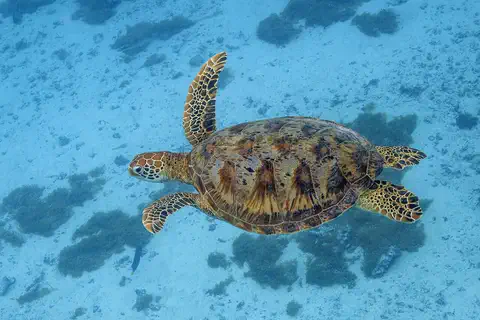
The green sea turtle is the largest sea turtle with a hard shell. It lives in warm seas around the world and, unlike other sea turtles, grown-ups eat mostly seagrass and algae. Females swim hundreds or even thousands of kilometers to lay their eggs on the beaches where they hatched long ago.
-
Watch
Country
Yemen
Yemen sits at the southwestern corner of the Arabian Peninsula, between the Red Sea and the Arabian Sea. Its green, terraced highlands are unlike anywhere else in Arabia, its old towns have tall houses of stone and mud brick, and it was the first place where coffee was grown as a crop to sell.
-
Watch
Country
Eritrea
Eritrea is a country in the Horn of Africa with a long coast on the Red Sea. Its capital, Asmara, sits high in cool mountains, while the coast below has one of the highest average temperatures in the world. About 3.6 million people live there, and its name comes from the Latin words for the Red Sea.
For parents & teachers
What children will learn
- Describe how the dugong's body is suited to grazing seagrass.
- Explain how dugongs differ from manatees and how they are related to elephants.
- Describe the dugong's slow life cycle and why it makes populations recover slowly.
- Understand the threats to dugongs and seagrass and how people protect them.
Recommended ages: 3 to 17 · About 12 minutes
Talk about it
- Why might an animal that has very few babies be more at risk from threats?
- How could pollution on land harm a seagrass meadow in the sea?
- How can communities that have hunted dugongs for generations help to protect them?
Try at home or in class
- Measure 3 meters on the floor to see the length of an adult dugong, then lie down beside it.
- Plant a few grass seeds in two pots, trim one pot often and leave the other, and watch how grazing changes how grass grows.
Key vocabulary: seagrass, herbivore, sea cow, flukes, bristles, calf
Where these facts come from
- The IUCN Red List of Threatened Species , International Union for Conservation of Nature (IUCN terms of use (no redistribution of Red List data or range maps))
- GBIF Backbone Taxonomy and GBIF Occurrence Search , Global Biodiversity Information Facility (CC0 1.0 (backbone); occurrence counts are facts derived from records under CC0, CC BY and CC BY-NC)
- Dugong dugon (dugong) , Animal Diversity Web, University of Michigan Museum of Zoology
- Dugong , Australian Museum
- Dugong , WWF-Australia
- Dugong (Dugong dugon) , CMS Dugong Memorandum of Understanding
- Dugong dugon (Dugong), 2019 amended global assessment , IUCN Red List of Threatened Species
- Wikidata , Wikimedia Foundation (CC0 1.0)
- Wikimedia Commons , Wikimedia Foundation (Per file: Public domain, CC0, CC BY or CC BY-SA only (credited on each page))
Checked, not yet human-reviewed. Last updated October 28, 2026. Spotted a mistake? Tell us.