
Animal
Wood duck
The wood duck is a duck that nests in holes in trees. The male has a shiny green head and red eyes. The ducklings jump down from the nest the day after they hatch.
The wood duck lives on ponds, rivers and swamps surrounded by trees in North America. It nests in tree holes, some of them high up, and the day after hatching the ducklings jump to the ground. Hunting and the loss of big trees once made it rare, but protection and nest boxes helped it come back.
Aix sponsa is a cavity-nesting duck of wooded wetlands in Canada, the United States, Mexico and Cuba, whose only close relative is the mandarin duck of eastern Asia. BirdLife International assessed it as Least Concern for the IUCN Red List (assessed 12 November 2020, published 2021), with an increasing trend and about 4.6 million mature birds.
Photo: Rhododendrites, CC BY-SA 4.0, via Wikimedia Commons
Meet the wood duck
The wood duck is a duck with a crest on its head.
The male is very colorful. The female is gray-brown, with a white ring around each eye.
The wood duck is a duck of wooded ponds and swamps. Both males and females have a crest on the back of the head. The male is very colorful: a shiny green, blue and purple head with two thin white lines, red eyes, a red patch at the base of the beak, a white throat, a rusty chest and bronze sides.
The female is gray-brown, with a white throat and a white ring around each eye. A wood duck is about 43 to 51 centimeters long, with wings about 70 to 73 centimeters across.
Aix sponsa belongs to the duck family, Anatidae; Audubon says its only close relative is the mandarin duck of eastern Asia. Smithsonian's National Zoo describes a crested head in both sexes, a white belly and a white line along the back of the wing that shows best in flight. The male has an iridescent green, blue and purple head with two parallel white lines, a white chin and throat, red eyes, red at the base of the bill, a deep rust chest, bronze sides and a black back and tail; the female is gray-brown with white eye-rings, chin and throat.
The Missouri Department of Conservation adds that the female's eye-ring tapers to a point behind the eye and that males molt in late summer into an 'eclipse' plumage like the female's, with more white on the face. Length is 43 to 51 centimeters (Smithsonian; Audubon) and wingspan 70 to 73 centimeters (Animal Diversity Web).
Quick facts
- Group
- Bird
- Length
- 0.43 to 0.51 m
- Wingspan
- 0.7 to 0.73 m
Ponds among the trees
Wood ducks live in North America.
They like quiet ponds, rivers and swamps with big trees all around.
Wood ducks live in Canada, the United States, Mexico and Cuba, mostly in the east of North America, but also in the west from California to southern British Columbia. Some spend the winter in the Bahamas.
They like shallow lakes, ponds, slow rivers and swamps surrounded by woods, often where big trees hang over the water and make it shady. Wood ducks that nest in the north fly south for the winter, but in the south some stay all year.
The IUCN lists the wood duck in Canada, the United States, Mexico and Cuba, as a breeder on Saint Pierre and Miquelon and as a non-breeding visitor to the Bahamas, from sea level to 900 meters, in forest and inland wetland habitats. The Smithsonian describes a range mainly in eastern North America plus the west from the northern two-thirds of California to southern British Columbia, in wooded swamps and river bottomlands.
Audubon describes shallow inland lakes, ponds, slow-moving rivers and swamps, mainly within deciduous or mixed woodland, often shaded by overhanging trees. Northern birds migrate; southern females may stay all year. Pairs form on the wintering grounds and the male follows the female to her nesting area, so a male may migrate far one spring and only a short way the next (Audubon). The Smithsonian notes that wood ducks lack a stable home range: it shifts with rising and falling floodwaters.
Continent
Its habitats


Where can you find this animal?
- Lives here naturally · Countries and seas named by a scientific source
- Sightings recorded · Records of wild sightings (GBIF)
- Visits for part of the year · Countries and seas named by a scientific source
Lives here naturally · Countries and seas named by a scientific source
Wooded ponds, rivers and swamps in Canada, the United States, Mexico and Cuba, mostly in eastern North America and along the Pacific side from California to southern British Columbia. Wood ducks live in only parts of these countries. Saint Pierre and Miquelon, where the IUCN lists breeding, has no separate map shape.
Places: Canada, Cuba, Mexico and United States.
Source: iucn-red-list · checked October 2026
Sightings recorded · Records of wild sightings (GBIF)
Counts of GBIF records of wild observations (human and machine) and preserved specimens. Records include introduced populations, vagrants, escaped or released animals and misidentifications, so a country with records is not necessarily part of the native range.
Wild sightings have been recorded in United States, Canada, Netherlands, Belgium, Mexico, Germany, France, Sweden and 57 more places.
Source: gbif · checked October 2026
Visits for part of the year · Countries and seas named by a scientific source
The Bahamas, where the IUCN lists wood ducks only outside the breeding season.
Places: Bahamas.
Source: iucn-red-list · checked October 2026
Range maps show where scientists say an animal lives, often country by country. An animal may live in only part of a country shown, and sightings records can include animals that wandered far from home.
Acorns and seeds
Wood ducks eat seeds, acorns and fruits.
Ducklings eat lots of insects.
Wood ducks eat mostly plant food: seeds of water plants, seeds that fall from trees and shrubs, fruits, leaves and, in many places, lots of acorns. They also eat insects and other small animals, and sometimes visit fields to eat leftover grain.
They feed by picking food from the water's surface, dipping their head and neck under the water, or walking on land. Ducklings eat mainly insects and other small animals.
Audubon describes a diet of mostly seeds: aquatic plants and their seeds, fallen seeds of trees and shrubs, insects and crustaceans, with acorns a major food in many areas and waste grain in fields; young feed mainly on insects and other invertebrates. The Missouri Department of Conservation lists seeds, nuts such as acorns, fruits and leaves plus small invertebrates, and the Smithsonian notes feeding in flooded timber and wooded swamps on tree seeds.
Wood ducks forage by taking food from the surface, submerging the head and neck, occasionally upending, and by walking on land (Audubon). In turn they are eaten by predators such as hawks (Missouri Department of Conservation).
Did you know?
Sometimes a mother duck lays eggs in another duck's nest.
Female wood ducks often lay eggs in each other's nests.
Females frequently lay eggs in each other's nests, sometimes in 'dump nests' where no incubation ever takes place (Audubon).
Claws for climbing
Wood duck ducklings have sharp claws.
They use them to climb up the inside of their tree hole.
Wood duck ducklings have sharp little claws. They use their claws and tails to climb up the inside of the tree hole to the entrance before they jump out.
In flight, wood ducks look dark, with a long tail and a white edge on the back of the wing. The Missouri Department of Conservation says their wings make a rustling, swishing sound.
Audubon describes the ducklings clinging with sharp claws and bracing with their tails as they climb to the cavity entrance. In flight wood ducks look long-tailed and dark, with a white trailing edge on the inner wing (Audubon); the Missouri Department of Conservation describes the flying male's blocky head and long, square tail and a rustling, swishing wing sound, and the female's deep blue wing patch (speculum) edged with white.
Calls differ between the sexes: males give a thin, high, rising 'jeeeeee', and females a drawn-out, rising squeal, 'oo-eek', when flushed and a sharp 'cr-r-ek' alarm call (Smithsonian).
The big jump
The mother wood duck lays her eggs in a hole in a tree.
The day after they hatch, the ducklings jump out and drop to the ground.
Wood ducks nest in holes in big trees near water, as high as about 20 meters (65 feet) above the ground, and they also use nest boxes that people put up. The female lines the hole with soft down and lays about 6 to 15 eggs. She keeps them warm by herself for about a month.
The ducklings stay in the nest for about a day. Then they climb to the entrance and jump to the ground, and their mother looks after them. They can fly at about 8 to 9 weeks old.
Pairs form from late October through February (Smithsonian). Nests are in large tree cavities near water, up to 65 feet (about 20 meters) above the ground, lined with down; wood ducks also use nest boxes, even low ones in open marsh (Audubon). Females often lay eggs in each other's nests, sometimes in 'dump nests' that are never incubated (Audubon).
Sources give different clutch sizes and incubation periods: 9 to 14 eggs, sometimes 6 to 15, incubated by the female for 25 to 35 days (Audubon); 6 to 10 eggs and about 30 days (Smithsonian); 6 to 16 eggs and 28 to 37 days (Missouri). The precocial ducklings stay in the nest about a day, then jump to the ground; the female tends them for 5 to 6 weeks, broods sometimes combine, and the young fly at about 8 to 9 weeks. There is one brood a year in the north and often two in the south (Audubon).
Pairs and partners
Wood duck pairs meet in winter.
The male shows off his bright colors to the female.
Wood ducks find their partners in winter. The male shows off his bright feathers in courtship displays. Pairs stay together longer than most ducks, usually until the eggs are about to hatch.
When it is time to nest, the male follows the female back to the place where she will nest. That means a male might fly far north one spring and only a short way the next.
Male courtship displays use postures that show off the colorful plumage (Audubon). Pairs form from late October through February and stay together longer than in most ducks, usually until the eggs pip (Smithsonian). Because pairs form on the wintering grounds and the male follows the female, male movements vary from year to year (Audubon).
The IUCN codes the species as a full migrant. The Missouri Department of Conservation notes that the female's rising flight whistle, heard in forested wetlands, may be the only sign that wood ducks are there.
Did you know?
Wood ducks will nest in boxes that people make.
Wood ducks readily nest in boxes that people put up near water.
Wood ducks readily use artificial nest boxes, even when they are placed low and in open marsh (Audubon; Smithsonian).
Listen to wood ducks
Listen to the sound at the start of this page.
These are real wood ducks calling in a park.
At the start of this page you can play a real recording of wood ducks. Jonathon Jongsma recorded a small group of male and female wood ducks standing on a wall at the edge of a small lake in a park in Minnesota, in October 2010.
Listen for their calls: male wood ducks give a thin, high, rising call, and females give a rising squeal.
The recording on this page (xeno-canto 63109, Jonathon Jongsma, 13 October 2010, shared on Wikimedia Commons) is of a small group of male and female wood ducks on the concrete retaining wall of a small lake in an urban park in Minnesota, United States; no playback was used. The Smithsonian describes the male's 'jeeeeee' and the female's 'oo-eek' and 'cr-r-ek' calls.
Did you know?
Wood ducks love to eat acorns.
In many places, acorns are a big part of a wood duck's diet.
Acorns are a major part of the diet in many areas (Audubon).
Saved by nest boxes
Long ago, wood ducks became rare.
People protected them and put up nest boxes. Now there are many.
By the late 1800s and early 1900s, wood ducks had become rare. Too many were hunted for their meat and feathers, and they lost many of the big trees they nested in. People feared they would die out.
Laws protected them, including the 1918 Migratory Bird Treaty Act between the United States and Canada, and people put up nest boxes for them. Wood ducks came back, and today they are listed as least concern, with numbers going up.
BirdLife International assessed Aix sponsa as Least Concern for the IUCN Red List (assessed 12 November 2020, published 2021): an extremely large range, an apparently increasing trend and about 4,600,000 mature individuals (Partners in Flight 2019; Waterbird Population Estimates 2020). Generation length is 5.5 years.
The population declined seriously in the late 19th century through hunting and loss of nesting sites (Audubon says the main cause was probably the loss of nest sites as large trees were cut), and early in the 20th century the species was thought to be threatened with extinction (Audubon); the Missouri Department of Conservation names habitat loss and overhunting for meat and plumage. The 1918 Migratory Bird Treaty Act gave it protection (Smithsonian), and legal protection and nest boxes helped it recover, which Audubon calls an early triumph of wildlife management. The Smithsonian reports no significant documented threats today.
IUCN Red List
How is the wood duck doing in the wild?
- Least Concern (this animal)
- Near Threatened
- Vulnerable
- Endangered
- Critically Endangered
- Extinct in the Wild
- Extinct
Least Concern
Not at risk of disappearing from the wild right now.
Amazing facts
-
Baby wood ducks jump out of a tree the day after they hatch.
The day after hatching, wood duck ducklings climb to the entrance of their tree hole and jump to the ground.
Ducklings stay in the cavity until the morning after hatching, then climb out using sharp claws and their tails, and jump (Audubon).
-
Wood ducks love to eat acorns.
In many places, acorns are a big part of a wood duck's diet.
Acorns are a major part of the diet in many areas (Audubon).
-
Sometimes a mother duck lays eggs in another duck's nest.
Female wood ducks often lay eggs in each other's nests.
Females frequently lay eggs in each other's nests, sometimes in 'dump nests' where no incubation ever takes place (Audubon).
-
Wood ducks will nest in boxes that people make.
Wood ducks readily nest in boxes that people put up near water.
Wood ducks readily use artificial nest boxes, even when they are placed low and in open marsh (Audubon; Smithsonian).
Words to know
- cavity
- a hole, such as a hollow in a tree
- crest
- a tuft of feathers on a bird's head
- drake
- a male duck
- precocial
- able to move about and feed soon after hatching
- eclipse plumage
- the plainer feathers some male ducks grow for a while after the breeding season
- nest box
- a wooden box that people put up for birds to nest in
Discovery challenge
-
Where does a wood duck lay its eggs?
Where do wood ducks usually nest?
What kind of nest site do wood ducks use?
- In a hole in a tree
- On floating weeds
- In a burrow underground
Show the answer
In a hole in a tree
In a hole in a tree, or in a nest box.
In holes in big trees near water, or in nest boxes people put up.
Large tree cavities near water, up to about 20 meters high, or artificial nest boxes (Audubon).
-
How do wood duck ducklings leave the nest?
How do young wood ducks get out of the nest?
How do wood duck ducklings leave the nest cavity?
- They jump to the ground
- Their mother carries them in her beak
- They wait until they can fly
Show the answer
They jump to the ground
They jump out and drop to the ground!
The day after hatching they climb to the entrance and jump.
They climb to the entrance with sharp claws and their tails, then jump to the ground (Audubon).
-
What color are a male wood duck's eyes?
What color are a male wood duck's eyes?
Which eye color does the Smithsonian give for the male wood duck?
- Red
- Blue
- Yellow
Show the answer
Red
Red!
Red. Females have a white ring around each eye.
Red; the female has white eye-rings (Smithsonian).
-
What helped wood ducks come back?
What helped wood ducks recover after they became rare?
Which measures does Audubon credit with the wood duck's recovery?
- Protection by law and nest boxes
- Moving them to islands
- Feeding them bread
Show the answer
Protection by law and nest boxes
Laws and nest boxes.
Laws that protected them and nest boxes that gave them places to nest.
Legal protection and the provision of nest boxes (Audubon).
Places where you might see it
-
 Watch
 Country
United States
The United States is a large country in North America made of 50 states, from icy Alaska to the warm islands of Hawaii. It has the Grand Canyon, the Mississippi River and Yellowstone, and about 342 million people live there.
-
 Watch
 Country
Canada
Canada is the second-largest country in the world, stretching across the north of North America from the Atlantic to the Pacific and up into the Arctic. It has the Rocky Mountains, thousands of islands and about 42 million people, who speak English, French and many other languages.
Experiments to try
Explore next
-
 Watch
3D
Animal
Mallard
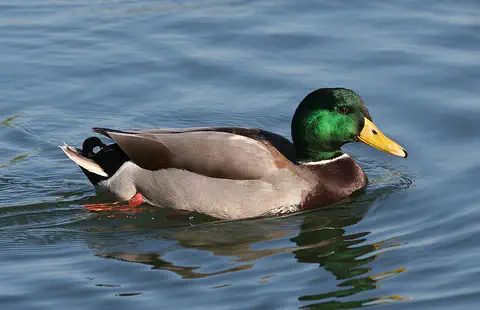
The mallard is perhaps the most familiar duck in the world, found on ponds, lakes, rivers and city parks across North America, Europe and Asia. Males have glossy green heads; females are mottled brown. Almost all farm ducks are descended from mallards.
-
 Watch
Animal
Trumpeter swan
The trumpeter swan is the largest native waterfowl in North America. It is all white with a big black beak, and its deep call sounds like a French horn. Hunting nearly wiped it out in the early 1900s, but with protection and people bringing swans back to old homes, its numbers have grown again.
-
 Watch
Animal
North American beaver
The North American beaver is the largest rodent in North America and a champion builder. It gnaws down trees with its strong orange teeth, builds dams that turn streams into ponds, and lives with its family in a lodge made of branches and mud.
-
Watch
Country
United States
The United States is a large country in North America made of 50 states, from icy Alaska to the warm islands of Hawaii. It has the Grand Canyon, the Mississippi River and Yellowstone, and about 342 million people live there.
-
Watch
Country
Canada
Canada is the second-largest country in the world, stretching across the north of North America from the Atlantic to the Pacific and up into the Arctic. It has the Rocky Mountains, thousands of islands and about 42 million people, who speak English, French and many other languages.
-
 Watch
Animal
Pileated woodpecker
The pileated woodpecker is the largest woodpecker in North America that is still alive today, nearly as big as a crow, with a flaming red crest. It chisels big rectangular holes in dead trees to reach carpenter ants, and the nest holes it carves later shelter owls, ducks, bats and other animals.
- Watch What If? Lab What if there were no wetlands? Marshes, swamps and bogs are wetlands: places where water covers the soil or sits just below it. EPA compares them to natural sponges that soak up rain and floodwater and let it go slowly. They also clean water and shelter many birds and young fish. Imagine a world with no wetlands, and follow what might change.
-
 Watch
Animal
Mandarin duck
The mandarin duck is a small, very colorful duck from East Asia. The male has orange 'sail' feathers on his back and orange whiskers on his face, while the female is soft gray and brown. Mandarins nest in holes in trees, and the ducklings jump down to the ground soon after hatching.
For parents & teachers
What children will learn
- Locate the parts of North America where wood ducks live.
- Describe where wood ducks nest and how the ducklings leave the nest.
- Name some foods wood ducks eat and how they find them.
- Explain how hunting and the loss of big trees made wood ducks rare, and how laws and nest boxes helped them recover.
Recommended ages: 3 to 17 · About 15 minutes
Talk about it
- Why might cutting down big old trees be a problem for birds that nest in tree holes?
- How can something as simple as a nest box help an animal?
- Why do you think male wood ducks are so colorful while females are gray-brown?
Try at home or in class
- With a grown-up, look at plans for a wood duck nest box, or draw your own design, and think about where it should go so ducklings can reach water.
- Collect a few acorns on a walk and look closely at them. Wood ducks eat lots of acorns: how big is an acorn compared with a duck's beak?
Key vocabulary: cavity, crest, drake, precocial, eclipse plumage, nest box
Where these facts come from
- GBIF Backbone Taxonomy and GBIF Occurrence Search , Global Biodiversity Information Facility (CC0 1.0 (backbone); occurrence counts are facts derived from records under CC0, CC BY and CC BY-NC)
- Wikidata , Wikimedia Foundation (CC0 1.0)
- The IUCN Red List of Threatened Species , International Union for Conservation of Nature (IUCN terms of use (no redistribution of Red List data or range maps))
- Aix sponsa (BirdLife International, assessed 12 November 2020, published 2021) , IUCN Red List of Threatened Species
- Aix sponsa: population text , IUCN Red List of Threatened Species
- Aix sponsa: IUCN Red List global assessment record (BirdLife International 2021), IUCN checklist on GBIF , GBIF
- Wood duck (Guide to North American Birds; text by Kenn Kaufman, 1996) , National Audubon Society
- Wood duck , Smithsonian's National Zoo and Conservation Biology Institute
- Wood duck (Field Guide) , Missouri Department of Conservation
- Aix sponsa (wood duck) , Animal Diversity Web, University of Michigan
- File:Wood duck drake vocalizing in Central Park (86815).jpg (Central Park Ramble, New York City, 18 February 2023, Rhododendrites) , Wikimedia Commons
- File:Aix sponsa - Wood Duck - XC63109.ogg (Jonathon Jongsma, Minnesota, 13 October 2010) , Wikimedia Commons
- Wikimedia Commons , Wikimedia Foundation (Per file: Public domain, CC0, CC BY or CC BY-SA only (credited on each page))
Checked, not yet human-reviewed. Last updated November 1, 2026. Spotted a mistake? Tell us.