
City Asia
Beijing
Beijing is the capital city of China. In the middle is a huge old palace with golden roofs. Millions of people live there.
Beijing, the capital of China, has been the country's capital for most of the last 600 years. At its heart is the Forbidden City, the emperors' palace. About 21.8 million people lived in the Beijing municipality at the end of 2024.
Beijing, whose name means "Northern Capital", has been China's capital since the early 15th century, apart from 1928–49, and capital of the People's Republic since 1949. Its plan follows a north-south axis through the Forbidden City; the municipality had 21.832 million residents at the end of 2024.
Photo: Han Zheng, CC BY-SA 2.0, via Wikimedia Commons
Discover Beijing
Beijing is the capital city of China.
Its name means "Northern Capital". Beijing has very old palaces and very new skyscrapers. More than 21 million people live in and around it.
Beijing is the capital of China, in the north of the country. Its name means "Northern Capital". It has been China's capital for most of the last 600 years, and the capital of the People's Republic of China since 1949. About 21.8 million people lived in the Beijing municipality, the city and the land around it, at the end of 2024.
Beijing mixes very old and very new. The Forbidden City, where emperors once lived, still stands at its center, while skyscrapers rise in its business district. In 2008 Beijing hosted the Summer Olympic Games for the first time.
Beijing is a province-level municipality and the capital of the People's Republic of China. Britannica notes that few cities have served so long as the political headquarters and cultural center of so vast an area, and that nearly every major old building in the city has national historical significance. The municipality covers 16,410.54 km², and its permanent population was 21.832 million at the end of 2024, down 26,000 from a year before.
Since 1949 the drive to modernize and industrialize has destroyed much of the older city, but monumental buildings, old restaurants and centers of traditional arts and crafts remain, and the government has acted to keep further industry out of the core. Residents of Beijing speak a dialect of Mandarin that forms the basis of Modern Standard Chinese, putonghua.
- Country
- China (capital)
- People in the municipality (end of 2024)
- 21.832 million
- Area of the municipality
- 16,410.54 km²
- Name means
- "Northern Capital"

Famous places
The Forbidden City is a giant palace with golden roofs and red walls.
Emperors lived there long ago. The Temple of Heaven has a round building with three roofs. The Great Wall runs over the hills near Beijing.
At the heart of Beijing stands the Forbidden City, the palace of China's emperors for about 500 years. A moat and high walls surround its golden-roofed halls, which together hold nearly 10,000 rooms. South of it is the Temple of Heaven, where emperors held great ceremonies; its round Hall of Prayer for Good Harvests has three layers of roof topped with a golden ball.
The Summer Palace, first built in 1750, mixes hills and lakes with pavilions and bridges. Outside the city, people visit the tombs of the Ming emperors and the Great Wall.
Beijing has several World Heritage Sites. The Forbidden City (1987), seat of supreme power from 1416 to 1911, has landscaped gardens and buildings whose nearly 10,000 rooms hold furniture and works of art; golden roofs, white marble balustrades and red pillars sit inside a moat and walls with a tower at each corner. The Temple of Heaven (1998), founded in the first half of the 15th century, is a complex of ceremonial buildings in gardens and old pine woods; its Hall of Prayer for Good Harvests (1420) is a lofty, cone-shaped building with triple eaves and a gilded ball on top.
The Summer Palace (1998), first built in 1750, largely destroyed in the war of 1860 and restored on its foundations in 1886, is a masterpiece of Chinese landscape gardening. At Zhoukoudian (1987), 42 km southwest, fossils of Peking man, who lived about 770,000 to 230,000 years ago, were unearthed between 1918 and 1939.
- Forbidden City
- seat of power 1416–1911; World Heritage Site (1987)
- Temple of Heaven
- founded in the first half of the 1400s; World Heritage Site (1998)
- Summer Palace
- first built 1750; World Heritage Site (1998)
- Zhoukoudian
- 42 km southwest; World Heritage Site (1987)

Three thousand years of history
People have lived near Beijing for a very long time.
Long ago, it was a small capital of a kingdom. Later, emperors built huge palaces there. Today it is the capital of all of China.
Beijing's history as a city began about 3,000 years ago, when it became the capital of a state called Yan. In 1267 the Mongol rulers of China built a grand new capital here called Dadu. In the early 1400s a Ming emperor made it the capital again and named it Beijing, "Northern Capital"; from 1416 the Forbidden City was the seat of power.
From 1928 to 1949 the capital moved away, and Beijing was called Beiping, "Northern Peace". In 1949 it became the capital of the People's Republic of China. Since then the city has grown enormously, and in 2008 it hosted the Olympics.
The Beijing government dates the city's history from its time as capital of the State of Yan during the Western Zhou dynasty (11th century–771 BCE); in the Warring States period Yan's capital, Ji, stood near the present city, the first capital associated with the site. More than 2,000 years ago a site to the north was a military and trading center of China's northeastern frontier. The Mongols under Genghis Khan took the city from the Jin between 1211 and 1215, and in 1267, under the Yuan dynasty, a new city northeast of the old, Dadu, became the administrative capital of China.
The early Ming made Nanjing their capital and renamed the old city Beiping; the third Ming emperor restored it as the imperial seat and named it Beijing. Except for 1928–49, when the Nationalist government made Nanjing the capital and the city was again called Beiping, it has remained the capital. Chosen as capital of the People's Republic in 1949, it grew rapidly in population, area and industry; it hosted the Summer Olympics in 2008.
Getting around Beijing
People in Beijing ride subway trains, buses, cars and bicycles.
Beijing had the first subway in all of China. Fast trains go from Beijing to cities far away. A big new airport opened in 2019.
In 1969 Beijing opened the first subway line in China, running east to west under the center. A loop line followed in 1987, under the Second Ring Road, where the old city walls once stood. For the 2008 Olympics, the city greatly expanded its subway.
Beijing is the railroad center of China, with main lines running to Shanghai, Guangzhou, Hong Kong and other cities. People also travel by bus, by car and by bicycle; bicycles and three-wheeled cycle carts are still heavily used for short trips. A new international airport, Daxing, opened south of the city center in 2019.
China's first subway line opened in Beijing in 1969, east to west through the center; a separate loop line of 1987 follows the old limits of the inner city beneath the Second Ring Road. Light-rail lines into the suburbs have been built since 2000, and after Beijing won the 2008 Olympics in 2001 it expanded the subway greatly: the first north-south line opened in 2007 and three more in 2008.
Britannica calls Beijing the railroad center of China, the terminus of national lines to Shenyang, Shanghai, Guangzhou, Hong Kong, Baotou and Taiyuan. People commute by subway, bus, car or bicycle, and bicycles and three-wheeled cycle carts remain heavily used for short trips despite the spread of cars. Daxing International Airport opened south of the city center in 2019.
- First subway line
- 1969, the first in China
- Daxing International Airport
- opened 2019
- Rail
- the railroad center of China
Four strong seasons
Beijing winters are cold and dry.
Summers are hot, and that is when most of the rain falls. In winter, cold winds blow from the northwest.
Beijing has cold, dry winters and hot, rainy summers. January averages −4 °C and July 26 °C. In an average year the temperature drops below freezing on 132 days between October and March.
About 635 millimeters of rain falls in a year, most of it from June to August; July alone averages about 230 millimeters. Winter is long, usually starting in late October, when cold northwesterly winds grow strong. Mountains protect the city a little, so it is slightly warmer in winter than other places in China this far north.
Although Beijing is not far from the sea, air circulation is mainly from the northwest all year, and maritime effects are slight: its climate is of the continental monsoon type of the temperate zone. Sheltering mountains make it slightly warmer in winter than other parts of China at the same latitude, but monthly means stay below 10 °C for five months. January averages −4 °C, July 26 °C and the year 12 °C, with 132 days of freezing temperatures between October and March.
Precipitation averages 635 mm, mostly from June to August, and July is the wettest month at about 230 mm; it varies greatly, from 1,400 mm in 1959 to only 180 mm in 1891. Winter begins in late October, when northwesterly winds strengthen and dominate until March. The municipal government names the Chinese scholar tree and the arborvitae as Beijing's city trees.
- Average in January
- −4 °C
- Average in July
- 26 °C
- Rain in a year
- about 635 mm, mostly June to August

Living in Beijing
In old parts of Beijing, families live along narrow lanes called hutongs.
Homes are built around little courtyards. In the parks, many people do slow, gentle exercises called tai chi.
In the older parts of Beijing, narrow lanes called hutongs are lined with homes built around enclosed courtyards, some with tiny potted-plant gardens and carved stone lions at the gates. Broad new boulevards have replaced many of the old street stalls and markets, but hutong life can still be glimpsed.
Tai chi, a slow, flowing kind of exercise, is practiced alone or in groups along roadsides and in parks. On hot summer evenings many people sit outside their apartment blocks to catch a cool breeze and chat, and street food stalls are busy. Young people fill cafés, and families visit nearby sights such as the Summer Palace and the Great Wall.
Traditional courtyard houses were built around three sides of a main courtyard, usually shaded by a large tree, which was the center of family life; in many compounds today several families share a courtyard and a common front gate. Broad new boulevards have displaced many old stalls and markets, but neighborhood life survives in the hutongs, with their potted-plant gardens and stone lions.
Britannica describes a wide range of leisure pursuits, especially those considered good for health: tai chi chuan is practiced singly or in groups along roadsides and in parks; older people gather in small restaurants and tea shops, and young people in cafés and clubs with music from DJ sets to Chinese rock bands. After 1949 the Temple of Heaven's grounds were repaired and opened as a public park.

Beijing on the map
Find Beijing on the globe.
It is in China, in the east of Asia. Beijing is in the north of China. Mountains shelter it.
Beijing is in northern China, in eastern Asia, on a lowland plain sheltered by mountains. The sea is not far away, but most of its winds blow from the northwest, so the sea has little effect on its weather.
Old Beijing was planned around one straight line running north to south through the middle of the Forbidden City. City walls, gates, main streets and markets were all arranged in relation to that line. Today the Second Ring Road follows the old limits of the inner city.
Beijing lies at about 39.9° N and 116.4° E, in a lowland protected by mountains. Its traditional core consisted of two walled cities, the northern inner city and the southern outer city; the walls no longer stand. The urban plan, based on traditional geomantic practice, was composed around a single straight north-south axis through the center of the Forbidden City, and walls, gates, avenues, religious buildings and markets were arranged in relation to it.
The 1987 loop subway line runs beneath the Second Ring Road, which follows the old limits of the inner city. The Zhoukoudian fossil site lies 42 km southwest, the Ming tombs and Great Wall sections to the north.
- Latitude
- about 39.9° north
- Longitude
- about 116.4° east
- City plan
- built along a north-south axis through the Forbidden City
Amazing facts
-
The Forbidden City has almost 10,000 rooms.
The buildings of the Forbidden City hold nearly 10,000 rooms, filled with furniture and works of art.
UNESCO describes the Forbidden City's many buildings as having nearly 10,000 rooms containing furniture and works of art.
-
Beijing had the very first subway in China.
China's first subway line opened in Beijing in 1969, running east to west under the city center.
In 1969 Beijing opened the first subway line in China; a loop line of 1987 follows the old inner-city limits beneath the Second Ring Road.
-
Some years, Beijing gets lots of rain. Other years, hardly any.
Beijing's rainfall changes a lot from year to year: 1,400 millimeters fell in 1959, but only 180 millimeters in 1891.
Precipitation is highly variable: 1,400 mm in the very wet year of 1959 against 180 mm in the very dry year of 1891, around a mean of 635 mm.
-
Very old human fossils were found near Beijing.
At Zhoukoudian, near Beijing, scientists found fossils of Peking man, an early human who lived hundreds of thousands of years ago.
Fossils of Peking man (Homo erectus pekinensis), who lived about 770,000 to 230,000 years ago, were unearthed at Zhoukoudian between 1918 and 1939.
Words to know
- capital
- the city where a country's government meets
- emperor
- a ruler of an empire, a group of lands and peoples
- dynasty
- a family whose members rule a country one after another
- hutong
- a narrow lane in an old part of Beijing, lined with courtyard homes
- courtyard
- an open space with buildings or walls around it
- municipality
- a city and the area it governs
- tai chi
- a slow, flowing exercise that began as a martial art
Discovery challenge
-
What does the name Beijing mean?
What does the name Beijing mean in English?
What does the name the third Ming emperor gave the city, Beijing, mean?
- Northern Capital
- Big River
- Golden Mountain
Show the answer
Northern Capital
Northern Capital! Beijing is in the north of China.
Beijing means "Northern Capital".
"Northern Capital"; from 1928 to 1949 it was called Beiping, "Northern Peace".
-
Who lived in the Forbidden City long ago?
Who lived and ruled in the Forbidden City?
For whom was the Forbidden City the seat of supreme power from 1416 to 1911?
- Emperors
- Farmers
- Sailors
Show the answer
Emperors
Emperors, the rulers of China long ago.
China's emperors lived and ruled there for about 500 years.
The emperors of the Ming and Qing dynasties.
-
What are the narrow old lanes of Beijing called?
What are the narrow lanes of old Beijing, lined with courtyard homes, called?
What are Beijing's traditional residential alleys called?
- Hutongs
- Canals
- Bazaars
Show the answer
Hutongs
Hutongs! Homes there have little courtyards.
Hutongs, where neighborhood life can still be glimpsed.
Hutongs, with courtyard houses, potted-plant gardens and carved stone lions at some gates.
-
In which year did Beijing host the Olympic Games?
In which year did Beijing first host the Summer Olympics?
Which Summer Olympics, won in 2001, led Beijing to expand its subway greatly?
- 1969
- 2008
- 2019
Show the answer
2008
2008! The city built new subway lines for it.
Beijing hosted the Summer Olympic Games for the first time in 2008.
The 2008 Games; three new subway lines opened in 2008 in time for them.
-
When does most of Beijing's rain fall?
In which season does most of Beijing's rain fall?
In which months does most of Beijing's 635 millimeters of precipitation fall?
- Summer
- Winter
Show the answer
Summer
Summer! Winters are cold and dry.
Most rain falls from June to August; July is the wettest month.
June to August, with July averaging about 230 millimeters.
Nearby places
-
Watch
Landmark
Forbidden City
The Forbidden City in Beijing was built between 1406 and 1420 as the palace of China's emperors. Over about 500 years, 24 emperors came to the throne there. High walls and a wide moat surround it. Since 1925 it has been the Palace Museum, and it became a World Heritage Site in 1987.
-
Watch
Landmark
Great Wall of China
The Great Wall is not one wall but many walls, built over about 2,000 years across northern China. The best-kept part, built under the Ming emperors, runs about 8,850 kilometers, with watchtowers, gates and signal towers along the way.
-
 Watch
Landmark
Terracotta Army
In 1974, farmers digging a well near Xi'an, China, found pieces of clay soldiers. Archaeologists uncovered an army of about 8,000 life-size soldiers and horses, made for the tomb of Qin Shi Huang, the first emperor of a united China, who died in 210 BCE. The figures were once brightly painted, and each has its own face.
-
 Watch
City
Seoul
Seoul is the capital of South Korea, on the Han River. It became a capital in 1394, and its old palaces and city gates still stand among skyscrapers. About 9.7 million people lived there in 2020, and its subway is one of the main ways to get around.
-
 Watch
City
Shanghai
Shanghai is China's most populous city, on the coast where the great Yangtze River meets the East China Sea. Once a small fishing village, it grew into one of the world's busiest seaports. About 24.9 million people lived in Shanghai in 2020, and the towers of Pudong rise across the Huangpu River.
-
 Watch
Landmark
Three Gorges Dam
The Three Gorges Dam crosses the Yangtze River in central China. It is 2,335 meters long and 185 meters high, and it can make more electricity than any other hydroelectric dam in the world. It also lets big ships travel far up the river, but building it meant that more than a million people had to move.
-
 Watch
Natural wonder
Gobi Desert
The Gobi is a giant desert stretching across Mongolia and China. Britannica says its name comes from a Mongolian word meaning waterless place. Much of it is bare rock and gravel rather than sand, winters are bitterly cold and summers hot, and its rocks hold remarkable dinosaur fossils, including the first dinosaur eggs known to science.
-
 Watch
Natural wonder
Lake Baikal
Lake Baikal, in southern Siberia, Russia, fills a deep crack in the Earth's crust where the land is pulling apart. UNESCO calls it the oldest and deepest lake in the world, about 25 million years old, and it holds about a fifth of the world's unfrozen fresh water. Many of its animals, like the Baikal seal, live nowhere else.
Explore next
-
 Watch
 Country
China
China is the largest country in Asia, almost as big as all of Europe. The land steps down from the high, cold Plateau of Tibet in the west to plains and coasts in the east, and about 1.4 billion people live there, along with giant pandas in the mountains of south-central China.
-
Watch
Landmark
Forbidden City
The Forbidden City in Beijing was built between 1406 and 1420 as the palace of China's emperors. Over about 500 years, 24 emperors came to the throne there. High walls and a wide moat surround it. Since 1925 it has been the Palace Museum, and it became a World Heritage Site in 1987.
-
Watch
Landmark
Great Wall of China
The Great Wall is not one wall but many walls, built over about 2,000 years across northern China. The best-kept part, built under the Ming emperors, runs about 8,850 kilometers, with watchtowers, gates and signal towers along the way.
-
 Watch
City
Hong Kong
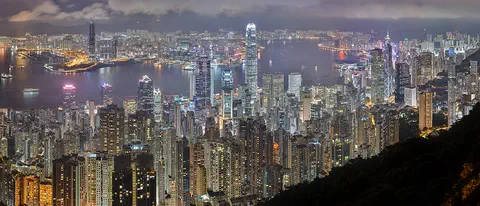
Hong Kong, on the south coast of China, grew around one of the world's great natural harbors. It was a British colony for 156 years and has been a special administrative region of China since 1997. About 7.5 million people lived there in mid-2026.
-
 Watch
City
Tokyo
Tokyo is the capital of Japan, at the head of Tokyo Bay. It began as the small town of Edo and was renamed Tokyo, the Eastern Capital, in 1868. About 14.3 million people lived in the Tokyo Metropolis in 2022, and Greater Tokyo is Japan's largest city region.
-
Watch
City
Seoul
Seoul is the capital of South Korea, on the Han River. It became a capital in 1394, and its old palaces and city gates still stand among skyscrapers. About 9.7 million people lived there in 2020, and its subway is one of the main ways to get around.
-
Watch
City
Shanghai
Shanghai is China's most populous city, on the coast where the great Yangtze River meets the East China Sea. Once a small fishing village, it grew into one of the world's busiest seaports. About 24.9 million people lived in Shanghai in 2020, and the towers of Pudong rise across the Huangpu River.
-
 Watch
City
Ankara
Ankara is the capital of Türkiye, in the interior of Anatolia, about 200 kilometers from the Black Sea. People have lived here since the Stone Age, and Romans, Byzantines, Seljuks and Ottomans all left buildings behind. It became the capital in 1923, and today it is a city of government, universities and museums.
For parents & teachers
What children will learn
- Locate Beijing in northern China and explain the meaning of its name.
- Describe the Forbidden City, the Temple of Heaven and the Summer Palace.
- Outline Beijing's long history as a capital, from the Yuan dynasty to the People's Republic.
- Describe a continental monsoon climate with cold, dry winters and hot, wet summers.
Recommended ages: 3 to 17 · About 15 minutes
Talk about it
- Old Beijing was planned around one straight north-south line. Why might a city be planned around a center line?
- Much of old Beijing has been replaced by wide roads and new buildings. What is gained and what is lost when a city rebuilds?
- Why do you think so many people in Beijing still use bicycles for short trips?
Try at home or in class
- Draw a plan of a courtyard house: a gate, a front courtyard and rooms on three sides of a main courtyard with a tree in the middle.
- Draw a straight line down a sheet of paper and arrange a palace, gates and streets symmetrically on both sides, like old Beijing.
Key vocabulary: capital, emperor, dynasty, hutong, courtyard, municipality, tai chi
Where these facts come from
- Wikidata , Wikimedia Foundation (CC0 1.0)
- Natural Earth vector data , Natural Earth (NACIS) (Public domain)
- UNESCO World Heritage List , UNESCO World Heritage Centre (Linked as a reference; site facts come from Wikidata)
- Beijing , Encyclopaedia Britannica
- Beijing: Landscape, climate and city layout , Encyclopaedia Britannica
- Beijing: History , Encyclopaedia Britannica
- Beijing: People , Encyclopaedia Britannica
- Beijing facts , The People's Government of Beijing Municipality
- Imperial Palaces of the Ming and Qing Dynasties in Beijing and Shenyang , UNESCO World Heritage Centre
- Temple of Heaven: an Imperial Sacrificial Altar in Beijing , UNESCO World Heritage Centre
- Summer Palace, an Imperial Garden in Beijing , UNESCO World Heritage Centre
- Peking Man Site at Zhoukoudian , UNESCO World Heritage Centre
- Wikimedia Commons , Wikimedia Foundation (Per file (public domain, CC0, CC BY or CC BY-SA); see each media record)
Checked, not yet human-reviewed. Last updated October 27, 2026. Spotted a mistake? Tell us.
Picture credits
- Photo: Han Zheng, CC BY-SA 2.0, via Wikimedia Commons · source · license
- Photo: N509FZ, CC BY-SA 4.0, via Wikimedia Commons · source · license
- Photo: Shujianyang, CC BY-SA 4.0, via Wikimedia Commons · source · license
- Photo: xiquinhosilva, CC BY 2.0, via Wikimedia Commons · source · license
- Photo: Photo by CEphoto, Uwe Aranas or alternatively © CEphoto, Uwe Aranas, CC BY-SA 3.0, via Wikimedia Commons · source · license