
Landmark Asia
Three Gorges Dam
The Three Gorges Dam is a giant wall across the Yangtze River in China. It holds back a huge lake. The water turns machines that make electricity.
The Three Gorges Dam crosses the Yangtze River in central China. It is 2,335 meters long and 185 meters high, and it can make more electricity than any other hydroelectric dam in the world. It also lets big ships travel far up the river, but building it meant that more than a million people had to move.
A straight-crested concrete gravity dam 2,335 m long and 185 m high, begun in 1994 and completed in 2006, Three Gorges reached its full 22,500 MW capacity in 2012 and set a world record of 111.88 TWh in 2020. Its reservoir opened the Yangtze to oceangoing ships as far as Chongqing, at the cost of displacing at least 1.3 million people, and its flood-control benefits remain debated.
Photo: Source file: Le Grand Portage Derivative work: Rehman, CC BY 2.0, via Wikimedia Commons
Discover the Three Gorges Dam
The Three Gorges Dam is in China. It is a very long, very tall wall made of concrete.
It stands across a big river called the Yangtze. Behind the wall, the water makes a giant lake. The dam uses the water to make electricity for many homes.
The Three Gorges Dam stands across the Yangtze River, just west of the city of Yichang in central China. The Yangtze is the longest river in Asia. A gorge is a deep, narrow valley with steep sides, and the dam is named after three gorges on the river.
The dam is 2,335 meters long and 185 meters high. The water it holds back forms a reservoir, a lake made by people, that stretches about 600 kilometers upstream. Water rushing through the dam spins machines called turbines, which make electricity. It can produce more power than any other hydroelectric dam on Earth.
The dam spans the Yangtze (Chang Jiang) just west of Yichang in Hubei province. Britannica describes a straight-crested concrete gravity structure 2,335 m long and up to 185 m high; NASA's Earth Observatory gives about 2,300 m and 185 m. Its reservoir submerged large parts of the Qutang, Wu and Xiling gorges for some 600 km upstream.
The project serves three stated purposes: hydroelectric power, navigation and flood control. With 32 main turbine generator units plus 2 additional generators, its 22,500 MW capacity makes it, in Britannica's words, the most productive hydroelectric dam in the world; in 2020 it generated 111.88 terawatt hours, a world record for annual output. Its value for flood control is debated.
- Length
- 2,335 m (7,660 ft)
- Maximum height
- 185 m (607 ft)
- Built
- 1994 to 2006
- Power capacity
- 22,500 megawatts
Why the dam was built
The Yangtze River sometimes floods. Floods can wash over towns and farms.
People built the dam to help hold back floods, to make electricity and to help big ships travel up the river.
The Yangtze gives water to millions of people, but it often floods. To protect people and farmland in the lower part of the river, China began building the dam in 1994. It was also meant to make electricity and to help big ships travel inland.
Building took many years. The dam started making some electricity in 2003, the main dam was finished in 2006, and all its generators were working by 2012. But the project changed many lives: the rising water covered land, natural landmarks and many old buildings and archaeological sites, and at least 1.3 million people had to move to new homes.
NASA's Earth Observatory notes that Chinese authorities estimated the Yangtze claimed 300,000 lives in the 20th century, and that the dam was begun in 1994 to protect some 15 million residents and 14,970 km² of the lower floodplain. Britannica calls it, at its start, the largest engineering project in China.
Built in phases, the dam began limited power production in 2003, when the reservoir first rose; on completion in 2006 it was the world's largest dam structure, and all 32 main generators were running in 2012. The costs were heavy: Britannica reports the displacement of at least 1.3 million people and the loss of natural features and countless architectural and archaeological sites, and NASA notes that the reservoir was expected to submerge about 632 km² of land.
A wall of concrete and steel
The dam is made of concrete and steel.
It is so heavy that its own weight holds back the water. Builders used a huge amount of concrete and steel to make it.
The Three Gorges Dam is a gravity dam. That means it is so heavy that its own weight holds back the push of the water. Its top is straight, not curved.
To build it, workers used 28 million cubic meters of concrete and 463,000 metric tons of steel. The dam and its power plants were built in stages over many years. The reservoir filled slowly: satellite pictures from 1987 and 2006 show the river swelling into a long lake behind the new wall.
As a straight-crested gravity dam, the structure resists the reservoir by its own mass. Britannica gives its materials as 28 million m³ (37 million cubic yards) of concrete and 463,000 metric tons of steel. The dam and its hydroelectric plant were built in phases over many years, with generating units added gradually from 2003 to 2012.
NASA's Landsat comparison of April 17, 1987 and November 7, 2006 shows the effect: after the main wall was complete, the river widened markedly and water backed up into tributaries far upstream. A 2006 study using NASA satellite data suggested that after the water rose in 2003, rainfall fell near the dam and rose farther away, with weather changes over an area of about 160 km².
Turbines, locks and a ship lift
Inside the dam, rushing water spins giant wheels called turbines. They make electricity.
Ships cannot jump over a dam! So they ride up in water steps called locks, or in a giant lift, like an elevator for boats.
The dam has 32 big turbine generators. When water flows through, it spins the turbines, and generators turn that spinning into electricity. In 2020 the dam made more electricity in one year than any power plant had ever made before.
Ships get past the dam in two ways. Ship locks work like a staircase of water: a ship enters a chamber, the water level changes, and the ship moves up or down a step at a time. A huge ship lift, 120 meters long, raises smaller ships faster, like an elevator. Big ships can now sail about 2,250 kilometers inland from Shanghai to Chongqing.
Power production rose from 2003 as turbine generators came online, until all 32 main units ran in 2012; with two additional generators the plant's capacity is 22,500 MW, and its 111.88 TWh in 2020 set a world record for annual generation.
For navigation, five-tier ship locks pass vessels of up to 10,000 tons, while a ship lift completed in late 2015, 120 m long, 18 m wide and 3.5 m deep, carries vessels of up to 3,000 tons past the dam more quickly; Britannica describes it as the world's largest ship lift at the time. The deepwater reservoir lets oceangoing freighters travel 2,250 km inland from Shanghai to Chongqing. Spillway gates release floodwater: NASA's Landsat 8 image of June 30, 2020 shows them open.
- Main turbine generators
- 32
- Record output (2020)
- 111.88 terawatt hours
- Ship lift
- 120 m long; ships up to 3,000 tons
- Reservoir's designed top water level
- 175 m
Floods, power and debate
In 2020 there was a lot of rain, and the river rose very high. The dam opened gates to let water out.
People still talk about how much the dam helps, and about the changes it brought.
In the summer of 2020, very heavy monsoon rain caused China's worst floods in more than 30 years. The reservoir behind the dam rose to 164.18 meters on July 19, the highest flood-season level since 2012, and operators opened spillway gates to let water out.
Officials said the dam reduced flood damage, while critics said the floods showed its limits. Some also blame the huge reservoir for more landslides and earthquakes in the area.
During the 2020 monsoon, China's heaviest floods in more than three decades pushed the reservoir to 164.18 m on July 19, according to the Three Gorges Corporation as reported by NASA, above the previous flood-season high of 163.11 m since full operation in 2012 (the designed maximum is 175 m). Officials credited the dam with reducing damage and loss of life; critics argued the floods exposed its limits for flood control.
Britannica also notes that the reservoir is blamed for an increase in landslides and earthquakes in the region. Weighing record output and navigation gains against displacement, lost heritage and environmental change, people continue to debate the dam.
Amazing facts
-
In 2020 the dam made a record amount of electricity.
In 2020 the dam made 111.88 terawatt hours of electricity, a world record for one power plant in one year.
Its 2020 output of 111.88 TWh set a new world record for annual hydroelectric generation.
-
Ships ride past the dam in a giant boat lift.
The dam's ship lift is 120 meters long and can lift ships of up to 3,000 tons, like a giant elevator for boats.
Completed in late 2015, the 120 m by 18 m ship lift was, according to Britannica, the largest in the world at the time.
-
You can see the dam's lake from space.
Satellite pictures from 1987 and 2006 show the Yangtze swelling into a long lake behind the dam.
NASA's Landsat images of 1987 and 2006 show the main wall as a thin buff line and the reservoir backing up into tributaries far upstream.
-
Big ocean ships can sail far inland on the river.
Thanks to the dam's deep reservoir, oceangoing ships can sail 2,250 kilometers inland, from Shanghai all the way to Chongqing.
The deepwater reservoir allows oceangoing freighters to navigate 2,250 km (1,400 miles) inland from Shanghai to Chongqing.
Words to know
- dam
- a strong wall built across a river to hold back water
- reservoir
- a lake made by people, often behind a dam, to store water
- gorge
- a deep, narrow valley with steep sides
- turbine
- a machine with blades that spins when water or wind pushes it
- hydroelectric
- making electricity from moving water
- lock
- a chamber where the water level is changed to lift or lower boats
Discovery challenge
-
Which river does the dam cross?
Which river does the Three Gorges Dam stand across?
Which river, Asia's longest, does the Three Gorges Dam span?
- The Nile
- The Yangtze
- The Mississippi
Show the answer
The Yangtze
The Yangtze! It is a very long river in China.
It crosses the Yangtze, the longest river in Asia, just west of Yichang.
The Yangtze (Chang Jiang), which the dam spans just west of Yichang in Hubei province.
-
What does the dam make?
What does the moving water at the dam make?
What does the dam produce, at a capacity of 22,500 MW?
- Electricity
- Oil
- Steel
Show the answer
Electricity
Electricity! The water spins machines that make it.
Water spins the turbines, and the generators make electricity.
Hydroelectric power: 32 main units plus 2 more give 22,500 MW, a world-leading capacity.
-
How do ships get past the dam?
How do ships get past the Three Gorges Dam?
Which two systems carry vessels past the dam?
- They are carried by trucks
- Through ship locks and a ship lift
- Through a tunnel under the dam
Show the answer
Through ship locks and a ship lift
They use water steps called locks, or a giant boat lift!
Ships use a staircase of locks, or the ship lift, which raises smaller ships like an elevator.
Five-tier ship locks for vessels up to 10,000 tons and a ship lift for vessels up to 3,000 tons.
-
How long is the dam?
How long is the Three Gorges Dam?
According to Britannica, what is the length of the dam's crest?
- 23 meters
- 2,335 meters
- 233 kilometers
Show the answer
2,335 meters
2,335 meters! That is very, very long.
It is 2,335 meters long and 185 meters high.
2,335 m (7,660 ft), with a maximum height of 185 m.
Nearby places
-
 Watch
Landmark
Terracotta Army
In 1974, farmers digging a well near Xi'an, China, found pieces of clay soldiers. Archaeologists uncovered an army of about 8,000 life-size soldiers and horses, made for the tomb of Qin Shi Huang, the first emperor of a united China, who died in 210 BCE. The figures were once brightly painted, and each has its own face.
-
 Watch
City
Shanghai
Shanghai is China's most populous city, on the coast where the great Yangtze River meets the East China Sea. Once a small fishing village, it grew into one of the world's busiest seaports. About 24.9 million people lived in Shanghai in 2020, and the towers of Pudong rise across the Huangpu River.
-
 Watch
City
Hong Kong
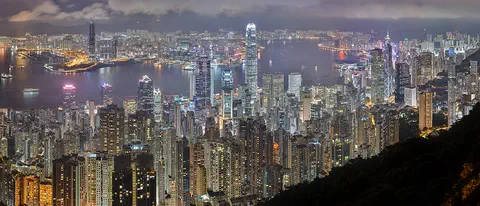
Hong Kong, on the south coast of China, grew around one of the world's great natural harbors. It was a British colony for 156 years and has been a special administrative region of China since 1997. About 7.5 million people lived there in mid-2026.
-
 Watch
Landmark
Forbidden City
The Forbidden City in Beijing was built between 1406 and 1420 as the palace of China's emperors. Over about 500 years, 24 emperors came to the throne there. High walls and a wide moat surround it. Since 1925 it has been the Palace Museum, and it became a World Heritage Site in 1987.
-
Watch
City
Beijing
Beijing, the capital of China, has been the country's capital for most of the last 600 years. At its heart is the Forbidden City, the emperors' palace. About 21.8 million people lived in the Beijing municipality at the end of 2024.
-
 Watch
Natural wonder
Ha Long Bay
Ha Long Bay is a bay in northeast Vietnam where more than a thousand limestone islands rise straight out of the sea. Over millions of years, water dissolved the limestone into towers and caves, and then the sea flooded in around them. Together with the nearby Cat Ba Archipelago it is a World Heritage site.
-
 Watch
Landmark
Great Wall of China
The Great Wall is not one wall but many walls, built over about 2,000 years across northern China. The best-kept part, built under the Ming emperors, runs about 8,850 kilometers, with watchtowers, gates and signal towers along the way.
-
 Watch
Landmark
Taipei 101
Taipei 101 is a skyscraper in Taipei, Taiwan, 508 meters tall with its spire and 101 stories high. When it opened, it was the tallest building in the world. Inside hangs a 660-ton steel ball, a tuned mass damper, that helps steady the tower in typhoon winds and earthquakes.
Experiments to try
Explore next
-
 Watch
 Country
China
China is the largest country in Asia, almost as big as all of Europe. The land steps down from the high, cold Plateau of Tibet in the west to plains and coasts in the east, and about 1.4 billion people live there, along with giant pandas in the mountains of south-central China.
-
 Watch
Natural wonder
Yangtze River
The Yangtze, called Chang Jiang (Long River) in China, is the longest river in Asia, about 6,300 kilometers. It starts in glacier meltwater on the Plateau of Tibet, cuts through deep gorges, passes huge cities like Chongqing, Wuhan and Nanjing, and reaches the East China Sea at Shanghai. Nearly a third of China's people live in its basin.
-
 Watch
Landmark
Aswan High Dam
The Aswan High Dam crosses the Nile River in southern Egypt. Finished in 1970, it is 111 meters high and 3,830 meters long. It controls the Nile's yearly flood, stores water for farms, makes electricity and created a huge reservoir, Lake Nasser. Ancient temples had to be moved to save them from the rising water.
- Watch What If? Lab What if rivers made electricity everywhere? Falling and flowing water can spin a turbine, and a turbine can spin a generator to make electricity. That's hydropower, one of the oldest ways people have used energy. Imagine every river making electricity, then discover how dams work, why fish need a way past them, and how small water wheels can power a single farm.
-
 Watch
Landmark
Agra Fort
Agra Fort is a huge red sandstone fortress beside the Yamuna River in Agra, India. The Mughal emperor Akbar began it in 1565. Its walls, about 2.5 kilometers around, protect palaces, halls and mosques added by later emperors. It was both an army base and a royal home.
-
 Watch
Landmark
Al-Aqsa Mosque
Al-Aqsa Mosque stands at the southern end of a huge raised plaza in the Old City of Jerusalem. Built in the early 700s, it has a silver-gray dome, and the golden Dome of the Rock stands nearby. The plaza is important to Muslims and to Jews.
-
 Watch
Landmark
Al-Masjid al-Haram
Al-Masjid al-Haram, the Great Mosque of Mecca in Saudi Arabia, was built around the Kaaba, a cube-shaped building that Muslims face when they pray. It is the most important place of pilgrimage in Islam. In 2026, 1,707,301 pilgrims came to Mecca for the hajj, and the mosque can hold up to about one million worshippers.
-
 Watch
Landmark
Angkor
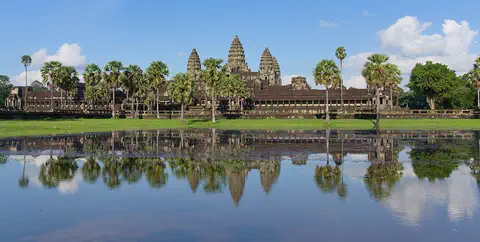
Angkor, in northwestern Cambodia, was the capital of the Khmer Empire from the 9th to the 15th century. Its kings built city after city here, with scores of temples, such as Angkor Wat and the Bayon, and giant reservoirs and canals to water the rice fields. Today it covers about 400 square kilometers, and more than 100,000 people live in villages inside it.
For parents & teachers
What children will learn
- Locate the Three Gorges Dam on the Yangtze River and explain what a dam and a reservoir are.
- Explain how moving water makes electricity and how locks and lifts move ships past a dam.
- Weigh the benefits and costs of a very large dam, including people who had to move.
Recommended ages: 3 to 17 · About 15 minutes
Talk about it
- The dam makes a lot of clean electricity, but more than a million people had to move. How should people decide whether a big project is worth it?
- Why might a river's water level matter to ships, farms and towns?
- If you had to move because of a new dam, what would you want to take with you, and what would you miss?
Try at home or in class
- Build a small dam of clay or sand across a tray of water and watch the water rise behind it; then cut a small channel and see how the water rushes out.
- Make a simple paper water wheel and hold it under a trickle from a tap to see moving water turn it.
Key vocabulary: dam, reservoir, gorge, turbine, hydroelectric, lock
Where these facts come from
- Wikidata , Wikimedia Foundation (CC0 1.0)
- Three Gorges Dam , Encyclopaedia Britannica (updated Aug. 29, 2026)
- Three Gorges Dam, China (Image of the Day, June 13, 2007) , NASA Earth Observatory
- Yangtze Dams Spill Water (Image of the Day, July 24, 2020) , NASA Earth Observatory
- Wikimedia Commons , Wikimedia Foundation (Per file (public domain, CC0, CC BY or CC BY-SA); see each media record)
Checked, not yet human-reviewed. Last updated October 27, 2026. Spotted a mistake? Tell us.