
 Country
Europe
Lithuania
Lithuania is a country by the Baltic Sea. It has thousands of lakes, big sand dunes and an old capital called Vilnius.
Lithuania is the largest and southernmost of the three Baltic states. Its low land was shaped by glaciers and holds about 3,000 lakes, a long spit of sand dunes lines its coast, and about 2.89 million people lived there in 2025.
Lithuania is a glaciated lowland on the southeastern Baltic, once the core of a Grand Duchy that by the 15th century reached from the Baltic to the Black Sea. It declared independence from the USSR on 11 March 1990, and the World Bank put its population at 2,888,774 in 2025.
Photo: Diliff, CC BY-SA 3.0, via Wikimedia Commons
Discover Lithuania
Lithuania is a country in the north of Europe.
The Baltic Sea is on one side. It has thousands of lakes and green forests. The capital city is Vilnius.
Lithuania is a country in northeastern Europe, the biggest and farthest south of the three Baltic states. The Baltic Sea is to the west, Latvia to the north, Belarus to the east and south, and Poland and a part of Russia called Kaliningrad to the southwest.
Most of Lithuania is low and gently rolling, with about 3,000 lakes, slow rivers and forests. Its capital is Vilnius. About 2.89 million people lived in Lithuania in 2025.
Lithuania covers about 65,300 square kilometers between Latvia to the north, Belarus to the east and south, Poland and the Russian exclave of Kaliningrad to the southwest, and the Baltic Sea to the west. Britannica describes its terrain as a low plain scraped by Ice Age glaciers, which left thick ridges of debris called moraines.
The World Bank estimated the population at 2,888,774 in 2025. Ethnic Lithuanians make up more than four-fifths of it, with Russian and Polish minorities and smaller numbers of Belarusians, Ukrainians, Latvians, Tatars and Roma. Vilnius has been the capital since at least 1323, when it is first mentioned in writing.
Cities and famous places
Vilnius is the capital of Lithuania.
Its old streets are small and twisty. It has old churches and a town hall. On the coast, a long strip of sand has giant dunes.
Vilnius has been the capital since at least 1323. Its Old Town is a World Heritage Site: its small medieval streets spread out from a castle hill where two rivers, the Neris and the Vilnia, meet, and buildings from many styles stand side by side.
On the coast is the Curonian Spit, a thin strip of sand dunes and forest 98 kilometers long, shared with Russia. About 35 kilometers from Vilnius, Kernavė is an archaeological site where people lived for about 10,000 years, with five big hill forts.
UNESCO inscribed the Vilnius Historic Centre in 1994. A wooden castle stood on Gediminas Hill, where the Neris and Vilnia rivers meet, around 1000 CE; by 1323, when Vilnius is first mentioned in writing, it was the capital of the Grand Duchy of Lithuania. Its circular medieval plan radiates from the castle site, and its Gothic, Renaissance, Baroque and Classical buildings include the cathedral, town hall and a 16th-century university ensemble.
The Curonian Spit (inscribed 2000), shared with Russia, is a dune peninsula 98 km long and 0.4 to 3.8 km wide that formed about 5,000 years ago; heavy logging in the 17th and 18th centuries set the dunes moving, and stabilization work has continued since about 1800. Kernavė (inscribed 2004), 35 km northwest of Vilnius in the Neris valley, holds evidence of settlement from the 9th or 8th millennium BCE to the Middle Ages, including five 13th-century hill forts.
Lakes, rivers and dunes
Long ago, thick ice covered Lithuania.
The ice left gentle hills and many lakes. About 3,000 lakes shine in the land. Sandy dunes line the seaside.
Glaciers, huge sheets of ice, scraped Lithuania into a low plain and left ridges of rock and soil behind. In the east and southeast are small hills and lots of lakes: about 3,000 in all. Slow, winding rivers flow to the Baltic Sea, and the biggest is the Nemunas.
About a third of the country is forest, with pines near the coast, spruces in the hilly east and oaks and birches in the middle. Winters are cold, about -5 °C in January, and July averages about 17 °C. The highest hill, Aukštojas, is only about 294 meters high.
Lithuania is mostly a low-lying plain with glacial moraines. The Middle Lithuanian Lowland of glacial lake clays and boulder-studded loams runs north to south, in places waterlogged; the Baltic Highlands to the east and southeast carry many small hills and lakes, about 3,000 lakes in all. The highest point is Aukštojas Hill, 293.84 m according to Vilnius District Municipality; Britannica still names Juozapinė Hill (292 m).
Rivers are slow lowland rivers draining to the Baltic; the Neman (Nemunas) is the largest. The climate is transitional between maritime and continental, with damp Atlantic air most common; January averages about -5 °C, July about 17 °C, and annual rainfall usually exceeds about 800 mm. About one-third of the land is forest and another fifth meadow; on the coast, sand dunes and the Curonian Lagoon, almost cut off from the sea by the Curonian Spit, form a distinctive landscape.

Animals of Lithuania
White storks live in Lithuania.
Wolves, foxes and wild boars live here. Beavers live deep in the forests. Swans and herons live here too.
Lithuania has many kinds of mammals. Wolves, foxes, otters, badgers and wild boars live there, and the deep forests hold elk (the animal Americans call a moose), deer and beavers.
Hundreds of kinds of birds live in Lithuania, including white storks, ducks, geese, swans, herons and hawks. UNESCO lists a bird migration path among the natural treasures of the Curonian Spit.
Britannica describes Lithuania's wildlife as very diverse: wolves, foxes, otters, badgers, ermine, wild boars and many rodents, with elk (Alces alces), stags and other deer, beavers and mink in the deep forests. Hundreds of bird species occur, including white storks, ducks, geese, swans, cormorants, herons and hawks, and many kinds of grouse and partridge.
UNESCO lists a bird migration path among the natural values of the Curonian Spit, along with ancient forests, mountain pine stands and specialized sand plants and animals. Britannica notes that swamps and marshes now make up only a small share of the land, while forest covers about a third of it.
People, languages and food
About 2.89 million people live in Lithuania.
Most speak Lithuanian. Some speak Russian or Polish too. Many people sing at big festivals. Potato dumplings are the national dish.
Most people in Lithuania speak Lithuanian, the official language. It belongs to the Baltic group of languages. Russian, Polish, Belarusian and Ukrainian are also spoken, especially in bigger cities.
Song festivals are a big tradition: Lithuania held its first song celebration in 1924, and now one takes place every four years, with thousands of singers and dancers. The national dish is cepelinai, potato dumplings stuffed with meat, curd cheese or mushrooms.
More than four-fifths of residents are ethnic Lithuanians. Lithuanian, the official language, belongs to the Baltic group of Indo-European languages; Russian, Polish, Belarusian and Ukrainian are spoken in the larger cities, and Yiddish by the small remaining Jewish community. Before World War II the Jewish community was large; Britannica records that by 1944 most of it had been murdered, deported or sent to concentration camps in the Holocaust. About four-fifths of the population is Roman Catholic.
UNESCO lists the Baltic Song and Dance Celebrations: Lithuania's first was held in 1924, it now takes place every fourth year (the 2024 celebration was in Vilnius and Kaunas), and performers come mostly from amateur choirs and dance groups. The national dish, cepelinai, are dumplings of grated and riced potato filled with ground meat, dry curd cheese or mushrooms; the official tourism site says they are now more often eaten in restaurants than at home.
A long history
People have lived in Lithuania for a very, very long time.
Long ago, Lithuania had kings and grand dukes. Vilnius became the capital. Today Lithuania is an independent country.
People lived at Kernavė about 10,000 years ago. In the 1200s a leader named Mindaugas united the Lithuanian tribes and was crowned king in 1253. Under grand dukes, Lithuania grew huge: by the 1400s it stretched from the Baltic Sea to the Black Sea. In 1569 it joined with Poland in one commonwealth.
From 1795 Russia ruled Lithuania. It was independent from 1918 to 1940, then later was made part of the Soviet Union. In 1990 it declared independence again, and in 2004 it joined the European Union.
The Lithuanians, a Baltic people protected by dense forest and marshland, resisted the German crusading orders; their tribes united under Mindaugas, crowned king in 1253. Gediminas, ruling from about 1315, built the empire of historic Lithuania, with Vilnius its capital by 1323, and under Vytautas (died 1430) the realm stretched from the Baltic south to the Black Sea and east almost to Mozhaisk, some 160 km west of Moscow. Jogaila's union with Poland (1385-86) brought Roman Christianity in 1387, and the Union of Lublin (1569) created the Polish-Lithuanian Commonwealth.
Russia ruled Lithuania from 1795. After independence from 1918 to 1940, it was briefly controlled by Germany during World War II and incorporated into the USSR in 1944. Its newly elected parliament declared independence by unanimous vote on 11 March 1990; the Soviet parliament acknowledged it on 6 September 1991, and Lithuania joined the EU and NATO in 2004.
Lithuania on the map
Find Lithuania on the globe.
It is in the north of Europe. The Baltic Sea is to the west. Four countries are its neighbors.
Lithuania sits on the eastern shore of the Baltic Sea, south of Latvia and Estonia. It has four land neighbors: Latvia in the north, Belarus in the east and south, and Poland and the Russian region of Kaliningrad in the southwest.
Its short coast is lined with sand dunes. The thin Curonian Spit almost cuts the Curonian Lagoon off from the sea, and the Nemunas, the biggest river, runs through the heart of the country.
Lithuania is bounded by Latvia to the north, Belarus to the east and south, Poland and Russia's detached Kaliningrad oblast to the southwest, and the Baltic Sea to the west. The coast belongs to a lowland Britannica calls the maritime depression, which rises gradually eastward to the Žemaičiai Upland.
The Curonian Spit, a sand peninsula 98 km long, separates the Curonian Lagoon from the Baltic; it lies within Lithuania's Curonian Spit National Park and Russia's Kurshskaya National Park. The Neman (Nemunas) runs north and then west through the heart of the country.
- Lakes
- about 3,000
- Curonian Spit
- 98 km long, 0.4–3.8 km wide
- Highest point
- Aukštojas Hill, 293.84 m
- Land neighbors
- Latvia, Belarus, Poland and Russia (Kaliningrad)
Amazing facts
-
Lithuania has about 3,000 lakes.
About 3,000 lakes dot Lithuania, most of them in the hilly east and southeast.
Britannica counts about 3,000 lakes in Lithuania, most of them in the glacial relief of the east and southeast.
-
On the coast, giant sand dunes once moved and covered villages.
After many trees were cut down on the Curonian Spit, its sand dunes started moving and buried the oldest villages.
Intensive logging on the Curonian Spit in the 17th and 18th centuries set its dunes moving toward the lagoon, burying the oldest settlements; stabilization began around 1800.
-
A favorite food in Lithuania is shaped like an airship.
Cepelinai, potato dumplings, are named after Zeppelin airships because they look like them.
Cepelinai take their name from Zeppelin airships; they combine grated and riced potato around a filling of ground meat, dry curd cheese or mushrooms.
-
People lived at Kernavė about 10,000 years ago.
Kernavė, near Vilnius, shows that people lived there over about 10,000 years, and it has five big hill forts.
Kernavė Archaeological Site holds evidence of settlement from the 9th or 8th millennium BCE; its five hill forts date to the 13th century, when it was a town of craftsmen and merchants.
-
Long ago, Lithuania reached all the way to the Black Sea.
In the 1400s the Grand Duchy of Lithuania stretched from the Baltic Sea all the way to the Black Sea.
UNESCO notes that by the 15th century the Grand Duchy of Lithuania, with Vilnius as its capital, had become the largest country in Europe, from the Baltic to the Black Sea.
Words to know
- glacier
- a huge, slow-moving sheet or river of ice
- moraine
- a ridge of rocks and soil left behind by a glacier
- sand dune
- a hill of sand piled up by the wind
- spit
- a long, narrow strip of sand or stones that sticks out into the sea
- lagoon
- shallow water almost cut off from the sea by a strip of land
- grand duchy
- a country ruled by a grand duke or grand prince
- World Heritage Site
- a place UNESCO lists as important to all people, to be protected
Discovery challenge
-
What is the capital city of Lithuania?
Which city is the capital of Lithuania?
Which city, first mentioned in writing in 1323, is Lithuania's capital?
- Vilnius
- Kaunas
- Riga
Show the answer
Vilnius
Vilnius is the capital of Lithuania.
Vilnius is the capital. Its Old Town is a World Heritage Site.
Vilnius was already the capital of the Grand Duchy of Lithuania by 1323; UNESCO inscribed its historic center in 1994. Riga is the capital of Latvia.
-
About how many lakes does Lithuania have?
About how many lakes are there in Lithuania?
Glaciers left Lithuania with roughly how many lakes?
- About 30
- About 3,000
- About 300,000
Show the answer
About 3,000
Lithuania has about 3,000 lakes!
There are about 3,000 lakes, most of them in the east and southeast.
About 3,000 lakes lie in Lithuania, mostly in the glacial hills of the east and southeast.
-
The Curonian Spit has giant hills made of what?
The Curonian Spit is famous for big dunes. What are they made of?
The Curonian Spit's Great Dune Ridge formed about 5,000 years ago from what material carried by currents?
- Sand
- Ice
- Volcanic rock
Show the answer
Sand
The dunes are made of sand. Trees help hold the sand still.
They are sand dunes. People plant trees and build barriers to stop the sand from moving.
Currents carried sand onto moraine islands about 5,000 years ago, forming a dune peninsula 98 km long.
-
Cepelinai are dumplings. What are they made from?
Cepelinai, Lithuania's national dish, are dumplings made mainly from what?
Cepelinai combine grated and riced what, around a meat, curd cheese or mushroom filling?
- Potatoes
- Rice
- Bananas
Show the answer
Potatoes
Cepelinai are made from potatoes.
They are potato dumplings filled with meat, curd cheese or mushrooms.
Grated and riced potato is wrapped around ground meat, dry curd cheese or mushrooms; the name comes from Zeppelin airships.
-
Long ago, Lithuania joined with which neighbor?
In 1569, Lithuania joined with which country to form one commonwealth?
The Union of Lublin (1569) joined Lithuania with which country in a single commonwealth?
- Sweden
- Poland
- Finland
Show the answer
Poland
Lithuania joined with Poland.
In 1569 Lithuania and Poland formed one commonwealth with a shared ruler and parliament.
The Union of Lublin turned a personal union into the Commonwealth of Two Peoples, with an elected joint sovereign and parliament but separate administrations, laws and armies.
Places to discover in Lithuania
Animals of Lithuania
-
 Watch
Animal
White stork
The white stork is a tall white bird with black flight feathers, a red bill and long orange legs. It nests on rooftops, chimneys and trees across Europe, North Africa and western Asia, and many storks soar south to spend the winter in Africa or South Asia.
-
 Watch
3D
Animal
Gray wolf
The gray wolf is the largest member of the dog family and the wild ancestor of pet dogs. Wolves live in family packs that hunt big animals like elk and moose together, and their howls can carry about 10 kilometers. After being wiped out in many places, wolves are coming back in parts of North America and Europe.
-
 Watch
3D
Animal
Wild boar
Wild boars are bristly wild pigs that live in forests and fields across Europe, Asia and North Africa. They sniff out food with their powerful snouts, live in family groups called sounders, and are the wild ancestors of farm pigs.
-
 Watch
Animal
Moose
The moose is the largest member of the deer family. It lives in northern forests, wades and even dives into lakes to eat water plants, and bull moose grow enormous new antlers every year. In Europe it is called an elk.
Explore next
-
Watch
City
Vilnius
Vilnius, the capital of Lithuania, grew where the Vilnia River flows into the Neris, below a castle on a hill. It was first written about in 1323, when it was already the capital of a huge state, and its old town of Gothic, Renaissance and Baroque buildings is a UNESCO World Heritage Site. About 618,000 people lived there in 2026.
-
Watch
Animal
White stork
The white stork is a tall white bird with black flight feathers, a red bill and long orange legs. It nests on rooftops, chimneys and trees across Europe, North Africa and western Asia, and many storks soar south to spend the winter in Africa or South Asia.
-
Watch
3D
Animal
Gray wolf
The gray wolf is the largest member of the dog family and the wild ancestor of pet dogs. Wolves live in family packs that hunt big animals like elk and moose together, and their howls can carry about 10 kilometers. After being wiped out in many places, wolves are coming back in parts of North America and Europe.
-
Watch
3D
Animal
Wild boar
Wild boars are bristly wild pigs that live in forests and fields across Europe, Asia and North Africa. They sniff out food with their powerful snouts, live in family groups called sounders, and are the wild ancestors of farm pigs.
-
Watch
Animal
Moose
The moose is the largest member of the deer family. It lives in northern forests, wades and even dives into lakes to eat water plants, and bull moose grow enormous new antlers every year. In Europe it is called an elk.
-
 Watch
 Country
Latvia
Latvia is the middle one of the three Baltic states, on the shores of the Baltic Sea and the Gulf of Riga. It is mostly low and green, with forests over more than half its land, and about 1.845 million people lived there at the start of 2026.
-
 Watch
 Country
Belarus
Belarus is a landlocked country in eastern Europe. Ice sheets of the last ice age shaped its low hills and wide plains, it has more than 10,000 lakes and one of Europe's largest wetlands, and about 9.1 million people lived there in 2025.
-
 Watch
 Country
Bosnia and Herzegovina
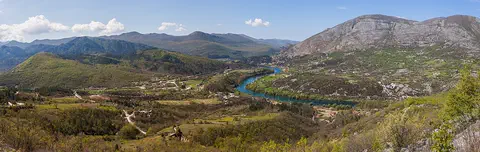
Bosnia and Herzegovina is a mountainous country in southeastern Europe. It has forests, limestone hills and many rivers, and famous old stone bridges cross some of them. Its capital is Sarajevo. It touches the Adriatic Sea along only about 20 kilometers of coast.
For parents & teachers
What children will learn
- Locate Lithuania on the Baltic Sea and name its four land neighbors.
- Explain how glaciers left Lithuania's lakes and how people have protected the Curonian Spit's dunes.
- Describe some of Lithuania's wildlife, places, languages and foods without treating them as one single culture.
- Outline Lithuania's history from the Grand Duchy to independence in 1918 and again in 1990.
Recommended ages: 3 to 17 · About 15 minutes
Talk about it
- Why might planting trees stop sand dunes from moving?
- Lithuania was once a huge country and is now a small one. How can a country's borders change over time?
- What foods are made from potatoes where you live?
Try at home or in class
- Pile dry sand in a tray and blow on it gently through a straw; then add small twigs or leaves and see whether the sand moves less.
- On a map of Europe, trace Lithuania's borders and find its four land neighbors.
Key vocabulary: glacier, moraine, sand dune, spit, lagoon, grand duchy, World Heritage Site
Where these facts come from
- Wikidata , Wikimedia Foundation (CC0 1.0)
- Natural Earth vector data , Natural Earth (NACIS) (Public domain)
- UNESCO World Heritage List , UNESCO World Heritage Centre (Linked as a reference; site facts come from Wikidata)
- Lithuania (Land, People) , Encyclopaedia Britannica
- Lithuania: History , Encyclopaedia Britannica
- Lithuanian language , Encyclopaedia Britannica
- Population, total: Lithuania , World Bank
- Vilnius Historic Centre , UNESCO World Heritage Centre
- Curonian Spit , UNESCO World Heritage Centre
- Kernavė Archaeological Site (Cultural Reserve of Kernavė) , UNESCO World Heritage Centre
- Baltic song and dance celebrations , UNESCO Intangible Cultural Heritage
- Aukštojas Hill , Vilnius District Municipality
- Cepelinai , Lithuania Travel (official tourism site)
- PlayOwl region table, version 1 , PlayOwl (PlayOwl original data)
- flag-icons 7.5.0 , Panayiotis Lipiridis and contributors (MIT)
- Wikimedia Commons , Wikimedia Foundation (Per file (public domain, CC0, CC BY or CC BY-SA); see each media record)
Checked, not yet human-reviewed. Last updated October 27, 2026. Spotted a mistake? Tell us.