
Animal
Moose
The moose is the biggest deer in the world. It has long legs, a big nose and, on the males, huge flat antlers.
The moose is the largest member of the deer family. It lives in northern forests, wades and even dives into lakes to eat water plants, and bull moose grow enormous new antlers every year. In Europe it is called an elk.
Alces alces, the moose (Eurasian elk), is the largest living cervid: a browser of boreal and northern temperate forests and wetlands across North America and Eurasia, with palmate antlers regrown each year, specialized feeding on aquatic plants and a mostly solitary life. It is listed as Least Concern.
Photo: Ryan Hagerty, public domain, via Wikimedia Commons
Meet the moose
The moose is the biggest deer of all.
It has very long legs and a big, droopy nose. A flap of furry skin hangs under its chin. Male moose grow giant antlers.
The moose is the biggest kind of deer in the world. A big bull can stand about 2 meters tall at the shoulder, taller than a grown-up, and weigh as much as eight or nine grown-ups. Females, called cows, are smaller.
Moose have long legs, a humped shoulder, a big drooping nose and a furry flap of skin under the throat called a bell. Only the males grow antlers, which are wide and flat like giant hands. In Europe, people call this animal an elk.
Alces alces is the largest member of the deer family, Cervidae. Britannica notes that the biggest bulls, in Alaska and eastern Siberia, weigh about 600 kilograms and stand 2 meters at the shoulder, while the smallest southern populations, such as in Wyoming, have bulls of 300 to 350 kilograms. Distinctive features are the long legs, shoulder hump, pendulous muzzle and hairy dewlap or 'bell'.
The English name 'moose' comes from an Algonquian word often translated as 'stripper and eater of bark'. In Europe the same species is called 'elk', which causes confusion with the North American elk (wapiti), a different deer. Several subspecies are recognized, among them the Alaska-Yukon moose, the largest.
Quick facts
- Group
- Mammal
- Height
- 1.5 to 2.1 m
- Weight
- 360 to 725 kg
- Top speed
- up to 56 km/h
- Lifespan in the wild
- up to 16 years
Northern forests and lakes
Moose live in cold places in the north.
They live in forests with lots of lakes, ponds and rivers. Snow covers the ground for much of the year.
Moose live across the cold northern forests of North America, Europe and Asia, from Alaska and Canada to Scandinavia and Russia. They like places with young trees and shrubs, such as willows and birches, and plenty of ponds, rivers and marshes.
Moose often move into forests that have recently burned or flooded, because young shrubs grow back quickly there. In Alaska alone there are about 175,000 to 200,000 moose.
The IUCN's global assessment lists moose as native in about two dozen countries, including Canada, the United States, Norway, Sweden, Finland, the Baltic states, Poland, Belarus, Ukraine, Russia, Kazakhstan, Mongolia and China. They are extinct in Austria.
Moose depend on early-successional habitat: deciduous shrubs regrowing after floods, avalanches, fires or logging, and the shrub zone along river floodplains. Most make seasonal movements between calving, rutting and wintering areas, from a few kilometers up to about 100 kilometers in Alaska. The map is shaded by country, so it overstates how much of each country moose use.
Continents
Its habitats


Where can you find this animal?
- Used to live here · Countries and seas named by a scientific source
- Lives here naturally · Countries and seas named by a scientific source
- Sightings recorded · Records of wild sightings (GBIF)
Used to live here · Countries and seas named by a scientific source
Austria, where the IUCN lists the moose as extinct.
Places: Austria.
Source: iucn-red-list · checked October 2026
Lives here naturally · Countries and seas named by a scientific source
Boreal and northern temperate forests, shrublands and wetlands of North America, northern Europe and northern Asia. Moose live only in the northern or forested parts of many countries shown.
Places: Canada, United States, Norway, Sweden, Finland, Estonia, Latvia, Lithuania and 11 more places.
Source: iucn-red-list · checked October 2026
Sightings recorded · Records of wild sightings (GBIF)
Counts of GBIF records of wild observations (human and machine) and preserved specimens. Records include introduced populations, vagrants, escaped or released animals and misidentifications, so a country with records is not necessarily part of the native range.
Wild sightings have been recorded in Estonia, Norway, Sweden, United States, Canada, Russia, Poland, Finland and 17 more places.
Source: gbif · checked October 2026
Range maps show where scientists say an animal lives, often country by country. An animal may live in only part of a country shown, and sightings records can include animals that wandered far from home.
Twigs in winter, water plants in summer
Moose eat plants.
In winter they eat twigs and bark. In summer they walk into ponds and eat water plants. They can even put their heads under water!
Moose are browsers. They eat leaves, buds, twigs and bark from shrubs and trees, especially willow, birch and aspen. A moose can eat up to about 32 kilograms of food in a day.
In summer, moose wade into lakes and ponds to eat water plants, which are full of protein and salt. A moose can put its whole head underwater, and it may even dive, staying under for up to 50 seconds. In winter, when the ponds freeze, it lives mostly on woody twigs.
Moose are browsing ruminants. In fall and winter they eat large quantities of willow, birch and aspen twigs, sometimes creating a visible browse line about 1.8 to 2.4 meters above the ground, and they may take conifers such as fir and yew. In spring they graze as well, and in summer they eat forbs, leaves and aquatic vegetation.
The large, mobile, sensitive muzzle appears specialized for harvesting submerged plants, which are rich in protein and sodium; moose may dive and feed for up to about 50 seconds. They visit mineral licks to replace sodium lost over winter. Because they prefer broad-leaved trees to conifers, heavy browsing can shift the makeup of a forest.

Antlers, legs and a bell
A bull moose grows new antlers every year.
They are covered in soft fuzz while they grow. Moose have long legs for walking in deep snow. They are great swimmers.
A bull moose's antlers can be about 1.5 meters across and weigh up to 35 kilograms. Amazingly, he grows a new pair every year. In spring they grow fast, covered with soft, fuzzy skin called velvet. After the fall mating season, he drops them to save energy for winter.
Long legs help moose step through deep snow, wade into lakes and swim. Moose have chocolate-brown to almost black fur. The furry bell under the throat is a dangling flap of skin and hair.
Antlers are solid bone, grown each spring and summer under velvety skin over three to five months and shed in late fall or winter after the rut. Palmate antlers of large bulls can span about 1.5 meters and weigh up to about 35 kilograms; size depends on age and diet, peaking at around 10 to 12 years in Alaska, and symmetry is thought to reflect health.
Long legs let moose move through deep snow, wade and swim well; even calves are strong swimmers. The front and hind legs are also powerful weapons against predators. In deep snow moose may trample networks of trails called 'moose yards'. The hairy dewlap, or bell, hangs from the throat of both sexes.
Spring calves
A baby moose is called a calf.
It is born in spring with reddish fur. Sometimes there are twins! The calf stays with its mom for a year.
After about eight months, a cow moose gives birth in late spring or early summer to one calf, or sometimes twins. A newborn weighs only about 13 kilograms and has reddish-brown fur. It grows very fast: in its first five months it becomes about ten times heavier.
The mother is very protective and keeps her calf close. She chases it away just before her next calf is born, about a year later.
Gestation lasts about 230 days (Grzimek's encyclopedia gives 233). Cows usually first breed at about 28 months and give birth in spring to one or two calves of roughly 13 kilograms, which increase about tenfold in weight in five months. The red-brown newborn coat fades within weeks and is replaced by an adult-like coat by late summer.
Calves are weaned in the fall, when the mother breeds again, and are driven off just before the next calf arrives. Growth, maturity and twinning rates depend strongly on habitat quality. Calves are most at risk from bears and wolves, and cows defend them vigorously. Wild moose rarely live more than about 16 years.
Mostly alone
Moose usually live alone.
A mother moose stays with her calf. In the fall, bull moose push their antlers together to see who is strongest.
Unlike most deer, moose usually live alone or with just one or two others. The strongest bond is between a mother and her calf. Moose are not territorial, though; they share their area with others.
In late September and early October, during the mating season called the rut, bulls push their antlers together in shoving contests. Moose can run at about 55 km/h and defend themselves with powerful kicks, so wildlife experts always tell people to watch moose from far away.
Moose are largely solitary and non-territorial, rarely traveling with more than one or two others, though cows maintain strong bonds with calves. Individuals remember favored feeding sites and return to them predictably; some studies have found moose returning to the same willow clumps on almost the same winter day each year.
During the rut in late September and early October, bulls joust by locking antlers and pushing; serious injuries are uncommon. Moose readily defend themselves: against wolves in deep snow they seek hard ground or back into dense conifers and strike with their hooves. Park services advise giving moose plenty of space, because both bulls and cows can be unpredictable.
Did you know?
In Europe, a moose is called an elk.
People in Europe call this animal an elk, while in North America 'elk' means a different deer.
'Elk' in British and European usage means Alces alces; in North America it usually refers to the wapiti, a different deer.
Moose and people
There are many moose in the world.
People look after them by keeping forests and wetlands healthy. Drivers watch out for moose crossing the road.
Moose are listed as Least Concern, which means they are not at risk overall, and the IUCN reports that their numbers are increasing. In places such as Alaska, many people hunt moose for food under rules that keep populations healthy.
Moose still face problems. Collisions with cars and trains kill many moose each year, and harsh winters and predators can make local numbers rise and fall. Wildlife managers count moose and set rules to keep each population healthy.
The IUCN lists Alces alces as Least Concern (global assessment made in 2015 and flagged as needing an update), with an increasing population trend. Britannica notes that moose decline under uncontrolled hunting but respond well to protection and management.
In Alaska, moose are an important food source and are managed unit by unit. The Alaska Department of Fish and Game reports that numbers south of Fairbanks fell from about 23,000 in 1970 to about 2,800 by 1975 after severe winters, heavy predation and over-harvest, then recovered to about 16,000. Vehicle and train collisions are a big cause of death in some areas: in Alaska's Matanuska Valley they kill about 200 moose a year.
IUCN Red List
How is the moose doing in the wild?
- Least Concern (this animal)
- Near Threatened
- Vulnerable
- Endangered
- Critically Endangered
- Extinct in the Wild
- Extinct
Least Concern
Not at risk of disappearing from the wild right now.
See the IUCN Red List assessment · The IUCN Red List of Threatened Species 2022.2
Amazing facts
-
Moose can dive under the water to eat.
A moose can dive and stay underwater for up to about 50 seconds while it feeds on water plants.
Moose may submerge for up to about 50 seconds while feeding on aquatic vegetation, and even calves are strong swimmers.
-
A bull moose grows new antlers every year.
A bull moose grows a whole new set of antlers every year, in just three to five months.
Antlers are regrown annually in three to five months and typically grow back larger each year as a bull matures.
-
In Europe, a moose is called an elk.
People in Europe call this animal an elk, while in North America 'elk' means a different deer.
'Elk' in British and European usage means Alces alces; in North America it usually refers to the wapiti, a different deer.
-
Baby moose grow very fast.
A moose calf weighs about 13 kilograms at birth but grows about ten times heavier in its first five months.
Calves increase their birth weight roughly tenfold within five months, fueled by their mothers' milk and summer browse.
Words to know
- antlers
- bony branches that grow on a deer's head and fall off each year
- velvet
- soft, fuzzy skin that covers antlers while they grow
- browser
- an animal that eats leaves, twigs and buds from trees and shrubs
- bell
- the flap of furry skin hanging under a moose's throat
- rut
- the mating season, when males compete
- boreal forest
- a cold northern forest of spruce, pine, birch and willow
Discovery challenge
-
What is a moose?
The moose is the largest member of which animal family?
To which family does Alces alces belong?
- The deer family
- The horse family
- The bear family
Show the answer
The deer family
A moose is the biggest kind of deer.
The moose is the largest member of the deer family.
Cervidae, the deer family, of which it is the largest living member.
-
What happens to a moose's antlers in winter?
What does a bull moose do with his antlers each year?
What covers growing antlers?
- They fall off and grow back
- They turn into wings
- They keep growing forever
Show the answer
They fall off and grow back
The antlers fall off, and new ones grow in spring.
He sheds them after the fall mating season and grows a new set the next spring and summer.
Velvet: soft, fuzzy skin that covers the bone for the three to five months it takes to grow.
-
Can moose swim?
Where do moose find food in summer?
Why are aquatic plants valuable to moose?
- In ponds and lakes
- Only in deserts
- In the ocean deep
Show the answer
In ponds and lakes
Yes! Moose swim and eat water plants.
Moose wade and dive in ponds and lakes to eat water plants.
They are rich in protein and sodium, nutrients scarce in winter browse.
-
What do Europeans call a moose?
What is a moose called in Europe?
Why does the word 'elk' cause confusion?
- An elk
- A zebra
- A camel
Show the answer
An elk
In Europe, a moose is called an elk.
In Europe the moose is called an elk.
European 'elk' means Alces alces, while North American 'elk' usually means the wapiti, a different deer.
Places where you might see it
-
 Watch
 Country
Sweden
Sweden is a country in northern Europe on the Scandinavian Peninsula. It stretches about 1,600 kilometers from north to south, with forests, many lakes and a rocky coast full of islands. About 10.6 million people live there, and its capital is Stockholm.
-
 Watch
Natural wonder
Denali
Denali is North America's highest mountain, 6,190 meters (20,310 feet) tall, in the Alaska Range. It rises about 5.6 kilometers from its base, more than Mount Everest does from its own high base. Huge glaciers spread from it in every direction, and the national park around it is home to grizzly bears, moose, caribou, Dall sheep and wolves.
-
 Watch
Natural wonder
Banff National Park
Banff National Park lies in the Rocky Mountains of Alberta, in western Canada. It began in 1885 around a group of hot springs, which makes it Canada's first national park. Today it covers 6,641 square kilometers of jagged peaks, glaciers, forests and turquoise lakes such as Lake Louise and Moraine Lake, and it is home to grizzly bears, wolves, elk and many more animals.
-
 Watch
 Country
Estonia
Estonia is the northernmost of the three Baltic states in northeastern Europe. Its low land of forests, bogs and lakes was shaped by ice, it has about 1,500 islands and islets, and about 1.36 million people lived there at the start of 2026.
-
 Watch
Natural wonder
Lake Superior
Lake Superior is the largest of North America's five Great Lakes, shared by the United States and Canada. It covers about 82,100 square kilometers, reaches 406 meters deep, and holds more water than the other four Great Lakes put together. It sits in an ancient crack in the continent that glaciers scooped out.
-
 Watch
 Country
Lithuania
Lithuania is the largest and southernmost of the three Baltic states. Its low land was shaped by glaciers and holds about 3,000 lakes, a long spit of sand dunes lines its coast, and about 2.89 million people lived there in 2025.
Experiments to try
Explore next
-
 Watch
3D
Animal
Reindeer
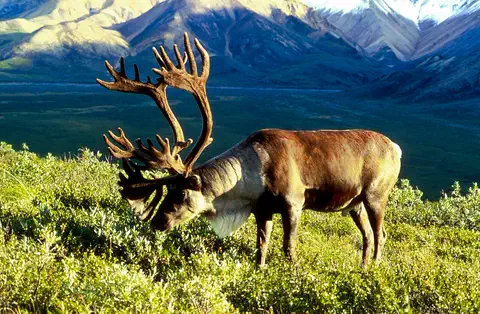
Reindeer, called caribou in North America, are deer of the Arctic tundra and northern forests. They are the only deer in which females grow antlers too. Some herds walk thousands of kilometers a year, and people in northern Europe and Asia have herded reindeer for a very long time.
-
 Watch
Animal
Red deer
The red deer is one of the largest deer in the world. It lives in forests, hills and moors across Europe and into western Asia and North Africa. Males, called stags, grow huge branching antlers every year and roar to win mates in autumn.
-
 Watch
Animal
White-tailed deer
White-tailed deer live in forests, fields and even towns from Canada down to South America. They are named for the white underside of the tail, which they hold up like a flag when they run. Males grow new antlers every year.
-
 Watch
3D
Animal
Gray wolf
The gray wolf is the largest member of the dog family and the wild ancestor of pet dogs. Wolves live in family packs that hunt big animals like elk and moose together, and their howls can carry about 10 kilometers. After being wiped out in many places, wolves are coming back in parts of North America and Europe.
-
 Watch
3D
Animal
American bison
The American bison is the largest land animal in North America. Once tens of millions roamed the Great Plains, but by the 1890s fewer than a thousand were left. Careful protection, starting with a tiny herd in Yellowstone, brought bison back.
-
Watch
Country
Sweden
Sweden is a country in northern Europe on the Scandinavian Peninsula. It stretches about 1,600 kilometers from north to south, with forests, many lakes and a rocky coast full of islands. About 10.6 million people live there, and its capital is Stockholm.
-
Watch
Natural wonder
Denali
Denali is North America's highest mountain, 6,190 meters (20,310 feet) tall, in the Alaska Range. It rises about 5.6 kilometers from its base, more than Mount Everest does from its own high base. Huge glaciers spread from it in every direction, and the national park around it is home to grizzly bears, moose, caribou, Dall sheep and wolves.
-
Watch
Natural wonder
Banff National Park
Banff National Park lies in the Rocky Mountains of Alberta, in western Canada. It began in 1885 around a group of hot springs, which makes it Canada's first national park. Today it covers 6,641 square kilometers of jagged peaks, glaciers, forests and turquoise lakes such as Lake Louise and Moraine Lake, and it is home to grizzly bears, wolves, elk and many more animals.
For parents & teachers
What children will learn
- Describe the moose's body features, including antlers, muzzle, bell and long legs.
- Explain how moose feed differently in summer and winter.
- Describe the antler cycle and the moose life cycle.
- Explain why people should watch moose from a distance and how moose are managed.
Recommended ages: 3 to 17 · About 15 minutes
Talk about it
- Why might a moose eat water plants in summer but twigs in winter?
- Growing huge antlers every year takes a lot of energy. Why might bulls drop them in winter?
- How could roads be made safer for both moose and drivers?
Try at home or in class
- Measure 2 meters up a wall with tape to see how tall a big moose is at its shoulder.
- Trace both of your hands with fingers spread on paper: this is roughly how flat, palm-shaped moose antlers look.
Key vocabulary: antlers, velvet, browser, bell, rut, boreal forest
Where these facts come from
- The IUCN Red List of Threatened Species , International Union for Conservation of Nature (IUCN terms of use (no redistribution of Red List data or range maps))
- GBIF Backbone Taxonomy and GBIF Occurrence Search , Global Biodiversity Information Facility (CC0 1.0 (backbone); occurrence counts are facts derived from records under CC0, CC BY and CC BY-NC)
- Moose , Alaska Department of Fish and Game
- Moose , Rocky Mountain National Park, U.S. National Park Service
- Moose , Encyclopaedia Britannica
- Alces alces (Moose), 2016 global assessment , IUCN Red List
- Wikidata , Wikimedia Foundation (CC0 1.0)
- Wikimedia Commons , Wikimedia Foundation (Per file: Public domain, CC0, CC BY or CC BY-SA only (credited on each page))
Checked, not yet human-reviewed. Last updated October 24, 2026. Spotted a mistake? Tell us.