
Animal
Lesser flamingo
The lesser flamingo is a pink bird with long legs and a long neck. It lives in huge flocks on salty lakes in Africa and India.
The lesser flamingo is the smallest flamingo. Millions live on salty, soda-rich lakes in Africa and India, where they sweep their upside-down bills through the water to filter out tiny algae, which help give them their pink color.
Phoeniconaias minor is an obligate filter feeder that strains microscopic blue-green algae and diatoms from alkaline and saline lakes. With about 2.2 to 3.2 million birds it is abundant, but it depends on very few breeding sites, above all Tanzania's Lake Natron, and is listed as Near Threatened.
Photo: DickDaniels, CC BY-SA 3.0, via Wikimedia Commons
Meet the lesser flamingo
The lesser flamingo is a pink bird with very long legs.
It has a long, bendy neck and a dark red beak that bends in the middle. Lesser flamingos live together in huge groups called flocks.
The lesser flamingo is the smallest of the world's six flamingo species, standing about 80 to 90 centimeters tall and weighing about 1.5 to 2 kilograms. It is pink, with long legs, a long neck and a dark red bill that bends sharply downward.
It may be the smallest, but there are lots of them. Millions of lesser flamingos live in Africa and India, and they gather in flocks so big that the San Diego Zoo calls them the largest flocks known among birds today.
Phoeniconaias minor is the smallest flamingo (San Diego Zoo: 80 to 90 centimeters tall, 1.5 to 2 kilograms, males larger than females). The IUCN estimates the global population at about 2.22 to 3.24 million birds.
Its life is built around a single food source: microscopic algae that grow in hot, alkaline and salty lakes where few other animals can live. The IUCN notes that the species depends on a network of suitable lakes, and that only a few sites are used for breeding.
Quick facts
- Group
- Bird
- Height
- 0.8 to 0.9 m
- Wingspan
- 0.95 to 1 m
- Weight
- 1.5 to 2 kg
Where it lives
Lesser flamingos live in Africa and India.
They live on very salty lakes. The water is too salty for most animals, but it is full of the tiny food flamingos eat.
Most lesser flamingos live on the soda lakes of East Africa's Great Rift Valley, in Kenya, Tanzania and Ethiopia. These lakes are very salty and alkaline, a bit like baking soda dissolved in water.
Smaller groups live in southern Africa (such as Botswana, Namibia and South Africa), in West Africa and in India and Pakistan. Lesser flamingos travel a lot, moving from lake to lake as water levels and food change, and they can turn up in almost every country south of the Sahara.
The IUCN reports the largest population, about 1.5 to 2.5 million birds, on the alkaline-saline lakes of East Africa's Great Rift Valley. Smaller populations occur in north-western India's Rann of Kachchh (about 390,000), southern Africa (55,000 to 65,000) and West Africa (15,000 to 25,000).
The species is itinerant, making long movements in response to conditions, including between Africa and India, so it depends on a network of suitable lakes rather than one site. Outside the breeding season it occurs in almost every sub-Saharan country and from the Arabian Peninsula to Pakistan; Asian and southern African birds often move from inland breeding sites to coastal wetlands.
Continents
Its habitat

Where can you find this animal?
- Lives here naturally · Countries and seas named by a scientific source
- Visits for part of the year · Countries and seas named by a scientific source
- Sightings recorded · Records of wild sightings (GBIF)
Lives here naturally · Countries and seas named by a scientific source
Salty, alkaline lakes and salt pans: the Rift Valley lakes of Kenya, Tanzania and Ethiopia, the main breeding area, plus southern Africa and north-western India. Flamingos live only at suitable lakes in each country.
Places: Botswana, India, Namibia, South Africa, Tanzania, Kenya and Ethiopia.
Source: iucn-red-list · checked October 2026
Visits for part of the year · Countries and seas named by a scientific source
Countries where the IUCN lists lesser flamingos outside the breeding season, as they wander between lakes and coasts.
Places: Angola, Burundi, Cameroon, DR Congo, Djibouti, Eritrea, Gabon, Gambia and 14 more places.
Source: iucn-red-list · checked October 2026
Sightings recorded · Records of wild sightings (GBIF)
Counts of GBIF records of wild observations (human and machine) and preserved specimens. Records include introduced populations, vagrants, escaped or released animals and misidentifications, so a country with records is not necessarily part of the native range.
Wild sightings have been recorded in South Africa, India, Kenya, Tanzania, Namibia, Spain, Uganda, France and 46 more places.
Source: gbif · checked October 2026
Range maps show where scientists say an animal lives, often country by country. An animal may live in only part of a country shown, and sightings records can include animals that wandered far from home.
What it eats
Lesser flamingos eat tiny green and blue food called algae.
They hold their beak upside down in the water. Their beak works like a sieve and catches the food.
Lesser flamingos eat almost nothing but tiny algae, so small you would need a microscope to see them, especially a blue-green kind called spirulina. These algae grow in salty, alkaline lakes.
To feed, a flamingo holds its bill upside down in the water, sucks water in and pumps it out through the sides. Inside the bill are rows of tiny plates called lamellae, up to about 10,000 of them, that act like filters and trap the algae. The pink color of flamingos comes from natural pigments in the food they eat.
The diet consists almost entirely of microscopic blue-green algae (cyanobacteria such as Spirulina, Oscillatoria and Lyngbya) and bottom-living diatoms found only in alkaline lakes, salt pans and saline lagoons; small invertebrates such as rotifers are taken to a lesser extent (IUCN). The bill holds up to about 10,000 microscopic lamellae.
Lesser flamingos feed mostly at night and in the early morning, when the water surface is calm, often swimming and filtering near the surface. When needed, they form large, dense feeding flocks that calm the water at the center. The San Diego Zoo notes that the smaller flamingos have deeper bills with stiff lamellae for filtering very fine particles, and that carotenoid pigments in the food give flamingos their color.
Did you know?
Flamingo parents can turn pale while feeding their chick.
Feeding chicks crop milk drains color from flamingo parents, so they can turn pale pink or even white for a while.
Producing pigment-rich crop milk depletes the parents' carotenoids, and their plumage can fade until the chick feeds itself (San Diego Zoo).
An amazing body
A flamingo's legs are very long. They help it walk in the water.
Its beak is bent like an elbow. Inside are tiny combs that catch food.
A lesser flamingo's long legs let it wade into the water, and its long neck lets it reach down to feed. Its dark red bill is bent in the middle and is held upside down when feeding, with tiny comb-like plates inside to filter food.
Its feathers are pink because of natural pigments in its food. In flight, flamingos stretch their long necks out in front and trail their legs behind, showing black and pink wing feathers.
The lesser flamingo's deep, sharply angled bill, held inverted while feeding, works as a pump-and-filter system lined with up to about 10,000 lamellae, which in the smaller flamingo species are stiff enough to strain very fine particles (IUCN; San Diego Zoo). Long legs allow wading, and a long, flexible neck brings the bill to the water surface.
Pink plumage comes from carotenoid pigments in algae. Flamingos need a running start to take off, usually into the wind, and fly with neck outstretched and legs trailing, showing black and pink to red wing feathers (San Diego Zoo).
Growing up
Flamingos build nests out of mud, like little towers.
The mother lays one egg on top. The fluffy gray chick drinks a special milk made by its parents.
Lesser flamingos nest in huge colonies of many thousands of pairs, on mudflats far out in remote salty lakes, where floods keep land predators away. Each pair builds a mound of mud and lays one egg on top.
Flamingo chicks hatch with gray fluffy feathers. Both parents feed their chick a special 'crop milk' made inside their bodies, and the chicks later gather in big groups called creches. Young flamingos are ready to breed at about 3 to 5 years old.
Breeding is irregular and depends on rains: lesser flamingos nest on large, undisturbed alkaline or saline lakes, salt pans or coastal lagoons after flooding isolates remote sites from land predators and provides soft mud for nests, often in colonies of many thousands of pairs mixed with greater flamingos (IUCN). Individual adults often do not breed every year.
Flamingos in general lay a single egg on a mud mound, incubate it for 27 to 31 days and feed chicks crop milk, a secretion from the upper digestive tract, which both parents and even foster adults can provide. Chicks leave the mound after 5 to 12 days, join creches and mature at 3 to 5 years (San Diego Zoo).
Life in a giant flock
Lesser flamingos love company.
They feed, fly and nest together in giant flocks. Sometimes there are more than a million in one place!
Lesser flamingos are very social. They do almost everything in groups, and in East Africa more than a million may gather together.
Flamingo flocks perform group displays, such as head-flagging, when they stretch their necks up and turn their heads from side to side, and marching, when a tightly packed group walks together and suddenly changes direction. These displays help many birds get ready to nest at the same time.
Lesser flamingos are highly gregarious and nomadic, moving between lakes as water and food conditions change. Flamingo flocks perform ritualized group displays such as head-flagging, wing salutes and marching, which the San Diego Zoo explains help synchronize breeding across the flock.
The IUCN notes that large, dense feeding flocks can calm the water at their center, improving feeding conditions, and that some researchers have suggested breeding failures, possibly lasting 10 or more years, may not affect overall population dynamics.
Did you know?
A flamingo eats with its head upside down.
Flamingos feed with their bills held upside down, pumping water through tiny filters to catch food.
Flamingos suck water in at the bill tip and pump it out at the sides through lamellae; the lesser flamingo's bill holds up to about 10,000 of them.
Protecting flamingo lakes
Lesser flamingos need their salty lakes to stay safe.
There are only a few places where they make their nests. People are working to protect those lakes.
The lesser flamingo is listed as Near Threatened because its numbers seem to be falling. Even though there are millions of them, they nest in only a few places. The most important is Lake Natron in Tanzania.
Plans to mine soda ash and build power projects at Lake Natron could harm the nesting colony. When the IUCN last checked, in 2018, these plans were on hold. Other problems include pollution, changes to the land around lakes and flamingos flying into power lines. People help by protecting breeding lakes and even building nesting islands.
The IUCN's 2018 assessment lists the species as Near Threatened (A2c+3c+4c) with a decreasing trend, citing habitat degradation and disturbance. Only three main breeding sites exist in Africa and one in India. Proposed soda-ash mining and hydroelectric schemes at Lake Natron, the most important colony, were on hold but had not been withdrawn (the IUCN cites a 2008 report and still called them on hold in 2018); the IUCN says such development would be disastrous and could justify a higher threat category.
Other threats include land reclamation, water pollution and collisions with power lines. Conservation actions include CITES and CMS Appendix II listings, an international action plan (2008), a flamingo sanctuary at Botswana's Makgadikgadi salt pans (2009) and successful breeding on an artificial island at Kamfers Dam, South Africa.
IUCN Red List
How is the lesser flamingo doing in the wild?
- Least Concern
- Near Threatened (this animal)
- Vulnerable
- Endangered
- Critically Endangered
- Extinct in the Wild
- Extinct
Near Threatened
Not at risk yet, but it could be soon.
See the IUCN Red List assessment · The IUCN Red List of Threatened Species 2021.3
Amazing facts
-
A flamingo eats with its head upside down.
Flamingos feed with their bills held upside down, pumping water through tiny filters to catch food.
Flamingos suck water in at the bill tip and pump it out at the sides through lamellae; the lesser flamingo's bill holds up to about 10,000 of them.
-
Flamingo babies are gray, not pink.
Flamingo chicks hatch with gray fluffy feathers, and their parents feed them a special milk from their throats.
Chicks hatch in gray down and are fed crop milk, a secretion of the upper digestive tract that flamingos share with pigeons and some penguins (San Diego Zoo).
-
More than a million lesser flamingos can be together in one place.
In East Africa, more than one million lesser flamingos may gather together, which the San Diego Zoo calls the largest flock known among birds today.
Flocks of over a million lesser flamingos in East Africa are described by the San Diego Zoo as the largest known among living birds.
-
Flamingo parents can turn pale while feeding their chick.
Feeding chicks crop milk drains color from flamingo parents, so they can turn pale pink or even white for a while.
Producing pigment-rich crop milk depletes the parents' carotenoids, and their plumage can fade until the chick feeds itself (San Diego Zoo).
Words to know
- filter feeder
- an animal that strains tiny food out of water
- algae
- tiny plant-like living things that grow in water
- alkaline
- the opposite of acidic, like water with baking soda in it
- flock
- a large group of birds
- creche
- a group of young birds looked after together
- lamellae
- tiny comb-like plates in a flamingo's bill that filter food
Discovery challenge
-
What does a lesser flamingo eat?
What is the main food of lesser flamingos?
What makes up almost all of the lesser flamingo's diet?
- Tiny algae from salty lakes
- Big fish
- Seeds and nuts
Show the answer
Tiny algae from salty lakes
They eat tiny algae that grow in salty water.
They filter tiny algae, especially blue-green spirulina, from salty, alkaline lakes.
Microscopic blue-green algae such as Spirulina, plus bottom-living diatoms, with a few small invertebrates.
-
How does a flamingo hold its beak to eat?
How does a flamingo hold its bill when it feeds?
In what position is the flamingo's bill held during filter feeding?
- Upside down in the water
- Pointing at the sky
- Tucked under its wing
Show the answer
Upside down in the water
It holds its beak upside down in the water.
The bill is held upside down, and water is pumped through tiny filters inside.
The bill is inverted; water is drawn in and pumped out through the lamellae.
-
Why are flamingos pink?
What gives flamingos their pink color?
Where does the pink coloring of flamingo feathers come from?
- Pink paint
- Natural pigments in their food
- Sunburn
Show the answer
Natural pigments in their food
Their food has pink and orange color in it.
Natural pigments called carotenoids in the algae they eat turn their feathers pink.
Carotenoid pigments obtained from algae and other food color the plumage.
-
Which lake is very important for lesser flamingo nests?
Which lake is the most important nesting place for lesser flamingos?
Which lake holds the lesser flamingo's most important breeding colony?
- Lake Natron in Tanzania
- Lake Superior in North America
- Lake Geneva in Switzerland
Show the answer
Lake Natron in Tanzania
Lake Natron in Tanzania, in Africa.
Lake Natron in Tanzania is the most important breeding site, so protecting it matters a lot.
Lake Natron, where soda-ash mining and hydroelectric proposals were on hold, but not withdrawn, when the IUCN last assessed the species.
Places where you might see it
-
 Watch
 Country
Tanzania
Tanzania is a country in East Africa, just south of the Equator, on the Indian Ocean. It has Mount Kilimanjaro, Africa's highest mountain, deep lakes in the East African Rift, and the Serengeti, where huge herds of wildebeest travel each year.
-
 Watch
 Country
Kenya
Kenya is a country in East Africa, crossed by the equator. It has the snow-capped Mount Kenya, the deep Great Rift Valley, Lake Victoria and a long Indian Ocean coast, and about 54 million people live there, many of them speaking Swahili.
-
 Watch
 Country
India
India is a huge country in South Asia, shaped like a big triangle pointing into the Indian Ocean. The Himalayas rise along its north, heavy monsoon rains arrive every summer, and about 1.46 billion people (2025) live there, speaking hundreds of languages.
-
 Watch
Natural wonder
Great Rift Valley
The Great Rift Valley is a huge valley that runs through East Africa, where the continent is slowly being stretched and pulled apart. Long, steep cliffs line its sides, its floor holds lakes full of flamingos, and giant volcanoes such as Kilimanjaro and Mount Kenya rose beside it. Scientists think a new ocean may one day open here.
Explore next
-
 Watch
Animal
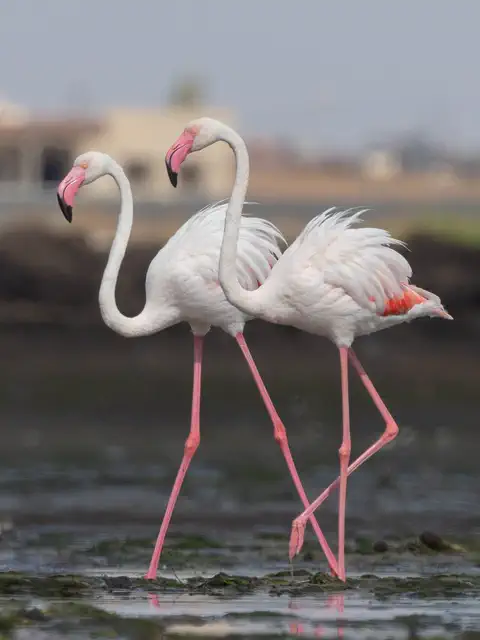
Greater flamingo
The greater flamingo is the tallest and heaviest flamingo, standing up to about 1.45 meters tall. It lives in salty lagoons and lakes across Africa, southern Europe, the Middle East and South Asia. It feeds by holding its bent bill upside down in the water and filtering out tiny animals, and it gets its pink color from what it eats.
-
 Watch
Animal
American flamingo
The American flamingo is a tall, bright pink wading bird of the Caribbean. It gets its color from pigments in the tiny water animals and algae it eats, and it feeds by filtering water through its bent bill with its head upside down. Flamingos live and nest in huge, noisy groups.
-
Watch
Country
Tanzania
Tanzania is a country in East Africa, just south of the Equator, on the Indian Ocean. It has Mount Kilimanjaro, Africa's highest mountain, deep lakes in the East African Rift, and the Serengeti, where huge herds of wildebeest travel each year.
-
Watch
Country
Kenya
Kenya is a country in East Africa, crossed by the equator. It has the snow-capped Mount Kenya, the deep Great Rift Valley, Lake Victoria and a long Indian Ocean coast, and about 54 million people live there, many of them speaking Swahili.
-
Watch
Country
India
India is a huge country in South Asia, shaped like a big triangle pointing into the Indian Ocean. The Himalayas rise along its north, heavy monsoon rains arrive every summer, and about 1.46 billion people (2025) live there, speaking hundreds of languages.
-
 Watch
Animal
African fish eagle
The African fish eagle is a big eagle of Africa's lakes, rivers and coasts, with a white head, chest and tail and a chestnut-brown body. It snatches fish from the surface of the water, and its loud, ringing call is one of the best-known sounds of Africa.
-
Watch
Natural wonder
Great Rift Valley
The Great Rift Valley is a huge valley that runs through East Africa, where the continent is slowly being stretched and pulled apart. Long, steep cliffs line its sides, its floor holds lakes full of flamingos, and giant volcanoes such as Kilimanjaro and Mount Kenya rose beside it. Scientists think a new ocean may one day open here.
-
 Watch
Animal
Adélie penguin
The Adélie penguin is a medium-sized penguin, about 70 centimeters tall, with a black back, a white front and a bright white ring around each eye. It breeds in summer on rocky, ice-free ground all around Antarctica, building nests of pebbles, and spends the winter far out at sea among the pack ice.
For parents & teachers
What children will learn
- Explain how a flamingo filter feeds and why its bill is shaped as it is.
- Describe why lesser flamingos live on salty, alkaline lakes.
- Locate the Great Rift Valley and India on a map.
- Understand why an abundant species can still be at risk if it breeds in few places.
Recommended ages: 3 to 17 · About 15 minutes
Talk about it
- Why might living where few other animals can survive be both helpful and risky?
- How could a mining project far away from cities affect birds?
- Why do you think flamingos nest far out on mudflats in the middle of lakes?
Try at home or in class
- Mix a little rice into water and pour it through a sieve or a comb-like fork: see how filtering separates food from water.
- Measure 85 centimeters up a wall and stand beside it to compare your height with a lesser flamingo.
Key vocabulary: filter feeder, algae, alkaline, flock, creche, lamellae
Where these facts come from
- The IUCN Red List of Threatened Species , International Union for Conservation of Nature (IUCN terms of use (no redistribution of Red List data or range maps))
- GBIF Backbone Taxonomy and GBIF Occurrence Search , Global Biodiversity Information Facility (CC0 1.0 (backbone); occurrence counts are facts derived from records under CC0, CC BY and CC BY-NC)
- Wikidata , Wikimedia Foundation (CC0 1.0)
- Phoeniconaias minor, global Red List assessment 2018 , IUCN Red List of Threatened Species
- Flamingo , San Diego Zoo Wildlife Alliance
- Wikimedia Commons , Wikimedia Foundation (Per file: Public domain, CC0, CC BY or CC BY-SA only (credited on each page))
Checked, not yet human-reviewed. Last updated October 28, 2026. Spotted a mistake? Tell us.