
Animal
King cobra
The king cobra is a very long snake from the forests of Asia. It eats other snakes. It is shy and likes to slip away from people.
The king cobra is the largest venomous snake in the world, growing to more than 5 meters long. It lives in forests and near streams in South and Southeast Asia, eats mainly other snakes, and the mother builds a nest of leaves and guards her eggs.
Ophiophagus hannah, the king cobra, is the world's largest venomous snake, a specialist predator of other snakes found from India to southern China, Indonesia and the Philippines. The IUCN lists it as Vulnerable. A 2024 study proposed splitting it into four species, and this page covers the king cobra in the traditional, broad sense.
Photo: Max Tibby, CC0 1.0, via Wikimedia Commons
Meet the king cobra
The king cobra is a very long snake.
It can be green, brown, yellow or black, with pale stripes. When it feels bothered, it lifts up its head and spreads its neck into a hood.
The king cobra is the world's largest venomous snake. An average adult is 3 to 3.6 meters long, about as long as two grown-ups lying head to toe, and the biggest reach about 5.4 meters.
Adults are yellow, green, brown or black, usually with pale yellow or white bands across the body, and the throat is cream or light yellow. Young king cobras look very different: they are jet black with bright yellow or white stripes. The name comes from its diet, because a king cobra can catch and eat other cobras.
Ophiophagus hannah is the largest venomous snake: the Smithsonian's National Zoo gives an average length of 3 to 3.6 meters and a maximum of about 5.4 meters, and a 2024 report gives up to 5.6 meters. Adults are yellow, green, brown or black with yellowish or white crossbars or chevrons and a pale yellow or cream throat; juveniles are jet black with yellow or white crossbars on the body and tail and four on the head.
The fangs are short, about 8 to 10 millimeters, and fixed to the front of the upper jaw. Being fixed, they must be short enough to fit inside the closed mouth, and their backward angle helps move prey toward the throat.
Quick facts
- Group
- Reptile
- Length
- 3 to 3.6 m
- Lifespan in the wild
- 20 years
Where it lives
King cobras live in warm forests in Asia.
They like to stay near streams. Sometimes they climb up into trees and bushes.
King cobras live in South and Southeast Asia, from northern India east to southern China and south through the Malay Peninsula to Indonesia and the Philippines.
They like forests with streams, bamboo thickets, mangrove swamps and farmland next to forest. They often stay near streams, where the temperature and dampness stay fairly steady. They are also good climbers and spend nearly a quarter of their time up in trees or bushes.
The traditional species ranges from northern India east to southern China, including Hong Kong and Hainan, and south through the Malay Peninsula to western Indonesia and the Philippines; the IUCN's 2011 assessment lists it in 16 countries and territories, including Hong Kong and Singapore.
It prefers streams in dense or open forest, bamboo thickets, nearby agricultural land and dense mangrove swamps, often staying near streams where temperature and humidity are relatively constant, and spends almost a quarter of its time in trees or bushes. Under the proposed 2024 split, the northern king cobra (O. hannah in the strict sense) covers northern and eastern India, the Andaman Islands, Indo-Burma and Indo-China south to central Thailand; the Sunda king cobra (O. bungarus) the Malay Peninsula, the Greater Sunda Islands and parts of the southern Philippines; and two newly described species the Western Ghats of south-western India (O. kaalinga) and the island of Luzon (O. salvatana).
Continent

Where can you find this animal?
- Lives here naturally · Countries and seas named by a scientific source
- Sightings recorded · Records of wild sightings (GBIF)
Lives here naturally · Countries and seas named by a scientific source
Forests, streams, bamboo thickets and mangroves from northern India and Nepal east to southern China and south to Indonesia and the Philippines. King cobras live only in parts of each country shown.
Places: Bangladesh, Bhutan, Brunei, Cambodia, China, India, Indonesia, Laos and 6 more places.
Source: iucn-red-list · checked October 2026
Sightings recorded · Records of wild sightings (GBIF)
Counts of GBIF records of wild observations (human and machine) and preserved specimens. Records include introduced populations, vagrants, escaped or released animals and misidentifications, so a country with records is not necessarily part of the native range.
Wild sightings have been recorded in India, Thailand, China, Indonesia, Vietnam, Malaysia, Philippines, Nepal and 10 more places.
Source: gbif · checked October 2026
Range maps show where scientists say an animal lives, often country by country. An animal may live in only part of a country shown, and sightings records can include animals that wandered far from home.
A snake that eats snakes
King cobras eat other snakes.
They hunt big snakes such as rat snakes and pythons. They even eat other cobras.
King cobras mostly eat cold-blooded animals, especially other snakes. Their usual meals are large, harmless snakes such as rat snakes and pythons up to about 3 meters long, but they also eat venomous snakes, including other cobras and kraits.
Some king cobras are very fussy and will eat only one kind of snake. A king cobra's venom quickly stops its prey from moving, and then the snake swallows its meal.
The diet is normally restricted to ectotherms, particularly other snakes: mostly larger nonvenomous species such as Asian rat snakes, dhamans and pythons up to about 3 meters, as well as Indian cobras, kraits and occasionally small king cobras. Some individuals specialize on a single snake species and refuse other prey.
Venom from glands attached to the fangs is forced through the hollow fangs by a small muscle. Its neurotoxins act within minutes on the prey's nervous system, especially the signals that control breathing, and other components begin digestion. The backward-angled fangs help work the prey down the throat.
Did you know?
King cobras are good climbers.
King cobras spend almost a quarter of their time up in trees or bushes.
Despite their size, king cobras are partly arboreal, spending nearly a quarter of their time in trees or shrubs.
Hood, eyes and growl
A king cobra can stand up tall.
It lifts the front of its body high off the ground. It can spread a hood on its neck. It has good eyes and a low, growly hiss.
When a king cobra feels threatened, it lifts the front part of its body as high as 1 to 1.2 meters off the ground, flattens its neck ribs into a hood and hisses. Its hiss is much deeper than most snakes', more like a dog's growl.
It also stands up tall without spreading its hood, just to see over bushes and long grass. Its eyesight is better than most snakes': it can spot a moving person nearly 100 meters away.
In a threat display the snake raises the front of its body about 1 to 1.2 meters, spreads the neck ribs into a hood and hisses; it can even move forward in this posture. It also rears up without the hood to see over vegetation. The hiss is unusually low, produced through tiny openings in the trachea and resonated by the lung.
Vision is better than in most snakes, enough to detect a moving person almost 100 meters away. Banding patterns vary across the range, and the 2024 study used these differences, along with DNA, to separate regional king cobras into proposed species.
A snake that builds a nest
A mother king cobra builds a nest of leaves.
She lays her eggs inside and stays on top to guard them. The father stays close by. The babies hatch in the fall.
King cobras breed from about January to April. Then the female pushes leaves and branches into a pile to make a nest. She lays 21 to 40 white, leathery eggs inside.
As the leaves rot, they give off warmth that keeps the eggs cozy. The mother rests on top of the nest to guard it, and the father stays nearby. The eggs hatch in the fall, and the young are jet black with bright bands.
Breeding usually occurs from January through April. King cobras are oviparous: the female gathers leaves and branches into a nest pile and lays 21 to 40 white, leathery eggs, which are incubated by heat from decomposition. She stays on top of the nest to guard it while the male remains nearby, and the National Zoo notes that pairs may possibly mate for life.
Incubation runs through spring and summer, and hatching takes place in the fall. Young king cobras are jet black with yellow or white crossbars. In the wild, king cobras can live about 20 years.
Shy, not fierce
King cobras are shy.
They would rather slip away than meet people. If you ever see a snake, stay well back, leave it alone and tell a grown-up.
King cobras have a fierce reputation, but they are actually cautious snakes that usually escape if they can. They defend themselves only when they are cornered or bothered, or when a mother is guarding her nest. In fact, they are more careful than many smaller snakes.
Rival male king cobras sometimes wrestle. It is more like a pushing contest than a fight: the first snake to push the other's head down to the ground wins.
Despite its reputation, the king cobra prefers to escape unless provoked and is more cautious than many smaller snakes; it defends itself when cornered or when guarding eggs, and nesting females are the exception that may defend the nest without being provoked. The National Zoo estimates it causes fewer than five human deaths a year across its range, about one-fifth of those caused by rattlesnakes in North America.
Rival males settle contests with ritual combat in which each tries to press the other's head to the ground. The zoo lists persecution by people among the main threats to king cobras, and its advice is simple: if you see a snake in the wild, leave it alone and encourage others to do the same.
Did you know?
Some king cobras eat only one kind of snake.
Some king cobras become so fussy that they will eat only one kind of snake and refuse everything else.
Individual dietary specialization is known: some king cobras accept a single prey snake species and refuse others.
Protecting king cobras
King cobras are in danger in many places.
The forests where they live are being cut down. People can help by leaving snakes alone and protecting forests.
King cobras are listed as Vulnerable. Their forests are being cut down or turned into farms, and people hunt and harm them.
Snakes are useful neighbors: king cobras eat other snakes, and many snakes keep the number of rats and mice down. Learning about snakes, protecting forests and leaving wild snakes alone all help. Knowing there may be four kinds of king cobra also helps scientists protect the rare ones.
The IUCN assessed the king cobra as Vulnerable in 2011 (criteria A2acd, a population reduction), with a decreasing trend; the assessment lists agriculture, logging and hunting as threats, records trade for pets, food, medicine and skins, and is flagged as needing an update. The National Zoo names habitat destruction and persecution by people as the main threats.
The 2024 taxonomic revision matters for conservation. Study co-author Wolfgang Wüster has pointed out that the Western Ghats and Luzon king cobras are restricted to relatively small areas that have lost a great deal of forest, so their needs must be considered separately from the widespread northern and Sunda species. The split could also lead to region-specific antivenoms; in 2024 only one king cobra-specific antivenom was produced, in Thailand.
IUCN Red List
How is the king cobra doing in the wild?
- Least Concern
- Near Threatened
- Vulnerable (this animal)
- Endangered
- Critically Endangered
- Extinct in the Wild
- Extinct
Vulnerable
At high risk of disappearing from the wild.
See the IUCN Red List assessment · The IUCN Red List of Threatened Species 2022.2
Amazing facts
-
A king cobra's hiss sounds like a dog's growl.
The king cobra's hiss is much deeper than most snakes', more like a growl.
The low hiss is produced through tiny openings in the trachea and resonated by the lung.
-
King cobras are good climbers.
King cobras spend almost a quarter of their time up in trees or bushes.
Despite their size, king cobras are partly arboreal, spending nearly a quarter of their time in trees or shrubs.
-
Some king cobras eat only one kind of snake.
Some king cobras become so fussy that they will eat only one kind of snake and refuse everything else.
Individual dietary specialization is known: some king cobras accept a single prey snake species and refuse others.
-
Baby king cobras are black with bright stripes.
Young king cobras are jet black with yellow or white bands, and four bands across the head.
Juveniles are jet black with yellow or white crossbars on body and tail and four on the head.
Words to know
- venomous
- able to inject venom with a bite or sting
- fang
- a long, sharp tooth; in snakes, venom flows through it
- hood
- the wide flap a cobra makes by spreading the ribs of its neck
- species
- one particular kind of living thing
- cold-blooded
- getting body warmth from the surroundings, like reptiles
- vulnerable
- at risk of becoming endangered
Discovery challenge
-
What do king cobras eat most?
What is the king cobra's main food?
Which prey dominates the king cobra's diet?
- Leaves
- Other snakes
- Fruit
Show the answer
Other snakes
They eat other snakes!
They mostly eat other snakes, such as rat snakes, pythons and even other cobras.
Other snakes, mostly large nonvenomous species, plus cobras and kraits.
-
What does a mother king cobra make for her eggs?
What does a female king cobra build?
Where does a female king cobra lay and guard her eggs?
- A nest of leaves
- A hole in a tree
- Nothing at all
Show the answer
A nest of leaves
She piles up leaves to make a nest.
She pushes leaves and branches into a pile and lays her eggs inside, then guards the nest.
In a leaf-and-branch nest pile warmed by decomposition and guarded by the female.
-
If you see a snake, what should you do?
What is the safe thing to do if you see a wild snake?
What is the safest response to finding a snake in the wild?
- Pick it up
- Poke it with a stick
- Stay well back, leave it alone and tell a grown-up
Show the answer
Stay well back, leave it alone and tell a grown-up
Stay well back and tell a grown-up.
Keep your distance and leave it alone. King cobras usually slip away if they can.
Leave it alone; king cobras prefer to escape unless they are provoked or guarding a nest.
-
How many kinds of king cobra might there be?
How many king cobra species did scientists propose in 2024?
Into how many species did the 2024 revision divide Ophiophagus hannah?
- One
- Four
- Ten
Show the answer
Four
Scientists think there may be four kinds.
Four: the northern, Sunda, Western Ghats and Luzon king cobras.
Four, based on DNA and banding differences; the split is new and still being adopted.
Places where you might see it
-
 Watch
 Country
India
India is a huge country in South Asia, shaped like a big triangle pointing into the Indian Ocean. The Himalayas rise along its north, heavy monsoon rains arrive every summer, and about 1.46 billion people (2025) live there, speaking hundreds of languages.
-
 Watch
 Country
Indonesia
Indonesia is a country of about 17,500 islands in Southeast Asia, spread across the Equator between the Indian and Pacific oceans. It has more than 100 active volcanoes, rainforests full of wildlife, and about 286 million people (2025).
-
 Watch
 Country
Cambodia
Cambodia is a country in mainland Southeast Asia, a land of wide plains and great rivers. Its Tonle Sap lake more than doubles in size every rainy season, and Angkor, with the remains of capitals built from the 800s to the 1400s, is one of the most important archaeological sites in Southeast Asia.
-
 Watch
Natural wonder
Ha Long Bay
Ha Long Bay is a bay in northeast Vietnam where more than a thousand limestone islands rise straight out of the sea. Over millions of years, water dissolved the limestone into towers and caves, and then the sea flooded in around them. Together with the nearby Cat Ba Archipelago it is a World Heritage site.
-
 Watch
 Country
Laos
Laos is a landlocked country in mainland Southeast Asia, covered mostly by forested mountains. The Mekong River runs along its western side, and most people live in villages and grow rice. Its capital, Vientiane, stands on the Mekong.
-
 Watch
 Country
Thailand
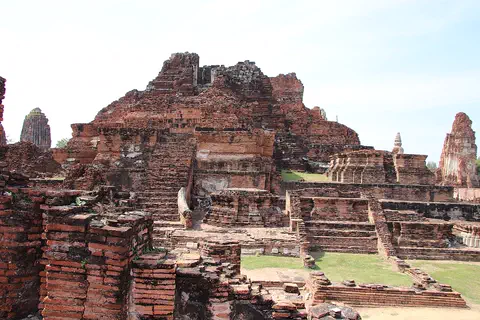
Thailand is a tropical country in the middle of mainland Southeast Asia, with forested mountains in the north, rice fields on its central plains and a long, narrow peninsula in the south. Its capital is Bangkok, and about 65.8 million people were on its civil register at the end of 2025.
Explore next
-
 Watch
Animal
Indian cobra
The Indian cobra, or spectacled cobra, lives across South Asia, from Pakistan to Sri Lanka. It raises its head and spreads a hood marked with a pattern like a pair of glasses, it eats lots of rats and mice, and it is venomous, so it is an animal to admire from far away.
-
 Watch
Animal
Black mamba
The black mamba is a long, slender, very fast snake of the savannas and rocky hills of sub-Saharan Africa. It is gray to brown, gets its name from its inky-black mouth, hunts small mammals by day, and is shy: it would almost always rather slip away from people. It is also highly venomous, so it is a snake to admire from far away.
-
 Watch
Animal
Reticulated python
The reticulated python lives in the forests, riversides and even towns of Southeast Asia. It can grow longer than any other kind of snake, it is covered in a net-like pattern, and it is such a good swimmer that it has reached many small islands across the sea.
-
Watch
Country
India
India is a huge country in South Asia, shaped like a big triangle pointing into the Indian Ocean. The Himalayas rise along its north, heavy monsoon rains arrive every summer, and about 1.46 billion people (2025) live there, speaking hundreds of languages.
-
Watch
Country
Indonesia
Indonesia is a country of about 17,500 islands in Southeast Asia, spread across the Equator between the Indian and Pacific oceans. It has more than 100 active volcanoes, rainforests full of wildlife, and about 286 million people (2025).
-
Watch
Country
Cambodia
Cambodia is a country in mainland Southeast Asia, a land of wide plains and great rivers. Its Tonle Sap lake more than doubles in size every rainy season, and Angkor, with the remains of capitals built from the 800s to the 1400s, is one of the most important archaeological sites in Southeast Asia.
-
Watch
Natural wonder
Ha Long Bay
Ha Long Bay is a bay in northeast Vietnam where more than a thousand limestone islands rise straight out of the sea. Over millions of years, water dissolved the limestone into towers and caves, and then the sea flooded in around them. Together with the nearby Cat Ba Archipelago it is a World Heritage site.
-
Watch
Country
Laos
Laos is a landlocked country in mainland Southeast Asia, covered mostly by forested mountains. The Mekong River runs along its western side, and most people live in villages and grow rice. Its capital, Vientiane, stands on the Mekong.
For parents & teachers
What children will learn
- Describe how the king cobra's body and behavior help it find and catch food, and why it eats other snakes.
- Explain that king cobras usually avoid people and how to behave safely around any wild snake.
- Describe the king cobra's unusual nest and life cycle.
- Explain how DNA and body features can show that one 'species' is really several.
Recommended ages: 3 to 17 · About 15 minutes
Talk about it
- Why might an animal with a scary reputation actually be shy?
- Why do you think scientists need DNA as well as appearance to decide whether animals are separate species?
- How can people who live near snakes stay safe without harming them?
Try at home or in class
- Lay out 3.3 meters of string to see how long an average king cobra is, then hold up the first meter to show how high one can rear.
- Make a pile of damp leaves in a box outdoors, check its temperature with your hand each day for a week, and see whether the middle feels warmer as the leaves break down.
Key vocabulary: venomous, fang, hood, species, cold-blooded, vulnerable
Where these facts come from
- The IUCN Red List of Threatened Species , International Union for Conservation of Nature (IUCN terms of use (no redistribution of Red List data or range maps))
- GBIF Backbone Taxonomy and GBIF Occurrence Search , Global Biodiversity Information Facility (CC0 1.0 (backbone); occurrence counts are facts derived from records under CC0, CC BY and CC BY-NC)
- Wikidata , Wikimedia Foundation (CC0 1.0)
- Ophiophagus hannah (King Cobra), Red List assessment 2011 , IUCN Red List of Threatened Species
- King cobra , Smithsonian's National Zoo and Conservation Biology Institute
- Four of a kind: King cobra is a quad of species, not one, study finds , Mongabay
- Taxonomic revision of the king cobra Ophiophagus hannah (Cantor, 1836) species complex, with the description of two new species (European Journal of Taxonomy 961: 1-51, 2024) , European Journal of Taxonomy
- Wikimedia Commons , Wikimedia Foundation (Per file: Public domain, CC0, CC BY or CC BY-SA only (credited on each page))
Checked, not yet human-reviewed. Last updated October 27, 2026. Spotted a mistake? Tell us.