
Animal
Okapi
The okapi has stripy legs like a zebra, but it is a cousin of the giraffe. It lives in a big rainforest in Africa.
The okapi has a velvety reddish-brown coat and zebra-like stripes on its legs, but its closest living relative is the giraffe. It lives only in the rainforests of the Democratic Republic of the Congo, where it browses leaves with a long, dark tongue. It is endangered.
Okapia johnstoni, the okapi or forest giraffe, is the giraffe's only close living relative: a shy, solitary browser of the rainforests of the Democratic Republic of the Congo, unknown to science until 1901. Habitat loss, poaching and the changing politics of Central Africa have driven its numbers down by more than half over three generations, and it is listed as Endangered.
Photo: Alan Eng from Brussels, Belgium, CC BY 2.0, via Wikimedia Commons
Meet the okapi
The okapi has a brown coat and stripy legs.
It looks a bit like a zebra. But its family is the giraffe family! It has big ears and a long, dark tongue.
With its striped legs, the okapi looks as if it might be related to a zebra. But look at its head and you will see a giraffe. The okapi is the giraffe's only close living relative, and it is sometimes called the forest giraffe.
An okapi stands about 1.5 meters tall and weighs about 200 to 350 kilograms. Females are usually bigger than males. Its legs and neck are much shorter than a giraffe's, which helps it move between the branches, trunks and roots of the rainforest.
Okapia johnstoni belongs to the Giraffidae with the giraffe; before that link was understood it was thought to belong with horses and zebras in the genus Equus because it resembles them. Adults stand about 1.5 meters, measure about 1.8 to 2.5 meters in body length and weigh about 200 to 350 kilograms, females being the larger sex.
San Diego Zoo Wildlife Alliance notes that people of the Ituri Forest knew the okapi for generations, but scientists learned of it only in 1901. Its shorter neck and legs suit a life threading through dense forest, and its long, prehensile tongue and the males' skin-covered horns, called ossicones, are features it shares with the giraffe.
Quick facts
- Group
- Mammal
- Length
- 1.8 to 2.5 m
- Height
- up to 1.5 m
- Weight
- 200 to 350 kg
Where okapis live
Okapis live in one country in Africa.
It is called the Democratic Republic of the Congo. They live deep in a big, dark, rainy forest.
Okapis live only in the rainforests of the Democratic Republic of the Congo, in Central Africa, mostly in the north and east of the country. The Ituri Forest is one of their most important homes.
These forests are tall, thick and dark, with only small patches of sunlight reaching the ground, and it rains a lot. Okapis are so shy and so well hidden that nobody knows exactly how far their range stretches.
The IUCN's 2015 assessment lists the okapi as extant only in the Democratic Republic of the Congo and extinct in Uganda, at elevations of about 450 to 1,500 meters. Animal Diversity Web places the range in the central, northern and eastern DRC, from the Maiko Forest to the Ituri Forest and west into the Rubi, Tele and Ebola river basins.
Okapis live in tall, closed-canopy rainforest and browse in the light gaps where sunlight reaches the understory; they avoid swamps. Because they are reclusive, neither local people nor researchers know exactly where the range ends. The map shades the whole country, but okapis live only in its forested north, center and east.
Continent
Did you know?
Scientists first learned about okapis more than 100 years ago.
People of the Ituri Forest knew about okapis for generations, but scientists only learned of them in 1901.
Long known to the people of the Ituri Forest, the okapi was unknown to science until 1901.
Where can you find this animal?
- Used to live here · Countries and seas named by a scientific source
- Lives here naturally · Countries and seas named by a scientific source
- Sightings recorded · Records of wild sightings (GBIF)
Used to live here · Countries and seas named by a scientific source
Uganda, where the IUCN lists the okapi as extinct.
Places: Uganda.
Source: iucn-red-list · checked October 2026
Lives here naturally · Countries and seas named by a scientific source
Rainforests of the north, center and east of the Democratic Republic of the Congo, including the Ituri Forest. Okapis live only in the forested part of the country.
Places: DR Congo.
Source: iucn-red-list · checked October 2026
Sightings recorded · Records of wild sightings (GBIF)
Counts of GBIF records of wild observations (human and machine) and preserved specimens. Records include introduced populations, vagrants, escaped or released animals and misidentifications, so a country with records is not necessarily part of the native range.
Wild sightings have been recorded in DR Congo, United States, Denmark, Germany, Congo and France.
Source: gbif · checked October 2026
Range maps show where scientists say an animal lives, often country by country. An animal may live in only part of a country shown, and sightings records can include animals that wandered far from home.
A long tongue for leaves
Okapis eat leaves, twigs and fruit.
They pull leaves off with their long tongue. Their tongue is so long it can reach their ears!
Okapis are browsers. Every day they eat about 18 to 29 kilograms of leaves, twigs, fruit and fungi, from more than 100 kinds of plants. They even eat clay, probably for the minerals in it.
An okapi uses its long, dark blue or black tongue to wrap around leaves and pull them into its mouth. The tongue is long enough to reach its own eyes and ears. Like giraffes, sheep and goats, okapis chew their cud: they bring food back up and chew it again.
Okapis are important forest browsers, taking 18 to 29 kilograms a day of leaves, twigs, fruit and fungi; the Okapi Conservation Project counts leaves of more than 100 plant species in the diet. Feeding leaves a visible "pruning line" in the foliage, and okapis also eat clay, likely for minerals.
The long, prehensile, dark blue or black tongue strips buds and young leaves from understory shrubs. As ruminants, okapis chew the cud and digest plants in a multi-chambered stomach. Like giraffes, they must splay their legs to reach the ground to drink.

Stripes, ears and velvet
An okapi's coat is soft like velvet.
Water slides off it, so the okapi stays dry. Its stripes may help a baby follow its mom through the dark forest.
An okapi's dark reddish-brown coat feels like velvet and is oily, so rain slides right off. Its rump and legs have bold white stripes, and its lower legs look like white socks.
The stripes help it hide in the patchy light of the forest, and they may help a calf follow its mother, so they are sometimes called follow-me stripes. Its big ears can turn separately, front and back, to pick up quiet sounds. Males have two short, skin-covered horns called ossicones.
The dense, velvety coat is oily and sheds water. Bold white stripes on the rump and legs offer camouflage in dappled forest light and, San Diego Zoo Wildlife Alliance suggests, may help young follow their mothers and adults find one another, hence the name follow-me stripes.
The large, upright ears rotate independently and give keen hearing, the okapi's main warning of danger in thick forest. Males have two short, skin-covered ossicones; females have hair whorls in their place. Scent glands on each foot leave a sticky, tar-like mark wherever an okapi walks.
A hidden calf
A baby okapi is called a calf.
It can stand up very soon after it is born. Its mom hides it in a safe spot. She comes back to feed it.
A mother okapi carries her calf for 14 to 16 months, then goes off alone into thick forest to give birth. The calf weighs about 14 to 30 kilograms and can stand within 30 minutes.
The mother hides her calf in a safe, secret spot and comes back to let it nurse. The calf stays hidden for about two months and grows fast, tripling its size by then. It starts tasting solid food at just three weeks old, but it does not reach full adult size until it is three years old.
Gestation lasts about 14 to 16 months (Animal Diversity Web gives 414 to 493 days, averaging 440). Mothers give birth alone in dense forest to a single calf of about 14 to 30 kilograms and 80 centimeters tall, which stands within 30 minutes and nurses within an hour.
Okapi calves are hiders: they spend about two months in a secluded nest that the mother defends, and may not pass dung for a month or two, which scientists think helps avoid leading predators to them. Calves try solid food at three weeks, triple their size by the end of the second month, are weaned between six months and a year, and reach adult size at about three years.
Shy and secret
Okapis are very shy.
They usually live alone. They walk along old forest paths. They can make sounds too low for us to hear. A mother may use them to call her baby.
Okapis are shy and usually live alone, except for mothers with calves. They are most active from the afternoon into the evening. They walk at least 0.8 kilometers a day looking for food, often along paths worn down by generations of okapis.
They leave scent marks with glands on their feet. Scientists also discovered that okapis make calls so low that people cannot hear them. A mother may use these calls to check on her calf without letting predators know where it is.
Okapis are solitary apart from females with calves, active from afternoon into evening, and travel along long-used trails; males hold home ranges that can span about 10 kilometers and can move 4 kilometers a day, keeping other males out while letting females pass.
They communicate through scent, from foot glands and, in males, urine spraying, and by voice: coughs, bleats and whistles, plus infrasonic calls discovered by San Diego Zoo Wildlife Alliance researchers. One explanation is that these very low calls let a mother keep in touch with a hidden calf without alerting predators. Leopards hunt adult okapis, and smaller wild cats can take calves.
Did you know?
A baby okapi hides for weeks.
A baby okapi may not poop for a month or two, which may help keep predators from finding it.
Calves can delay their first defecation for one to two months, which scientists think avoids signaling their location to predators.
Protecting the forest giraffe
There are fewer okapis than before.
Their forest is being cut down. Rangers and local people work to protect okapis and their forest home.
The okapi is endangered. Its numbers have fallen by more than half, because its forest is being cut down and some okapis are poached. Changes in the politics of the region have played a part too.
In 1992 a large area of the Ituri Forest, about one fifth of the okapi's habitat there, was set aside as the Okapi Wildlife Reserve. Rangers, local communities, zoos and conservation groups work together to protect it. The okapi is a national symbol of the Democratic Republic of the Congo and appears on its money.
The IUCN lists the okapi as Endangered (2015 assessment) with a decreasing population. San Diego Zoo Wildlife Alliance reports a decline of more than 50 percent over three generations, still intensifying, caused by habitat loss, poaching and the changing politics of the region. The population is hard to estimate.
The Okapi Wildlife Reserve, created in 1992 to protect about one fifth of the okapi's habitat in the Ituri Forest, is supported by zoos, conservation organizations and local communities, and ecoguards of the DRC's wildlife authority, ICCN, protect wildlife across the country. As an umbrella species, the okapi helps protect the many other animals and plants of its forest.
IUCN Red List
How is the okapi doing in the wild?
- Least Concern
- Near Threatened
- Vulnerable
- Endangered (this animal)
- Critically Endangered
- Extinct in the Wild
- Extinct
Endangered
At very high risk of disappearing from the wild.
See the IUCN Red List assessment · The IUCN Red List of Threatened Species 2022.2
Amazing facts
-
An okapi's tongue can reach its own ears.
An okapi's long, dark tongue is long enough to reach its eyes and ears.
The prehensile tongue is long enough for an okapi to reach its own eyes and ears.
-
Scientists first learned about okapis more than 100 years ago.
People of the Ituri Forest knew about okapis for generations, but scientists only learned of them in 1901.
Long known to the people of the Ituri Forest, the okapi was unknown to science until 1901.
-
A baby okapi hides for weeks.
A baby okapi may not poop for a month or two, which may help keep predators from finding it.
Calves can delay their first defecation for one to two months, which scientists think avoids signaling their location to predators.
-
The okapi is on the money in its country.
The okapi is a national symbol of the Democratic Republic of the Congo and appears on its money.
A national symbol of the DRC, the okapi features on its currency and on the emblem of ICCN ecoguards.
Words to know
- browser
- an animal that eats leaves and twigs from bushes and trees
- ossicones
- short, skin-covered horns on the heads of giraffes and male okapis
- ruminant
- an animal that brings up its food and chews it again
- prehensile
- able to wrap around and grab things
- infrasound
- sound too low for people to hear
- endangered
- at risk of disappearing from the wild
Discovery challenge
-
Which animal is the okapi's cousin?
Which animal is the okapi's closest living relative?
Which animal is the okapi's only close living relative?
- The zebra
- The giraffe
- The elephant
Show the answer
The giraffe
The giraffe is the okapi's cousin, even though the okapi has stripes like a zebra.
Despite its zebra-like legs, the okapi's closest living relative is the giraffe.
The okapi and the giraffe are the two living members of the Giraffidae.
-
Where do okapis live?
In which country do okapis live in the wild?
Which is the only country where the IUCN lists the okapi as extant?
- The Democratic Republic of the Congo
- Australia
- Canada
Show the answer
The Democratic Republic of the Congo
Okapis live in the rainforests of the Democratic Republic of the Congo.
Okapis live only in the rainforests of the Democratic Republic of the Congo, in Central Africa.
Only the DRC; the species is extinct in Uganda.
-
What does an okapi use to grab leaves?
What does an okapi use to pull leaves into its mouth?
Which structure does the okapi share with the giraffe for feeding?
- Its tail
- Its long, dark tongue
- Its front hooves
Show the answer
Its long, dark tongue
It uses its long, dark tongue.
Its long, dark blue or black tongue wraps around leaves and pulls them in.
A long, prehensile tongue, as in the giraffe, used to strip buds and leaves.
-
What does a mother okapi do with her new baby?
How does a mother okapi keep her newborn calf safe?
How does a mother okapi protect her newborn calf from predators?
- She carries it on her back
- She hides it in a secret spot
- She leaves it in a river
Show the answer
She hides it in a secret spot
She hides her baby in a safe spot and comes back to feed it.
She hides the calf in a safe, secluded spot and returns to let it nurse.
Calves are hiders, staying in a secluded nest for about two months while the mother forages and defends it.
Places where you might see it
-
 Watch
 Country
Democratic Republic of the Congo
The Democratic Republic of the Congo, or DR Congo, is the second-largest country in Africa. The mighty Congo River curves through its rainforests, volcanoes rise in the east, and its capital, Kinshasa, is a center of music, fashion and popular culture.
-
 Watch
Natural wonder
River Congo
The Congo is Africa's second-longest river, about 4,700 kilometers long. It curves in a giant arc through the rainforests of central Africa and empties into the Atlantic Ocean. Rain falls in its basin all year, so it carries a huge amount of water, and its wild lower rapids are home to about 320 kinds of fish, about 90 of them found nowhere else.
-
Watch
Natural wonder
Virunga National Park
Virunga National Park, in the east of the Democratic Republic of the Congo, was founded in 1925; the park describes itself as Africa's first national park. It stretches from active volcanoes in the south to the snowy Rwenzori Mountains in the north. About one third of the world's mountain gorillas live in its forests, along with elephants, hippos, chimpanzees and hundreds of kinds of birds.
Explore next
-
 Watch
3D
Animal
Giraffe
Giraffes are the tallest animals on Earth. A long neck and a long dark tongue let them eat leaves from treetops that other animals cannot reach, and their patchy coats help them blend into the shade of the trees.
-
Watch
Country
Democratic Republic of the Congo
The Democratic Republic of the Congo, or DR Congo, is the second-largest country in Africa. The mighty Congo River curves through its rainforests, volcanoes rise in the east, and its capital, Kinshasa, is a center of music, fashion and popular culture.
-
 Watch
Animal
African forest elephant
The African forest elephant is a separate species from the bigger bush elephant. It lives in the rainforests of central and western Africa, eats lots of fruit and spreads the seeds of forest trees in its dung. It is Critically Endangered.
-
 Watch
Animal
Eastern gorilla
The eastern gorilla is the gorilla of the misty mountains and forests of east-central Africa. It has two kinds: the shaggy mountain gorilla, whose numbers are slowly growing, and the big Grauer's gorilla, which has become much rarer.
-
 Watch
3D
Animal
Leopard
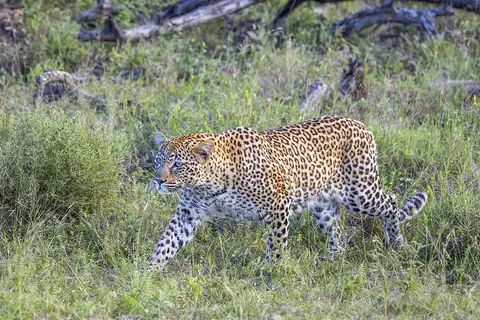
The leopard is a strong, spotted big cat and the best climber of them all. It can carry its food high up into a tree, away from lions and hyenas. Leopards live in more kinds of places than any other big cat, from deserts to rainforests, across Africa and Asia.
-
Watch
Natural wonder
River Congo
The Congo is Africa's second-longest river, about 4,700 kilometers long. It curves in a giant arc through the rainforests of central Africa and empties into the Atlantic Ocean. Rain falls in its basin all year, so it carries a huge amount of water, and its wild lower rapids are home to about 320 kinds of fish, about 90 of them found nowhere else.
-
Watch
Natural wonder
Virunga National Park
Virunga National Park, in the east of the Democratic Republic of the Congo, was founded in 1925; the park describes itself as Africa's first national park. It stretches from active volcanoes in the south to the snowy Rwenzori Mountains in the north. About one third of the world's mountain gorillas live in its forests, along with elephants, hippos, chimpanzees and hundreds of kinds of birds.
-
 Watch
Animal
Aardvark
The aardvark is a shy night digger of African savannas. It sniffs out ant and termite nests, rips them open with its spade-like claws and laps up the insects with a sticky tongue about 30 centimeters long. Its name means 'earth pig' in Afrikaans.
For parents & teachers
What children will learn
- Explain that the okapi is related to the giraffe, not the zebra, and how scientists tell.
- Describe how the okapi's body suits life in a dense rainforest.
- Describe how okapi mothers hide and care for their calves.
- Understand why the okapi is endangered and how the Okapi Wildlife Reserve helps.
Recommended ages: 3 to 17 · About 15 minutes
Talk about it
- Why might a short neck be better than a long one in a thick forest?
- How could calls too low for us to hear help a mother protect her baby?
- Why might protecting one animal, like the okapi, help many other forest animals too?
Try at home or in class
- Draw an okapi and a zebra side by side and list what is the same and what is different.
- Hide a toy in a room and leave a trail of paper footprints for someone to follow, like an okapi's scent marks.
Key vocabulary: browser, ossicones, ruminant, prehensile, infrasound, endangered
Where these facts come from
- The IUCN Red List of Threatened Species , International Union for Conservation of Nature (IUCN terms of use (no redistribution of Red List data or range maps))
- GBIF Backbone Taxonomy and GBIF Occurrence Search , Global Biodiversity Information Facility (CC0 1.0 (backbone); occurrence counts are facts derived from records under CC0, CC BY and CC BY-NC)
- Okapi , San Diego Zoo Wildlife Alliance
- Okapia johnstoni (okapi) , Animal Diversity Web, University of Michigan
- The Okapi , Okapi Conservation Project
- Okapia johnstoni (Okapi), 2015 assessment , IUCN Red List
- Wikidata , Wikimedia Foundation (CC0 1.0)
- Wikimedia Commons , Wikimedia Foundation (Per file: Public domain, CC0, CC BY or CC BY-SA only (credited on each page))
Checked, not yet human-reviewed. Last updated October 24, 2026. Spotted a mistake? Tell us.