
Animal
Red squirrel
The red squirrel is a small tree squirrel with a bushy tail. It lives in forests in Europe and Asia and hides seeds and nuts for winter.
Red squirrels are small tree squirrels from the forests of Europe and northern Asia. Their fur can be ginger, brown or even black, and in winter they grow long ear tufts. In Britain they have become rare since people brought gray squirrels from North America.
Sciurus vulgaris, the Eurasian red squirrel, ranges from Ireland and Iberia to the Pacific coast of Asia. It is a seed-eating, scatter-hoarding tree squirrel with remarkably variable coat color. Globally Least Concern (IUCN, 2023), it has declined in Britain and Italy through habitat loss and competition with the introduced gray squirrel, which carries squirrelpox.
Photo: Charles J. Sharp, CC BY-SA 4.0, via Wikimedia Commons
Meet the red squirrel
The red squirrel is a small squirrel with a big, bushy tail.
Many red squirrels have orange-red fur and a white tummy. Some are brown, and some are almost black! In winter, long tufts of fur grow on top of their ears.
The red squirrel, also called the Eurasian red squirrel, is a tree squirrel from the forests of Europe and northern Asia. Its head and body are only 18 to 24 centimeters long, and its bushy tail is almost as long as its body.
Despite its name, its fur can be ginger, dark brown or even black, and in central Europe squirrels of different colors live side by side. The squirrel in our photo, from a cemetery in Vienna, Austria, is a black one.
Sciurus vulgaris is a tree squirrel of the Palearctic. PTES gives a head-and-body length of 18 to 24 centimeters, and the Woodland Trust says the tail is almost as long as the body. Animal Diversity Web describes more variation in coat color than in almost any other Palearctic mammal: from light red to black on the head and back, with several color forms living together in much of central Europe, while British populations are red. All but fully melanistic animals have white or cream underparts.
The IUCN now treats the squirrels of Calabria in southern Italy as a separate species, Sciurus meridionalis, on morphological and genetic evidence. The hero photo shows a black red squirrel in Meidling Cemetery, Vienna.
Quick facts
- Group
- Mammal
- Length
- 0.18 to 0.24 m
- Lifespan in the wild
- up to 7 years
Forests from Ireland to the Pacific
Red squirrels live in forests in Europe and Asia.
Many like pine woods best. They spend most of their time high up in the trees.
Red squirrels live across Europe and northern Asia, from Britain, Ireland, Spain and Portugal in the west to China and the Pacific coast in the east. They live in conifer, broadleaved and mixed forests, and in some parks and gardens too.
In Britain they were once found everywhere. Now they live mainly in Scotland, in pockets of northern England and Wales, and on a few small islands. They spend most of their time in the trees and come down to the ground less often than gray squirrels.
The IUCN's 2023 global assessment describes a range from the United Kingdom, Ireland, Spain and Portugal through continental Europe, Russia, Mongolia and northwest and northeast China to the Pacific coast, from sea level to 3,100 meters in the Alps. The species is absent from southwest Iberia and most Mediterranean islands, sporadic in the Balkans, and almost gone from southeast Britain. The IUCN also records introductions in parts of Russia, the Caucasus, Ukraine, Lithuania, northern Kazakhstan and the Caribbean.
Habitats include coniferous, deciduous and mixed forest, parks, gardens and small conifer stands, and urban areas can support denser populations. PTES notes that it generally prefers large pine forests, usually over 50 hectares. In Britain, the Woodland Trust says reds now survive mainly in Scotland, pockets of northern England and Wales, and small islands off England's south coast, and across much of Ireland, where the range is also shrinking.
Continents
Its habitat

Where can you find this animal?
- Brought here by people · Countries and seas named by a scientific source
- Lives here naturally · Countries and seas named by a scientific source
- Sightings recorded · Records of wild sightings (GBIF)
Brought here by people · Countries and seas named by a scientific source
Introduced by people to Armenia, Azerbaijan, Georgia, Kazakhstan and Kyrgyzstan (IUCN). IUCN also lists an introduction in Saint Kitts and Nevis, too small to show on this map.
Places: Azerbaijan, Armenia, Georgia, Kazakhstan and Kyrgyzstan.
Source: iucn-red-list · checked October 2026
Lives here naturally · Countries and seas named by a scientific source
Conifer, broadleaved and mixed forests, parks and gardens from Ireland, Britain and Iberia across Europe, Russia, Mongolia and northern China to the Pacific coast. In Britain reds now live mainly in Scotland, pockets of northern England and Wales, and some islands.
Places: Albania, Austria, Belgium, Bosnia & Herz., Bulgaria, Belarus, China, Croatia and 34 more places.
Source: iucn-red-list · checked October 2026
Sightings recorded · Records of wild sightings (GBIF)
Counts of GBIF records of wild observations (human and machine) and preserved specimens. Records include introduced populations, vagrants, escaped or released animals and misidentifications, so a country with records is not necessarily part of the native range.
Wild sightings have been recorded in UK, France, Netherlands, Switzerland, Germany, Norway, Sweden, Denmark and 57 more places.
Source: gbif · checked October 2026
Range maps show where scientists say an animal lives, often country by country. An animal may live in only part of a country shown, and sightings records can include animals that wandered far from home.
Seeds, nuts and secret stores
Red squirrels eat seeds and nuts from trees.
Pine seeds are a favorite. In the fall they hide food in the ground to eat in winter.
Red squirrels get most of their food from trees. Pine seeds are a favorite, and they also eat hazelnuts, acorns, beechnuts, larch and spruce seeds, fruit, shoots, bark and fungi. Very rarely they take a bird's egg or chick.
In autumn they bury seeds and nuts just under the soil to eat in winter. Glands in the squirrel's cheeks put a scent on the food it carries, which helps it find its stores again. Seeds it forgets may sprout into new trees.
Animal Diversity Web lists conifer seeds, beechnuts, acorns and nuts as staples, with fungi, birds' eggs and garden plants when staples are scarce, and notes that squirrels peel conifer bark to lick the sap; the Woodland Trust adds larch and spruce seeds, fruit, shoots, bark and lichen, and calls eggs and young birds rare items. Squirrels open nuts with the power of the lower incisors and, with practice, can do it in a few seconds. Daily intake is highest in spring, about 80 grams, and lowest in winter, about 35 grams (ADW).
PTES notes that red squirrels can store little fat and spend up to four-fifths of their active time feeding. Food is cached just below the soil surface or tucked into bark, and items carried in the mouth are scent-marked by cheek glands, which helps relocation. The IUCN notes that this scatter-hoarding aids reforestation.

Built for the treetops
A red squirrel is a super climber and jumper.
Its back ankles bend a lot, so it can run up and down trees. Its front paws hold food like little hands.
Red squirrels are built for life in the trees. Double-jointed ankles let them run up and down trunks with ease, and they can jump more than 2 meters, even though their body is less than 25 centimeters long.
Their clever front paws turn and hold nuts while they eat. They have keen eyesight, hearing, smell and touch. In winter their coat grows thicker, more fur covers the soles of their feet, and long tufts grow on their ears.
The Woodland Trust credits double-jointed ankles for the red squirrel's easy movement up and down trunks and reports leaps of more than 2 meters from an animal under 25 centimeters long. PTES describes dexterous front feet used to handle food, and Animal Diversity Web notes keen vision, smell, touch and hearing.
The coat changes with the seasons: body fur is replaced twice a year and tail fur once, and the winter coat is thicker, covers more of the soles and carries longer ear tufts. A shortage of food, disease or parasites can delay the molt. According to the Woodland Trust, gray squirrels never have tufted ears, and a red squirrel's tail is always one color.
Kits in a drey
Baby red squirrels are born in a cozy nest called a drey.
At first they have no fur and cannot see. Their mother feeds them milk. After about ten weeks they find their own food.
Red squirrels can have two litters a year, one in late winter or spring and one in summer. After about 38 days, the mother gives birth to one to six babies, called kits, in a drey: a ball-shaped nest of twigs lined with moss, leaves or grass, high in a tree.
Newborns weigh only 8 to 12 grams and have no fur, and their eyes are closed. Their eyes open at about 30 days, and they leave the nest at about 45 days.
Litters are born in February to April and May to August (IUCN), about 13 weeks apart. Before mating, males follow a female in long chases through the trees, and females often mate with more than one male (Woodland Trust). Gestation is 38 to 39 days (ADW). PTES and the IUCN give litters of 1 to 6, while ADW gives 5 to 7 as usual and a range of 1 to 10.
Newborns are altricial: hairless, blind, 8 to 12 grams, with closed ear canals. Eyes open at about 30 days; the young first leave the nest and start solid food at about 45 days, and are weaned and independent at 8 to 10 weeks, though PTES notes they may stay with their mother over winter. ADW reports that fewer than one in four survives its first year and that the young mature within a year.
A busy day in the branches
Red squirrels are awake in the daytime.
They are busiest in the morning and late afternoon. They mostly live alone. They make warning calls when danger is near.
Red squirrels are active by day, busiest in the morning and late afternoon. In summer they rest in their nests around midday, but in winter they may skip that rest. They do not hibernate, though they stay in the nest during storms and strong winds.
Red squirrels mostly live alone, but their home areas can overlap a lot. They communicate with body signals, scents and sounds such as warning calls. Pine martens, birds of prey, foxes and stoats hunt them.
Activity centers on food, with peaks in the morning and late afternoon; the midday rest of spring and summer is short or skipped in winter. Red squirrels do not hibernate but stay in the nest during storms and high winds, when travel through the canopy is dangerous, and each keeps several nests to escape to when chased (ADW).
They are solitary and not territorial, with widely overlapping home ranges; males gather only in the home range of a female ready to mate. Communication uses body signals, sounds including warning calls, and chemical cues, with touch within families. Predators named by the Woodland Trust and PTES include pine martens, birds of prey such as goshawks and some owls, foxes, stoats, polecats and wildcats; ADW adds that climbing snakes may take young in the nest.
Did you know?
Red squirrels eat the most food in spring.
A red squirrel eats about 80 grams of food a day in spring but only about 35 grams a day in winter.
ADW gives daily intake of about 80 grams in spring and 35 grams in winter, the seasonal low.
Reds and grays
There are many red squirrels in Europe and Asia.
In Britain, gray squirrels came from far away. They make life hard for red squirrels. People help red squirrels by caring for their woods.
Worldwide, the IUCN lists the red squirrel as Least Concern, because it lives across such a huge area. But in some places, such as Britain and Italy, it has declined a lot.
In Britain, people brought gray squirrels from North America. The bigger grays can outcompete reds, and they carry a disease called squirrelpox, which kills red squirrels but not grays. Losing woodland harms reds too. Conservation groups protect red squirrel woods and help control gray squirrels where reds still live.
The IUCN assessed Sciurus vulgaris as Least Concern in 2023, citing its very large range and many protected areas; the population trend is unknown. It records well-documented declines and range contractions in the United Kingdom, Ireland, Italy and Finland. In Britain and Italy the causes are habitat loss and competition from the gray squirrel introduced from North America. Grays can carry squirrelpox virus without symptoms; it is fatal to reds, and where it is present grays can replace reds up to 25 times faster than usual.
The British Red List classes the red squirrel as Endangered (Endangered in England and Wales and Near Threatened in Scotland, according to PTES). The IUCN adds the fur and pet trades (unquantified) and road traffic in towns. The Woodland Trust protects habitat, supports gray squirrel management in red squirrel areas and has backed research suggesting that recovering pine martens could help reds.
IUCN Red List
How is the red squirrel doing in the wild?
- Least Concern (this animal)
- Near Threatened
- Vulnerable
- Endangered
- Critically Endangered
- Extinct in the Wild
- Extinct
Least Concern
Not at risk of disappearing from the wild right now.
See the IUCN Red List assessment · The IUCN Red List of Threatened Species 2022.2
Amazing facts
-
A red squirrel can jump farther than a grown-up is tall.
Red squirrels can jump more than 2 meters, though their body is less than 25 centimeters long.
The Woodland Trust reports leaps of more than 2 meters by an animal with a head-and-body length under 25 centimeters.
-
Red squirrels put their smell on nuts so they can find them later.
Glands in a red squirrel's cheeks scent the seeds and nuts it carries, which helps it find its hidden stores.
PTES notes that seeds and nuts carried in the mouth are scent-marked by cheek glands, helping the squirrel relocate its caches.
-
Red squirrels eat the most food in spring.
A red squirrel eats about 80 grams of food a day in spring but only about 35 grams a day in winter.
ADW gives daily intake of about 80 grams in spring and 35 grams in winter, the seasonal low.
-
Red squirrels do not sleep all winter.
Red squirrels do not hibernate. In stormy, windy weather they stay snug in their nests.
Red squirrels do not hibernate, but they shelter in the nest during storms and strong winds, when moving through the canopy is dangerous.
Words to know
- drey
- a squirrel's ball-shaped nest of twigs, built high in a tree
- cache
- a hidden store of food saved to eat later
- conifer
- a tree with cones and needles, such as a pine or spruce
- squirrelpox
- a virus carried by gray squirrels that kills red squirrels
- native
- living naturally in a place, not brought there by people
- melanistic
- having very dark or black fur or skin
Discovery challenge
-
What is a squirrel's nest in a tree called?
What is a red squirrel's nest of twigs and moss called?
What is the name of the spherical twig nest a red squirrel builds in the canopy?
- A drey
- A burrow
- A hive
Show the answer
A drey
It is called a drey.
A drey: a ball of twigs lined with moss, leaves or grass, high in a tree.
A drey; red squirrels also nest in tree cavities and keep several nests to escape to.
-
What colors can a red squirrel's fur be?
Which colors can a red squirrel's fur be?
Which best describes coat color in the red squirrel?
- Red, brown or even black
- Only bright red
- Only white
Show the answer
Red, brown or even black
Red squirrels can be red, brown or even black, like the one in our photo.
Their fur ranges from ginger to dark brown or black; in central Europe different colors live side by side.
Coat color varies from light red to black, with several forms often co-occurring in central Europe (ADW).
-
What sickness do gray squirrels carry that harms red squirrels?
Which disease, carried by gray squirrels, kills red squirrels?
Which virus carried by introduced gray squirrels is fatal to red squirrels?
- A cold
- Squirrelpox
- Chickenpox
Show the answer
Squirrelpox
Squirrelpox. It does not hurt gray squirrels, but it makes red squirrels very sick.
Squirrelpox. Gray squirrels carry it without getting ill, but it kills red squirrels.
Squirrelpox virus (SQPV), often carried without symptoms by grays; where it is present, grays can replace reds up to 25 times faster.
-
Where do red squirrels live in the wild?
Where are red squirrels native?
Which region is the red squirrel's native range?
- Australia
- Antarctica
- Europe and Asia
Show the answer
Europe and Asia
They live in forests in Europe and Asia.
Their native range runs from Ireland and Spain across Europe and Russia to China, Korea and Japan.
The Palearctic, from Britain, Ireland and Iberia to the Pacific coast of Asia (IUCN, 2023).
Places where you might see it
-
 Watch
 Country
United Kingdom
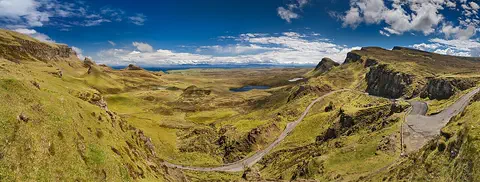
The United Kingdom, or UK, lies on islands off the northwest coast of Europe. It is made up of four parts, England, Scotland, Wales and Northern Ireland, and about 69.5 million people live there. Its capital is London.
-
 Watch
 Country
Finland
Finland is a northern European country covered mostly by forest and dotted with tens of thousands of lakes. About a third of it lies north of the Arctic Circle, where the summer sun shines all night. About 5.7 million people live there, most of them in the south.
Explore next
-
 Watch
3D
Animal
Eastern gray squirrel
Eastern gray squirrels are bushy-tailed tree squirrels from the forests of eastern North America, and they are a common sight in parks and gardens. They bury nuts to eat later. People also took them to Britain and other countries; in Britain they cause problems for the native red squirrel.
-
 Watch
Animal
Eastern chipmunk
Eastern chipmunks are small ground squirrels with five dark stripes down their backs. They live in the woods, yards and parks of eastern North America, carry food in stretchy cheek pouches, and store it in underground burrows for the winter.
-
Watch
Country
United Kingdom
The United Kingdom, or UK, lies on islands off the northwest coast of Europe. It is made up of four parts, England, Scotland, Wales and Northern Ireland, and about 69.5 million people live there. Its capital is London.
-
Watch
Country
Finland
Finland is a northern European country covered mostly by forest and dotted with tens of thousands of lakes. About a third of it lies north of the Arctic Circle, where the summer sun shines all night. About 5.7 million people live there, most of them in the south.
-
 Watch
Animal
Tawny owl
The tawny owl is a medium-sized woodland owl, about the size of a pigeon, with a round head, big dark eyes and brown, streaky feathers that hide it against tree bark. It hunts mice and voles at night on silent wings, and its hoots are a familiar sound at night.
-
 Watch
Animal
Aardvark
The aardvark is a shy night digger of African savannas. It sniffs out ant and termite nests, rips them open with its spade-like claws and laps up the insects with a sticky tongue about 30 centimeters long. Its name means 'earth pig' in Afrikaans.
-
 Watch
Animal
African buffalo
The African buffalo is a huge, cow-like grazer with heavy, curving horns. It lives in herds that can number in the thousands, and a herd will rush to protect a calf in danger. It lives across much of Africa south of the Sahara, from open savannas to rainforests.
-
 Watch
Animal
African forest elephant
The African forest elephant is a separate species from the bigger bush elephant. It lives in the rainforests of central and western Africa, eats lots of fruit and spreads the seeds of forest trees in its dung. It is Critically Endangered.
For parents & teachers
What children will learn
- Describe how a red squirrel's ankles, paws and senses suit life in trees.
- Explain how red squirrels cache food for winter and how that can help forests.
- Describe the red squirrel's life cycle, from blind newborn to independent youngster.
- Explain why introduced gray squirrels have made red squirrels rare in Britain.
Recommended ages: 3 to 17 · About 15 minutes
Talk about it
- Why might a squirrel that stores little fat need to hide food for winter?
- How can the same kind of animal come in different colors?
- What could people do to help a native animal when a newcomer species arrives?
Try at home or in class
- Mark 2 meters on the floor with tape, then try a standing jump: could you jump as far as a red squirrel compared with your size?
- Rub a little vanilla or lemon on a few pebbles, hide them among unscented ones, and try to find them by smell, like a squirrel finding its stores.
Key vocabulary: drey, cache, conifer, squirrelpox, native, melanistic
Where these facts come from
- The IUCN Red List of Threatened Species , International Union for Conservation of Nature (IUCN terms of use (no redistribution of Red List data or range maps))
- GBIF Backbone Taxonomy and GBIF Occurrence Search , Global Biodiversity Information Facility (CC0 1.0 (backbone); occurrence counts are facts derived from records under CC0, CC BY and CC BY-NC)
- Sciurus vulgaris (global assessment, 2023) , IUCN Red List
- Sciurus vulgaris (Eurasian red squirrel) , Animal Diversity Web, University of Michigan
- Red squirrel , Woodland Trust
- Red squirrel , People's Trust for Endangered Species
- Wikidata , Wikimedia Foundation (CC0 1.0)
- Wikimedia Commons , Wikimedia Foundation (Per file: Public domain, CC0, CC BY or CC BY-SA only (credited on each page))
Checked, not yet human-reviewed. Last updated October 27, 2026. Spotted a mistake? Tell us.