
Animal
Tawny owl
The tawny owl is a round, brown owl with big dark eyes. It lives in woods and parks and hoots at night.
The tawny owl is a medium-sized woodland owl, about the size of a pigeon, with a round head, big dark eyes and brown, streaky feathers that hide it against tree bark. It hunts mice and voles at night on silent wings, and its hoots are a familiar sound at night.
Strix aluco is a nocturnal, highly territorial owl of broadleaved woodland, parks and gardens across Europe, North Africa and western and central Asia. A pair may hold the same territory, and even the same nest hole, for life. It is listed as Least Concern, with about 1.58 to 2.34 million mature birds in the IUCN's 2024 estimate.
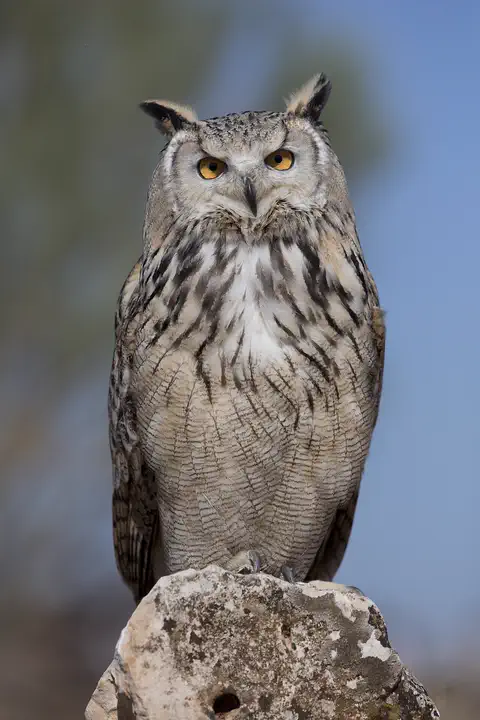
Photo: © Anil Öztas, CC BY-SA 4.0, via Wikimedia Commons
Meet the tawny owl
The tawny owl is a round, brown owl.
It has a round head with no ear tufts and big dark eyes. A ring of dark feathers goes around its face. Its streaky feathers look like tree bark.
The tawny owl is about the size of a wood pigeon, with a rounded body and head, large dark eyes and a hooked beak. A ring of dark feathers surrounds its face. Females weigh around 500 grams; males are about a quarter smaller.
Its brown and gray streaked feathers help it blend into woodland, and in the UK most are reddish brown above and paler underneath. It is quite different from the snowy owl, a large white owl with yellow eyes, and from the huge, orange-eyed eagle-owl with its ear tufts.
Strix aluco is a medium-sized owl of the family Strigidae, compact and powerful, with rounded wings spanning up to about a meter. Average weights given in the Handbook of the Birds of Europe, the Middle East and North Africa are about 426 grams for males and 524 for females; the Woodland Trust describes males as about 25 percent smaller.
It has a rounded head without ear tufts, large dark eyes set in a facial disk ringed with dark feathers, and cryptic brown-gray, streaked plumage. In the UK most are reddish brown above and paler below. Dark eyes and a tuftless round head distinguish it from the eagle-owl, and its brown, streaked plumage from the white snowy owl.
Quick facts
- Group
- Bird
- Wingspan
- up to 1 m
- Weight
- 0.43 to 0.52 kg
- Lifespan in the wild
- up to 23.4 years
Where it lives
Tawny owls live in Europe, Asia and the north of Africa.
They live in woods with big old trees. Some live in parks and big gardens.
Tawny owls live across most of Europe, in North Africa and through western and central Asia. In Britain they are the most widespread owl, but they do not live in Ireland.
Their favorite home is broadleaved woodland with big, old trees, though they also live in parks, large gardens and even cities if there are enough large trees for roosting and nesting. They may fly out over nearby farmland to hunt. Tawny owls do not migrate: a settled pair probably never leaves its territory.
The IUCN's 2024 global assessment lists the species as resident in about sixty countries, from Portugal, Morocco and Norway east to Kazakhstan, Pakistan and parts of China, up to about 4,250 meters, in forest, shrubland and artificial habitats; it is not a migrant.
In Britain the BTO describes tawny owls as resident in woodland throughout the country but absent from Ireland, the Channel Islands, the Northern Isles, the Outer Hebrides, the Isles of Scilly and treeless uplands. Established pairs are highly sedentary, and young birds disperse from their parents' territory in autumn.
Continents
Its habitat

Where can you find this animal?
- Lives here naturally · Countries and seas named by a scientific source
- Sightings recorded · Records of wild sightings (GBIF)
Lives here naturally · Countries and seas named by a scientific source
Woodland, parks and gardens across Europe (but not Ireland), North Africa and western and central Asia. Owls live in only part of many countries shown. Andorra and Liechtenstein have no separate map shape. The IUCN also lists Turkmenistan, which is not shaded because no wild records from there have been shared with GBIF.
Places: Afghanistan, Albania, Algeria, Armenia, Austria, Azerbaijan, Belarus, Belgium and 48 more places.
Source: iucn-red-list · checked October 2026
Sightings recorded · Records of wild sightings (GBIF)
Counts of GBIF records of wild observations (human and machine) and preserved specimens. Records include introduced populations, vagrants, escaped or released animals and misidentifications, so a country with records is not necessarily part of the native range.
Wild sightings have been recorded in Sweden, France, Finland, UK, Denmark, Norway, Netherlands, Belgium and 58 more places.
Source: gbif · checked October 2026
Range maps show where scientists say an animal lives, often country by country. An animal may live in only part of a country shown, and sightings records can include animals that wandered far from home.
What it eats
Tawny owls mostly eat mice and voles.
At night they swoop down from a branch and catch them on the ground. Sometimes they eat birds, frogs, beetles and worms.
Mice and voles are the tawny owl's main food. At night it sits on a high perch, listening and watching, then glides down without a sound to snatch a rodent from the forest floor.
It also catches birds, frogs, young rabbits and, when food is hard to find, insects and earthworms. Like other owls, it coughs up pellets containing the remains of its food. Finding pellets under a tree is a clue that an owl roosts there.
Small rodents, especially mice and voles, are the staple diet. The tawny owl is a perch-and-pounce hunter: it descends silently from a high perch to seize prey on the ground, locating it with sensitive hearing as well as vision.
Other prey taken occasionally includes birds, amphibians and young rabbits, and insects and earthworms when food is scarce. The remains of its meals are cast up as pellets, which accumulate beneath roosts and are a sign that an owl is nearby. Shortage of prey is one of the possible causes the RSPB suggests for the species' recent decline in the UK.
Did you know?
Tawny owls sometimes hoot back at people!
The male tawny owl's hoot is easy to copy, and owls often answer people who imitate it.
The Woodland Trust notes that the male's hoot is easy to imitate and that owls often respond to people who copy it.
Built for the dark
Tawny owls have big eyes for seeing in the dark.
Their ears are very good at hearing tiny sounds. Soft, fluffy edges on their feathers make their flying silent.
Tawny owls are built for hunting at night. Their large eyes help them see in darkness, and their hearing is just as important: they can find a mouse by the sound it makes.
The wing feathers have soft, furry edges that let the owl fly without a sound, so prey does not hear it coming. Its streaky brown-gray feathers are excellent camouflage. If you are lucky, you might spot one dozing in a tree in the daytime.
Large eyes give good vision in low light, while very sensitive hearing lets the owl pinpoint prey; the Woodland Trust notes that hearing is as important as sight for finding food. The wing feathers have a soft, furry edge that allows near-silent flight.
The brown and gray streaked plumage provides camouflage against bark, so roosting birds are easily overlooked during the day.
Growing up
Tawny owls lay their eggs in a hole in a big tree.
The mother usually lays two or three eggs. They hatch after about a month. The fluffy owlets climb out onto the branches before they can fly.
Tawny owls nest in a hole inside a big old tree, though they may also use an old crow's nest, a squirrel's nest or a nest box. The female usually lays two or three eggs in spring and keeps them warm for about 30 days.
The chicks, called owlets, hatch covered in down. Before they can fly well they leave the nest and spend several days on nearby branches, which is called branching. They fly at about five weeks old. Their parents care for them for a few more weeks, and the young are independent by the end of autumn.
Pairs normally mate for life and nest in tree cavities, old crow nests, squirrel dreys or nest boxes, often reusing the same site for years. In Britain the BTO gives an average first laying date of 23 March. Clutches are typically two or three eggs (one to six recorded), incubated by the female for about 30 days.
The young are altricial and downy. They leave the nest before they can fly properly and clamber about nearby branches, a stage called branching, then fledge at about 34.5 to 38.5 days. Parents care for them for several weeks more, and young become independent by the end of autumn, when they disperse. Breeding usually begins at one year, and the oldest ringed wild bird lived 23 years and 5 months, though typical life expectancy is about four years.

Too-whit, too-woo!
You might hear a tawny owl before you see it.
The male hoots "hoo-hoo-hoo". The female answers "kew-wick!" Together they sound like "too-whit, too-woo".
The famous "too-whit, too-woo" call is actually made by two tawny owls. The female calls a shrill "kew-wick" (the "too-whit"), and the male answers with a long, hooting "hoo-hoo-hoo" (the "too-woo").
Tawny owls usually mate for life, and a pair defends its territory from other owls all year round. They are loudest in autumn, when pairs warn off young owls looking for a place to settle. Many pairs use the same territory, and even the same nest hole, for their whole lives.
Tawny owls are territorial and sedentary. The familiar "too-whit, too-woo" is a duet: the female's sharp "kew-wick" combined with the male's hooting "hoo-hoo-hoo". The BTO notes that the species is most vocal in autumn, when territory holders try to stop dispersing juveniles from settling.
Ringing data show that individuals often occupy the same territory, and even the same nest hole or box, throughout their lives. Pairs defend their territory together all year. Because the birds are nocturnal, they are more often heard than seen; the male's call is easy to imitate, and owls often respond to people who copy it.
Did you know?
Owlets climb about in the trees before they can fly.
Young tawny owls leave the nest and spend several days sitting on nearby branches before they can fly properly. This is called branching.
Owlets typically leave the nest before fledging and clamber about nearby branches for several days, a stage called branching.
Tawny owls today
There are lots of tawny owls in the world.
But in Britain there are fewer than before. Keeping big old trees and woods helps them nest and hunt.
Worldwide, the tawny owl is listed as Least Concern: the IUCN's 2024 assessment estimates about 1.6 to 2.3 million adults, with stable numbers.
In Britain, though, tawny owls declined by more than 40 percent between 1995 and 2023, and they are now on the Amber List of birds of conservation concern. Scientists are not yet sure why. Losing woodland and big old trees with nest holes, and a shortage of mice and voles, may be part of the problem. Some tawny owls nest in nest boxes.
The IUCN's 2024 global assessment lists Strix aluco as Least Concern, with 1,580,000 to 2,340,000 mature individuals and a stable trend; no major global threats are listed.
Regional trends differ. The RSPB reports that UK numbers fell by more than 40 percent between 1995 and 2023, moving the species onto the Amber List; the causes are not known, but habitat loss and prey shortage may contribute, and the Woodland Trust points to loss of woodland and suitable nest trees. Because the species is nocturnal, it is poorly covered by daytime surveys, so the BTO has run dedicated tawny owl surveys, most recently in 2018 and 2019. BTO ringing records show owls using the same nest hole or nest box throughout their lives.
IUCN Red List
How is the tawny owl doing in the wild?
- Least Concern (this animal)
- Near Threatened
- Vulnerable
- Endangered
- Critically Endangered
- Extinct in the Wild
- Extinct
Least Concern
Not at risk of disappearing from the wild right now.
See the IUCN Red List assessment · The IUCN Red List of Threatened Species 2021.3
Amazing facts
-
"Too-whit, too-woo" is two owls talking.
The famous "too-whit, too-woo" is made by two tawny owls: the female calls "kew-wick" and the male answers "hoo-hoo-hoo".
The classic call is a duet: the female's "kew-wick" and the male's hoot, often heard together.
-
A tawny owl may live in the same tree hole all its life.
Ringing records show that tawny owls often keep the same territory, and even the same nest hole, for their whole lives.
BTO ringing data show individuals frequently using the same territory and nest hole or box throughout life.
-
Owlets climb about in the trees before they can fly.
Young tawny owls leave the nest and spend several days sitting on nearby branches before they can fly properly. This is called branching.
Owlets typically leave the nest before fledging and clamber about nearby branches for several days, a stage called branching.
-
Tawny owls sometimes hoot back at people!
The male tawny owl's hoot is easy to copy, and owls often answer people who imitate it.
The Woodland Trust notes that the male's hoot is easy to imitate and that owls often respond to people who copy it.
Words to know
- nocturnal
- active at night
- camouflage
- colors or patterns that help an animal blend in
- territory
- an area an animal lives in and defends from others
- pellet
- a small bundle of food remains that an owl coughs up
- owlet
- a baby owl
- branching
- when young owls leave the nest and climb on branches before they can fly
Discovery challenge
-
Who makes the "too-whit, too-woo" sound?
How is the tawny owl's "too-whit, too-woo" made?
What produces the tawny owl's familiar "too-whit, too-woo"?
- One owl
- Two owls calling together
- The wind in the trees
Show the answer
Two owls calling together
Two owls! The mom says "kew-wick" and the dad says "hoo-hoo".
It is two owls: the female calls "kew-wick" and the male answers with hoots.
A duet between a female giving "kew-wick" and a male giving the hooting call.
-
What do tawny owls mostly eat?
What is the tawny owl's main food?
Which prey forms the staple of the tawny owl's diet?
- Mice and voles
- Fish
- Leaves
Show the answer
Mice and voles
They mostly eat mice and voles.
Mice and voles, caught on the forest floor at night.
Small rodents, especially mice and voles, supplemented by birds, amphibians and invertebrates.
-
Where do tawny owls lay their eggs?
Where does a tawny owl usually nest?
Which nest site is most typical of the tawny owl?
- In a hole in a tree
- On the beach
- In a burrow underground
Show the answer
In a hole in a tree
In a hole in a big tree.
In a hole in a large tree, or sometimes an old crow's nest, squirrel's nest or nest box.
Tree cavities, with old crow nests, squirrel dreys and nest boxes also used.
-
What color are a tawny owl's eyes?
Which feature helps tell a tawny owl from a Eurasian eagle-owl?
Which combination of features identifies a tawny owl rather than an eagle-owl?
- Dark eyes and no ear tufts
- Orange eyes and tall ear tufts
- Yellow eyes and white feathers
Show the answer
Dark eyes and no ear tufts
Tawny owls have big dark eyes.
Tawny owls have dark eyes and no ear tufts; eagle-owls have orange eyes and tall ear tufts.
Dark eyes and a rounded, tuftless head; the eagle-owl has orange eyes and plumicorns, and the snowy owl is white with yellow eyes.
Places where you might see it
-
 Watch
 Country
United Kingdom
The United Kingdom, or UK, lies on islands off the northwest coast of Europe. It is made up of four parts, England, Scotland, Wales and Northern Ireland, and about 69.5 million people live there. Its capital is London.
-
 Watch
 Country
Germany
Germany is a country in north-central Europe. The land rises from flat plains by the North Sea and the Baltic Sea to forested hills and, in the far south, the Alps. About 83.5 million people (2025) live there, and its capital is Berlin.
Explore next
-
 Watch
Animal
Eurasian eagle-owl
The Eurasian eagle-owl is one of the biggest owls in the world, with wings up to about 2 meters across, big orange eyes and two tall ear tufts. It lives across Europe and Asia, nests on rocky ledges and flies silently at night to catch rats, voles, hares and birds.
-
 Watch
Animal
Barn owl
The barn owl is a pale, ghostly owl with a heart-shaped face that works like a dish to collect sound. It hunts mice and voles at night over fields and grassland, finding them by hearing alone if it has to. Barn owls live on every continent except Antarctica.
-
 Watch
Animal
Snowy owl
The snowy owl is a large white owl that nests on the Arctic tundra. Unlike most owls it hunts in daylight, and in the endless light of an Arctic summer it may hunt at any hour. Lemmings are its favorite food.
-
 Watch
Animal
Red squirrel
Red squirrels are small tree squirrels from the forests of Europe and northern Asia. Their fur can be ginger, brown or even black, and in winter they grow long ear tufts. In Britain they have become rare since people brought gray squirrels from North America.
-
Watch
Country
United Kingdom
The United Kingdom, or UK, lies on islands off the northwest coast of Europe. It is made up of four parts, England, Scotland, Wales and Northern Ireland, and about 69.5 million people live there. Its capital is London.
-
Watch
Country
Germany
Germany is a country in north-central Europe. The land rises from flat plains by the North Sea and the Baltic Sea to forested hills and, in the far south, the Alps. About 83.5 million people (2025) live there, and its capital is Berlin.
-
 Watch
Animal
Adélie penguin
The Adélie penguin is a medium-sized penguin, about 70 centimeters tall, with a black back, a white front and a bright white ring around each eye. It breeds in summer on rocky, ice-free ground all around Antarctica, building nests of pebbles, and spends the winter far out at sea among the pack ice.
-
 Watch
Animal
African fish eagle
The African fish eagle is a big eagle of Africa's lakes, rivers and coasts, with a white head, chest and tail and a chestnut-brown body. It snatches fish from the surface of the water, and its loud, ringing call is one of the best-known sounds of Africa.
For parents & teachers
What children will learn
- Describe how the tawny owl's eyes, hearing, silent wings and camouflage suit hunting at night.
- Explain the tawny owl's "too-whit, too-woo" duet and why owls call in autumn.
- Describe the tawny owl's life cycle, including branching.
- Explain why big old trees matter to tawny owls.
Recommended ages: 3 to 17 · About 15 minutes
Talk about it
- Why might an owl rely on hearing as much as on sight?
- Why would a pair of owls keep the same territory for life?
- How could a town or school make space for owls?
Try at home or in class
- On an evening walk with a grown-up in autumn, listen for owl calls and write down what you hear.
- With a grown-up, find a big old tree near you and look for holes or hollows where an owl could nest.
Key vocabulary: nocturnal, camouflage, territory, pellet, owlet, branching
Where these facts come from
- The IUCN Red List of Threatened Species , International Union for Conservation of Nature (IUCN terms of use (no redistribution of Red List data or range maps))
- GBIF Backbone Taxonomy and GBIF Occurrence Search , Global Biodiversity Information Facility (CC0 1.0 (backbone); occurrence counts are facts derived from records under CC0, CC BY and CC BY-NC)
- Wikidata , Wikimedia Foundation (CC0 1.0)
- Strix aluco (Tawny Owl), Red List global assessment 2024 , IUCN Red List of Threatened Species
- Tawny Owl BirdFacts , British Trust for Ornithology (BTO)
- Tawny Owl , Royal Society for the Protection of Birds (RSPB)
- Tawny owl (Strix aluco) , Woodland Trust
- Snowy Owl identification , Cornell Lab of Ornithology, All About Birds
- Wikimedia Commons , Wikimedia Foundation (Per file: Public domain, CC0, CC BY or CC BY-SA only (credited on each page))
Checked, not yet human-reviewed. Last updated October 28, 2026. Spotted a mistake? Tell us.