
Animal
Eastern gray squirrel
The gray squirrel is a quick climber with a big, bushy tail. It buries nuts in the fall and digs them up in winter.
Eastern gray squirrels are bushy-tailed tree squirrels from the forests of eastern North America, and they are a common sight in parks and gardens. They bury nuts to eat later. People also took them to Britain and other countries; in Britain they cause problems for the native red squirrel.
Sciurus carolinensis is a tree squirrel native to eastern North America that thrives in mature woodland and in towns. A scatter-hoarder of nuts and a seed disperser at home, it has been introduced to Britain, Ireland, Italy and South Africa; in Britain it outcompetes native red squirrels and spreads squirrelpox.
Photo: Dominic Nelson, CC BY-SA 4.0, via Wikimedia Commons
Meet the gray squirrel
The gray squirrel has soft gray fur and a white tummy.
It has a big, fluffy tail, little ears and bright, dark eyes. It can run up trees very fast.
The eastern gray squirrel is a medium-sized tree squirrel, 38 to 52 centimeters long, and almost half of that is its bushy tail. Its fur is gray, often with brownish or cinnamon patches, and its belly is pale. Males and females look the same.
Not every gray squirrel is gray! In the northern part of their range, black squirrels are common, and they are the same species. Black fur may even help: black squirrels lose less heat in very cold weather.
Sciurus carolinensis is a medium-sized tree squirrel with no difference in size or color between the sexes. Animal Diversity Web gives a total length of 380 to 525 millimeters, a tail of 150 to 250 millimeters and a mass of 338 to 750 grams. The back ranges from grizzled dark to pale gray, often with cinnamon tones; the underparts are gray to buff and the tail is edged with pale hairs.
Melanism is common in the north of the range. Animal Diversity Web cites studies showing that black squirrels lose 18 percent less heat below −10 °C and have a 20 percent lower basal metabolic rate than gray ones. Adults have 22 teeth.
Quick facts
- Group
- Mammal
- Length
- 0.38 to 0.53 m
- Weight
- 0.34 to 0.75 kg
- Lifespan in the wild
- up to 12.5 years
From American forests to city parks
Gray squirrels come from the forests of North America.
They live in woods, parks and gardens. People took some to other countries, like Britain and Italy.
Eastern gray squirrels come from the eastern United States and southern Canada, from the Atlantic coast to just west of the Mississippi River. They love big, old forests with oak and walnut trees, whose nuts keep well through the winter. They also live happily in city parks and gardens.
In the 1800s, people brought gray squirrels to Britain. Since then they have spread across most of the country, and people have also taken them to Ireland, Italy and South Africa. Our photo was taken in Bute Park, Cardiff, in Wales.
The native range covers the eastern United States to just west of the Mississippi River and north into southern Canada; the IUCN's current global assessment (2018) lists Canada and the United States as native, with an increasing population. It prefers mature, continuous woodland of more than 40 hectares, and densities are highest where oaks and walnuts produce nuts that store well through the winter; the species is also common in towns.
Introductions include western North America, Italy, South Africa, Britain and Ireland. The Woodland Trust reports that gray squirrels reached the UK in the 19th century and are now common everywhere except north and western Scotland and some islands. The hero photo shows one in Bute Park, Cardiff, part of that introduced population.
Continents
Its habitat

Where can you find this animal?
- Brought here by people · Countries and seas named by a scientific source
- Lives here naturally · Countries and seas named by a scientific source
- Sightings recorded · Records of wild sightings (GBIF)
Brought here by people · Countries and seas named by a scientific source
Introduced by people to the United Kingdom (in the 19th century), Ireland, Italy and South Africa.
Places: UK, Ireland, Italy and South Africa.
Source: iucn-red-list · checked October 2026
Lives here naturally · Countries and seas named by a scientific source
Hardwood forests, parks and gardens of the eastern United States, west to just beyond the Mississippi River, and southern Canada.
Places: United States and Canada.
Source: iucn-red-list · checked October 2026
Sightings recorded · Records of wild sightings (GBIF)
Counts of GBIF records of wild observations (human and machine) and preserved specimens. Records include introduced populations, vagrants, escaped or released animals and misidentifications, so a country with records is not necessarily part of the native range.
Wild sightings have been recorded in UK, United States, Canada, Ireland, Italy, South Africa, France, Belgium and 20 more places.
Source: gbif · checked October 2026
Range maps show where scientists say an animal lives, often country by country. An animal may live in only part of a country shown, and sightings records can include animals that wandered far from home.
Nut buriers
Gray squirrels love nuts, like acorns and walnuts.
In the fall they bury lots of nuts in the ground. In winter they dig them up again to eat.
Gray squirrels mostly eat nuts, seeds, buds and flowers from trees such as oaks, hickories, walnuts and beeches. They also eat pine seeds, mushrooms, berries, corn and, in summer, insects.
In the fall they bury nuts one at a time in many different spots, which is called scatter hoarding. In winter they find them again using memory and smell. Burying nuts this way may help spread tree seeds to new places.
Animal Diversity Web lists nuts, flowers and buds of more than 24 oak species, plus hickory, pecan, walnut and beech, and fruits and seeds of maples, mulberries, hawthorns, hazels and many others, along with conifer seeds, fungi and crops such as corn and wheat in winter. Insects are eaten in summer and are probably especially important for juveniles, and squirrels may also take bird eggs, nestlings and frogs.
Food is cached by scatter hoarding: items buried singly in many places, recovered by memory and smell. The Woodland Trust notes that gray squirrels have been observed pretending to bury nuts, which may fool watching thieves. Unrecovered seeds may be dispersed, and eating truffles may spread fungal spores.

Built to climb
A squirrel's bushy tail helps it balance in the trees.
On cold days, the squirrel curls up and uses its tail like a warm blanket.
Gray squirrels are expert climbers. Their back ankles are double-jointed, so their feet can turn to face forward or backward, which is a perfect fit for climbing trees.
The long, bushy tail works like a balancing pole when they leap through branches, and like a blanket in cold weather. Squirrels also have a keen sense of smell, which helps them find buried nuts and learn about other squirrels nearby.
The Woodland Trust describes double-jointed ankles that let the hind feet face forward or backward, an adaptation for tree climbing. The bushy tail aids balance and serves as insulation when the squirrel curls up in cold weather; gray squirrels do not hibernate but are less active when food is scarce.
Animal Diversity Web notes a keen sense of smell, used to find caches and to read neighbors' stress and reproductive condition. Vibrissae, sensitive whiskers around the nose and mouth used for touch, are the only hairs a newborn has. Agility in trees makes squirrels hard for predators to catch.
Kits in a drey
Baby squirrels are born in a nest of leaves and twigs.
At first they have no fur and cannot see. Their mother feeds them milk until they are big enough to find food.
Gray squirrels can have babies twice a year, in late winter and in summer. After about six weeks, a mother has a litter of about three or four babies in a nest of twigs and leaves called a drey, or in a hole in a tree.
Newborns weigh only 13 to 18 grams, about as much as three grapes. They have no fur except tiny whiskers. They start eating solid food at about two months and are grown up by about nine months old.
Breeding peaks in December to February and May to June, slightly later farther north, and a female can raise two litters a year for more than eight years. Gestation is 44 days according to Animal Diversity Web. The Woodland Trust gives litters of three to four when food is plentiful, born in a drey of twigs or in a tree hole.
Newborns are altricial, naked apart from their vibrissae and 13 to 18 grams (Wikidata gives 15.5). Weaning begins in the seventh week and ends by the tenth, when the juvenile coat is lost, and adult size is reached at about nine months. Most females first breed at about 15 months, though some do at 5.5 months; males mature by about 11 months.
Busy days in the trees
Squirrels are busy in the morning and afternoon.
They make calls and flick their tails to talk. If they see a hawk or a fox, they call out a warning.
Gray squirrels are active by day, busiest a couple of hours after sunrise and again in the afternoon, so they avoid the midday heat. They are not very territorial and often live close together, though some are bossier than others.
Squirrels talk with many calls and by flicking their tails. They give warning calls when they spot a predator such as a hawk, fox, bobcat or coyote. They sleep in a tree den or in a drey high in the branches, 9 to 14 meters off the ground.
In spring, summer and autumn activity peaks about two hours after sunrise and two to five hours before sunset; in winter there is a single peak two to four hours before sunset. Females are more active in summer and males in winter. Squirrels use both a permanent tree den and a leaf nest in a tree fork about 9 to 14 meters up.
The Woodland Trust notes that gray squirrels are not strongly territorial, though dominance hierarchies exist; Animal Diversity Web adds that males form a dominance hierarchy at breeding time and that females mate with several males. Communication combines vocalizations, postures such as tail flicking, and smell. Warning calls alert neighbors to predators, which include mink and other weasels, red foxes, bobcats, wolves, coyotes, lynx and hawks.
Did you know?
Gray squirrels do not sleep all winter.
Gray squirrels do not hibernate. On cold days they curl up and wrap their bushy tails around them like a blanket.
Gray squirrels do not hibernate; they become less active when food is scarce and curl up under their bushy tails in cold weather.
At home and away
There are lots of gray squirrels in North America.
In Britain, gray squirrels came from far away. They make life hard for the little red squirrels that lived there first.
In its homeland, the gray squirrel is common, and the IUCN lists it as Least Concern with a growing population. Its buried nuts may help spread tree seeds, and it is food for many predators.
Where people took it, though, it causes trouble. In Britain, gray squirrels compete with native red squirrels for food and carry a disease called squirrelpox. Gray squirrels do not get sick from it, but red squirrels do and usually die. Gray squirrels also strip bark from trees.
The IUCN assessed the eastern gray squirrel as Least Concern in 2018, with an increasing population. In its native range it is an important seed predator and disperser and a prey species for many carnivores and raptors.
As an introduced species it is a serious problem. The Woodland Trust reports that in the UK gray squirrels compete with the native red squirrel for food and carry squirrelpox virus, to which they are immune but which is fatal to reds; viable red squirrel populations survive only where grays are rare or absent. Bark stripping and seed eating also change woodland composition, so in parts of the UK gray squirrels are culled to protect red squirrels and woodlands.
IUCN Red List
How is the eastern gray squirrel doing in the wild?
- Least Concern (this animal)
- Near Threatened
- Vulnerable
- Endangered
- Critically Endangered
- Extinct in the Wild
- Extinct
Least Concern
Not at risk of disappearing from the wild right now.
See the IUCN Red List assessment · The IUCN Red List of Threatened Species 2022.2
Amazing facts
-
Squirrels sometimes pretend to bury nuts.
Gray squirrels have been seen pretending to bury nuts, which may trick other squirrels that are watching.
The Woodland Trust reports deceptive caching: gray squirrels have been observed faking burials in front of potential thieves.
-
Some gray squirrels are black.
Black squirrels are a dark form of the gray squirrel, common in the north of its range.
Melanistic gray squirrels lose 18 percent less heat below −10 °C than gray ones, and black squirrels are commoner in the north.
-
A squirrel's back feet can turn around.
Double-jointed ankles let a gray squirrel turn its back feet to face forward or backward when it climbs.
The Woodland Trust describes double-jointed ankles that let the hind feet face forward or backward, an adaptation for tree climbing.
-
Gray squirrels do not sleep all winter.
Gray squirrels do not hibernate. On cold days they curl up and wrap their bushy tails around them like a blanket.
Gray squirrels do not hibernate; they become less active when food is scarce and curl up under their bushy tails in cold weather.
Words to know
- drey
- a squirrel's nest of twigs and leaves, built in a tree
- scatter hoarding
- hiding food in many small hidden stores instead of one big one
- rodent
- a gnawing mammal, such as a squirrel, mouse or beaver
- invasive species
- a living thing brought to a new place where it spreads and causes harm
- native
- living naturally in a place, not brought there by people
Discovery challenge
-
What do squirrels do with nuts in the fall?
What do gray squirrels do with many of the nuts they collect in the fall?
How do gray squirrels store food for winter?
- Bury them to eat later
- Throw them into a river
- Give them to birds
Show the answer
Bury them to eat later
They bury them, then dig them up in winter.
They bury nuts one at a time in many spots and find them later by memory and smell.
By scatter hoarding: burying items singly across many sites, recovered with memory and smell.
-
What does a squirrel use its bushy tail for?
How does a gray squirrel use its bushy tail?
Which two jobs does the gray squirrel's tail do?
- Balancing and keeping warm
- Digging tunnels
- Swimming fast
Show the answer
Balancing and keeping warm
It helps the squirrel balance, and it keeps it warm like a blanket.
It works as a balancing pole in the branches and as a blanket in cold weather.
Balance during arboreal movement and insulation when the squirrel curls up in the cold.
-
Where do gray squirrels come from?
Where are eastern gray squirrels native?
Which region is the eastern gray squirrel's native range?
- North America
- Australia
- Antarctica
Show the answer
North America
They come from North America.
They are native to the eastern United States and southern Canada; people took them to Europe and South Africa.
Eastern North America; populations in Britain, Ireland, Italy and South Africa are introduced.
-
What is a squirrel's leafy nest called?
What is a gray squirrel's nest of twigs and leaves called?
What is the name of the leaf nest a gray squirrel builds in a tree fork?
- A drey
- A burrow
- A web
Show the answer
A drey
It is called a drey.
A drey. Squirrels also use holes in trees as dens.
A drey, built about 9 to 14 meters up; squirrels also keep permanent tree-hole dens.
Places where you might see it
-
 Watch
 Country
United States
The United States is a large country in North America made of 50 states, from icy Alaska to the warm islands of Hawaii. It has the Grand Canyon, the Mississippi River and Yellowstone, and about 342 million people live there.
-
 Watch
 Country
United Kingdom
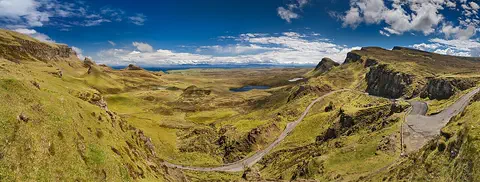
The United Kingdom, or UK, lies on islands off the northwest coast of Europe. It is made up of four parts, England, Scotland, Wales and Northern Ireland, and about 69.5 million people live there. Its capital is London.
Experiments to try
- Watch What If? Lab What if seeds could not travel? Seeds ride the wind, float on water, hide in fruit that animals eat, and cling to fur and socks. What if every seed simply dropped under its parent plant? Explore crowded seedlings, wind and animal helpers, and the burrs that gave people an idea.
- Watch What If? Lab What if a city had no trees? Cities are full of roads, roofs and parking lots that soak up the Sun's heat. Street trees shade them, cool the air, catch rain and give birds a home. Imagine a city with every tree gone: hotter streets, more rain rushing down the drains and fewer birds. Then see how people plant trees to help.
Explore next
-
 Watch
Animal
Red squirrel
Red squirrels are small tree squirrels from the forests of Europe and northern Asia. Their fur can be ginger, brown or even black, and in winter they grow long ear tufts. In Britain they have become rare since people brought gray squirrels from North America.
-
 Watch
Animal
Eastern chipmunk
Eastern chipmunks are small ground squirrels with five dark stripes down their backs. They live in the woods, yards and parks of eastern North America, carry food in stretchy cheek pouches, and store it in underground burrows for the winter.
-
Watch
Country
United States
The United States is a large country in North America made of 50 states, from icy Alaska to the warm islands of Hawaii. It has the Grand Canyon, the Mississippi River and Yellowstone, and about 342 million people live there.
-
Watch
Country
United Kingdom
The United Kingdom, or UK, lies on islands off the northwest coast of Europe. It is made up of four parts, England, Scotland, Wales and Northern Ireland, and about 69.5 million people live there. Its capital is London.
- Watch What If? Lab What if seeds could not travel? Seeds ride the wind, float on water, hide in fruit that animals eat, and cling to fur and socks. What if every seed simply dropped under its parent plant? Explore crowded seedlings, wind and animal helpers, and the burrs that gave people an idea.
- Watch What If? Lab What if a city had no trees? Cities are full of roads, roofs and parking lots that soak up the Sun's heat. Street trees shade them, cool the air, catch rain and give birds a home. Imagine a city with every tree gone: hotter streets, more rain rushing down the drains and fewer birds. Then see how people plant trees to help.
-
 Watch
Animal
Aardvark
The aardvark is a shy night digger of African savannas. It sniffs out ant and termite nests, rips them open with its spade-like claws and laps up the insects with a sticky tongue about 30 centimeters long. Its name means 'earth pig' in Afrikaans.
-
 Watch
Animal
African buffalo
The African buffalo is a huge, cow-like grazer with heavy, curving horns. It lives in herds that can number in the thousands, and a herd will rush to protect a calf in danger. It lives across much of Africa south of the Sahara, from open savannas to rainforests.
For parents & teachers
What children will learn
- Describe how a gray squirrel's tail, feet and senses help it live in trees.
- Explain scatter hoarding and how it may help spread tree seeds.
- Describe the gray squirrel's life cycle.
- Explain why a species that is harmless at home can become a problem where people introduce it.
Recommended ages: 3 to 17 · About 15 minutes
Talk about it
- Why might burying nuts in many places be safer than keeping them all in one spot?
- How could a forgotten acorn help a forest?
- Why do you think gray squirrels harm red squirrels in Britain but not in America?
Try at home or in class
- Hide ten nuts or buttons around a garden or room, then try to find them all the next day, and talk about how squirrels remember.
- Watch squirrels in a park for ten minutes and count how many times they bury, eat or carry food.
Key vocabulary: drey, scatter hoarding, rodent, invasive species, native
Where these facts come from
- The IUCN Red List of Threatened Species , International Union for Conservation of Nature (IUCN terms of use (no redistribution of Red List data or range maps))
- GBIF Backbone Taxonomy and GBIF Occurrence Search , Global Biodiversity Information Facility (CC0 1.0 (backbone); occurrence counts are facts derived from records under CC0, CC BY and CC BY-NC)
- Sciurus carolinensis (eastern gray squirrel) , Animal Diversity Web, University of Michigan
- Grey squirrel , Woodland Trust
- Sciurus carolinensis (global assessment) , IUCN Red List
- Wikidata , Wikimedia Foundation (CC0 1.0)
- Wikimedia Commons , Wikimedia Foundation (Per file: Public domain, CC0, CC BY or CC BY-SA only (credited on each page))
Checked, not yet human-reviewed. Last updated October 24, 2026. Spotted a mistake? Tell us.
Picture and 3D model credits
- Photo: Dominic Nelson, CC BY-SA 4.0, via Wikimedia Commons · source · license
- Photo: Rhododendrites, CC BY-SA 4.0, via Wikimedia Commons · source · license
- Photo: Charles J. Sharp, CC BY-SA 4.0, via Wikimedia Commons · source · license
- 3D model: animalica, CC BY 4.0, via Sketchfab · source · license