
Animal
Sand lizard
The sand lizard is a brown, spotted lizard from Europe and Asia. Males have green sides, and in spring they are at their brightest!
The sand lizard is a stocky lizard that lives across much of Europe and east into Central Asia, Mongolia and China. It likes sunny, open places such as meadows, heaths and sand dunes. Both males and females have brown patterns on their backs, but the males have green sides, brightest in spring. In Britain, females leave their eggs buried in warm, sunny sand.
Lacerta agilis (family Lacertidae) ranges from the Spanish Pyrenees and southern Britain east through the Caucasus and Central Asia to northwestern China and southwestern Mongolia, from sea level to about 2,500 m. Aghasyan and colleagues listed it as Least Concern for the IUCN Red List (assessed 8 May 2018, published 2021) for its very wide range and presumed large population, while noting that many subpopulations are threatened, especially in the northwest of its range.
Photo: Krzysztof Mizera, CC BY-SA 3.0, via Wikimedia Commons
Meet the sand lizard
The sand lizard is a stocky lizard.
It has brown patterns on its back.
Males have green sides, brightest in spring.
The sand lizard is a stocky lizard that grows up to about 20 centimeters long, tail included. It lives in a huge area, from Spain and Britain across Europe and into Central Asia, Mongolia and China.
Both males and females have brown, patterned backs with two strong stripes. In the breeding season, males have bright green sides, which helps tell them apart from females.
The taxonomy of Lacerta agilis is still debated: a mitochondrial study found three groups of populations (Kalyabina et al. 2001), nine subspecies are generally recognized (Andres et al. 2014), and authors disagree on their number and boundaries (IUCN). Amphibian and Reptile Conservation (ARC) describes a stocky lizard up to 20 cm long; both sexes have brown, varied dorsal patterns with two strong dorsal stripes, and males have strikingly green flanks, brightest in late April and May.
Quick facts
- Group
- Reptile
- Length
- 0.2 m
Sunny, open places
Sand lizards like sunny, open places.
They live on heaths, meadows and sand dunes.
Sand lizards live in many kinds of open, sunny places: meadows, heaths, coastal sand dunes, grasslands, steppes, mountain meadows, hedgerows, open woods, old-fashioned farmland and country gardens. In Britain they are found mostly on heathland and sand dunes.
They live from sea level up to about 2,500 meters in the mountains. In the north of Europe they come out of hibernation in March.
The IUCN describes a range across much of western, central and eastern Europe, from about 1,800 m in the Spanish Pyrenees east through the Caucasus and Central Asia to northwestern China (Tien Shan and Xinjiang) and southwestern Mongolia, north to about 60°N in Siberia, with isolated subpopulations in southern and northwestern England and north Wales and recent records near Turku, Finland (origin unknown). Habitats include meadows, heathland, coastal dunes, steppe, alpine meadows, shrubland, hedgerows, open woodland, traditional farmland and rural gardens, sometimes sandy semi-desert. In Britain it now occurs naturally only on protected heathland in Surrey, Dorset and Hampshire and on the Merseyside dunes (ARC).
Continents
Its habitat

Where can you find this animal?
- Lives here naturally · Countries and seas named by a scientific source
- Sightings recorded · Records of wild sightings (GBIF)
Lives here naturally · Countries and seas named by a scientific source
Across much of Europe and east through the Caucasus and Central Asia to northwestern China (Xinjiang) and southwestern Mongolia (IUCN). In many countries shaded it lives only in parts: in Spain only in the Pyrenees, in Italy and Greece only in a few mountain areas, in Britain naturally only in southern and northwestern England and north Wales, plus reintroduced sites. Andorra, Liechtenstein and Az
Places: Albania, Armenia, Austria, Belarus, Belgium, Bosnia & Herz., Bulgaria, China and 33 more places.
Source: iucn-red-list · checked November 2026
Sightings recorded · Records of wild sightings (GBIF)
Counts of GBIF records of wild observations (human and machine) and preserved specimens. Records include introduced populations, vagrants, escaped or released animals and misidentifications, so a country with records is not necessarily part of the native range.
Wild sightings have been recorded in Netherlands, Germany, Austria, Switzerland, France, Russia, Denmark, Sweden and 40 more places.
Source: gbif · checked October 2026
Range maps show where scientists say an animal lives, often country by country. An animal may live in only part of a country shown, and sightings records can include animals that wandered far from home.
Insects and other small animals
Sand lizards eat insects and spiders.
Sometimes they eat a small lizard.
Sand lizards hunt arthropods: small animals with jointed legs, such as insects and spiders. Once in a while they also eat small lizards.
Summer is their busiest season. In China, scientists describe them choosing hot, sunny places with plenty of plants, such as grasslands, forests, orchards and shrubs.
The IUCN describes a diet of a variety of arthropods and occasionally small lizards, with summer the most active season (Zhao et al. 1999). In Britain the species depends on mature, sunny vegetation for cover and basking and on open, undisturbed sand for egg-laying (ARC).
Did you know?
Sand lizards live as far east as China.
Sand lizards live all the way from the Pyrenees mountains in Spain to northwestern China and Mongolia.
From the Spanish Pyrenees to Xinjiang and southwestern Mongolia (IUCN).
Brown stripes and green sides
Its back is brown with spots and stripes.
Males have bright green sides in spring.
A sand lizard is stocky, with a long tail, and it grows up to about 20 centimeters long. Its back is brown with a varied pattern and two strong stripes.
In late April and May, the breeding season, males show off extremely bright green sides. Females stay brown: the lizard in the photo on this page is a female, and her sides are brown too.
ARC describes a stocky lizard reaching about 20 cm, both sexes with brown, varied dorsal patterns and two strong dorsal stripes, and males with strikingly green flanks that are brightest in the breeding season in late April and May. The Commons record identifies the lizard in this page's photo as a female, which matches its brown flanks.
Eggs warmed by the sun
The mother lays eggs in a nest in the ground.
In Britain, the sun warms the sand over the eggs.
The babies hatch in summer or autumn.
After their winter rest, sand lizards come out in March or April. In late May or June, the female lays her eggs in a small nest in the ground; in China, clutches of 3 to 15 eggs have been recorded. She may lay one or two clutches a year. In Britain, the eggs are left buried in sand in the sun, which helps keep them warm.
The eggs take about 50 to 55 days to hatch. Baby sand lizards appear from July to October: babies from a first clutch hatch earlier than those from a second.
The IUCN gives emergence from hibernation in March in the north and March to April in the south and in mountains; eggs laid from the end of May to June in small earthen nests, 3 to 15 per clutch (Zhao et al. 1999); one or two clutches per year; incubation 50 to 55 days; first clutches hatching in July to August and second clutches in September to October. In Britain, eggs are laid in late May or early June, left buried in sun-warmed sand, and hatch between late August and September (ARC).
Sun lovers
Sand lizards warm up in the sun.
In winter they have a long rest.
Sand lizards are sun lovers. They need open, sunny spots for basking and thick plants nearby to hide in. They spend the winter in hibernation and come out in spring, when the males' green sides are at their brightest.
When open heaths and dunes grow over with tall plants and trees, sand lizards lose the sunny spaces they need.
Sand lizards hibernate and emerge in March to April (IUCN); in Britain they occupy mature vegetation that provides cover next to open sand for egg-laying, and their need for both can give them a limited distribution even within protected sites (ARC). The IUCN notes that open habitats the species requires are being overgrown, and that in Sweden some fragmented subpopulations are reported to suffer inbreeding depression (Olsson et al. 1996).
Did you know?
Male sand lizards have bright green sides in spring.
Male sand lizards have extremely striking green sides, brightest in the breeding season in late April and May.
Male flanks are strikingly green, brightest in late April and May (ARC).
Common in some places, rare in others
In many places there are lots of sand lizards.
In Britain they are rare, so people protect them.
The sand lizard is listed as least concern because it lives across a huge area. But in the northwest of its range, including Britain, Scandinavia and northern Germany, it is threatened. Its homes are lost to towns, intensive farming that removes hedgerows, tourism and heaths growing over, and traffic and cats are dangers too.
In Britain it is strictly protected by law. A charity there has brought sand lizards back to restored heaths and dunes using young lizards bred in human care.
Aghasyan et al. assessed Lacerta agilis as Least Concern (Global; assessed 8 May 2018, published 2021; trend stable): declines in parts of its range are unlikely to reach the 30% needed for a threatened category, but numerous subpopulations are threatened. Threats include urbanization, intensive agriculture and hedgerow loss, coastal and alpine tourism, changes in forestry, road traffic, cats in towns and overgrowth of open habitats. It is listed on Appendix II of the Bern Convention and Annex IV of the EU Habitats Directive, protected nationally in most range countries and Vulnerable in Switzerland. In Britain, ARC's reintroduction programme has re-established it at many sites, including dunes in Wales, Kent, Devon and Cornwall.
IUCN Red List
How is the sand lizard doing in the wild?
- Least Concern (this animal)
- Near Threatened
- Vulnerable
- Endangered
- Critically Endangered
- Extinct in the Wild
- Extinct
Least Concern
Not at risk of disappearing from the wild right now.
Amazing facts
-
Male sand lizards have bright green sides in spring.
Male sand lizards have extremely striking green sides, brightest in the breeding season in late April and May.
Male flanks are strikingly green, brightest in late April and May (ARC).
-
Sand lizards live as far east as China.
Sand lizards live all the way from the Pyrenees mountains in Spain to northwestern China and Mongolia.
From the Spanish Pyrenees to Xinjiang and southwestern Mongolia (IUCN).
-
The sun helps keep sand lizard eggs warm.
In Britain, sand lizard eggs are left buried in sand that is in the sun, which helps keep them warm.
Eggs left buried in sun-exposed sand (ARC).
-
In Britain, people bring sand lizards back to places they used to live.
A British charity has brought sand lizards back to many restored heaths and dunes using young lizards bred by zoos and private keepers.
ARC's reintroduction programme uses captive-bred hatchlings from a network of zoos and private individuals (ARC).
Words to know
- heathland
- open land with low shrubs such as heather, often on sandy soil
- hibernation
- a long winter rest in which an animal's body slows down
- arthropod
- a small animal with jointed legs and a hard outer skin, such as an insect or spider
- clutch
- a group of eggs laid at one time
- reintroduction
- releasing animals back into a place where they used to live
- least concern
- not currently at serious risk of dying out in the wild
Discovery challenge
-
What color are a male sand lizard's sides in spring?
What color do male sand lizards' sides turn in the breeding season?
What color are the flanks of breeding male Lacerta agilis?
- Bright green
- Bright blue
- Bright red
Show the answer
Bright green
Bright green!
Extremely striking green, brightest in late April and May.
Strikingly green, brightest in late April and May (ARC).
-
What keeps sand lizard eggs warm?
In Britain, what helps keep sand lizard eggs warm?
How are sand lizard eggs incubated in Britain?
- The sun warming the sand
- The mother sitting on them
- Warm water
Show the answer
The sun warming the sand
The sun!
The eggs are left buried in sand in the sun.
Buried in sun-exposed sand and left (ARC).
-
What do sand lizards eat?
What kind of food do sand lizards mostly eat?
What is the main prey of Lacerta agilis?
- Insects and other small animals
- Grass
- Fish
Show the answer
Insects and other small animals
Insects and spiders!
Arthropods, like insects and spiders, and sometimes small lizards.
A variety of arthropods, occasionally small lizards (IUCN).
-
Where do sand lizards live?
Where do sand lizards live?
What is the overall range of Lacerta agilis?
- Across Europe and Asia
- Only in Australia
- Only in South America
Show the answer
Across Europe and Asia
In Europe and Asia!
From Spain and Britain to Mongolia and China.
Europe east through the Caucasus and Central Asia to Xinjiang and Mongolia (IUCN).
Places where you might see it
-
 Watch
 Country
Germany
Germany is a country in north-central Europe. The land rises from flat plains by the North Sea and the Baltic Sea to forested hills and, in the far south, the Alps. About 83.5 million people (2025) live there, and its capital is Berlin.
-
 Watch
 Country
United Kingdom
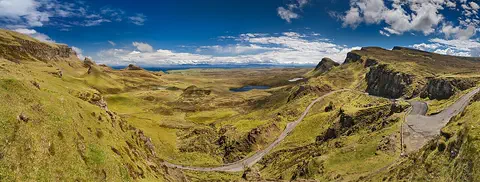
The United Kingdom, or UK, lies on islands off the northwest coast of Europe. It is made up of four parts, England, Scotland, Wales and Northern Ireland, and about 69.5 million people live there. Its capital is London.
Explore next
-
 Watch
Animal
Slow worm
The slow worm is a legless lizard from Europe. It is not a worm or a snake: unlike snakes, it can blink its eyelids and drop its tail. Slow worms live in meadows, woodland edges, heaths and gardens, spend a lot of time hidden under logs or underground, and hunt slow-moving prey such as small slugs. Mothers give birth to live young.
-
 Watch
Animal
Common wall lizard
The common wall lizard lives across much of southern and central Europe, from northern Spain to the Balkans and northwestern Türkiye. Its scientific name, muralis, means living on walls, and it is often found on stone walls and buildings, even in big cities. It lays eggs, and people have brought it to places such as Britain, the United States and Canada.
-
 Watch
Animal
Common toad
The common toad is a warty brown amphibian that lives across Europe and into Asia. It spends most of the year on land, hunting slugs, worms and insects at night, then travels back to the pond where it hatched to lay long strings of eggs each spring.
-
Watch
Country
Germany
Germany is a country in north-central Europe. The land rises from flat plains by the North Sea and the Baltic Sea to forested hills and, in the far south, the Alps. About 83.5 million people (2025) live there, and its capital is Berlin.
-
Watch
Country
United Kingdom
The United Kingdom, or UK, lies on islands off the northwest coast of Europe. It is made up of four parts, England, Scotland, Wales and Northern Ireland, and about 69.5 million people live there. Its capital is London.
-
 Watch
Animal
Aldabra giant tortoise
The Aldabra giant tortoise is one of the largest land tortoises on Earth. Wild ones live on Aldabra Atoll, a ring of coral islands in the Indian Ocean, where about 180,000 of them graze, browse and shape the land like elephants do in Africa. They can live for more than 100 years.
-
 Watch
Animal
Alligator snapping turtle
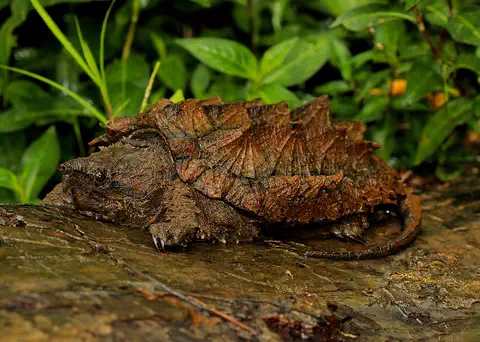
The alligator snapping turtle is the largest freshwater turtle in the United States. It lies still on the bottom of rivers and lakes with its mouth open, wiggling a worm-like lure on its tongue to trick fish into swimming close. Its numbers have fallen, and it is now endangered.
-
 Watch
3D
Animal
American alligator
The American alligator is a large, armored reptile of the swamps, marshes and lakes of the southeastern United States. Alligator mothers guard their nests and carry their babies to the water, and the holes alligators dig help many other animals survive dry seasons.
For parents & teachers
What children will learn
- Describe how male and female sand lizards look different in spring.
- Explain why sand lizards need both sunny open ground and thick plants.
- Describe how sand lizard eggs are kept warm.
- Explain how habitat restoration and reintroduction can bring an animal back.
Recommended ages: 3 to 17 · About 15 minutes
Talk about it
- Why might a lizard need open sunny spots and thick plants close together?
- Why might an animal be common in one country but rare in another?
- What could happen to a heath if nobody looks after it?
Try at home or in class
- Sun test: put two small stones outside, one in the sun and one in the shade. After an hour, feel which is warmer.
- Spot the stripes: look closely at the photo and count the pale spots along the lizard's back.
Key vocabulary: heathland, hibernation, arthropod, clutch, reintroduction, least concern
Where these facts come from
- GBIF Backbone Taxonomy and GBIF Occurrence Search , Global Biodiversity Information Facility (CC0 1.0 (backbone); occurrence counts are facts derived from records under CC0, CC BY and CC BY-NC)
- Wikidata , Wikimedia Foundation (CC0 1.0)
- The IUCN Red List of Threatened Species , International Union for Conservation of Nature (IUCN terms of use (no redistribution of Red List data or range maps))
- Lacerta agilis (Aghasyan et al., assessed 8 May 2018, published 2021) , IUCN Red List of Threatened Species
- Lacerta agilis: justification, range, population, habitat, threats, use and trade, and conservation text , IUCN Red List of Threatened Species
- Lacerta agilis: IUCN Red List global assessment record (Aghasyan et al. 2021), IUCN checklist on GBIF , GBIF
- Sand lizard , Amphibian and Reptile Conservation (ARC)
- File:Jaszczurka.jpg (Krzysztof Mizera, 13 August 2011) , Wikimedia Commons
- Wikimedia Commons , Wikimedia Foundation (Per file: Public domain, CC0, CC BY or CC BY-SA only (credited on each page))
Checked, not yet human-reviewed. Last updated November 1, 2026. Spotted a mistake? Tell us.