
Animal
Slow worm
The slow worm looks like a snake, but it is a lizard with no legs! It is shiny and smooth, and it loves to eat slugs.
The slow worm is a legless lizard from Europe. It is not a worm or a snake: unlike snakes, it can blink its eyelids and drop its tail. Slow worms live in meadows, woodland edges, heaths and gardens, spend a lot of time hidden under logs or underground, and hunt slow-moving prey such as small slugs. Mothers give birth to live young.
Anguis fragilis (family Anguidae) is a legless lizard found only in Europe, from 0 to 2,700 m. In 2013 genetic work split the former A. fragilis into five species (Gvoždík et al., accepted by Speybroeck et al. 2016). Bowles assessed it as Least Concern for the IUCN Red List (Global and Europe; assessed 20 June 2023, published 2024) for its wide distribution, presumed large and stable population and presence in many protected areas.
Photo: I, Wildfeuer, CC BY-SA 3.0, via Wikimedia Commons
Meet the slow worm
The slow worm has no legs.
But it is not a snake. It is a lizard!
It can blink its eyes.
The slow worm is a lizard without legs. People often mistake it for a snake, but snakes cannot blink, and a slow worm has eyelids. It also has a flat, forked tongue and can drop its tail to escape from a predator.
Its scientific name, fragilis, is Latin for fragile, after the tail that breaks off so easily. Grown slow worms are about 40 to 50 centimeters long.
Anguis fragilis is a legless lizard of the family Anguidae. Unlike snakes it has eyelids and a flat, forked tongue and can shed its tail to escape a predator (Amphibian and Reptile Conservation, ARC). The epithet fragilis is Latin for fragile, after the easily broken tail; the German name Blindschleiche does not mean blind but comes from an Old German word meaning shining, for its smooth skin (Reptile Database). Kent Wildlife Trust gives a length of 40 to 50 cm and a weight of 20 to 100 g.
Quick facts
- Group
- Reptile
- Length
- 0.4 to 0.5 m
- Weight
- 0.02 to 0.1 kg
- Lifespan in the wild
- up to 20 years
Meadows, woods and gardens
Slow worms live in grassy places, woods and gardens.
They like to hide under logs.
Slow worms live only in Europe, across a wide area from Portugal and Spain to Scandinavia and the Balkans. They live in grassy meadows, woodland clearings and edges, heaths, hedgerows, parks and country gardens, from sea level up to about 2,700 meters.
In Britain they are often found in gardens, especially around compost heaps.
The IUCN describes the species as endemic to Europe and widespread there, at 0 to 2,700 m, in grassy meadows, woodland glades, heathland, forest edges and clearings, alluvial forest, hedgerows, parkland and rural gardens; it has been found burrowing in loose sand and under rocks. In Britain it is widespread and often found in gardens (ARC), especially mature gardens and allotments with compost heaps (Kent Wildlife Trust). Its origin in Ireland is uncertain: it has been recorded there since 1972 and is established, and it may be an introduction or a genuine relict (IUCN).
Continent
Its habitats


Where can you find this animal?
- Lives here naturally · Countries and seas named by a scientific source
- Sightings recorded · Records of wild sightings (GBIF)
Lives here naturally · Countries and seas named by a scientific source
Found only in Europe (IUCN 2023). In France, Greece, Portugal and Spain it lives on the mainland only. Andorra and Liechtenstein are listed too (no map shapes), and so is the Kaliningrad area of Russia (not shaded: the shape is all of Russia). Romania and Moldova are on the IUCN list but not shaded: the Reptile Database says only a closely related species, Anguis colchica, lives in Romania, and Mo
Places: Albania, Austria, Belgium, Bosnia & Herz., Bulgaria, Croatia, Czechia, Denmark and 22 more places.
Source: iucn-red-list · checked November 2026
Sightings recorded · Records of wild sightings (GBIF)
Counts of GBIF records of wild observations (human and machine) and preserved specimens. Records include introduced populations, vagrants, escaped or released animals and misidentifications, so a country with records is not necessarily part of the native range.
Wild sightings have been recorded in France, UK, Netherlands, Germany, Austria, Switzerland, Sweden, Spain and 40 more places.
Source: gbif · checked October 2026
Range maps show where scientists say an animal lives, often country by country. An animal may live in only part of a country shown, and sightings records can include animals that wandered far from home.
Slugs on the menu
Slow worms eat slugs.
They eat worms too.
Slow worms hunt slow-moving prey, especially small slugs. They also eat earthworms, insects and other small animals without backbones. In British gardens and allotments, they are often found hunting around compost heaps.
They find their food mostly by smell, using a special sense organ that also helps them recognize other slow worms and avoid predators. In British gardens they help gardeners by eating pests, especially slugs.
Slow worms feed on slow-moving prey, particularly small slugs (ARC); Animal Diversity Web describes a carnivorous diet mainly of slugs and earthworms, with insects and other arthropods also listed. A well-developed vomeronasal organ lets them rely largely on smell to detect prey, recognize other slow worms and avoid predators. In the United Kingdom they are common in suburban gardens, where they eat garden pests, particularly slugs (Animal Diversity Web).
Did you know?
Baby slow worms are gold or silver.
Newborn slow worms are only about 4 centimeters long, very thin, with gold or silver backs and black bellies.
Neonates about 4 cm, gold or silver dorsally with black bellies (ARC).
Smooth, shiny and legless
Its skin is smooth and shiny.
Boys and girls look a bit different.
A slow worm is long and smooth, with shiny skin. Males are grayish brown and sometimes have blue spots. Females are brown with dark sides, and some have a thin line down the back. Females are larger than males.
Babies are very thin, about 4 centimeters long at first, with gold or silver backs and black bellies.
ARC describes a shiny lizard: males grayish brown, females brown with dark sides, some females with a thin vertebral line; juveniles very thin, about 4 cm at first, with gold or silver dorsal sides and black bellies. Kent Wildlife Trust notes that females are larger and that males are paler and sometimes have blue spots; Animal Diversity Web adds that blue-spotted males are a small percentage, especially in the east of the range. A lost tail can regrow, but the new one differs in color and internal structure (Animal Diversity Web).
Babies born in summer
The mother keeps her eggs inside her body.
In summer, the babies are born.
They are tiny and thin!
Slow worms mate in spring. The female keeps the eggs inside her body until they are ready, then gives birth to live young in late summer. A British wildlife trust says a mother has on average eight babies; across the species, litters of 3 to 26 young are recorded.
Females usually have babies only every other year. Young slow worms grow fastest in their first year, and females can start breeding when they are 3 to 4 years old.
A viviparous species: the female gives birth to 3 to 26 young (IUCN); ARC and Kent Wildlife Trust describe internal incubation of eggs and birth in late summer, on average eight young (Kent). Animal Diversity Web gives a breeding season of March to May, a gestation of 3 to 5 months, reproduction generally every other year, female maturity at 3 to 4 years, and most rapid growth in the first year, to an average snout-vent length of 100 mm.
Hidden away
Slow worms like to hide.
In winter they sleep underground.
Slow worms spend much of the year hidden underground, which makes them hard to watch. Unlike other British reptiles, they rarely bask out in the open: they prefer to hide under logs or in compost heaps, and on mild summer days they can be found under sun-warmed rocks.
In Britain they hibernate from about October to March. In the breeding season in spring, males can become aggressive toward each other.
Slow worms spend much of the year in burrows, which makes their behavior hard to observe and population changes hard to measure (Animal Diversity Web; IUCN). ARC notes that, unlike other British reptiles, they rarely bask in the open, preferring to hide under logs or in compost heaps; on mild summer days they are found under sun-warmed rocks, and pregnant females sometimes bask in direct sunlight (Animal Diversity Web). In the UK they are underground from October to March and may go underground again in the hottest part of summer; males become more aggressive in the breeding season (Animal Diversity Web; Kent Wildlife Trust).
Did you know?
Slow worms love slugs.
In British gardens, slow worms help gardeners by eating slugs.
Feeds on garden pests, particularly slugs (Animal Diversity Web).
Safe overall, protected in places
There are lots of slow worms.
In Britain, the law protects them.
The slow worm is listed as least concern, because it lives across a wide area and its numbers seem large and steady. In some places it is losing homes to intensive farming, spreading towns, fires and new forests planted in clearings. Traffic and pet cats are dangers too.
In Great Britain the law protects slow worms from being harmed or sold.
Bowles assessed Anguis fragilis as Least Concern (Global and Europe; assessed 20 June 2023, published 2024; trend stable; also Least Concern for the EU27). Local declines are believed to result from conversion of land to intensive agriculture; other threats are urbanization, fires, re-afforestation of clearings, road traffic, domestic cats and, in the UK, translocation projects. It is on Appendix III of the Bern Convention, occurs in many protected areas and is protected by law in some countries, such as Austria, Germany, Sweden and Switzerland (IUCN). In Great Britain it is protected by law against deliberate harm and against sale (ARC).
IUCN Red List
How is the slow worm doing in the wild?
- Least Concern (this animal)
- Near Threatened
- Vulnerable
- Endangered
- Critically Endangered
- Extinct in the Wild
- Extinct
Least Concern
Not at risk of disappearing from the wild right now.
Amazing facts
-
A slow worm can blink. Snakes can't!
A slow worm has eyelids and can blink, which is one way to tell it is a lizard and not a snake.
Eyelids, a flat forked tongue and tail autotomy separate it from snakes (ARC).
-
Its name means fragile, because its tail breaks off easily.
The name fragilis is Latin for fragile, because the slow worm's tail breaks off so easily.
Epithet fragilis, Latin 'fragile', after the easily broken tail (Reptile Database).
-
Slow worms love slugs.
In British gardens, slow worms help gardeners by eating slugs.
Feeds on garden pests, particularly slugs (Animal Diversity Web).
-
Baby slow worms are gold or silver.
Newborn slow worms are only about 4 centimeters long, very thin, with gold or silver backs and black bellies.
Neonates about 4 cm, gold or silver dorsally with black bellies (ARC).
Words to know
- legless lizard
- a lizard whose body has no legs, so it looks like a snake
- eyelid
- the skin that closes over an eye; snakes do not have them
- hibernate
- to spend the winter in a long rest
- live young
- babies that are born, not hatched from eggs outside the mother
- predator
- an animal that hunts and eats other animals
- least concern
- not currently at serious risk of dying out in the wild
Discovery challenge
-
What kind of animal is a slow worm?
What kind of animal is a slow worm?
To which group does Anguis fragilis belong?
- A lizard
- A worm
- A snake
Show the answer
A lizard
A lizard with no legs!
It is a legless lizard, not a worm or a snake.
A legless lizard of the family Anguidae.
-
What can a slow worm do that a snake can't?
What can a slow worm do that a snake cannot?
Which feature separates a slow worm from snakes?
- Blink its eyes
- Fly
- Swim underwater for days
Show the answer
Blink its eyes
It can blink!
It has eyelids, so it can blink.
Movable eyelids (ARC).
-
What do slow worms love to eat?
Which food do slow worms especially like?
What is the main prey of Anguis fragilis?
- Slugs
- Seeds
- Fish
Show the answer
Slugs
Slugs!
Slow-moving prey, especially small slugs.
Mainly slugs and earthworms (ARC; Animal Diversity Web).
-
How are baby slow worms born?
How do slow worm babies come into the world?
What is the mode of reproduction of Anguis fragilis?
- The mother gives birth to live young
- They hatch from eggs in a nest
- They grow from tadpoles
Show the answer
The mother gives birth to live young
They are born alive!
The eggs stay inside the mother, and she gives birth in late summer.
Viviparous: 3 to 26 young (IUCN).
Places where you might see it
-
 Watch
 Country
United Kingdom
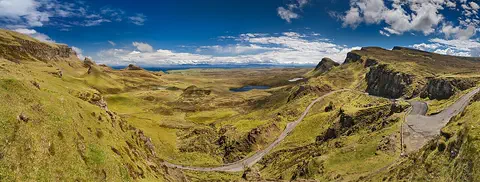
The United Kingdom, or UK, lies on islands off the northwest coast of Europe. It is made up of four parts, England, Scotland, Wales and Northern Ireland, and about 69.5 million people live there. Its capital is London.
-
 Watch
 Country
Germany
Germany is a country in north-central Europe. The land rises from flat plains by the North Sea and the Baltic Sea to forested hills and, in the far south, the Alps. About 83.5 million people (2025) live there, and its capital is Berlin.
Explore next
-
 Watch
Animal
Sand lizard
The sand lizard is a stocky lizard that lives across much of Europe and east into Central Asia, Mongolia and China. It likes sunny, open places such as meadows, heaths and sand dunes. Both males and females have brown patterns on their backs, but the males have green sides, brightest in spring. In Britain, females leave their eggs buried in warm, sunny sand.
-
 Watch
Animal
Common wall lizard
The common wall lizard lives across much of southern and central Europe, from northern Spain to the Balkans and northwestern Türkiye. Its scientific name, muralis, means living on walls, and it is often found on stone walls and buildings, even in big cities. It lays eggs, and people have brought it to places such as Britain, the United States and Canada.
-
Watch
Country
United Kingdom
The United Kingdom, or UK, lies on islands off the northwest coast of Europe. It is made up of four parts, England, Scotland, Wales and Northern Ireland, and about 69.5 million people live there. Its capital is London.
-
Watch
Country
Germany
Germany is a country in north-central Europe. The land rises from flat plains by the North Sea and the Baltic Sea to forested hills and, in the far south, the Alps. About 83.5 million people (2025) live there, and its capital is Berlin.
-
 Watch
Animal
Aldabra giant tortoise
The Aldabra giant tortoise is one of the largest land tortoises on Earth. Wild ones live on Aldabra Atoll, a ring of coral islands in the Indian Ocean, where about 180,000 of them graze, browse and shape the land like elephants do in Africa. They can live for more than 100 years.
-
 Watch
Animal
Alligator snapping turtle
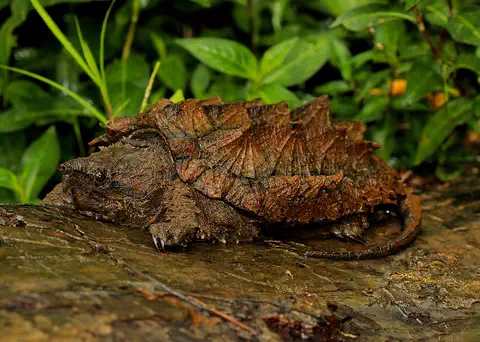
The alligator snapping turtle is the largest freshwater turtle in the United States. It lies still on the bottom of rivers and lakes with its mouth open, wiggling a worm-like lure on its tongue to trick fish into swimming close. Its numbers have fallen, and it is now endangered.
-
 Watch
3D
Animal
American alligator
The American alligator is a large, armored reptile of the swamps, marshes and lakes of the southeastern United States. Alligator mothers guard their nests and carry their babies to the water, and the holes alligators dig help many other animals survive dry seasons.
-
 Watch
Animal
American crocodile
The American crocodile is a large reptile of warm coasts and mangrove swamps, from the southern tip of Florida through Mexico, Central America, the Caribbean and northern South America. It is shy, it basks in the sun to warm up, and mother crocodiles carry their babies to the water.
For parents & teachers
What children will learn
- Explain how a slow worm differs from a snake.
- Describe what slow worms eat and why gardeners like them.
- Describe how slow worm babies are born.
- Explain why an animal that hides a lot is hard to count.
Recommended ages: 3 to 17 · About 15 minutes
Talk about it
- Why might people think a slow worm is a snake?
- Why might a garden compost heap be a good home for a slow worm?
- How could you count animals that spend most of their time hidden?
Try at home or in class
- Lizard or snake? Make a two-column chart and sort the slow worm's features (eyelids, no legs, forked tongue, drops its tail) by which animal they match.
- Measure it: cut a string 50 centimeters long, the length of a big slow worm, and compare it with your arm.
Key vocabulary: legless lizard, eyelid, hibernate, live young, predator, least concern
Where these facts come from
- GBIF Backbone Taxonomy and GBIF Occurrence Search , Global Biodiversity Information Facility (CC0 1.0 (backbone); occurrence counts are facts derived from records under CC0, CC BY and CC BY-NC)
- Wikidata , Wikimedia Foundation (CC0 1.0)
- The IUCN Red List of Threatened Species , International Union for Conservation of Nature (IUCN terms of use (no redistribution of Red List data or range maps))
- Anguis fragilis (Bowles, assessed 20 June 2023, published 2024) , IUCN Red List of Threatened Species
- Anguis fragilis: taxonomy, justification, range, population, habitat, threats and conservation text , IUCN Red List of Threatened Species
- Anguis fragilis: IUCN Red List global assessment record (Bowles 2024), IUCN checklist on GBIF , GBIF
- Slow-worm , Amphibian and Reptile Conservation (ARC)
- Slow worm , Kent Wildlife Trust
- Anguis fragilis: Slow Worm (Shortridge 2019) , Animal Diversity Web, University of Michigan
- Anguis fragilis Linnaeus, 1758 , The Reptile Database
- File:2009-08-14Anguis fragilis037.jpg (Wildfeuer, 14 August 2009) , Wikimedia Commons
- Wikimedia Commons , Wikimedia Foundation (Per file: Public domain, CC0, CC BY or CC BY-SA only (credited on each page))
Checked, not yet human-reviewed. Last updated November 1, 2026. Spotted a mistake? Tell us.