
Animal
Common wall lizard
The common wall lizard is a small, quick lizard from Europe. It likes to sit on sunny rocks, walls and buildings!
The common wall lizard lives across much of southern and central Europe, from northern Spain to the Balkans and northwestern Türkiye. Its scientific name, muralis, means living on walls, and it is often found on stone walls and buildings, even in big cities. It lays eggs, and people have brought it to places such as Britain, the United States and Canada.
Podarcis muralis (family Lacertidae) ranges from northern Spain north to northern France and east to the Balkans and northwestern Anatolia, from sea level to 2,500 m. Böhme and colleagues listed it as Least Concern for the IUCN Red List (assessed 14 December 2008, published 2009; marked as needing an update) for its wide distribution, broad habitat tolerance and presumed large population. Introduced populations live in the United Kingdom, Germany, the United States and on Vancouver Island, Canada.
Photo: Mariomassone, CC BY-SA 4.0, via Wikimedia Commons
Meet the common wall lizard
The common wall lizard is a small lizard.
It likes sunny walls and rocks.
Its tail is very long!
The common wall lizard grows up to about 23 centimeters long, and its tail is about twice as long as its body. Its name comes from the Latin word muralis, which means living on walls.
In Canada, wall lizards are described with brown backs covered in green blotches, and males with blue spots along their sides. The lizard in this page's photo has a bright green back with a net of dark brown marks.
The Reptile Database gives the meaning of the epithet muralis as living on walls. The Invasive Species Council of British Columbia describes animals up to 23 cm in total length, with the tail twice the body length, females slightly smaller than males, brown backs with green blotches, blue spots along the sides of males, and cream bellies with brown spots that darken toward the throat. The species is genetically very diverse: the Reptile Database lists many described subspecies and notes that it is still unclear how its genetic groups match them.
Quick facts
- Group
- Reptile
- Length
- 0.23 m
Walls, rocks and railway lines
Wall lizards live on rocks and walls.
Some live in towns and cities.
Common wall lizards live in rocky places and on scree, in scrubland, woods, orchards, vineyards and fields, and on stone walls and buildings. They are often found where people live, in villages and large cities, and along railway lines.
They live from sea level up to about 2,500 meters high in the mountains.
The IUCN describes a range from northern Spain north to northern France, southern Belgium, Luxembourg and west-central Germany, east through Austria, southwestern Czechia, central Slovakia and Hungary to central Romania, Bulgaria, most of the Balkans and northwestern Anatolia, plus Jersey in the Channel Islands. It is largely absent from northern Europe (small, isolated northern populations), southern Iberia and parts of southern Italy. Habitats include rock and scree, scrub, deciduous and coniferous woodland, orchards, vineyards, fields, walls and buildings; it is often found in settlements and along railway lines, which may help it spread.
Continent
Its habitats


Where can you find this animal?
- Brought here by people · Countries and seas named by a scientific source
- Brought here by people · Countries and seas named by a scientific source
- Lives here naturally · Countries and seas named by a scientific source
- Sightings recorded · Records of wild sightings (GBIF)
Brought here by people · Countries and seas named by a scientific source
Introduced to the United States, and in many places in the United Kingdom and Germany, often presumably by people who kept them (IUCN). Germany is shaded as native above.
Places: United States and UK.
Source: iucn-red-list · checked November 2026
Brought here by people · Countries and seas named by a scientific source
Introduced to southern Vancouver Island, British Columbia, in 1967 and slowly spreading since (Invasive Species Council of British Columbia). The Reptile Database also lists an introduced population in Poland (not shaded).
Places: Canada.
Source: https://bcinvasives.ca/invasives/european-wall-lizard/ · checked November 2026
Lives here naturally · Countries and seas named by a scientific source
From northern Spain to northern France, Belgium, Luxembourg and west-central Germany, east to central Romania, Bulgaria, most of the Balkans and northwestern Türkiye (IUCN 2008). In several shaded countries it lives only in parts: northern Spain plus a few isolated central Spanish groups, southern Belgium, west-central Germany, southwestern Czechia, central Slovakia and central Hungary. Liechtenst
Places: Albania, Austria, Belgium, Bosnia & Herz., Bulgaria, Croatia, Czechia, France and 15 more places.
Source: iucn-red-list · checked November 2026
Sightings recorded · Records of wild sightings (GBIF)
Counts of GBIF records of wild observations (human and machine) and preserved specimens. Records include introduced populations, vagrants, escaped or released animals and misidentifications, so a country with records is not necessarily part of the native range.
Wild sightings have been recorded in France, Germany, Italy, Switzerland, Netherlands, Austria, Spain, Luxembourg and 32 more places.
Source: gbif · checked October 2026
Range maps show where scientists say an animal lives, often country by country. An animal may live in only part of a country shown, and sightings records can include animals that wandered far from home.
Ants, beetles and much more
Wall lizards eat bugs and spiders.
Some eat fruit too.
Common wall lizards eat many kinds of small animals. In western Bulgaria, scientists who studied what wall lizards had eaten found a very wide range of foods, and grown-up lizards ate a wider variety than young ones.
In a neighborhood in Victoria, British Columbia, Canada, where people brought them, ants were the food found most often, then beetles and earwigs. In British Columbia they also eat spiders and fruit.
Vacheva and Naumov (2024) analyzed 194 fecal samples from two localities in western Bulgaria and describe P. muralis as an opportunistic feeder with a very wide trophic spectrum, with adults eating a more diverse diet than subadults and differences between males and females. In a suburban neighborhood of Victoria, British Columbia, ants were the most frequently detected prey, followed by beetles and earwigs, and adults took about 30% more prey taxa than juveniles (Gullo et al. 2024). The Invasive Species Council of British Columbia describes the introduced lizards as omnivorous, eating insects, spiders, other invertebrates and fruits.
Did you know?
Wall lizards have lived in Canada since 1967.
Wall lizards were brought to southern Vancouver Island in Canada in 1967 and have been slowly spreading ever since.
Introduced to southern Vancouver Island in 1967; without help it spreads about 100 m a year (Invasive Species Council of British Columbia).
Long legs and a long tail
It has long legs and long toes.
Its tail is twice as long as its body!
A common wall lizard has long legs and long toes, and its tail is about twice as long as its body. Females are a little smaller than males.
In British Columbia it looks like a native lizard there, the northwestern alligator lizard, but the wall lizard has longer legs and toes and can have green or blue colors.
Diagnostic notes from British Columbia: longer limbs and toes than the native northwestern alligator lizard (Elgaria coerulea), and green or blue coloration where the alligator lizard is drabber; tail about twice the body length; females slightly smaller than males (Invasive Species Council of British Columbia).
Eggs hidden under stones
The mother lays eggs.
She hides them under rocks or wood.
She can lay eggs more than once a year.
Common wall lizards lay eggs. In general, females lay two or three clutches a year, with two to six eggs in each.
In British Columbia, females lay up to three times in spring and summer, 3 to 11 eggs each time. They hide the eggs under rocks or pieces of wood on the ground, and the eggs take up to about a month to hatch.
The IUCN gives two to three clutches of two to six eggs per year. For the introduced British Columbia population, the Invasive Species Council of British Columbia reports up to three clutches a year in spring and summer, 3 to 11 eggs per clutch, eggs hidden under rocks or wood, and incubation of up to a month. The Reptile Database lists the species as oviparous.
Sun on the rocks
Wall lizards warm up in the sun.
In winter they rest.
Common wall lizards bask on rocks and tree trunks in full sun. In British Columbia they rest through the winter, from November to March, but may come out on sunny days.
On their own they spread only about 100 meters a year, so people think they travel farther by hitching rides on vehicles, in shipments of fruit and plants, or when pets are let go.
In British Columbia the species basks on rocks and tree trunks in full sun, does well in human-modified areas such as backyards, railways and roadsides, and typically hibernates from November to March but may be active on sunny days. Without human help it typically spreads about 100 m a year, so it is thought to spread by hitchhiking on vehicles, in shipments of produce and plants, or through pet releases (Invasive Species Council of British Columbia). In Switzerland, introduced southern subspecies are mostly found along railway lines (IUCN).
Did you know?
The wall lizard's name means living on walls.
The scientific name muralis comes from Latin and means living on walls.
Epithet from Latin muralis, to live on walls (Reptile Database).
Common at home, a newcomer elsewhere
There are lots of wall lizards.
In some places far from home, people try to stop them spreading.
The common wall lizard is listed as least concern: it lives across a large area and is usually common where it can find a good home. In some places it is threatened, for example on islands, in some mountains where alpine tourism is being developed, and in parts of northern Europe where more intensive farming and too much pesticide use cost it its habitat.
People have brought it to new places. In British Columbia it is a newcomer that people are asked not to keep, breed, release, sell or move.
Böhme et al. assessed Podarcis muralis as Least Concern (Global; assessed 14 December 2008, published 2009; trend stable; needs updating). There appear to be no major threats overall; populations are locally threatened on islands and in mountains (alpine tourism in central Spain) and, mainly in northern Europe, by agricultural intensification and pesticide overuse. It is frequent in the pet trade, not considered a major threat, and introduced non-native subspecies may threaten some local populations. It is on Appendix II of the Bern Convention and Annex IV of the EU Habitats Directive. In British Columbia it is a Regional Containment/Control species on the provincial priority invasive species list.
IUCN Red List
How is the common wall lizard doing in the wild?
- Least Concern (this animal)
- Near Threatened
- Vulnerable
- Endangered
- Critically Endangered
- Extinct in the Wild
- Extinct
Least Concern
Not at risk of disappearing from the wild right now.
Amazing facts
-
The wall lizard's name means living on walls.
The scientific name muralis comes from Latin and means living on walls.
Epithet from Latin muralis, to live on walls (Reptile Database).
-
A wall lizard's tail is twice as long as its body.
A common wall lizard's tail is about twice as long as its body.
Tail about twice the body length (Invasive Species Council of British Columbia).
-
Wall lizards can live in big cities.
Common wall lizards are often found in villages and large cities, and along railway lines.
Often in human settlements, including large cities, and along railway lines, a possible means of dispersal (IUCN).
-
Wall lizards have lived in Canada since 1967.
Wall lizards were brought to southern Vancouver Island in Canada in 1967 and have been slowly spreading ever since.
Introduced to southern Vancouver Island in 1967; without help it spreads about 100 m a year (Invasive Species Council of British Columbia).
Words to know
- basking
- lying in the sun to warm up
- clutch
- a group of eggs laid at one time
- introduced
- brought by people to a place where it did not live before
- scree
- loose broken stones on a mountain slope
- invasive
- a living thing brought to a new place that spreads and can cause problems there
- least concern
- not currently at serious risk of dying out in the wild
Discovery challenge
-
What does the wall lizard's name mean?
What does the scientific name muralis mean?
What does the epithet muralis mean?
- Living on walls
- Living in water
- Living in trees
Show the answer
Living on walls
Living on walls!
Muralis is Latin for living on walls.
To live on walls (Reptile Database).
-
How long is a wall lizard's tail?
How long is a common wall lizard's tail compared with its body?
What is the tail length relative to the body in P. muralis?
- About twice as long as its body
- About half as long as its body
- It has no tail
Show the answer
About twice as long as its body
Twice as long as its body!
Its tail is about twice as long as its body.
About twice the body length (Invasive Species Council of British Columbia).
-
Where do wall lizards hide their eggs?
In British Columbia, where do wall lizards hide their eggs?
Where do introduced P. muralis in British Columbia place their eggs?
- Under rocks or wood
- In a nest in a tree
- In a pond
Show the answer
Under rocks or wood
Under rocks or wood!
The eggs are hidden under rocks or pieces of wood on the ground.
Hidden under rocks or wood on the ground (Invasive Species Council of British Columbia).
-
Where are wall lizards from?
Where is the common wall lizard's home range?
What is the native range of Podarcis muralis?
- Europe
- Australia
- South America
Show the answer
Europe
Europe!
Southern and central Europe, from northern Spain to the Balkans and northwestern Türkiye.
Northern Spain to the Balkans and northwestern Anatolia (IUCN).
Places where you might see it
-
 Watch
 Country
Italy
Italy is a country in southern Europe on a long peninsula that reaches into the Mediterranean Sea, often described as shaped like a boot. The Alps rise in the north, the Apennine mountains run down its length, and about 58.9 million people (2026) live there. Its capital is Rome.
-
 Watch
 Country
France
France is a country in northwestern Europe, between the Atlantic Ocean and the Mediterranean Sea. It has high mountains such as the Alps and the Pyrenees, long rivers such as the Loire and the Seine, and about 69.1 million people (2026). Its capital is Paris.
-
 Watch
 Country
Switzerland
Switzerland is a small, landlocked country in central Europe. The Alps cover its south and east, great rivers such as the Rhine and Rhône begin there, and its 9.1 million people share four national languages: German, French, Italian and Romansh.
Explore next
-
 Watch
Animal
Sand lizard
The sand lizard is a stocky lizard that lives across much of Europe and east into Central Asia, Mongolia and China. It likes sunny, open places such as meadows, heaths and sand dunes. Both males and females have brown patterns on their backs, but the males have green sides, brightest in spring. In Britain, females leave their eggs buried in warm, sunny sand.
-
 Watch
Animal
Slow worm
The slow worm is a legless lizard from Europe. It is not a worm or a snake: unlike snakes, it can blink its eyelids and drop its tail. Slow worms live in meadows, woodland edges, heaths and gardens, spend a lot of time hidden under logs or underground, and hunt slow-moving prey such as small slugs. Mothers give birth to live young.
-
Watch
Country
Italy
Italy is a country in southern Europe on a long peninsula that reaches into the Mediterranean Sea, often described as shaped like a boot. The Alps rise in the north, the Apennine mountains run down its length, and about 58.9 million people (2026) live there. Its capital is Rome.
-
Watch
Country
France
France is a country in northwestern Europe, between the Atlantic Ocean and the Mediterranean Sea. It has high mountains such as the Alps and the Pyrenees, long rivers such as the Loire and the Seine, and about 69.1 million people (2026). Its capital is Paris.
-
Watch
Country
Switzerland
Switzerland is a small, landlocked country in central Europe. The Alps cover its south and east, great rivers such as the Rhine and Rhône begin there, and its 9.1 million people share four national languages: German, French, Italian and Romansh.
-
 Watch
Animal
Aldabra giant tortoise
The Aldabra giant tortoise is one of the largest land tortoises on Earth. Wild ones live on Aldabra Atoll, a ring of coral islands in the Indian Ocean, where about 180,000 of them graze, browse and shape the land like elephants do in Africa. They can live for more than 100 years.
-
 Watch
Animal
Alligator snapping turtle
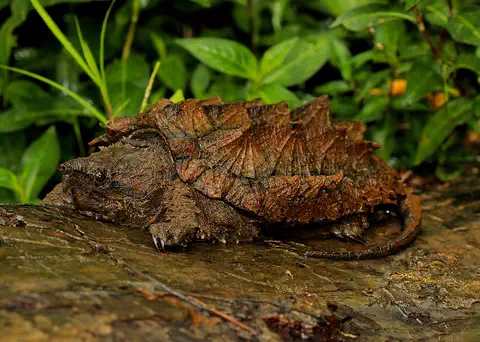
The alligator snapping turtle is the largest freshwater turtle in the United States. It lies still on the bottom of rivers and lakes with its mouth open, wiggling a worm-like lure on its tongue to trick fish into swimming close. Its numbers have fallen, and it is now endangered.
-
 Watch
3D
Animal
American alligator
The American alligator is a large, armored reptile of the swamps, marshes and lakes of the southeastern United States. Alligator mothers guard their nests and carry their babies to the water, and the holes alligators dig help many other animals survive dry seasons.
For parents & teachers
What children will learn
- Describe where common wall lizards live, including towns and cities.
- Explain what basking is and why lizards bask in the sun.
- Compare the egg-laying of wall lizards in Europe and in British Columbia.
- Explain how people can carry an animal to a new place by accident.
Recommended ages: 3 to 17 · About 15 minutes
Talk about it
- Why might a lizard do well living on walls and buildings?
- How could a small lizard travel hundreds of kilometers without walking?
- Why might an animal that is common in one place be unwelcome in another?
Try at home or in class
- Sun test: put two stones outside, one in the sun and one in the shade. After an hour, feel which is warmer.
- Tail measure: on a paper strip, draw a lizard's body 8 centimeters long, then add a tail twice as long. How long is the whole lizard?
Key vocabulary: basking, clutch, introduced, scree, invasive, least concern
Where these facts come from
- GBIF Backbone Taxonomy and GBIF Occurrence Search , Global Biodiversity Information Facility (CC0 1.0 (backbone); occurrence counts are facts derived from records under CC0, CC BY and CC BY-NC)
- Wikidata , Wikimedia Foundation (CC0 1.0)
- The IUCN Red List of Threatened Species , International Union for Conservation of Nature (IUCN terms of use (no redistribution of Red List data or range maps))
- Podarcis muralis (Böhme et al., assessed 14 December 2008, published 2009) , IUCN Red List of Threatened Species
- Podarcis muralis: justification, range, population, habitat, threats and conservation text , IUCN Red List of Threatened Species
- Podarcis muralis: IUCN Red List global assessment record (Böhme et al. 2009), IUCN checklist on GBIF , GBIF
- Podarcis muralis (Laurenti, 1768) , The Reptile Database
- European wall lizard , Invasive Species Council of British Columbia
- The common wall lizard Podarcis muralis (Reptilia: Lacertidae) shows diverse food preferences and intraspecific difference: a study case from Bulgaria (Vacheva and Naumov 2024) , Turkish Journal of Zoology
- Dietary observations of introduced Common Wall Lizards (Podarcis muralis) in a suburban environment, Victoria, British Columbia, Canada (Gullo et al. 2024) , Urban Naturalist (Eagle Hill Institute)
- File:Podarcis muralis near Entella river 006.jpg (Mariomassone, 25 April 2023) , Wikimedia Commons
- Wikimedia Commons , Wikimedia Foundation (Per file: Public domain, CC0, CC BY or CC BY-SA only (credited on each page))
Checked, not yet human-reviewed. Last updated November 1, 2026. Spotted a mistake? Tell us.