
Animal
Veiled chameleon
The veiled chameleon is a lizard with a tall, pointy crest on its head. It can change its colors, and it catches bugs with a long, sticky tongue.
The veiled chameleon lives in the dry mountains of Yemen and Saudi Arabia. It has a tall helmet-like casque on its head, eyes that can look two ways at once, feet that grip like hands and a super-fast sticky tongue. It changes color to show its mood, not to hide.
Chamaeleo calyptratus is a large chameleon of the mountains and plateaus of Yemen and southwestern Saudi Arabia. It shows the classic chameleon toolkit, from independently moving eyes and grasping feet to a ballistic tongue and layered color cells, plus a casque that helps channel moisture to its mouth. It is Least Concern in the wild but has been introduced to Florida and Hawaii through the pet trade.
Photo: H. Zell, CC BY-SA 3.0, via Wikimedia Commons
Meet the veiled chameleon
This is the veiled chameleon.
It is a lizard with a tall crest on its head, like a pointy hat. Its skin has green, yellow and blue stripes. It can change its colors!
The veiled chameleon is one of the larger chameleons. On top of its head is a tall crest called a casque, which can grow to about 5 centimeters high. Its body is banded with bright green, gold, blue and black.
Males are much bigger than females: a male can measure up to about 61 centimeters from nose to tail tip, while a female reaches about 25 to 36 centimeters. Males also have a little spur on each back foot, even when they hatch.
Chamaeleo calyptratus belongs to the chameleon family, Chamaeleonidae. Its most striking feature is the casque, a helmet-like crest that starts as a tiny swelling in hatchlings and can grow to about 2 inches (5 centimeters) tall; males have larger casques than females.
The species shows strong sexual dimorphism. ADW gives males 17 to 24 inches (43 to 61 centimeters) from head to tail tip and females 10 to 14 inches (25 to 36 centimeters), and adds that males hatch with spurs on their hind feet; the San Diego Zoo also notes the male's spur on each hind leg. Mature males show bold bands of turquoise, yellow, orange, green and black, while females are greener with tan, orange and white mottling.
Quick facts
- Group
- Reptile
- Length
- 0.25 to 0.61 m
- Lifespan in the wild
- 5 to 8 years
Where it lives
Veiled chameleons live in the mountains of Yemen and Saudi Arabia.
It is dry there, with little water. They climb in bushes and trees.
Veiled chameleons come from the southwestern corner of the Arabian Peninsula, in Yemen and southwestern Saudi Arabia. They live on high, dry plateaus, in mountain valleys and in the bushes and trees along wadis, valleys that only sometimes have water.
They climb in shrubs and trees, from low bushes near the ground to high branches. There is very little water in their home, so they have clever ways to drink, which you will find out about soon.
The IUCN lists the species as native to Saudi Arabia and Yemen, at elevations of about 1,200 to 2,000 meters; the Reptile Database gives up to 2,500 meters in Yemen and southwestern Saudi Arabia. Habitats include shrubland, grassland, plateaus and wadis along the foot of the escarpment, and the species also uses farmed and other human-altered land.
It is arboreal, living in trees and shrubs, and ADW notes it tolerates a wider range of temperatures than many chameleons. Pet-trade introductions have created wild populations in the United States, in Florida and on Maui in Hawaii, which appear on the map as an introduced layer.
Continent
Its habitat

Where can you find this animal?
- Brought here by people · Countries and seas named by a scientific source
- Lives here naturally · Countries and seas named by a scientific source
- Sightings recorded · Records of wild sightings (GBIF)
Brought here by people · Countries and seas named by a scientific source
Introduced through the pet trade: wild populations in Florida and on Maui, Hawaii.
Places: United States.
Source: iucn-red-list · checked October 2026
Lives here naturally · Countries and seas named by a scientific source
Mountain plateaus, valleys and wadis of Yemen and southwestern Saudi Arabia, roughly 1,200 to 2,500 meters above sea level. Veiled chameleons live only in this corner of each country shown.
Places: Saudi Arabia and Yemen.
Source: iucn-red-list · checked October 2026
Sightings recorded · Records of wild sightings (GBIF)
Counts of GBIF records of wild observations (human and machine) and preserved specimens. Records include introduced populations, vagrants, escaped or released animals and misidentifications, so a country with records is not necessarily part of the native range.
Wild sightings have been recorded in United States, Yemen, Saudi Arabia, Japan, Madagascar, Taiwan, Estonia, Egypt and 9 more places.
Source: gbif · checked October 2026
Range maps show where scientists say an animal lives, often country by country. An animal may live in only part of a country shown, and sightings records can include animals that wandered far from home.
What it eats
Veiled chameleons eat bugs.
They shoot out a long, sticky tongue to catch them. They also nibble leaves and flowers.
Veiled chameleons mostly eat insects, such as crickets and grasshoppers. A chameleon sits very still, spots an insect, then shoots out its long, sticky tongue very quickly and pulls the bug back into its mouth.
Unusually for a chameleon, the veiled chameleon also eats plants: leaves, flowers and buds. Eating leaves may also help it get water in the dry season. They sometimes catch small mammals and birds too.
The veiled chameleon is an omnivore. Its diet is mainly insects, captured with a projectile tongue, but unlike most chameleons it regularly eats leaves, flowers and buds; ADW reports that leaves can serve as a water source in the dry season. Hawaii's invasive species program adds that it will also eat small mammals and birds.
The tongue is kept bunched at the back of the mouth until needed. Its tip is a ball of muscle that forms a small suction cup on impact, and a sticky surface helps it grip, so even prey that a slow-moving lizard could never chase down can be caught. Strong jaws then crush the prey for swallowing.
Did you know?
Chameleons do not change color to hide.
A chameleon on a polka-dot tablecloth will not turn spotty! Its colors show its mood instead.
Each chameleon species has a fixed set of colors and patterns, used mainly for communication rather than background matching.
An amazing body
A chameleon's eyes can look in two directions at once!
Its feet grab branches like hands. Its tail can curl around a twig and hold on.
Chameleons are full of surprises. Each eye sits inside a scaly cone and can move on its own, so a chameleon can look at two different things at once and see all around its body. When it spots food, both eyes point at it.
Its toes are joined into two groups on each foot, which clamp onto branches the way your thumb and fingers grab a stick. Its tail can wrap around branches like an extra hand. And its tall casque collects drops of water at night that roll down into its mouth.
Each eye sits in a cone-shaped scaly lid with a small opening for the pupil, and the eyes rotate and focus independently, giving nearly 360-degree vision before converging on prey. The toes are joined into opposing bundles: on the forefoot the two outer toes form one group and the three inner toes another, reversed on the hind foot, producing a pincer grip.
The prehensile tail grips branches and, unlike many lizards' tails, cannot be shed and regrown. Color comes from layered skin cells (yellow and red pigment cells, melanin cells that make brown and black or reflect blue, and a white reflecting layer) controlled by nerves and hormones. According to the San Diego Zoo, the veiled chameleon's casque acts as a water collector, channeling nighttime moisture to the mouth.
Growing up
A mother chameleon digs a hole in the ground.
She lays lots of eggs and covers them up. When the babies hatch, they already know how to catch bugs!
When a female veiled chameleon is ready to lay eggs, she climbs down to the ground, digs a hole and lays a big clutch: the San Diego Zoo says 20 to 70 eggs. She buries them and leaves. She can do this up to three times a year.
The eggs take a long time to hatch, about 6 to 9 months. The babies look like tiny, paler adults, and within a few days they start hunting insects on their own, with no parent to teach them. They grow fast and can be grown up within their first year.
Females descend to the ground to dig a nest hole, lay a clutch, bury it and leave. Clutch sizes vary by source: 20 to 70 eggs (San Diego Zoo), 30 to 95 (Hawaii DLNR) or 35 to 85 (ADW); up to three clutches a year are possible. Incubation is long, about 6 to 9 months, and the eggs absorb water from the soil as they develop.
Hatchlings are independent at once, hunting insects within days. ADW reports sexual maturity at only 4 to 5 months, and females nearly full grown in their first year. ADW gives a usual lifespan of about five years for females and up to eight for males.
Colors that talk
Chameleons change color to show how they feel.
A happy, strong chameleon may turn bright. A scared one may turn dark. They like to live alone.
Chameleons do not change color to match whatever they sit on. Instead, colors are their way of talking. A chameleon's colors change with its mood, such as fear or anger, and with light and temperature. Bright males are more powerful and attract more females, while a male that gives in turns brown or gray.
Veiled chameleons like to live alone. Males guard their space and do not get along with other males. If a veiled chameleon is frightened, it may curl up and turn dark.
Color change is mainly communication, not camouflage. Displays shift with mood, light, temperature and humidity: brighter males are more dominant and more attractive to females, submissive males turn brown or gray, and females use color to accept or reject males and to signal that they are carrying eggs. ADW notes that female veiled chameleons darken to blackish-green with blue and yellow spots after mating.
The species is solitary and territorial. Adult males are intolerant of each other, and males and females tolerate one another only when ready to breed. When startled, a veiled chameleon may curl tightly, darken and stay still.
Did you know?
Veiled chameleons eat leaves as well as bugs.
Unlike most chameleons, veiled chameleons eat leaves, flowers and buds as well as insects.
Plant-eating is unusual among chameleons; ADW suggests leaves supply water during the dry season.
Wild home, faraway pets
Wild veiled chameleons are doing all right.
Some pet chameleons were let go in Hawaii and Florida. In Hawaii, they can eat the birds and bugs that belong there.
In their mountain home, veiled chameleons are not in danger: the IUCN lists them as Least Concern. Some are caught from the wild for the pet trade.
Many veiled chameleons are kept as pets around the world, and some have been released where they do not belong. In Florida and on the island of Maui in Hawaii, they now live in the wild. Hawaii counts them as a pest, because they can eat native Hawaiian birds and insects, and it is against the law to bring them there.
The IUCN assessed the species as Least Concern in 2012 (flagged as needing an update), with a stable population; hunting and trapping is the threat it names, and the species is traded nationally and internationally as a pet.
Introduced populations are a concern. The Reptile Database records the species as introduced to Florida, and Hawaii lists it as injurious wildlife: established populations on Maui could prey on native birds and insects, and officials worry that pet keepers are illegally spreading them. Hawaii's program notes the species can live from dry lowlands to wet mountains up to 12,000 feet, and can function ecologically like a tree snake.
IUCN Red List
How is the veiled chameleon doing in the wild?
- Least Concern (this animal)
- Near Threatened
- Vulnerable
- Endangered
- Critically Endangered
- Extinct in the Wild
- Extinct
Least Concern
Not at risk of disappearing from the wild right now.
See the IUCN Red List assessment · The IUCN Red List of Threatened Species 2022.2
Amazing facts
-
A chameleon can look at two things at the same time.
Each chameleon eye moves on its own, so it can look at two different things at once.
Independently rotating eyes give chameleons nearly 360-degree vision; both converge when prey is spotted.
-
The veiled chameleon's crest helps it drink.
At night, water drops roll down the veiled chameleon's casque and into its mouth.
The San Diego Zoo describes the veiled chameleon's casque as a water collector in its arid mountain home.
-
Chameleons do not change color to hide.
A chameleon on a polka-dot tablecloth will not turn spotty! Its colors show its mood instead.
Each chameleon species has a fixed set of colors and patterns, used mainly for communication rather than background matching.
-
Veiled chameleons eat leaves as well as bugs.
Unlike most chameleons, veiled chameleons eat leaves, flowers and buds as well as insects.
Plant-eating is unusual among chameleons; ADW suggests leaves supply water during the dry season.
Words to know
- casque
- a tall, helmet-like crest on a chameleon's head
- prehensile
- able to grab and hold on, like a chameleon's tail
- arboreal
- living in trees and bushes
- wadi
- a valley in a dry land that only sometimes has water
- omnivore
- an animal that eats both plants and animals
- introduced species
- an animal that people brought to a place where it did not live before
Discovery challenge
-
How does a chameleon catch bugs?
How does a veiled chameleon catch insects?
Which structure does a chameleon use to capture prey?
- With its tail
- With a long, sticky tongue
- With its casque
Show the answer
With a long, sticky tongue
Zap! Its long, sticky tongue grabs the bug.
It shoots out its long tongue, which grips the insect with a sticky, suction-cup tip.
A projectile tongue whose muscular tip forms a suction cup on contact.
-
Why do chameleons change color?
What is the main reason chameleons change color?
What is the primary function of chameleon color change?
- To show their mood and talk to other chameleons
- To copy any pattern they sit on
- To keep their eggs warm
Show the answer
To show their mood and talk to other chameleons
Their colors show how they feel.
Colors change with mood, light and temperature; chameleons do not copy their background.
Communication: displays signal dominance, submission and readiness to breed.
-
Where do wild veiled chameleons live?
Where do wild veiled chameleons come from?
Which region is the veiled chameleon's native range?
- Yemen and Saudi Arabia
- Antarctica
- Brazil
Show the answer
Yemen and Saudi Arabia
They come from the mountains of Yemen and Saudi Arabia.
They live in the dry mountains of Yemen and southwestern Saudi Arabia.
Mountain plateaus and wadis of Yemen and southwestern Saudi Arabia.
-
What does the tall crest on its head do?
How does the veiled chameleon's casque help it?
Which function does the San Diego Zoo give for the veiled chameleon's casque?
- It helps it hear
- It collects water drops that run into its mouth
- It stores food
Show the answer
It collects water drops that run into its mouth
Water drops roll down the crest into its mouth.
At night, moisture collects on the casque and runs down into the chameleon's mouth.
It acts as a water collector, channeling nighttime moisture to the mouth.
Places where you might see it
-
 Watch
 Country
Yemen
Yemen sits at the southwestern corner of the Arabian Peninsula, between the Red Sea and the Arabian Sea. Its green, terraced highlands are unlike anywhere else in Arabia, its old towns have tall houses of stone and mud brick, and it was the first place where coffee was grown as a crop to sell.
-
 Watch
 Country
Saudi Arabia
Saudi Arabia covers about four-fifths of the Arabian Peninsula. Most of it is dry desert, including the Empty Quarter, the largest sand area in the world. About 35.3 million people lived there in 2024, most of them in cities such as Riyadh, the capital.
Explore next
-
 Watch
Animal
Panther chameleon
The panther chameleon is a lizard famous for its brilliant colors. It lives on the island of Madagascar, grips branches with tong-shaped feet and a curling tail, looks two ways at once, and catches insects with a lightning-fast tongue. Males change their colors to send messages.
-
Watch
Country
Yemen
Yemen sits at the southwestern corner of the Arabian Peninsula, between the Red Sea and the Arabian Sea. Its green, terraced highlands are unlike anywhere else in Arabia, its old towns have tall houses of stone and mud brick, and it was the first place where coffee was grown as a crop to sell.
-
Watch
Country
Saudi Arabia
Saudi Arabia covers about four-fifths of the Arabian Peninsula. Most of it is dry desert, including the Empty Quarter, the largest sand area in the world. About 35.3 million people lived there in 2024, most of them in cities such as Riyadh, the capital.
-
 Watch
3D
Animal
Green iguana
The green iguana is a large lizard from the forests of Central and South America. It climbs high into trees to bask in the sun, eats leaves, flowers and fruit, and dives into rivers to get away from danger. It can grow to about 2 meters long, tail included.
-
 Watch
Animal
Aldabra giant tortoise
The Aldabra giant tortoise is one of the largest land tortoises on Earth. Wild ones live on Aldabra Atoll, a ring of coral islands in the Indian Ocean, where more than 100,000 of them graze, browse and shape the land like elephants do in Africa. They can live for more than 100 years.
-
 Watch
Animal
Alligator snapping turtle
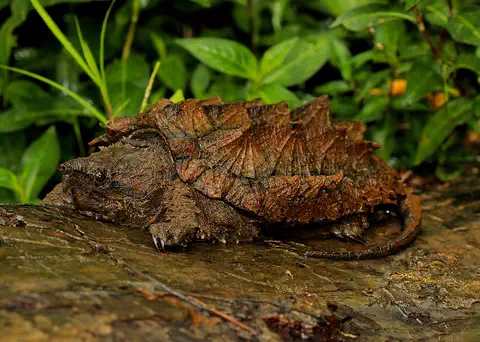
The alligator snapping turtle is the largest freshwater turtle in the United States. It lies still on the bottom of rivers and lakes with its mouth open, wiggling a worm-like lure on its tongue to trick fish into swimming close. Its numbers have fallen, and it is now endangered.
-
 Watch
3D
Animal
American alligator
The American alligator is a large, armored reptile of the swamps, marshes and lakes of the southeastern United States. Alligator mothers guard their nests and carry their babies to the water, and the holes alligators dig help many other animals survive dry seasons.
-
 Watch
Animal
American crocodile
The American crocodile is a large reptile of warm coasts and mangrove swamps, from the southern tip of Florida through Mexico, Central America, the Caribbean and northern South America. It is shy, it basks in the sun to warm up, and mother crocodiles carry their babies to the water.
For parents & teachers
What children will learn
- Describe chameleon adaptations: independent eyes, grasping feet, prehensile tail and projectile tongue.
- Explain that chameleons change color mainly to communicate, not to camouflage.
- Describe how veiled chameleons survive in a dry mountain habitat.
- Understand why releasing pet reptiles can harm wildlife elsewhere.
Recommended ages: 3 to 17 · About 15 minutes
Talk about it
- Why might a slow-moving lizard need a very fast tongue?
- How could a crest on the head help an animal living where there is little water?
- Why might a chameleon from Arabia cause problems in Hawaii?
Try at home or in class
- Hold a pencil with your thumb on one side and four fingers on the other, then try with fingers taped into two groups, like a chameleon's foot.
- Cover one eye and look left, then switch: imagine seeing both views at once, as a chameleon can.
Key vocabulary: casque, prehensile, arboreal, wadi, omnivore, introduced species
Where these facts come from
- The IUCN Red List of Threatened Species , International Union for Conservation of Nature (IUCN terms of use (no redistribution of Red List data or range maps))
- GBIF Backbone Taxonomy and GBIF Occurrence Search , Global Biodiversity Information Facility (CC0 1.0 (backbone); occurrence counts are facts derived from records under CC0, CC BY and CC BY-NC)
- Chamaeleo calyptratus (Veiled Chameleon), Red List assessment 2012 , IUCN Red List of Threatened Species
- Chameleon , San Diego Zoo Wildlife Alliance
- Veiled Chameleon , Hawaii Invasive Species Council, Department of Land and Natural Resources
- Chamaeleo calyptratus , The Reptile Database
- Chamaeleo calyptratus (veiled chameleon) , Animal Diversity Web, University of Michigan Museum of Zoology
- Wikidata , Wikimedia Foundation (CC0 1.0)
- Wikimedia Commons , Wikimedia Foundation (Per file: Public domain, CC0, CC BY or CC BY-SA only (credited on each page))
Checked, not yet human-reviewed. Last updated October 28, 2026. Spotted a mistake? Tell us.