
Animal
Wolverine
The wolverine looks like a small, furry bear, but it is part of the weasel family. It lives in cold, snowy places in the north. It can walk a long, long way.
The wolverine is a strong, stocky member of the weasel family that lives in the cold north of North America, Europe and Asia. It travels huge distances, eats almost anything it can find, and digs dens in deep snow for its babies. Its fierce reputation is often exaggerated: it avoids wolves and bears.
Gulo gulo is a stocky mustelid, a wide-ranging scavenger and predator of boreal forest and tundra. It lives at low densities, depends on persistent deep snow for denning, and reproduces slowly, using delayed implantation. The IUCN lists it as Least Concern but decreasing; it is sparse in Europe and in the eastern and southwestern parts of its North American range, and in the contiguous United States it has been listed as threatened since 2023.
Photo: Zefram, CC BY 2.5, via Wikimedia Commons
Meet the wolverine
The wolverine has thick dark brown fur, short legs and a bushy tail.
It looks a bit like a small bear. But it is really a cousin of weasels, otters and badgers.
The wolverine looks like a small, squat bear, but it belongs to the weasel family, with otters and badgers. It is about 65 to 104 centimeters long, plus a bushy tail, and most weigh 8 to 18 kilograms. Males are 30 to 40 percent heavier than females.
Its long, thick fur is dark brown to black, with a pale stripe running from each shoulder along its sides to its tail. Many have a white patch on the chest. It has a broad, flat head, short ears, short legs and strong teeth.
Gulo gulo is a mustelid that Britannica describes as resembling a small, squat, broad bear: 65 to 104 centimeters long excluding a 13- to 26-centimeter tail, 36 to 45 centimeters at the shoulder and usually 8 to 18 kilograms, with the largest males near 30. In Alaska, adult males weigh 11 to 18 kilograms and females 6 to 12, males being 30 to 40 percent heavier.
The long, dense coat is dark brown to black with a creamy to gold stripe from each shoulder along the flanks to the tail base, and a white throat or chest patch is common. Wolverines walk semiplantigrade, on the soles of their feet, and have hairy soles, curved semi-retractile claws, a broad flat head and anal glands that secrete a strong-smelling fluid.
Quick facts
- Group
- Mammal
- Length
- 65 to 104 cm
- Height
- 36 to 45 cm
- Weight
- 8 to 18 kg
- Lifespan in the wild
- 5 to 7 years
Where it lives
Wolverines live in the far north of the world.
They live in snowy forests, on mountains and on the cold, open tundra. They need lots of space and lots of snow.
Wolverines live in the cold north of North America, Europe and Asia: in Canada and the United States, including Alaska, in Norway, Sweden and Finland, and across Russia, Mongolia and China. They live in snowy forests, mountains and tundra.
They need huge areas of wild land. In south-central Alaska a male's home area is about 700 to 1,000 square kilometers. Long ago wolverines lived across much more of North America, but they are now gone from most of the eastern United States and eastern Canada.
The IUCN Red List (assessed 2015, published 2016) lists the wolverine as extant in Canada, China, Finland, Mongolia, Norway, Russia, Sweden and the United States, and as a vagrant in Estonia. It inhabits taiga, boreal forest, mountains and tundra.
The Alaska Department of Fish and Game (ADF&G) notes that the range has receded substantially from most of the eastern United States and Canada, and Britannica describes wolverines as sparse in Europe and in the eastern and southwestern parts of the North American range. In Colorado, native wolverines had not been observed since 1919. Shading is by country.
Continents
Its habitats


Where can you find this animal?
- Lives here naturally · Countries and seas named by a scientific source
- Sightings recorded · Records of wild sightings (GBIF)
Lives here naturally · Countries and seas named by a scientific source
Boreal forest, taiga, mountains and tundra of the far north. The range has shrunk from most of the eastern United States and Canada, and wolverines live only in parts of most countries shown. Estonia, where wolverines are vagrants, is not shown.
Places: Canada, United States, Norway, Sweden, Finland, Russia, Mongolia and China.
Source: iucn-red-list · checked October 2026
Sightings recorded · Records of wild sightings (GBIF)
Counts of GBIF records of wild observations (human and machine) and preserved specimens. Records include introduced populations, vagrants, escaped or released animals and misidentifications, so a country with records is not necessarily part of the native range.
Wild sightings have been recorded in Norway, United States, Canada, Sweden, Finland, Russia, Poland, Germany and 9 more places.
Source: gbif · checked October 2026
Range maps show where scientists say an animal lives, often country by country. An animal may live in only part of a country shown, and sightings records can include animals that wandered far from home.
What it eats
Wolverines eat almost anything they can find.
In winter they eat leftovers from big animals. They also catch voles, squirrels, hares and birds.
Wolverines eat almost anything they can find or catch. In winter they mostly eat carrion, the remains of moose, caribou and other animals that died or were left by wolves and hunters. All year they also catch smaller animals like voles, squirrels, snowshoe hares and birds, and in spring they sometimes take young Dall sheep.
Their powerful jaws and big neck muscles let them crush bones and chew frozen meat. Wolverines can go for a long time on very little food.
Wolverines are opportunistic and well adapted for scavenging. ADF&G reports that in winter they rely mainly on carrion, such as moose and caribou killed by wolves, by hunters or by natural causes, while year-round they hunt small and medium-sized mammals and birds: voles, squirrels, snowshoe hares and others. Killing moose, Dall sheep or caribou is possible but rare, though young Dall sheep are taken in spring.
Powerful jaws and neck muscles allow them to crush bone and eat frozen flesh, and they can survive long periods on little food. Britannica adds that rodents tunneling under deep snow are a frequent prey, and that harsh, snowy winters are thought to leave more carcasses.
Did you know?
Frost brushes right off a wolverine's fur.
Frost and frozen breath brush off wolverine fur so easily that people have used it to trim parka hoods.
Britannica notes that wolverine fur is valued for parka trim because frost and frozen breath brush off the smooth hairs.
Built for the snow
Wolverines have hairy soles on their feet and curved claws.
They are good at climbing trees. Their thick fur is long. Frost brushes off it easily.
Wolverines walk on the soles of their feet, like people and bears, and their feet have hairy soles. Their curved claws can be partly pulled in, and wolverines can climb trees easily.
Their thick coat is long and dense. Its smooth hairs are so good at shedding frost that wolverine fur is valued for trimming parkas, because frost and frozen breath brush off easily. Wolverines have amazing endurance: movements of about 64 kilometers in a single day have been recorded.
A semiplantigrade gait, hairy soles, short bowed legs and curved semi-retractile claws suit travel over snow and rough ground, and wolverines climb trees readily. Strong teeth, powerful jaws and large neck muscles enable bone-crushing.
The long, coarse fur sheds frost: Britannica notes it is valued for parka trim because frost and frozen breath brush off its smooth hairs. Endurance is exceptional; ADF&G documents movements of 40 miles (about 64 kilometers) in a day. Densities are low: about 4.5 to 5.0 wolverines per 1,000 square kilometers in the Kenai Mountains and Turnagain Arm area, which ADF&G says is typical of south-central Alaska.
Growing up in a snow cave
Baby wolverines are called kits.
Many are born in a cave dug in deep snow. They are born blind and tiny. Their mother raises them alone.
Wolverines mate in summer, from May to August, but the tiny embryo waits and does not attach inside the mother until late fall or early winter. This is called delayed implantation. Kits are born between February and April, often in snow caves with tunnels up to about 55 meters long.
A litter usually has two or three kits, born blind and weighing less than half a kilogram. They grow fast, stop drinking milk at 9 to 10 weeks, and reach adult size by winter. The mother raises them alone. Young males usually leave home at about a year old.
Breeding runs from May to August, but the blastocyst does not implant until late fall or early winter; delayed implantation lets a female commit to pregnancy when food and her condition are best, and in poor years pregnancies may fail. Births occur from February to April, often in snow caves with one or two tunnels up to 60 yards (about 55 meters) long.
Wild litters average two to three kits, and ADF&G says no wild litter larger than four has been reported (Britannica gives one to five). Kits weigh under 0.4 kilograms, are weaned at 9 to 10 weeks and become independent at about five or six months, though most stay in their mother's range until at least a year. Both sexes mature in their second year, but fewer than 10 percent of two-year-old females produce litters.

A wide-ranging loner
Wolverines usually live alone.
They are busy in the day and at night. They walk and walk to look for food.
Wolverines live alone for most of the year. A male's home area overlaps those of two to six females, and males defend their areas from other males from February to July. Wolverines can be active at any time of day, all year round.
People often tell stories about how fierce wolverines are, but the Alaska Department of Fish and Game says this reputation is exaggerated. Wolverines do not go after wolves or bears. They avoid them, because those bigger predators can be dangerous to them.
Wolverines are largely solitary. In Alaska, resident males' home ranges overlap those of two to six females, offspring share their mother's range, and males defend territories from February through July, during denning and breeding. ADF&G reports activity at any time of day, year-round, while Britannica describes the species as generally a nocturnal hunter; it also notes that some adults, littermates and small family groups have been seen traveling together.
Their endurance and strength have made wolverines a subject of folklore, but ADF&G states that the fierce reputation is exaggerated: they avoid wolves and bears, as encounters can be fatal to them (wolves are a main natural cause of wolverine deaths), while defending food or territory against other wolverines and smaller predators.
Did you know?
A wolverine mom's baby waits months before it starts to grow.
Thanks to delayed implantation, a wolverine that mates in summer does not start growing a baby until late fall or winter.
Delayed implantation lets food supply and the female's condition determine whether a pregnancy is maintained and how many kits are born.
Wolverines and deep snow
Wolverines need big wild places with lots of snow.
In some places there are fewer than before. People are working to bring wolverines back to some mountains.
The IUCN lists the wolverine as Least Concern, but its numbers are going down. Wolverines are rare in Europe and in many parts of North America, because people hunted, trapped and poisoned them to keep them away from farm animals.
Wolverines also seem to depend on deep snow. Scientists have seen big drops in wolverine numbers where snow has become much less deep. Because they have few young and need lots of space, protecting large wild areas, and their snowy denning places, is important. In 2023 the U.S. Fish and Wildlife Service listed wolverines in the lower 48 states as threatened, which means protected by law. Plans have been made to bring wolverines back to some mountains in the United States.
The IUCN lists Gulo gulo as Least Concern with a decreasing trend. Britannica attributes its sparseness in Europe and in eastern and southwestern North America to hunting, trapping and poisoning aimed at protecting livestock. Limited reproduction makes populations sensitive to overharvest, and ADF&G notes that sustainable trapping in Alaska depends on refuges that act as source populations.
Wolverines appear dependent on deep snowpack, and North American studies have recorded significant declines where snow depth has fallen sharply. ADF&G stresses protecting large wilderness areas and, as recreation reaches remote areas, natal denning sites. In the contiguous United States, where wolverines live in the Northern Rocky Mountains and North Cascades, the U.S. Fish and Wildlife Service listed the North American wolverine as threatened under the Endangered Species Act in a final rule published on November 30, 2023 (in force from January 2, 2024), citing climate change and the habitat degradation and fragmentation that come with it. Reintroduction plans have targeted the Cascade Range, the Sierra Nevada and Colorado.
IUCN Red List
How is the wolverine doing in the wild?
- Least Concern (this animal)
- Near Threatened
- Vulnerable
- Endangered
- Critically Endangered
- Extinct in the Wild
- Extinct
Least Concern
Not at risk of disappearing from the wild right now.
See the IUCN Red List assessment · The IUCN Red List of Threatened Species 2022.2
Amazing facts
-
Frost brushes right off a wolverine's fur.
Frost and frozen breath brush off wolverine fur so easily that people have used it to trim parka hoods.
Britannica notes that wolverine fur is valued for parka trim because frost and frozen breath brush off the smooth hairs.
-
Wolverine kits are often born in caves made of snow.
In Interior and northern Alaska, most wolverine kits are born in snow caves, with tunnels up to about 55 meters long.
ADF&G reports that in Interior and northern Alaska most young are born in snow caves with one or two tunnels up to 60 yards long.
-
A wolverine mom's baby waits months before it starts to grow.
Thanks to delayed implantation, a wolverine that mates in summer does not start growing a baby until late fall or winter.
Delayed implantation lets food supply and the female's condition determine whether a pregnancy is maintained and how many kits are born.
-
Wolverines stay away from wolves and bears.
Despite their tough reputation, wolverines avoid wolves and bears, which can be dangerous to them.
ADF&G states that the wolverine's fierce reputation is exaggerated: it avoids larger predators rather than attacking them.
Words to know
- carrion
- the body of an animal that is already dead
- scavenger
- an animal that eats leftovers or animals that are already dead
- delayed implantation
- when a baby animal waits before it starts to grow inside its mother
- kit
- a baby wolverine
- tundra
- cold, treeless land in the far north
- snowpack
- the layers of snow that build up on the ground over winter
Discovery challenge
-
Which family does the wolverine belong to?
Which animal family is the wolverine part of?
To which family does Gulo gulo belong?
- The bear family
- The weasel family
- The dog family
Show the answer
The weasel family
It looks like a little bear, but it is part of the weasel family.
The weasel family, with otters and badgers, even though it looks bear-like.
Mustelidae, the weasel family.
-
Where are many wolverine babies born?
Where are many wolverine kits born?
Where do wolverines in Interior and northern Alaska usually give birth?
- In snow caves
- In bird nests
- Under water
Show the answer
In snow caves
Many are born in caves dug in deep snow.
In snow caves, which can have tunnels up to about 55 meters long.
In snow caves, which is one reason persistent deep snow matters.
-
What do wolverines eat in winter?
What do wolverines mainly eat in winter?
Which food source dominates the wolverine's winter diet?
- Mostly carrion
- Mostly grass
- Mostly fish from the sea
Show the answer
Mostly carrion
Mostly leftovers from big animals.
Carrion: the remains of moose, caribou and other animals.
Carrion, including ungulates killed by wolves, hunters or natural causes.
-
What do wolverines do when wolves and bears are near?
How do wolverines usually behave toward wolves and bears?
According to ADF&G, how do wolverines respond to larger predators?
- They avoid them
- They follow them everywhere
- They live with them
Show the answer
They avoid them
No. Wolverines stay away from wolves and bears.
They avoid them, because wolves and bears can be dangerous to them.
They avoid them; the fierce reputation is exaggerated.
Places where you might see it
-
 Watch
 Country
Canada
Canada is the second-largest country in the world, stretching across the north of North America from the Atlantic to the Pacific and up into the Arctic. It has the Rocky Mountains, thousands of islands and about 42 million people, who speak English, French and many other languages.
-
Watch
Natural wonder
Rocky Mountains
The Rocky Mountains, or Rockies, stretch about 4,800 kilometers from northern Canada to New Mexico in the United States. They include more than 100 separate ranges, and their highest peak, Mount Elbert in Colorado, is 4,399 meters tall. Glaciers carved their peaks and valleys, and famous parks such as Banff, Jasper and Yellowstone protect their lakes, hot springs and wildlife.
-
 Watch
 Country
Finland
Finland is a northern European country covered mostly by forest and dotted with tens of thousands of lakes. About a third of it lies north of the Arctic Circle, where the summer sun shines all night. About 5.7 million people live there, most of them in the south.
Explore next
-
 Watch
Animal
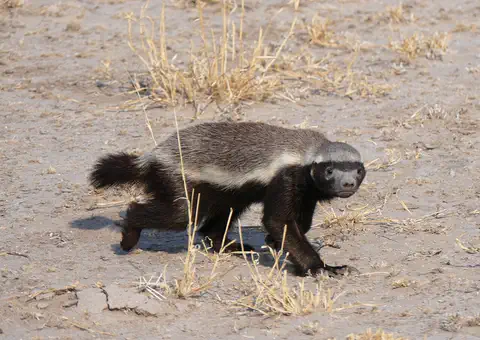
Honey badger
The honey badger, or ratel, is a stocky member of the weasel family that lives across Africa, the Middle East and India. Its gray or white back and black underside make it easy to spot. It digs with huge front claws, travels far to find food, and breaks into bees' nests for honey and bee grubs.
-
 Watch
Animal
Sea otter
The sea otter is a marine mammal of the North Pacific coast that spends almost its whole life in the water. It has the thickest fur of any animal, floats on its back to eat, and even uses rocks as tools. By eating sea urchins, sea otters help kelp forests stay healthy.
-
Watch
Country
Canada
Canada is the second-largest country in the world, stretching across the north of North America from the Atlantic to the Pacific and up into the Arctic. It has the Rocky Mountains, thousands of islands and about 42 million people, who speak English, French and many other languages.
-
 Watch
3D
Animal
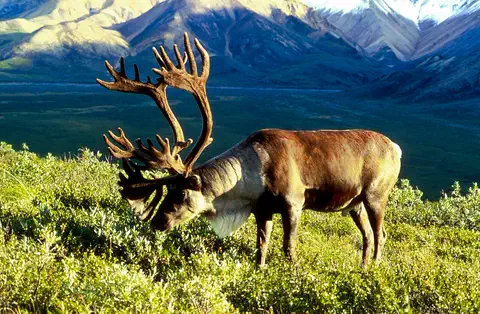
Reindeer
Reindeer, called caribou in North America, are deer of the Arctic tundra and northern forests. They are the only deer in which females grow antlers too. Some herds walk thousands of kilometers a year, and people in northern Europe and Asia have herded reindeer for a very long time.
-
 Watch
3D
Animal
Gray wolf
The gray wolf is the largest member of the dog family and the wild ancestor of pet dogs. Wolves live in family packs that hunt big animals like elk and moose together, and their howls can carry about 10 kilometers. After being wiped out in many places, wolves are coming back in parts of North America and Europe.
-
 Watch
Animal
Eurasian lynx
The Eurasian lynx is the largest of the four kinds of lynx. It has black ear tufts, a ruff of fur around its face, a short black-tipped tail and big furry paws for snow. It hides in forests and ambushes deer such as roe deer, and it has returned to parts of Europe where it had disappeared.
-
Watch
Natural wonder
Rocky Mountains
The Rocky Mountains, or Rockies, stretch about 4,800 kilometers from northern Canada to New Mexico in the United States. They include more than 100 separate ranges, and their highest peak, Mount Elbert in Colorado, is 4,399 meters tall. Glaciers carved their peaks and valleys, and famous parks such as Banff, Jasper and Yellowstone protect their lakes, hot springs and wildlife.
-
Watch
Country
Finland
Finland is a northern European country covered mostly by forest and dotted with tens of thousands of lakes. About a third of it lies north of the Arctic Circle, where the summer sun shines all night. About 5.7 million people live there, most of them in the south.
For parents & teachers
What children will learn
- Describe the wolverine's body and how it suits cold, snowy places.
- Explain how wolverines find food, including scavenging in winter.
- Understand delayed implantation and snow-cave denning.
- Explain why deep snow and large wild areas matter for wolverine conservation.
Recommended ages: 3 to 17 · About 15 minutes
Talk about it
- Why might an animal that lives at very low density be hard to study and protect?
- How could less snow in winter affect a wolverine family?
- Why do you think stories about wolverines made them sound fiercer than they are?
Try at home or in class
- Measure out 64 kilometers on a local map from your home to see how far a wolverine can travel in a day.
- Blow on a cold window or mirror, then compare how frost sticks to smooth and fluffy fabrics.
Key vocabulary: carrion, scavenger, delayed implantation, kit, tundra, snowpack
Where these facts come from
- The IUCN Red List of Threatened Species , International Union for Conservation of Nature (IUCN terms of use (no redistribution of Red List data or range maps))
- GBIF Backbone Taxonomy and GBIF Occurrence Search , Global Biodiversity Information Facility (CC0 1.0 (backbone); occurrence counts are facts derived from records under CC0, CC BY and CC BY-NC)
- Gulo gulo (Wolverine), 2015 assessment , IUCN Red List of Threatened Species
- Wolverine species profile , Alaska Department of Fish and Game
- Wolverine , Encyclopaedia Britannica
- Gulo gulo , Animal Diversity Web, University of Michigan Museum of Zoology
- North American wolverine receives federal protection as a threatened species under the Endangered Species Act (November 2023) , U.S. Fish and Wildlife Service
- North American wolverine (Gulo gulo luscus) , U.S. Fish and Wildlife Service
- Wikidata , Wikimedia Foundation (CC0 1.0)
- Wikimedia Commons , Wikimedia Foundation (Per file: Public domain, CC0, CC BY or CC BY-SA only (credited on each page))
Checked, not yet human-reviewed. Last updated October 24, 2026. Spotted a mistake? Tell us.