
City Europe
Kraków
Kraków is a big, old city in Poland. A castle stands on a hill beside the river.
Kraków is a city in southern Poland on the Vistula River. For almost three centuries it was the capital of Poland, where kings were crowned and buried at Wawel Hill. Its historic center is a UNESCO World Heritage Site, and about 816,600 people lived in the city at the end of 2025.
Kraków received its town charter in 1257, became the royal capital in 1320 and stayed the capital until Warsaw took over in 1596. Its university, founded in 1364, is one of the oldest universities of international renown, as UNESCO puts it. Poland's statistics office estimated 816,614 people in the city on 31 December 2025, second only to Warsaw.
Photo: XEvansGambitx, CC BY-SA 4.0, via Wikimedia Commons
Discover Kraków
Kraków is a city in Poland. It sits beside a wide river called the Vistula.
Only one city in Poland has more people. That city is Warsaw.
Kraków is a city in southern Poland, on the Vistula River. It is the capital of the province of Lesser Poland.
Poland's statistics office estimated 816,614 people in Kraków at the end of 2025, up from 800,653 in the 2021 census. Only Warsaw, the capital, has more people.
City Population's tables from Statistics Poland give Kraków 744,032 people at the end of 1992, 758,544 in the 2002 census, 800,653 in the 2021 census and 816,614 in the estimate for 31 December 2025, on 326.85 km². Warsaw (1,866,729) is the only larger city; Wrocław (672,601) is third.
Universalis places the old town on the rocky Wawel rise above the Vistula, at a crossroads where the river winds between the foothills near Wieliczka and the end of the Kraków Jura uplands.
- Country
- Poland
- People in Kraków (estimate, 31 December 2025)
- 816,614
- People in the 2021 census
- 800,653
- Area of the city
- 326.85 km²
Wawel Hill and the market square
A castle with red roofs stands on Wawel Hill. Long ago, Poland's kings lived there.
In the old town is a very big market square.
Wawel Hill rises beside the Vistula. On it stand the royal castle and the cathedral where Poland's kings were buried. UNESCO calls the hill the dominant feature of Kraków's historic center.
North of the hill lies the medieval town, with what UNESCO describes as Europe's largest market square, and in the southern part of town lies Kazimierz, an old district with ancient synagogues. Together they were added to UNESCO's World Heritage List in 1978.
UNESCO's World Heritage listing (inscribed 1978, boundary modified 2010, 149.65 ha) joins three ensembles: the medieval chartered city, the Wawel Hill complex and the town of Kazimierz with Stradom (chartered in 1335). Wawel Hill, a former royal residence and burial place, carries the castle and the cathedral that symbolize the seats of royal and bishops' power.
UNESCO describes 'Europe's largest market square', the remains of 14th-century fortifications, many churches, palaces and townhouses, and Kazimierz, shaped by both Catholic and Jewish cultures. Universalis counts thirty convents and fifty-eight old churches in the city.
- Historic Centre of Kraków
- UNESCO World Heritage Site, inscribed 1978
- Main Market Square
- described by UNESCO as Europe's largest market square
- Wawel Hill
- a former royal residence, with its castle and cathedral
City of kings
Long ago, Kraków was the capital of Poland. Kings were crowned there.
It has a very old university, where an astronomer named Copernicus studied.
Kraków received its town charter in 1257. In 1320 it became the capital of the Kingdom of Poland, and from then on Poland's kings were crowned and buried there. In 1364 King Casimir the Great founded its university, now called the Jagiellonian University; the astronomer Copernicus studied there from 1491 to 1494.
In 1596 Warsaw became the capital instead. Kraków later came under Austrian rule, and in 1918 it became part of the new Polish republic.
Universalis says Kraków was rebuilt with the help of German settlers after 1241 and received a charter on the model of Magdeburg law in 1257; Władysław I made it his capital in 1320, and it remained the city of royal coronations and burials. The university, founded in 1364 by Casimir the Great, was the second in eastern Europe, after Prague's; its oldest college, the Collegium Maius, where Copernicus studied in 1491–1494, is now a museum.
Warsaw became the capital in 1596. Austria took Kraków in 1795; it was a free city from 1815, was annexed again by Austria in 1846, and joined the new Polish republic in 1918. The city suffered greatly in the Second World War.
- Town charter
- 1257
- Royal capital
- from 1320 until 1596
- University founded
- 1364
Trams and the river
Trams run through the streets of Kraków. They have been electric for more than 120 years!
Boats float on the river beside the castle.
Kraków's trams have run on electricity since 1901. UrbanRail.Net lists a network of about 98.5 kilometers with 23 lines, and part of it runs in a tunnel with two underground stations, one of them under the main railway station.
The network is still growing: a new 4.3-kilometer line to the Mistrzejowice district opened in September 2026.
UrbanRail.Net describes Kraków's standard-gauge (1,435 mm) tram network, electrified since 1901, at about 98.5 km and 23 lines. Its 'rapid tram' tunnel, mostly built in the 1980s, has underground stations at the main railway station and the Technical University and opened in December 2008.
Recent extensions include Krowodrza Górka to Papierni Prądnickich (3.6 km, 2023) and the TAURON Arena to Mistrzejowice line (4.3 km), opened on 26 September 2026.
- Electric trams
- since 1901
- Tram network
- about 98.5 km, 23 lines
- Newest tram extension
- 4.3 km to Mistrzejowice, 26 September 2026
Cold winters, wet summers
Winters in Kraków are cold, and summers are warm.
Rain or snow falls often, and summer is the wettest time.
The World Meteorological Organization's averages for Kraków (1981–2010) show daytime highs of about 25 °C in July and only about 1 °C in January. January nights average about −5 °C.
About 672 millimeters of rain and snow fall in an average year. Summer is the wettest season: July brings the most, about 88 millimeters, and February the least, about 30.
The WMO table for Kraków, 1981–2010, gives average highs from 1.2 °C in January to 24.6 °C in July and average lows from −5.3 °C in January to 13.4 °C in July; lows are below freezing from December to March.
The monthly precipitation averages add up to about 671.5 mm a year, on about 175 days with 0.1 mm or more. June to August bring 250.0 mm, more than a third of the year; July is wettest (87.9 mm) and February driest (29.7 mm).
- July, average high (WMO, 1981–2010)
- 24.6 °C
- January, average low (same period)
- −5.3 °C
- Precipitation in a year (sum of the monthly averages)
- about 672 mm
Students, scholars and steel
Students come to Kraków to learn at its old university.
The city also has factories, and lots of visitors come to see its old buildings.
UNESCO calls the Jagiellonian University one of the oldest universities of international renown, and Universalis says that from the 1300s to the 1600s it was one of the main centers of learning in eastern Europe. Its oldest college, the Collegium Maius, is now a museum.
Kraków is also a city of industry. A large steelworks was built beside it at Nowa Huta, and Universalis describes a city making machines, electrical goods and medicines. It is a big center for tourists, too.
Universalis describes Kraków as 'the most famous of Polish cities' and, with its industrial satellite town of Nowa Huta, home of the first large steelworks of postwar Poland, a dynamic industrial city making machinery, electrical goods and pharmaceuticals, without losing the cultural and artistic roles behind its fame. It calls the city a major tourist center in the Tatra region.
UNESCO notes that Kraków was one of the largest administrative and commercial centers of central Europe, where arts and crafts flourished and the cultures of East and West mixed.
- Jagiellonian University
- one of the oldest universities of international renown (UNESCO)
- Collegium Maius
- the university's oldest college, now a museum
- Nowa Huta
- industrial district with a large steelworks
Kraków on the map
Find Poland on the globe, in central Europe. Kraków is in the south of Poland.
The Vistula River flows right past the castle hill.
Kraków is in southern Poland, at about 50° north, on the Vistula River. Universalis places it in the region of the Tatra Mountains.
Measured from Wawel Castle, the Cloth Hall in the Main Market Square is about 0.8 kilometers to the north, and the Collegium Maius about 0.8 kilometers to the north-northwest.
Kraków lies at about 50.1° N and 20.0° E. Measured from Wawel Castle (Wikidata points), the Wawel Cathedral is less than 0.1 km west-northwest, the Cloth Hall (Sukiennice) about 0.81 km north and the Collegium Maius about 0.84 km north-northwest.
The hero photo was taken from a drone camera on 27 April 2021 at 19:24 by its clock, about 0.55 km southwest of the castle and 446 m above sea level (Commons camera data), looking across the Vistula toward the castle and the city.
- Latitude
- about 50.1° north
- Longitude
- about 20.0° east
- Wawel Castle to the Cloth Hall
- about 0.8 km north
Amazing facts
-
Kraków has one of the biggest market squares in Europe!
UNESCO describes Kraków's medieval town as having Europe's largest market square.
UNESCO's description of the Historic Centre of Kraków says the 13th-century merchants' town has 'Europe's largest market square'.
-
An astronomer named Copernicus studied in Kraków.
The astronomer Copernicus studied at Kraków's university from 1491 to 1494.
Universalis notes that Copernicus studied at the Collegium Maius, the university's oldest college, from 1491 to 1494; the building is now a museum.
-
Kraków's old center has been a World Heritage Site since 1978.
The Historic Centre of Kraków was added to UNESCO's World Heritage List in 1978.
UNESCO lists the Historic Centre of Kraków as property 29, inscribed in 1978 under criterion (iv), with a minor boundary modification in 2010.
-
Some of Kraków's trams go underground!
Kraków's tram tunnel has two underground stations, one beneath the main railway station.
The 'rapid tram' tunnel, mostly built in the 1980s and opened in December 2008, has underground stations at the main railway station and the Technical University.
Words to know
- charter
- an official paper that gives a town its rights and rules
- coronation
- the ceremony in which a king or queen is crowned
- university
- a place where adults study and do research after school
- astronomer
- a scientist who studies the stars, planets and space
- World Heritage Site
- a place UNESCO lists as so important that it should be protected for everyone
- tram
- an electric train that runs on rails along city streets
Discovery challenge
-
Kraków is a city in which country?
Kraków is a city in which country?
Kraków was the royal capital of which kingdom from 1320 to 1596?
- Czechia
- Poland
- Germany
Show the answer
Poland
Poland!
Poland, in central Europe.
The Kingdom of Poland; Warsaw became the capital in 1596.
-
What river flows past Kraków's castle?
Which river flows past Wawel Hill in Kraków?
Kraków's old town stands on the rocky Wawel rise above which river?
- The Danube
- The Vistula
- The Rhine
Show the answer
The Vistula
The Vistula!
The Vistula, Poland's great river.
The Vistula.
-
Which scientist studied in Kraków?
Which astronomer studied at Kraków's university in the 1490s?
Who studied at the Collegium Maius from 1491 to 1494?
- Copernicus
- Galileo
- Newton
Show the answer
Copernicus
Copernicus!
Copernicus, from 1491 to 1494.
Copernicus; the Collegium Maius is now a museum.
-
Which city in Poland has more people than Kraków?
Which is the only Polish city with more people than Kraków?
In the estimate for 31 December 2025, which city outnumbered Kraków's 816,614?
- Wrocław
- Gdańsk
- Warsaw
Show the answer
Warsaw
Warsaw, the capital!
Warsaw, Poland's capital.
Warsaw (1,866,729); Wrocław is third (672,601).
-
Which month brings Kraków the most rain and snow?
Which month brings Kraków the most precipitation, on average?
Which month averages 87.9 mm of Kraków's roughly 672 mm a year (WMO, 1981–2010)?
- February
- July
- November
Show the answer
July
In July, in summer!
July. February is the driest.
July (87.9 mm); February is the driest (29.7 mm).
Nearby places
-
 Watch
City
Ostrava
Ostrava is the third-largest city in Czechia and the capital of the Moravian-Silesian Region. Universalis says it was born of the industrial revolution, as a place for mining coal, and grew with a big iron and steel industry. Czechia's 2021 census counted 282,450 people.
-
 Watch
City
Košice
Košice is the second-largest city in Slovakia and the center of the country's east. It lies in the valley of the Hornád River, with hills and mountains around it. Slovakia's 2021 census counted 229,040 people in the city.
-
 Watch
City
Warsaw
Warsaw is the capital of Poland, on the Vistula River. Much of the city was destroyed in World War II, and afterward its people rebuilt the Old Town so carefully that UNESCO made it a World Heritage Site. About 1.86 million people lived there in 2024.
-
 Watch
City
Budapest
Budapest, the capital of Hungary, was made in 1873 by joining three towns on the Danube River: hilly Buda and old Óbuda on one bank and flat Pest on the other. About 1.7 million people live there (2026), with hot springs under the ground and the first underground railway built on the European mainland.
-
 Watch
City
Lviv
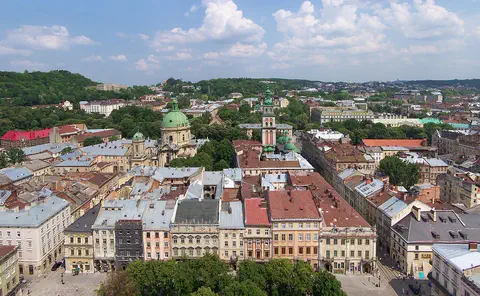
Lviv is a city in western Ukraine, founded in 1256 and named after Lev, a prince's son. Its old center, with a market square, castle hill and churches of many kinds, is on UNESCO's World Heritage List. Ukraine's statistics service estimated 717,273 people there at the start of 2022.
-
 Watch
City
Bratislava
Bratislava is the capital of Slovakia, on the Danube River close to the borders with Austria and Hungary. For more than 200 years it was the capital of the Kingdom of Hungary. The 2021 census counted 475,503 people in the city.
-
 Watch
Landmark
Belvedere
The Belvedere in Vienna is made of two Baroque palaces, the Lower and the Upper Belvedere, joined by a large garden. Prince Eugene of Savoy had them built as a summer home from 1712 to 1723, to designs by Johann Lukas von Hildebrandt. In 1777 the Upper Belvedere became, the museum says, one of the world's first public museums, and today the Belvedere is an art museum.
-
Watch
City
Vienna
Vienna is the capital of Austria, on the Danube River. For centuries it was the home of emperors, and composers such as Haydn, Mozart and Beethoven lived and worked there. About 2 million people lived in the city at the start of 2026.
Explore next
-
Watch
 Country
Poland
Poland lies near the center of Europe, between the Baltic Sea and the Carpathian Mountains. Most of it is low, flat land shaped by Ice Age glaciers, and about 37 million people live there. Its capital, Warsaw, stands on the Vistula River.
-
Watch
City
Warsaw
Warsaw is the capital of Poland, on the Vistula River. Much of the city was destroyed in World War II, and afterward its people rebuilt the Old Town so carefully that UNESCO made it a World Heritage Site. About 1.86 million people lived there in 2024.
-
 Watch
City
Prague
Prague, the capital of the Czech Republic, lies on the Vltava River in the heart of Europe. With Prague Castle on its hill, the 14th-century Charles Bridge and so many church towers that it is called the 'City of a Hundred Spires', its historic center is a UNESCO World Heritage Site. About 1.4 million people lived there in 2025.
-
Watch
City
Vienna
Vienna is the capital of Austria, on the Danube River. For centuries it was the home of emperors, and composers such as Haydn, Mozart and Beethoven lived and worked there. About 2 million people lived in the city at the start of 2026.
-
Watch
City
Ostrava
Ostrava is the third-largest city in Czechia and the capital of the Moravian-Silesian Region. Universalis says it was born of the industrial revolution, as a place for mining coal, and grew with a big iron and steel industry. Czechia's 2021 census counted 282,450 people.
-
Watch
City
Lviv
Lviv is a city in western Ukraine, founded in 1256 and named after Lev, a prince's son. Its old center, with a market square, castle hill and churches of many kinds, is on UNESCO's World Heritage List. Ukraine's statistics service estimated 717,273 people there at the start of 2022.
-
 Watch
City
Gdańsk
Gdańsk is a port city on Poland's Baltic coast and the capital of the Pomeranian Voivodeship. From the 13th to the 17th century it was one of Europe's great trading places. Statistics Poland estimated 489,328 people in the city at the end of 2025.
-
 Watch
City
Amsterdam
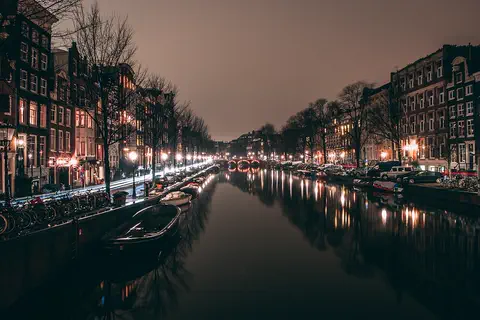
Amsterdam is the capital of the Netherlands. It began as a fishing village beside a dam on the Amstel River, which gave the city its name. Today about 942,000 people live among its rings of canals, hundreds of bridges, houseboats and bicycles.
For parents & teachers
What children will learn
- Locate Kraków on the Vistula in southern Poland.
- Describe how a medieval town became a royal capital and a university city.
- Explain what a World Heritage Site is and why old town centers are protected.
- Read monthly temperature and precipitation averages for a central European city.
Recommended ages: 3 to 17 · About 15 minutes
Talk about it
- Kings were crowned in Kraków, but in 1596 the capital moved to Warsaw. What might change for a city when it stops being the capital?
- Kraków's university is more than 650 years old. Why do you think some universities last so long?
- UNESCO protects Kraków's old center. What would you protect in your own town, and why?
Try at home or in class
- Castle model: build a hill beside a 'river' and put a castle and a cathedral on top, like Wawel Hill.
- Market square map: draw a big square with a long hall in the middle and streets leading out from it.
- Precipitation chart: plot Kraków's monthly precipitation and find the wettest and driest months.
Key vocabulary: charter, coronation, university, astronomer, World Heritage Site, tram
Where these facts come from
- Wikidata , Wikimedia Foundation (CC0 1.0)
- Natural Earth vector data , Natural Earth (NACIS) (Public domain)
- Poland: provinces and cities (censuses 2002, 2011, 2021; estimate 31 December 2025) , City Population (Thomas Brinkhoff), from Statistics Poland (GUS)
- Historic Centre of Kraków , UNESCO World Heritage Centre
- Cracovie , Encyclopaedia Universalis (Jean-Paul Volle)
- Kraków: Tramwaj / Cracow Tram , UrbanRail.Net (Robert Schwandl)
- World Weather Information Service: Krakow climatological information , World Meteorological Organization
- File:Zamek Królewski na Wawelu (1).jpg (XEvansGambitx, 27 April 2021) , Wikimedia Commons
- Wikimedia Commons , Wikimedia Foundation (Per file (public domain, CC0, CC BY or CC BY-SA); see each media record)
Checked, not yet human-reviewed. Last updated November 1, 2026. Spotted a mistake? Tell us.