
Animal
African penguin
The African penguin lives on sunny beaches in Africa, not on ice. It has black feet and a pink patch by each eye. Its tummy has little black spots.
The African penguin is a penguin of warm, sunny coasts. It lives only in South Africa and Namibia, nests in burrows and under bushes, and hunts sardines and anchovies in the cold sea. Its numbers have fallen so far that it is now Critically Endangered, and people are working hard to protect it.
Spheniscus demersus is endemic to the coasts and islands of South Africa and Namibia. A bare patch of skin above each eye helps it shed heat, and it feeds mainly on small schooling fish. In 2024 the IUCN listed it as Critically Endangered (about 19,800 mature individuals); SANParks reported in 2026 that fewer than 10,000 breeding pairs remain in the wild.
Photo: Diego Delso, CC BY-SA 4.0, via Wikimedia Commons
Meet the African penguin
The African penguin lives in Africa, where the sun is warm.
It has a black and white coat, black feet and a pointy bill. A pink patch of skin sits above each eye. Its tummy has little black spots.
Not all penguins live on ice. The African penguin lives on sunny beaches and rocky islands at the southern tip of Africa.
It is one of the smaller penguins: about 61 to 69 centimeters tall and 2 to 5 kilograms. Look for its black feet, its sharp, pointed bill and the patch of pink skin above each eye. Every African penguin has its own pattern of black dots on its white chest, as special as a person's fingerprints.
Spheniscus demersus stands about 61 to 69 centimeters tall and weighs 2 to 5 kilograms, according to San Diego Zoo Wildlife Alliance, with males generally slightly larger than females. Dense, waterproof plumage of black, white and gray keeps it warm in the cold coastal current, while a bare patch of skin above each eye helps it lose heat on land.
The dot-like flecks scattered across the white chest differ from bird to bird, so individual birds can be told apart. Its other names include black-footed penguin, Cape penguin and jackass penguin.
Quick facts
- Group
- Bird
- Height
- 0.61 to 0.69 m
- Weight
- 2 to 5 kg
- Top speed
- up to 24 km/h
Where it lives
African penguins live in South Africa and Namibia.
They live on beaches and small islands by the sea. They swim in the cold water to find fish.
African penguins live only in two countries, South Africa and Namibia, along rocky coasts and on small islands just offshore. The water there is cold, even though the air on land can be very hot.
They live in big groups called colonies. One famous colony is at Boulders Beach in Simon's Town, near Cape Town. Penguins sometimes wander farther, to Angola and beyond.
The IUCN's 2024 global assessment lists the species as resident only in Namibia and South Africa, with non-breeding birds in Angola and vagrants in Congo, Gabon and Mozambique. The South African government describes it as endemic to these two countries. Breeding colonies are on offshore islands and a few mainland sites, from Namibia to Algoa Bay.
The Boulders colony in Table Mountain National Park counted 790 breeding pairs in June 2026, about 2,528 birds, which SANParks estimates is roughly 8 to 9 percent of South Africa's African penguins.
Continent
Did you know?
African penguins can dig nests in old penguin poop.
African penguins often dig burrows in guano, the dried droppings of seabirds that built up on their islands.
Burrows dug in guano gave shelter from the sun; the South African government lists the historic removal of guano among the causes of lost nesting habitat.
Where can you find this animal?
- Lives here naturally · Countries and seas named by a scientific source
- Sightings recorded · Records of wild sightings (GBIF)
- Visits for part of the year · Countries and seas named by a scientific source
Lives here naturally · Countries and seas named by a scientific source
Rocky coasts and offshore islands of South Africa and Namibia, from Namibia to Algoa Bay. Penguins live only along the coast of the countries shown.
Places: South Africa, Namibia, Atlantic Ocean and Indian Ocean.
Source: iucn-red-list · checked October 2026
Sightings recorded · Records of wild sightings (GBIF)
Counts of GBIF records of wild observations (human and machine) and preserved specimens. Records include introduced populations, vagrants, escaped or released animals and misidentifications, so a country with records is not necessarily part of the native range.
Wild sightings have been recorded in South Africa, Namibia, United States, Canada, Denmark, Antarctica, Peru, Chile and 13 more places.
Source: gbif · checked October 2026
Visits for part of the year · Countries and seas named by a scientific source
Non-breeding birds reach the coast of Angola.
Places: Angola.
Source: iucn-red-list · checked October 2026
Range maps show where scientists say an animal lives, often country by country. An animal may live in only part of a country shown, and sightings records can include animals that wandered far from home.
What it eats
African penguins eat small fish from the sea.
They like sardines and anchovies. They also eat squid. They swallow their food whole.
African penguins hunt small fish that swim in big schools, especially sardines and anchovies. They also catch squid and crustaceans, animals with hard shells such as shrimp-like creatures.
They are fast swimmers, reaching up to about 24 kilometers an hour. They can hold their breath for more than two minutes and dive deeper than 120 meters. A penguin may eat up to about half a kilogram of food in a day.
The diet is dominated by small schooling fish, mainly sardines and anchovies, with squid and crustaceans. San Diego Zoo Wildlife Alliance reports hunting speeds of up to 15 miles an hour (about 24 km/h), breath-holds of more than two minutes and dives of over 400 feet (about 120 meters).
A bird may eat up to a pound (about 0.45 kilograms) a day, around 14 percent of its body weight. Because the penguins depend on sardines and anchovies, changes in those fish stocks matter greatly to them; the South African government notes that sardine stocks have been at historically low levels.
Did you know?
More penguins nested at Boulders Beach in 2026.
At Boulders Beach, 790 pairs of African penguins nested in 2026, up from 698 the year before.
SANParks counted 790 breeding pairs at Boulders in June 2026, up 92 from 2025, while cautioning that one year's rise is not full recovery.
Keeping cool in Africa
African penguins can get too hot in the sun.
The pink skin above their eyes helps them cool down. On hot days they rest in shady nests.
Penguins are built for cold water, so a sunny African beach can be too hot. The African penguin has a clever trick: the pink patch above each eye is bare skin. When the penguin gets hot, more blood flows into this skin, and the air cools it down, a little like a radiator.
Its thick, waterproof feathers keep it warm and dry while it swims in the cold sea. Nests under bushes or rocks give shade from the hot sun.
Life on a hot coast beside a cold ocean is a thermal balancing act. The bare skin above each eye is a heat-loss surface: as the bird warms, more blood flows there and is cooled by the surrounding air, according to San Diego Zoo Wildlife Alliance.
Dense, waterproof plumage insulates the penguin at sea. On land, nest sites in burrows, under bushes or among rocks give shelter from the sun. Sharp, pointed bills and black feet are further features that distinguish this species.
Growing up
The mother penguin lays two eggs in a burrow.
Mom and dad take turns keeping the eggs warm. When the chicks are bigger, they huddle together with other chicks.
African penguins are ready to breed at about four years old. A male calls to a female with a loud, donkey-like bray. The pair makes a nest, often a burrow dug into sand or old penguin droppings, called guano, and the female lays two eggs.
Both parents take turns keeping the eggs warm for up to 40 days, then share feeding the chicks. After about a month, the chicks huddle in nursery groups while their parents fish. At about four months old, the young leave the colony.
Birds mature at about 3 to 4 years. Males court with a braying call; pairs bond for the season and sometimes for later seasons too. Nests are burrows in sand or in guano, or sites under bushes and rocks.
Two eggs are incubated by both parents for up to 40 days. For the first 30 days the parents share brooding and feeding; after about a month, chicks are left in nursery groups (crèches) for short periods while both adults forage. Juveniles leave the colony at about four months, once they have grown their juvenile plumage.

Brays, yells and haws
African penguins make loud calls. Some sound like a donkey!
Each penguin has its own voice. Partners find each other by listening.
African penguins are noisy neighbors. Each bird has its own voice, and they use three kinds of call. A bray attracts a mate. A yell warns others away from a territory. A haw helps partners find each other when one is on land and the other is at sea.
They use body language too. An annoyed penguin may open its bill wide, point it, peck or jab at another bird.
San Diego Zoo Wildlife Alliance describes three call types: the bray, used in courtship; the yell, used in territorial defense; and the haw, used by mates to locate one another between land and sea. Each individual's call is distinctive.
Aggression is signaled with gaping, bill-pointing, pecking and bill-jabbing. Because each bird sounds different, a parent returning from the sea can find its partner by voice.
Did you know?
Every African penguin has its own pattern of spots.
The black dots on an African penguin's chest are different on every bird, as special as a person's fingerprints.
Chest fleck patterns are individual, so each African penguin can be recognized by its spots.
Saving the African penguin
There are not many African penguins left.
Many people are helping them. Some places in the sea are kept for penguins to fish. Helpers care for penguins that are sick or hurt.
About a hundred years ago there were more than a million pairs of African penguins. Today fewer than 10,000 breeding pairs remain, and the species is Critically Endangered. One big problem is food: penguins need sardines and anchovies, and those fish have become scarce.
People are helping. Sardine and anchovy fishing boats are kept out of the sea near six of the biggest colonies, and rescue centers care for oiled or sick penguins. At Boulders Beach, the number of nesting pairs went up in 2026.
The IUCN listed the African penguin as Critically Endangered in 2024, with about 19,800 mature individuals and a continuing decline. The South African government reports a fall from more than a million breeding pairs to about ten thousand over the last century, and SANParks (2026) says fewer than 10,000 pairs remain.
Pressures named by the government include competition with fisheries for sardine and anchovy, shipping noise, pollution, and loss of nesting habitat through historic guano removal and coastal development. Interim closures of commercial sardine and anchovy fishing around six key colonies began in 2022, and in March 2025 a court-backed agreement set no-fishing zones around the same six sites, which hold 76 percent of South Africa's African penguins, for the next decade. Boulders rose from 698 pairs in 2025 to 790 in 2026, which SANParks cautions is not a full recovery.
IUCN Red List
How is the african penguin doing in the wild?
- Least Concern
- Near Threatened
- Vulnerable
- Endangered
- Critically Endangered (this animal)
- Extinct in the Wild
- Extinct
Critically Endangered
At extremely high risk of disappearing from the wild.
See the IUCN Red List assessment · IUCN Red List
Amazing facts
-
Every African penguin has its own pattern of spots.
The black dots on an African penguin's chest are different on every bird, as special as a person's fingerprints.
Chest fleck patterns are individual, so each African penguin can be recognized by its spots.
-
Some African penguin calls sound like a donkey.
A male African penguin calls to a female with a loud, donkey-like bray.
Courting males use a donkey-like bray, one of three call types alongside the territorial yell and the contact haw.
-
African penguins can dig nests in old penguin poop.
African penguins often dig burrows in guano, the dried droppings of seabirds that built up on their islands.
Burrows dug in guano gave shelter from the sun; the South African government lists the historic removal of guano among the causes of lost nesting habitat.
-
More penguins nested at Boulders Beach in 2026.
At Boulders Beach, 790 pairs of African penguins nested in 2026, up from 698 the year before.
SANParks counted 790 breeding pairs at Boulders in June 2026, up 92 from 2025, while cautioning that one year's rise is not full recovery.
Words to know
- endemic
- found naturally in only one place or region
- colony
- a large group of animals that live and breed together
- burrow
- a hole or tunnel an animal digs for a home or nest
- guano
- the droppings of seabirds or bats, which can build up into thick layers
- bray
- a loud, harsh call like a donkey's
- critically endangered
- at extremely high risk of disappearing from the wild
Discovery challenge
-
What helps an African penguin cool down?
Which body part helps an African penguin lose heat on a hot day?
Which feature acts as a heat-loss surface in the African penguin?
- Its black feet
- The pink skin above its eyes
- Its chest spots
Show the answer
The pink skin above its eyes
The pink skin above its eyes lets out heat.
More blood flows into the bare pink skin when the penguin is hot, and the air cools it.
Blood flow to the bare skin above the eye increases as the bird warms, so heat is lost to the air.
-
Where do African penguins live?
In which two countries do African penguins live?
To which countries is the African penguin endemic?
- Kenya and Egypt
- South Africa and Namibia
- Morocco and Nigeria
Show the answer
South Africa and Namibia
They live in South Africa and Namibia, by the sea.
They live only along the coasts and islands of South Africa and Namibia.
The species breeds only in South Africa and Namibia; non-breeding birds reach Angola.
-
What do African penguins like to eat?
What do African penguins mostly eat?
Which prey dominates the African penguin's diet?
- Sardines and anchovies
- Grass and seeds
- Worms and beetles
Show the answer
Sardines and anchovies
They catch little fish like sardines and anchovies.
They hunt sardines and anchovies, plus some squid and crustaceans.
Small schooling fish, mainly sardines and anchovies; scarce sardines are one pressure on the species.
-
How many pairs of African penguins are left?
About how many breeding pairs of African penguins are left (2026)?
How many breeding pairs remained in the wild, according to SANParks in 2026?
- Fewer than 10,000
- About a million
- More than 50 million
Show the answer
Fewer than 10,000
Only a few are left, so people are helping them.
Fewer than 10,000 breeding pairs remain, down from more than a million a century ago.
SANParks reported fewer than 10,000 breeding pairs in 2026; the IUCN lists the species as Critically Endangered.
Places where you might see it
-
 Watch
 Country
South Africa
South Africa is the southernmost country in Africa, with the Atlantic Ocean on one side and the Indian Ocean on the other. A high plateau covers most of it, about 63.5 million people (2026) live there, and it has 12 official languages and three capital cities.
-
 Watch
 Country
Namibia
Namibia lies on the southwestern coast of Africa. The Namib, a desert of huge dunes kept alive by sea fog, runs along its coast, a high plateau with farms and wildlife fills its middle, and the dry Kalahari lies to the east. Namibia became independent in 1990.
-
Watch
Natural wonder
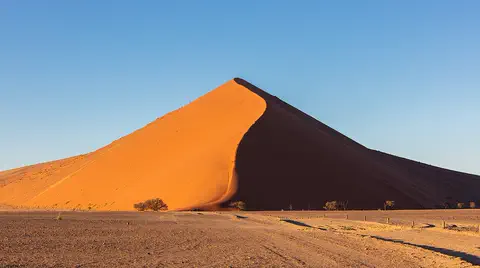
Namib
The Namib is a cool desert that runs for about 1,900 kilometers along Africa's Atlantic coast, from Angola through Namibia into South Africa. It gets almost no rain, but cold ocean water makes thick fog that drifts inland. UNESCO says its Namib Sand Sea is the only coastal desert in the world with huge dune fields influenced by fog.
Explore next
-
 Watch
3D
Animal
Little penguin
The little penguin is the smallest penguin in the world, only about 33 centimeters long and about 1 kilogram. It lives along the coasts of southern Australia and New Zealand, where it is also called the fairy penguin, the blue penguin or kororā. It fishes at sea by day and comes ashore after dark to its burrow.
-
 Watch
Animal
Gentoo penguin
The gentoo penguin is the penguin with the red-orange bill, orange feet and a white band across the top of its head. It lives on the Antarctic Peninsula and on islands around Antarctica, builds nests of stones, and usually lays two eggs. National Geographic says no other diving bird swims faster.
-
Watch
Country
South Africa
South Africa is the southernmost country in Africa, with the Atlantic Ocean on one side and the Indian Ocean on the other. A high plateau covers most of it, about 63.5 million people (2026) live there, and it has 12 official languages and three capital cities.
-
Watch
Country
Namibia
Namibia lies on the southwestern coast of Africa. The Namib, a desert of huge dunes kept alive by sea fog, runs along its coast, a high plateau with farms and wildlife fills its middle, and the dry Kalahari lies to the east. Namibia became independent in 1990.
-
 Watch
3D
Animal
King penguin
The king penguin is the second-largest penguin in the world. It lives in huge, noisy colonies on windy islands in the Southern Ocean and dives deep to catch lantern fish. Its babies grow a thick coat of brown fluff and take more than a year to raise.
-
Watch
Natural wonder
Namib
The Namib is a cool desert that runs for about 1,900 kilometers along Africa's Atlantic coast, from Angola through Namibia into South Africa. It gets almost no rain, but cold ocean water makes thick fog that drifts inland. UNESCO says its Namib Sand Sea is the only coastal desert in the world with huge dune fields influenced by fog.
-
 Watch
Animal
Adélie penguin
The Adélie penguin is a medium-sized penguin, about 70 centimeters tall, with a black back, a white front and a bright white ring around each eye. It breeds in summer on rocky, ice-free ground all around Antarctica, building nests of pebbles, and spends the winter far out at sea among the pack ice.
-
 Watch
Animal
African fish eagle
The African fish eagle is a big eagle of Africa's lakes, rivers and coasts, with a white head, chest and tail and a chestnut-brown body. It snatches fish from the surface of the water, and its loud, ringing call is one of the best-known sounds of Africa.
For parents & teachers
What children will learn
- Explain that some penguins live in warm places and describe how the African penguin stays cool.
- Describe the African penguin's diet and why changes in fish stocks matter to it.
- Describe its life cycle, from two eggs in a burrow to young leaving the colony.
- Understand why the species is Critically Endangered and how people are trying to help.
Recommended ages: 3 to 17 · About 15 minutes
Talk about it
- How can a penguin live in a sunny place like Africa?
- Penguins and fishing boats both want sardines and anchovies. How could people share the sea fairly?
- Why might it help scientists that every African penguin has different spots?
Try at home or in class
- Draw a penguin chest with your own pattern of dots, then compare with a friend's: no two are the same.
- Put one hand in cool water and fan the other: talk about the different ways bodies lose heat.
Key vocabulary: endemic, colony, burrow, guano, bray, critically endangered
Where these facts come from
- The IUCN Red List of Threatened Species , International Union for Conservation of Nature (IUCN terms of use (no redistribution of Red List data or range maps))
- GBIF Backbone Taxonomy and GBIF Occurrence Search , Global Biodiversity Information Facility (CC0 1.0 (backbone); occurrence counts are facts derived from records under CC0, CC BY and CC BY-NC)
- Wikidata , Wikimedia Foundation (CC0 1.0)
- Spheniscus demersus (African Penguin), Red List global assessment 2024 , IUCN Red List of Threatened Species
- African penguin , San Diego Zoo Wildlife Alliance
- African penguin population grows at Boulders colony , South African National Parks (SANParks)
- Forestry, Fisheries and the Environment on interim fishing closures and limitations around key penguin colonies , South African Government
- South Africa steps up to save the African penguin (25 April 2025) , SAnews (South African Government News Agency)
- African penguin population shows signs of recovery at Boulders Beach (26 June 2026) , Weekend Argus / Independent on Saturday
- Wikimedia Commons , Wikimedia Foundation (Per file: Public domain, CC0, CC BY or CC BY-SA only (credited on each page))
Checked, not yet human-reviewed. Last updated October 24, 2026. Spotted a mistake? Tell us.