
Animal
Burmese python
The Burmese python is a big, strong snake from Asia. It has brown patches like puzzle pieces. It is a good climber and swimmer.
The Burmese python is one of the largest snakes in the world. In its home in South and Southeast Asia it has become rare because so many are caught, but in southern Florida, where people let pet pythons go, it has spread through the Everglades and eats many of the animals that live there.
Python bivittatus is a large constrictor native from northeastern India and Nepal to southern China and parts of Indonesia. The IUCN lists it as Vulnerable after steep declines caused by harvesting for food, skins, medicine and pets, while an introduced population, established in Everglades National Park by 2000, is now one of the most challenging invasive-species problems in the world, according to USGS.
Photo: Everglades NPS from Homestead, Florida, United States, public domain, via Wikimedia Commons
Meet the Burmese python
The Burmese python is a big, heavy snake.
It has dark brown patches with light edges. It can climb trees and swim in rivers. It catches food by squeezing.
The Burmese python is one of the six largest snakes in the world. Most adults are 3 to almost 5 meters long, and females are usually bigger than males.
Its skin is tan, yellow-brown or gray, covered in big dark patches outlined in cream or gold. Pythons are constrictors: they have no fangs, but many backward-curving teeth hold their food while their strong body squeezes. This snake's story has two very different sides, in Asia and in Florida.
Python bivittatus was long treated as a subspecies of Python molurus (SeaWorld's older fact sheet still lists it that way); the IUCN and the Smithsonian treat it as a species. The Smithsonian's National Zoo counts it among the six largest snakes, with adults averaging 3 to 4.9 meters and lengths over 4.6 meters common; females tend to be larger.
The base color ranges from pale tan to yellowish brown or gray, with large dark brown or olive blotches outlined in cream or gold. Like other pythons it has no fangs; rows of recurved teeth grip prey. It has two lungs, unusual among snakes, although the smaller one is vestigial and not fully functional.
Quick facts
- Group
- Reptile
- Length
- 3 to 4.9 m
- Lifespan in the wild
- 20 to 25 years
Where it lives
Burmese pythons come from Asia.
They live in forests, grasslands and marshes, often near water. Some now live in Florida too, far from home.
Burmese pythons are native to South and Southeast Asia: from northeastern India, Nepal and Bangladesh through Myanmar, Thailand, Laos, Cambodia and Vietnam to southern China and a few Indonesian islands, such as Java and Bali.
They live mostly in forests, including rainforests and mangroves, but also in grasslands, marshes and along rivers. They shelter in rocky places near streams, under big logs and in burrows and caves. They can even survive cool winters by hibernating.
Today Burmese pythons also live wild in southern Florida, in the United States. People brought them there as pets.
The IUCN range runs from two small, isolated areas of northeastern India, Nepal and Bangladesh through Myanmar, Thailand (south to Surat Thani), Laos, Cambodia, Vietnam and southern China, including Hong Kong and Hainan, to Indonesia, where it is confirmed only from Java, Nusa Barung, Bali, Sumbawa, south Sulawesi and possibly Lombok. It is absent from Peninsular Malaysia, Sumatra and Borneo.
It uses forests, including mangroves and rainforest, plus grasslands, marshes, rivers and wetlands such as Cambodia's Tonle Sap, and is a good climber and expert swimmer. It is unusually cold-tolerant for a python and hibernates in subtropical parts of China. It prefers drier places than the reticulated python, which shares most of its range. Introduced populations live in southern Florida and Singapore.
Continent
Its habitats


Where can you find this animal?
- Brought here by people · Countries and seas named by a scientific source
- Lives here naturally · Countries and seas named by a scientific source
- Sightings recorded · Records of wild sightings (GBIF)
Brought here by people · Countries and seas named by a scientific source
Southern Florida only, where released or escaped pet pythons established a breeding population in Everglades National Park by 2000 and have spread across much of the region. The IUCN also lists an introduced population in Singapore, too small to show on this map.
Places: United States.
Source: iucn-red-list · checked October 2026
Lives here naturally · Countries and seas named by a scientific source
Forests, mangroves, grasslands, marshes and riversides of South and Southeast Asia. In India only two small areas in the northeast; in China the south (including Hainan and Hong Kong); in Indonesia only Java, Bali, Sumbawa, south Sulawesi and nearby small islands. It is absent from Peninsular Malaysia, Sumatra and Borneo.
Places: India, Nepal, Bangladesh, Myanmar, Thailand, Laos, Cambodia, Vietnam and 2 more places.
Source: iucn-red-list · checked October 2026
Sightings recorded · Records of wild sightings (GBIF)
Counts of GBIF records of wild observations (human and machine) and preserved specimens. Records include introduced populations, vagrants, escaped or released animals and misidentifications, so a country with records is not necessarily part of the native range.
Wild sightings have been recorded in United States, China, Thailand, India, Indonesia, Taiwan, Vietnam, Nepal and 12 more places.
Source: gbif · checked October 2026
Range maps show where scientists say an animal lives, often country by country. An animal may live in only part of a country shown, and sightings records can include animals that wandered far from home.
What it eats
Burmese pythons eat animals.
They catch mammals, birds and other animals. After a big meal, they rest for days.
Burmese pythons eat mostly mammals, but also birds, reptiles and frogs. They are more active at night than in the day. A python grabs its prey, coils around it and squeezes, then swallows it whole.
Its jaw bones are joined by stretchy tissue, so its mouth can open around an animal several times wider than its head. Snakes do not eat every day: after a good meal, a python spends days or even weeks resting somewhere warm while it digests.
The IUCN describes a diet of small to large mammals, birds, reptiles and amphibians, with mammals preferred, and a mainly nocturnal habit. The Smithsonian notes that domestic fowl and pigs draw pythons to farms.
The jaw bones are linked by tissue that lets them separate, so a python can swallow prey several times wider than its head. The Smithsonian notes that wild snakes do not eat every day; morning basking warms them enough to hunt, and after a successful meal they spend days or weeks staying warm enough to digest it.
Did you know?
A mother python can warm her eggs by twitching her muscles.
Snakes cannot make much body heat, but a mother Burmese python twitches her muscles to keep her eggs several degrees warmer than the air.
Brooding females raise the temperature within their coils several degrees above ambient by rhythmic muscle twitching, and do not feed for the two or more months they brood (Smithsonian).
Patterned and powerful
A Burmese python has no eyelids.
A clear scale covers each eye like a pair of goggles. Its patchy skin helps it hide in leaves and shadows.
Look at the photo: this python has wrapped its thick body around a tree trunk. Burmese pythons are good climbers as well as expert swimmers.
They have no eyelids. Instead, a thin, clear scale protects each eye, and it comes off whenever the snake sheds its skin. The blotchy pattern breaks up the snake's outline, and scientists in Florida say pythons are so well camouflaged that they are very hard to find, even though they are huge.
Burmese pythons lack eyelids; a transparent scale shields each eye and is shed with the rest of the skin (Smithsonian). The blotched pattern is effective camouflage: the National Park Service describes the snakes as secretive and well camouflaged, and USGS scientists report extremely low detection rates, which make it hard even to estimate how many live in Florida.
The photo shows the species' climbing ability: the body is coiled tightly around a trunk, gripping with its muscular coils. A long body means long internal organs, and the species is one of the few snakes with two lungs, though one is small and vestigial.
Growing up
Mother pythons lay lots of eggs.
The mother curls around them and twitches to keep them warm. Then the babies hatch and go off on their own.
Burmese pythons breed in early spring. A mother usually lays 30 to 60 eggs, and sometimes as many as 100. She coils around them and stays for two months or more without eating. By twitching her muscles, she keeps the eggs several degrees warmer than the air.
The babies hatch at about 31 to 46 centimeters long, about as long as a ruler or a bit more, and they are on their own straight away. They are ready to breed after four or five years.
The Smithsonian reports breeding in early spring, clutches averaging 30 to 60 eggs (up to 100), and a brooding period of two months or more during which the female does not feed; muscle twitching raises the temperature inside her coils several degrees above the air. Hatchlings of about 31 to 46 centimeters are independent at once, and maturity comes at four to five years (males at 2.1 to 2.7 meters, females at 2.7 meters or more).
The species is notable for parthenogenesis: a captive female kept away from males laid viable eggs in five consecutive years, and genetic tests showed the young were identical to her. The IUCN assessment describes it as the only boid snake then known to do this.
A python far from home
Some pet pythons were let go in Florida.
Now many live wild in the Everglades. They eat the animals that live there. People are working hard to find them.
Burmese pythons were once popular pets in the United States. Some escaped or were let go in Florida, and by 2000 scientists confirmed that pythons were breeding in the wild in Everglades National Park. They have now spread across much of southern Florida.
In Florida, pythons are an invasive species: they do not belong there naturally, and they eat many native animals. Scientists have found 76 kinds of animals inside pythons' stomachs, mostly mammals and birds, and even alligators. Park rangers ask everyone: never let unwanted pets loose.
The National Park Service attributes the Everglades population to accidental or intentional release of pets. USGS reports that a breeding population was confirmed in Everglades National Park in 2000 and now occupies much of southern Florida; a 2023 USGS-led synthesis lists 76 prey species from python digestive tracts, mainly mammals and birds plus American alligator and green iguana.
In a 2012 USGS study, night road surveys in the park from 2003 to 2011 recorded 99.3 percent fewer raccoon sightings, 98.9 percent fewer opossums and 87.5 percent fewer bobcats than before 2000, and no rabbits; the authors concluded that the findings suggest python predation caused the declines. USGS states that eradication across the landscape is not possible with existing tools, so the focus is on control, research and prevention.
Did you know?
A mother python once laid eggs with no father at all.
A female Burmese python kept on her own in captivity laid eggs that hatched for five years in a row, and her babies were copies of her.
A captive female isolated from males produced viable eggs in five consecutive years; genetic tests showed offspring identical to her, making it the only boid snake then known to reproduce this way (IUCN).
Rare at home
In Asia, there are fewer Burmese pythons than before.
People catch them for their skins and for food. Some countries now protect them.
Strangely, while Burmese pythons are a problem in Florida, they are in trouble in their real home. The IUCN lists them as vulnerable.
In Asia, huge numbers are caught for food, for their skins, which are made into shoes, belts and other goods, for traditional medicine and for the pet trade. Some forests have been cleared too. They are now very rare in mainland China and Vietnam. Where they are well protected, as in Thailand and Hong Kong, they are still common.
The IUCN listed the species as Vulnerable (assessed 2011, published 2012, errata 2019, flagged as needing an update), estimating a decline of at least 30 percent over ten years across its range, with declines of about 90 percent in mainland China and more than 80 percent in Vietnam. Drivers are harvest for food, skins (for leather and for traditional musical instruments), traditional medicine, snake wine and the pet trade, with habitat loss a lesser factor.
The population trend is decreasing, but the snake remains common in Thailand, where its protection is well enforced, and in Hong Kong, where it is protected. The contrast with Florida is a lesson in how a species can be threatened in one place and invasive in another.
IUCN Red List
How is the burmese python doing in the wild?
- Least Concern
- Near Threatened
- Vulnerable (this animal)
- Endangered
- Critically Endangered
- Extinct in the Wild
- Extinct
Vulnerable
At high risk of disappearing from the wild.
See the IUCN Red List assessment · The IUCN Red List of Threatened Species 2022.2
Amazing facts
-
A mother python can warm her eggs by twitching her muscles.
Snakes cannot make much body heat, but a mother Burmese python twitches her muscles to keep her eggs several degrees warmer than the air.
Brooding females raise the temperature within their coils several degrees above ambient by rhythmic muscle twitching, and do not feed for the two or more months they brood (Smithsonian).
-
Pythons do not have eyelids.
A Burmese python has no eyelids. A clear scale covers each eye, and it peels off when the snake sheds its skin.
The transparent eye scale (spectacle) replaces eyelids and is shed with the rest of the skin at each molt.
-
Scientists found 76 kinds of animals inside pythons in Florida.
In Florida, scientists have found 76 different kinds of animals in pythons' stomachs, including alligators.
A 2023 USGS-led synthesis identified 76 prey species in the digestive tracts of Florida pythons, mostly mammals and birds, plus American alligator and green iguana.
-
A mother python once laid eggs with no father at all.
A female Burmese python kept on her own in captivity laid eggs that hatched for five years in a row, and her babies were copies of her.
A captive female isolated from males produced viable eggs in five consecutive years; genetic tests showed offspring identical to her, making it the only boid snake then known to reproduce this way (IUCN).
Words to know
- invasive species
- a plant or animal brought to a new place that spreads and harms the animals and plants already there
- constrictor
- a snake that wraps around its prey and squeezes
- camouflage
- colors or patterns that help an animal blend in
- vulnerable
- at high risk of disappearing from the wild
- hibernate
- to rest deeply through the cold winter
- clutch
- a group of eggs laid at one time
Discovery challenge
-
How did Burmese pythons get to Florida?
How did Burmese pythons come to live wild in Florida?
What is the origin of the Burmese python population in the Everglades?
- They swam across the ocean
- Pet pythons escaped or were let go
- They have always lived there
Show the answer
Pet pythons escaped or were let go
People let pet pythons go, or the pythons escaped. Never let a pet go outside!
Some pet pythons escaped or were released, and by 2000 they were breeding in Everglades National Park.
The National Park Service attributes the population to the accidental or intentional release of captive pets; breeding was confirmed in 2000.
-
What covers a python's eye?
What protects a Burmese python's eye instead of an eyelid?
What protects a python's eye in place of eyelids?
- A clear scale
- Long eyelashes
- Fur
Show the answer
A clear scale
A clear scale covers each eye like goggles.
Pythons have no eyelids. A thin, clear scale covers each eye and is shed with the skin.
A transparent scale (the spectacle) covers the eye and is replaced at each shed.
-
How does a mother python keep her eggs warm?
How does a mother Burmese python keep her eggs warm?
How does a brooding female raise the temperature of her clutch?
- She builds a fire
- She leaves them in the sun
- She coils around them and twitches
Show the answer
She coils around them and twitches
She curls around the eggs and twitches her muscles to make warmth.
She coils around her eggs and twitches her muscles, keeping them several degrees warmer than the air.
Rhythmic muscle contractions within her coils raise the clutch temperature several degrees above ambient.
-
Where do Burmese pythons come from?
Where is the Burmese python's native home?
Which region is the Burmese python's native range?
- Australia
- South and Southeast Asia
- South America
Show the answer
South and Southeast Asia
They come from Asia. Some now live in Florida too.
They are native to South and Southeast Asia, from India and Nepal to China and Indonesia.
Native from northeastern India and Nepal through mainland Southeast Asia to southern China and parts of Indonesia; introduced in Florida and Singapore.
Places where you might see it
-
 Watch
 Country
Thailand
Thailand is a tropical country in the middle of mainland Southeast Asia, with forested mountains in the north, rice fields on its central plains and a long, narrow peninsula in the south. Its capital is Bangkok, and about 65.8 million people were on its civil register at the end of 2025.
-
 Watch
 Country
Vietnam
Vietnam stretches about 1,650 kilometers along the coast of Southeast Asia, with mountains in the west and two great river deltas, the Red River in the north and the Mekong in the south. About 102.3 million people lived there in 2025. Its capital is Hanoi, and its largest city is Ho Chi Minh City.
-
 Watch
Natural wonder
Everglades National Park
Everglades National Park covers 1.5 million acres at the southern tip of Florida. It protects marshes of sawgrass, forests of mangroves and pines, and shallow bays, all fed by fresh water flowing slowly south. It is home to alligators and crocodiles, the rare Florida panther and hundreds of kinds of birds, but invasive Burmese pythons have caused serious harm to its wildlife.
Explore next
-
 Watch
Animal
Reticulated python
The reticulated python lives in the forests, riversides and even towns of Southeast Asia. It can grow longer than any other kind of snake, it is covered in a net-like pattern, and it is such a good swimmer that it has reached many small islands across the sea.
-
 Watch
Animal
Boa constrictor
The boa constrictor is a large, heavy snake of South America. Of all the boas, it lives in the greatest variety of places, from rainforests to dry scrub and farms. It catches food by squeezing, it has no venom, and mothers give birth to live babies.
-
Watch
Country
Thailand
Thailand is a tropical country in the middle of mainland Southeast Asia, with forested mountains in the north, rice fields on its central plains and a long, narrow peninsula in the south. Its capital is Bangkok, and about 65.8 million people were on its civil register at the end of 2025.
-
Watch
Country
Vietnam
Vietnam stretches about 1,650 kilometers along the coast of Southeast Asia, with mountains in the west and two great river deltas, the Red River in the north and the Mekong in the south. About 102.3 million people lived there in 2025. Its capital is Hanoi, and its largest city is Ho Chi Minh City.
-
 Watch
3D
Animal
American alligator
The American alligator is a large, armored reptile of the swamps, marshes and lakes of the southeastern United States. Alligator mothers guard their nests and carry their babies to the water, and the holes alligators dig help many other animals survive dry seasons.
-
 Watch
Animal
Common raccoon
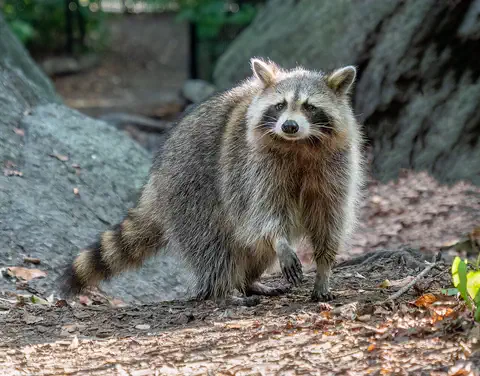
The common raccoon is a clever night-time animal from North and Central America, famous for its black mask, ringed tail and nimble, hand-like front paws. It eats almost anything and lives in forests, wetlands, farms and even big cities. People have also brought raccoons to Europe and Japan, where they now live wild.
-
Watch
Natural wonder
Everglades National Park
Everglades National Park covers 1.5 million acres at the southern tip of Florida. It protects marshes of sawgrass, forests of mangroves and pines, and shallow bays, all fed by fresh water flowing slowly south. It is home to alligators and crocodiles, the rare Florida panther and hundreds of kinds of birds, but invasive Burmese pythons have caused serious harm to its wildlife.
-
 Watch
Animal
Cane toad
The cane toad is a large, warty toad that comes from the Amazon and Guianas of South America. People carried it to many warm places, including Australia in 1935, hoping it would eat beetles in sugarcane fields. It did not solve that problem, but it spread fast, and its poison harms native animals that try to eat it.
For parents & teachers
What children will learn
- Describe the Burmese python's camouflage, climbing and how it eats.
- Explain what an invasive species is, using the Everglades pythons as an example.
- Understand how one species can be threatened in its native range and harmful somewhere else.
- Describe how a mother python cares for her eggs.
Recommended ages: 3 to 17 · About 15 minutes
Talk about it
- Why is it so important never to release a pet into the wild?
- How can the same animal be in trouble in one place and a problem in another?
- Why might a huge snake still be very hard for scientists to find?
Try at home or in class
- Measure 4 meters with string and lay it on the floor to see how long an average adult Burmese python is.
- Make a camouflage test: color a paper snake with dark patches and hide it on a patterned surface, then time how long it takes someone to spot it.
Key vocabulary: invasive species, constrictor, camouflage, vulnerable, hibernate, clutch
Where these facts come from
- The IUCN Red List of Threatened Species , International Union for Conservation of Nature (IUCN terms of use (no redistribution of Red List data or range maps))
- GBIF Backbone Taxonomy and GBIF Occurrence Search , Global Biodiversity Information Facility (CC0 1.0 (backbone); occurrence counts are facts derived from records under CC0, CC BY and CC BY-NC)
- Wikimedia Commons , Wikimedia Foundation (Per file: Public domain, CC0, CC BY or CC BY-SA only (credited on each page))
- Python bivittatus (Burmese Python), IUCN Red List assessment 2012 (errata version 2019) , IUCN
- Burmese python , Smithsonian's National Zoo and Conservation Biology Institute
- Burmese Python , Everglades National Park, U.S. National Park Service
- Comprehensive Review of Burmese Python Science Released , U.S. Geological Survey
- Severe mammal declines coincide with proliferation of invasive Burmese pythons in Everglades National Park , U.S. Geological Survey
- Burmese Python (Animal Bytes) , SeaWorld Parks & Entertainment
- Wikidata , Wikimedia Foundation (CC0 1.0)
Checked, not yet human-reviewed. Last updated October 27, 2026. Spotted a mistake? Tell us.
Picture credits
- Photo: Everglades NPS from Homestead, Florida, United States, public domain, via Wikimedia Commons · source