
Animal
Basking shark
The basking shark is a giant shark that eats tiny animals. It swims slowly with its huge mouth wide open.
The basking shark is the second-biggest fish in the world, after the whale shark. It swims slowly near the surface with its enormous mouth open, sieving tiny floating animals called zooplankton out of the water. It is gentle and lives mainly in cool seas.
Cetorhinus maximus, the only member of the family Cetorhinidae, is the second-largest living fish and one of only three large filter-feeding sharks. It strains zooplankton from as much as 2,000 tons of seawater an hour, migrates with its food, and reproduces very slowly. The IUCN lists it as Endangered, with a decreasing population.
Photo: Greg Skomal / NOAA Fisheries Service, public domain, via Wikimedia Commons
Meet the basking shark
The basking shark is a giant fish.
It is one of the biggest fish in the whole sea. But it only eats tiny animals that drift in the sea. It is a gentle giant.
The basking shark is the second-largest fish in the world. Only the whale shark is bigger. An average adult is about 6.7 to 8.8 meters long, and the biggest can reach 12 meters and weigh up to about six tonnes.
Even though it is so huge, the basking shark eats some of the smallest animals in the sea. It swims along with its mouth wide open, catching tiny drifting animals called zooplankton. The Florida Museum describes it as passive and generally no danger to people.
Cetorhinus maximus is second only to the whale shark in size. The Florida Museum gives an average adult length of 6.7 to 8.8 meters and a maximum of about 12 meters; the UK's Natural History Museum gives weights of up to six tonnes. It is the only species in its family, Cetorhinidae, in the order Lamniformes.
With the whale shark and the megamouth shark, it is one of just three large filter-feeding sharks, and the only one that relies entirely on the passive flow of water into its open mouth as it swims; the other two use suction or pumping. Its scientific name joins the Greek for whale or sea monster and nose with the Latin maximus, great.
Quick facts
- Group
- Fish
- Length
- 6.7 to 8.8 m
- Weight
- up to 6,000 kg
- Lifespan in the wild
- 50 years
Where it lives
Basking sharks live in cool seas.
They swim near coasts and out in the open ocean. In summer you might see their big fin at the top of the water.
Basking sharks live mostly in cool and temperate seas of the Atlantic and Pacific Oceans. They swim in open water near coasts, sometimes visiting bays, and they also travel far offshore.
In the North Atlantic they are summer visitors to the coasts of Canada, the United States and Britain. Around Britain they are seen from May to October, and many swim south in winter, some as far as North Africa.
The Florida Museum calls the basking shark a coastal-pelagic species of temperate waters worldwide. In the western Atlantic it ranges from Newfoundland to Florida and from southern Brazil to Argentina; in the eastern Atlantic from Iceland and Norway to Senegal, including the Mediterranean. In the Pacific it occurs off Japan, China and the Koreas, western and southern Australia, New Zealand, from the Gulf of Alaska to the Gulf of California, and from Ecuador to Chile.
It is seen mostly at the surface, but the IUCN assessment gives a depth range down to 1,264 meters. The Natural History Museum notes that basking sharks occur in UK waters from May to October, that many migrate south toward North Africa in winter while some stay, and that there is some evidence of journeys across the Atlantic.
Its habitat

Where can you find this animal?
- Lives here naturally · Countries and seas named by a scientific source
- Sightings recorded · Records of wild sightings (GBIF)
Lives here naturally · Countries and seas named by a scientific source
Mainly cool and temperate coastal and open waters of the Atlantic (including the Mediterranean) and Pacific, often seen at the surface in summer; the IUCN list also includes coasts of southern Africa and some tropical islands. Shading is by whole ocean, so it is much wider than where basking sharks actually live.
Places: Atlantic Ocean and Pacific Ocean.
Source: iucn-red-list · checked October 2026
Sightings recorded · Records of wild sightings (GBIF)
Counts of GBIF records of wild observations (human and machine) and preserved specimens. Records include introduced populations, vagrants, escaped or released animals and misidentifications, so a country with records is not necessarily part of the native range.
Wild sightings have been recorded in UK, United States, France, Norway, Ireland, Canada, Netherlands, New Zealand and 39 more places.
Source: gbif · checked October 2026
Range maps show where scientists say an animal lives, often country by country. An animal may live in only part of a country shown, and sightings records can include animals that wandered far from home.
A giant that eats tiny food
Basking sharks eat tiny animals that float in the sea.
The shark swims with its mouth open wide. Water flows in, and the tiny animals get caught inside.
Basking sharks eat zooplankton: tiny drifting animals such as small crustaceans and the eggs and babies of fish and other sea creatures. To catch them, the shark swims slowly forward with its mouth wide open.
Water flows into its mouth and out through its huge gill slits. On the way, comb-like parts called gill rakers, covered in sticky mucus, trap the zooplankton. A basking shark can filter about 2,000 tons of water every hour, enough to fill an Olympic swimming pool in under an hour and a half.
The diet is zooplankton, especially large zooplankton such as small crustaceans, invertebrate larvae and fish eggs and larvae. Feeding is ram filtration: as the shark swims, water enters the open mouth, which the Natural History Museum says can open up to a meter wide, and leaves through the enlarged gill slits. Mucus-covered gill rakers trap the prey. The Florida Museum gives a rate of up to 2,000 tons of water an hour; the Natural History Museum gives about two million liters.
Basking sharks gather where zooplankton is dense. One theory holds that they shed their gill rakers in winter and rest in deeper water; another suggests they feed near the bottom then. Neither has been confirmed, and it is unknown how often the rakers are replaced.
Did you know?
Basking sharks sometimes jump right out of the water.
People have seen basking sharks leap out of the water. Nobody knows for sure why they do it.
Breaching is not fully understood; one idea is that it helps dislodge parasites such as sea lampreys, which attach to the skin.
A body built for filtering
The basking shark has a pointed nose and small eyes.
Its mouth is huge. It has very long gill slits and a big fin on its back. Its skin is very rough.
The basking shark's mouth is enormous and reaches back past its small eyes. Its gill slits are so long that they nearly go all the way around its head. Inside are the black gill rakers that trap its food.
It has hundreds of tiny teeth. Its dark, triangular back fin can be over a meter tall. Inside, a huge oily liver, up to a quarter of its body weight, helps it float.
Identification features are the massive body, gill slits that nearly encircle the head, a crescent-shaped (lunate) tail fin and a conical snout. The mouth extends past the small eyes and holds hundreds of tiny hooked teeth. The Natural History Museum describes a large, dark, triangular first dorsal fin, over a meter tall in some sharks.
The liver can make up 25 percent of body weight and is rich in squalene, a low-density oil that gives the shark near-neutral buoyancy, important for a fish with no swim bladder. The skin is covered in large dermal denticles; the Florida Museum warns that contact with it has injured divers.
Growing up
A baby basking shark is called a pup.
It grows inside its mother for a very long time, maybe years. Baby basking sharks have a long, hooked nose.
Scientists know very little about how basking sharks have babies, because pregnant females are almost never found. Only one has ever been recorded carrying young. She was reported to have given birth to five live pups, each about 1.5 to 2 meters long.
A pregnancy may last from about one year to three years or more. Young basking sharks have a long, hooked snout that changes shape during their first year. They grow very slowly, and females may not have pups until they are 12 to 16 years old.
Reproduction is poorly known. The Florida Museum reports that only one pregnant female has been recorded; she reportedly gave birth to five live young and one stillborn, 1.5 to 2 meters long. The species is widely thought to be ovoviviparous, and embryos may feed on unfertilized eggs (oophagy). Estimates of gestation differ: the Florida Museum suggests 3 years or longer, the Natural History Museum 12 to 36 months, with a rest between litters.
Newborns are believed to be 1.5 to 1.8 meters long, with a long, hook-like snout that may help water flow through the mouth; the mouth changes shape quickly during the first year. Growth is extremely slow: sharks may reach 5 to 6 meters before maturing, and females are estimated to mature at 12 to 16 years. The IUCN gives a generation length of 34 years.
Sunbathing and traveling
Basking sharks swim slowly at the top of the sea.
It looks like they are sunbathing! That is how they got their name. Sometimes they even jump out of the water.
On sunny summer days, basking sharks cruise slowly at the surface with the top of their back and their big fin out of the water. It looks as if they are soaking up the sun, or basking, which is how they got their name.
They are great travelers, following the seasons and their food. Sometimes they twist and roll as they feed, and people have even seen them leap right out of the water. Nobody is sure why they jump.
The common name comes from the habit of cruising at the surface with the back awash and the first dorsal fin exposed, as if sunning itself. Basking sharks are highly migratory: off North America they appear from North Carolina to New York in spring, move to New England and Canada in summer, and disappear in autumn and winter.
Group size is reported differently: the Florida Museum mentions pairs and schools of up to 100 or more, while the Natural History Museum describes UK sharks as usually solitary, sometimes in small single-sex groups. Breaching is not fully understood; one idea is that it helps dislodge parasites such as sea lampreys. Basking sharks are generally tolerant of divers and boats, and experts quoted by the Natural History Museum advise swimmers to stay at least 4 meters away and boats at least 100 meters.
Did you know?
A basking shark can open its mouth about as wide as a meter stick is long.
A basking shark can open its mouth up to about a meter wide.
The Natural History Museum gives a gape of up to about a meter, letting the shark filter huge volumes of water as it swims.
Protecting basking sharks
There are far fewer basking sharks than there used to be.
Long ago people hunted them. Now many countries protect them, and one place in Scotland's sea is kept safe especially for them.
The basking shark is endangered. For many years people hunted it for the oil in its giant liver, and for its fins, skin and meat. Because basking sharks grow up slowly and have babies slowly, their numbers fell and are slow to recover.
Today many countries protect them. Fishing for them has been banned in British waters since 1998 and in European Union waters since 2007. In 2020 Scotland created the world's first protected area for basking sharks, in the Sea of the Hebrides. Boats hitting sharks and fishing gear are still dangers.
The IUCN assessed the basking shark in November 2018 (published 2021) as Endangered under criterion A2bd, with a decreasing population; listed threats are fishing and shipping lanes. Historic fisheries took sharks for liver oil, meat, fins and skin, and slow maturity, long gestation and low output make the species unusually slow to recover.
The Natural History Museum reports that the last British basking shark fishery closed in 1995, that fishing has been banned in British waters since 1998 and in European Union waters since 2007, and that the sharks are still hunted in some areas, mainly for fins. Bycatch, entanglement and collisions with boats remain threats, and scientists are studying possible effects of microplastics and of climate change on their prey. In December 2020 Scotland designated four Marine Protected Areas; the Sea of the Hebrides site is the world's first protected area for basking sharks.
IUCN Red List
How is the basking shark doing in the wild?
- Least Concern
- Near Threatened
- Vulnerable
- Endangered (this animal)
- Critically Endangered
- Extinct in the Wild
- Extinct
Endangered
At very high risk of disappearing from the wild.
See the IUCN Red List assessment · The IUCN Red List of Threatened Species 2022.2
Amazing facts
-
A basking shark can open its mouth about as wide as a meter stick is long.
A basking shark can open its mouth up to about a meter wide.
The Natural History Museum gives a gape of up to about a meter, letting the shark filter huge volumes of water as it swims.
-
Baby basking sharks have a long, hooked nose.
Young basking sharks have a long, hook-like snout, which changes shape during their first year.
Juveniles have a long, hook-like snout thought to increase water flow through the mouth; the mouth changes shape and relative length rapidly in the first year.
-
Basking sharks sometimes jump right out of the water.
People have seen basking sharks leap out of the water. Nobody knows for sure why they do it.
Breaching is not fully understood; one idea is that it helps dislodge parasites such as sea lampreys, which attach to the skin.
-
The first safe place in the sea just for basking sharks is in Scotland.
In 2020 Scotland created the world's first protected area for basking sharks, in the Sea of the Hebrides.
The Sea of the Hebrides Marine Protected Area, designated in December 2020, is described by the Natural History Museum as the world's first protected area for basking sharks.
Words to know
- zooplankton
- tiny animals that drift in the water, such as small crustaceans and fish eggs
- filter feeder
- an animal that sieves its food out of the water
- gill rakers
- comb-like parts on the gills that trap food
- basking
- lying or floating in the warmth of the sun
- migration
- a regular journey animals make with the seasons
- endangered
- at risk of disappearing from the wild
Discovery challenge
-
What does the basking shark eat?
What does the basking shark eat?
What is the basking shark's main food?
- Big fish and seals
- Tiny animals called zooplankton
- Seaweed
Show the answer
Tiny animals called zooplankton
Basking sharks eat tiny animals that float in the sea.
They eat zooplankton, tiny drifting animals, which they sieve from the water with their gill rakers.
Large zooplankton (small crustaceans, invertebrate larvae, fish eggs and larvae), filtered by ram feeding.
-
Which fish is bigger than the basking shark?
Which fish is bigger than the basking shark?
Which is the only living fish larger than the basking shark?
- The whale shark
- The goldfish
- The clownfish
Show the answer
The whale shark
The whale shark is the only fish bigger than the basking shark.
The basking shark is the second-largest fish. Only the whale shark is bigger.
The basking shark is second only to the whale shark, Rhincodon typus, which is also a filter feeder.
-
How did the basking shark get its name?
How did the basking shark get its name?
What behavior gave the basking shark its common name?
- It lives in baskets
- It swims slowly at the top of the water, as if sunbathing
- It sleeps on beaches
Show the answer
It swims slowly at the top of the water, as if sunbathing
It swims slowly at the top of the sea, as if it is sunbathing.
It cruises at the surface with its back and fin showing, as if soaking up the sun.
The name comes from its habit of cruising at the surface, back awash and first dorsal fin exposed, as if sunning itself.
-
What traps the basking shark's food?
Which body part traps the basking shark's food?
Which structures sieve zooplankton from the water?
- Its tail
- Its gill rakers
- Its back fin
Show the answer
Its gill rakers
Dark combs called gill rakers catch the tiny food.
Gill rakers, covered in sticky mucus, trap zooplankton as water flows out through the gills.
Mucus-covered gill rakers on the gill arches strain prey from water passing out through the gill slits.
Places where you might see it
-
 Watch
 Country
United Kingdom
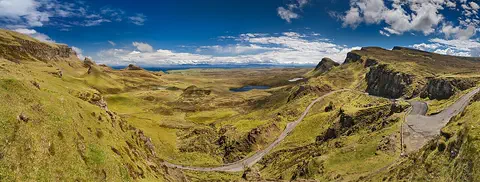
The United Kingdom, or UK, lies on islands off the northwest coast of Europe. It is made up of four parts, England, Scotland, Wales and Northern Ireland, and about 69.5 million people live there. Its capital is London.
-
 Watch
 Country
Canada
Canada is the second-largest country in the world, stretching across the north of North America from the Atlantic to the Pacific and up into the Arctic. It has the Rocky Mountains, thousands of islands and about 42 million people, who speak English, French and many other languages.
Explore next
-
 Watch
3D
Animal
Whale shark
The whale shark is the largest fish in the world. This gentle giant swims through warm seas with its huge mouth open, filtering tiny plankton and small fish from the water, and every whale shark has its own pattern of pale spots.
-
 Watch
3D
Animal
Great white shark
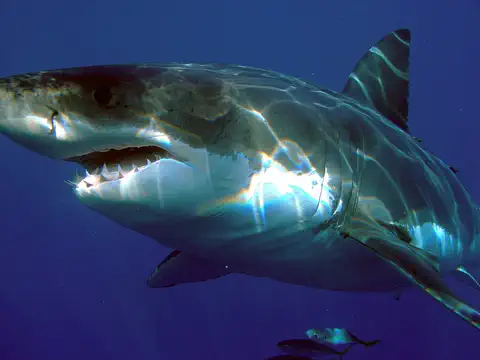
The great white shark is the largest of the mackerel sharks: a strong, torpedo-shaped fish with a gray back and a white belly. It hunts fish, seals and sea lions, and it is partly warm-blooded, which helps it stay active in cool water.
-
 Watch
Animal
Giant oceanic manta ray
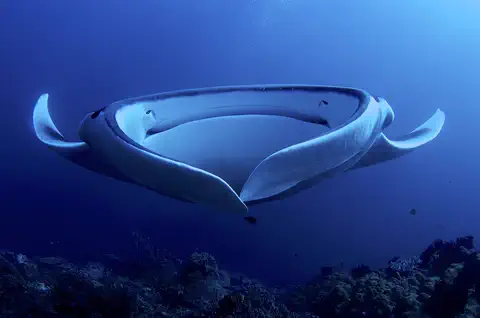
The giant oceanic manta ray is the largest ray in the world, with wing-like fins that can stretch more than 6 meters from tip to tip. This gentle filter feeder funnels plankton into its wide mouth, and it has a single pup only every two to three years.
-
 Watch
3D
Animal
Humpback whale
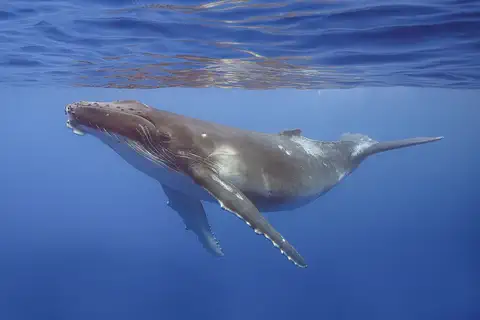
The humpback whale is a baleen whale famous for leaping out of the water, slapping its giant flippers and singing long, complex songs. It lives in every ocean and makes one of the longest journeys of any mammal, between cold feeding waters and warm waters where calves are born. Once hunted almost to extinction, it is now recovering.
-
Watch
Country
United Kingdom
The United Kingdom, or UK, lies on islands off the northwest coast of Europe. It is made up of four parts, England, Scotland, Wales and Northern Ireland, and about 69.5 million people live there. Its capital is London.
-
Watch
Country
Canada
Canada is the second-largest country in the world, stretching across the north of North America from the Atlantic to the Pacific and up into the Arctic. It has the Rocky Mountains, thousands of islands and about 42 million people, who speak English, French and many other languages.
-
 Watch
3D
Animal
Shortfin mako shark
The shortfin mako is a sleek, metallic-blue shark that roams warm and mild oceans all over the world. Scientists call it the fastest shark: it can sprint at up to about 70 kilometers an hour and even leap out of the water. It hunts fast fish such as tuna and swordfish, and it is now endangered.
-
 Watch
3D
Animal
Ocean sunfish
The ocean sunfish, or mola, is one of the heaviest bony fish in the world. Its body is tall, round and flat, with a long fin on top, another underneath, and a strange frilly edge instead of a tail. It dives deep to eat jellyfish and is often seen resting at the surface, perhaps to warm up.
For parents & teachers
What children will learn
- Explain how a filter feeder catches tiny food, using the basking shark's gill rakers as the example.
- Compare the basking shark's size with familiar things and with the whale shark.
- Describe why slow growth and long pregnancies make basking sharks slow to recover from hunting.
- Name ways people now protect basking sharks.
Recommended ages: 3 to 17 · About 15 minutes
Talk about it
- How can one of the biggest fish in the sea live on some of the smallest animals?
- Why do you think scientists know so little about how basking sharks have babies?
- If you saw a basking shark from a boat, how could you watch it safely without disturbing it?
Try at home or in class
- Make a filter feeder: pour water with a pinch of rice or lentils through a sieve or a comb held over a bowl, and see what gets trapped.
- Measure 8 meters outside with a tape measure or by counting big steps to see how long an average adult basking shark is.
Key vocabulary: zooplankton, filter feeder, gill rakers, basking, migration, endangered
Where these facts come from
- The IUCN Red List of Threatened Species , International Union for Conservation of Nature (IUCN terms of use (no redistribution of Red List data or range maps))
- GBIF Backbone Taxonomy and GBIF Occurrence Search , Global Biodiversity Information Facility (CC0 1.0 (backbone); occurrence counts are facts derived from records under CC0, CC BY and CC BY-NC)
- Cetorhinus maximus (Basking Shark), 2018 global assessment , IUCN Red List of Threatened Species
- Basking Shark (Cetorhinus maximus) species profile , Florida Museum of Natural History
- Basking shark (Cetorhinus maximus) , Natural History Museum, London
- Shark anatomy , Fisheries and Oceans Canada
- Wikidata , Wikimedia Foundation (CC0 1.0)
- Wikimedia Commons , Wikimedia Foundation (Per file: Public domain, CC0, CC BY or CC BY-SA only (credited on each page))
Checked, not yet human-reviewed. Last updated October 28, 2026. Spotted a mistake? Tell us.