
Animal
Boa constrictor
The boa constrictor is a big, patterned snake from South America. Mother boas have live babies instead of laying eggs.
The boa constrictor is a large, heavy snake of South America. Of all the boas, it lives in the greatest variety of places, from rainforests to dry scrub and farms. It catches food by squeezing, it has no venom, and mothers give birth to live babies.
Boa constrictor is a large, live-bearing constrictor in the family Boidae. Following recent genetic studies, the IUCN uses the name for the boas of South America and Trinidad and Tobago, while those of Mexico and Central America are placed in Boa imperator. It is a habitat generalist, listed as Least Concern, though harvested for skins, meat and the pet trade.
Photo: Pavel Ševela, CC BY-SA 4.0, via Wikimedia Commons
Meet the boa constrictor
The boa constrictor is a big, strong snake.
It has a pattern of patches and bands. It has no venom. It catches food by holding on tight and squeezing.
The boa constrictor is one of the best-known big snakes. Adults can grow to about 3.9 meters long, longer than two grown-ups lying head to toe, and can weigh more than 45 kilograms.
Its name tells you how it hunts: a constrictor is a snake that wraps around its food and squeezes. Boas do not have venom. Unlike pythons, which lay eggs, mother boas give birth to live babies.
Boa constrictor belongs to the Boidae, the boas. Adults reach about 3.9 meters and more than 45 kilograms (Smithsonian's National Zoo); the IUCN cites a maximum total length of 4.2 meters. Boas are live-bearing, unlike the egg-laying pythons.
For a long time all boas from northern Mexico to Argentina were treated as one species with many subspecies. Molecular and morphological studies summarized by Card and colleagues in 2016 led the IUCN to keep the name Boa constrictor for the South American lineage and to refer North and Central American boas to Boa imperator. Some sources, including the Smithsonian, still use the older, broader sense.
Quick facts
- Group
- Reptile
- Length
- 0.5 to 3.9 m
- Weight
- from 45 kg
- Lifespan in the wild
- 20 to 30 years
Where it lives
Boa constrictors live in South America.
They live in rainforests, dry forests, grasslands and even near farms. They hide in hollow logs and old burrows.
Boa constrictors live across most of South America, from Colombia and Venezuela to Argentina, and on the islands of Trinidad and Tobago. They are missing only from Chile and Uruguay. Very similar boas live in Mexico and Central America, but after studying their genes, scientists now count those northern boas as a separate species.
No other boa lives in so many kinds of places: wet rainforests, dry forests, grassy savannas, mangrove swamps, dry scrub, beaches, wetlands and land near farms and towns. Boas climb trees and are good swimmers, but they usually rest on dry land, inside hollow logs or old animal burrows.
The IUCN range covers most of South America, absent only from Chile and Uruguay, plus Trinidad and Tobago, from sea level to about 2,000 meters. It spans the Amazon, Chaco, Pantanal, Cerrado, Caatinga, Atlantic Forest, Llanos, Chiquitania and Andean foothills. Boas recorded on other Caribbean islands are considered waifs without breeding populations; the species has been introduced to Puerto Rico.
Habitats include tropical and subtropical wet, moist and dry forest, beaches, savannas, mangroves, semi-arid scrub, gallery forest, wetlands, secondary growth and areas around people. The species is semiarboreal, although adults are often found on the ground; the Smithsonian notes that boas swim well but seldom choose to, sheltering in hollow logs and abandoned burrows.
Continent
Its habitats


Where can you find this animal?
- Lives here naturally · Countries and seas named by a scientific source
- Sightings recorded · Records of wild sightings (GBIF)
Lives here naturally · Countries and seas named by a scientific source
Forests, savannas, scrub, mangroves, wetlands and farmland across most of South America (absent only from Chile and Uruguay) and Trinidad and Tobago, from sea level to about 2,000 meters. French Guiana is part of the range but has no separate region on this map. Boas of Mexico and Central America are now treated as a separate species, Boa imperator, and are not shown.
Places: Colombia, Venezuela, Guyana, Suriname, Trinidad & Tobago, Ecuador, Peru, Brazil and 3 more places.
Source: iucn-red-list · checked October 2026
Sightings recorded · Records of wild sightings (GBIF)
Counts of GBIF records of wild observations (human and machine) and preserved specimens. Records include introduced populations, vagrants, escaped or released animals and misidentifications, so a country with records is not necessarily part of the native range.
Wild sightings have been recorded in Brazil, Colombia, Mexico, Argentina, Ecuador, United States, Peru, Costa Rica and 31 more places.
Source: gbif · checked October 2026
Range maps show where scientists say an animal lives, often country by country. An animal may live in only part of a country shown, and sightings records can include animals that wandered far from home.
What it eats
Boas eat animals.
They catch rats, birds, lizards and other small animals. They swallow their food whole.
Boa constrictors eat rats, squirrels, opossums, bats, birds, large lizards and even other snakes. Most of the time a boa is an ambush hunter: it waits quietly until an animal comes close. When food is hard to find, it moves around more to search.
The boa grabs its prey with small hooked teeth, wraps its body around it and squeezes, then swallows it whole. In some parts of South America, people even let boas into their homes to catch rats.
The diet includes mammals, birds, snakes and lizards (IUCN); the Smithsonian lists large lizards, small to medium birds, opossums, bats, mongooses, rats and squirrels. Boas are mostly ambush predators but forage more actively when prey is scarce.
Small, hooked teeth secure the prey while coils wrap around it. It was long believed that constrictors crush bones or stop breathing, but research described by the Smithsonian shows the squeeze causes circulatory arrest: pressure stops the heart from moving blood. Because they eat rodents, boas are valued as pest controllers in many parts of tropical America.
Did you know?
Boas do not crush their food. They squeeze just enough.
Scientists have found that a boa's squeeze works by stopping the prey's blood from flowing, not by crushing its bones.
Research on constriction found that boas cause circulatory arrest, overturning the long-held idea that constrictors kill by crushing or suffocation (Smithsonian).
Patterns and senses
Boas come in many colors.
They can be tan, green, red or yellow, with bands and patches. The colors help them hide.
A boa's colors depend on where it lives. Its body can be tan, green, red or yellow, with bars, jagged lines, diamonds and circles that help it blend in. The boa in the photo has reddish markings near its tail, and another name for the species is red-tailed boa.
Some big snakes have heat-sensing pits on their heads, but boa constrictors do not. They rely on their flicking tongue, which picks up smells, and on their excellent eyesight.
Coloration varies with habitat for camouflage: the ground color can be tan, green, red or yellow, with cryptic bars, jagged lines, diamonds and circles (Smithsonian). The captive boa in the photo shows reddish saddles toward the tail; red-tailed boa is one of the species' common names (Wikidata).
Unlike some larger boids, Boa constrictor lacks heat-sensitive facial pits; it relies on chemical cues gathered by the tongue and on good vision. Small, hooked teeth give a secure grip, and a muscular body supplies the constricting force.
Live babies
Mother boas do not lay eggs.
The babies grow inside her and are born alive. Baby boas can look after themselves right away. They like to climb trees.
Boas mate in the dry season, after the rains stop. The female's scent tells males she is ready, and several males may gather around one female.
The babies grow inside the mother for several months and are born alive, often about 25 at a time. Each newborn is about 50 centimeters long and can look after itself straight away. Young boas spend much of their time up in trees; as they grow heavy, they spend more time on the ground.
Boa constrictor is viviparous. Breeding is seasonal in most accounts, with the timing varying by region. The Smithsonian describes males searching for widely spaced females after the rains end, with females signaling readiness by scent; the IUCN notes that males often aggregate around a single female. Gestation is given as four to six months (IUCN) or five to eight months, depending on temperature (Smithsonian).
Litters range from 5 to 41 young in the study the IUCN cites, or 10 to 64 (average 25) according to the Smithsonian. Neonates of about 50 centimeters are independent and largely arboreal. Maturity comes at two to three years according to the Smithsonian, but not before the fourth year according to the IUCN. Fatherless reproduction has also been reported (IUCN).
A quiet loner
Boas like to be alone.
They are often busy at night. They wait very still for food to come close.
Boa constrictors usually live alone, except in the breeding season. They are often active at night, but they can be out and about in the daytime too.
A boa spends a lot of time waiting quietly in one spot, perfectly still and hidden by its pattern. Young boas climb a lot, while big adults are usually found on the ground. If you ever meet a big snake, stay back, leave it alone and tell a grown-up.
Boas are largely solitary outside the breeding season (Smithsonian). Activity has been recorded both by day and by night (IUCN), although the Smithsonian describes them as nocturnal hunters.
They are semiarboreal, with a shift from trees as juveniles to the ground as adults, and they adjust their foraging to prey density, from sit-and-wait ambush to active searching. Their adaptability is one reason released pets can survive where the climate is warm enough, as in southern Florida.
Did you know?
Boas can live for 20 to 30 years.
Boa constrictors live 20 to 30 years in the wild, so a pet boa needs care for a very long time.
Wild boas live 20 to 30 years (Smithsonian), which also notes that owners sometimes release boas that have grown too large, creating populations outside the native range.
Widespread, but watched
There are still many boa constrictors.
But people catch some for their skins and as pets. Pets should never be let go outside.
Boa constrictors are listed as least concern, because they live across a huge area. But their numbers are slowly falling in some places, where forests are cleared for farms, mines and oil, and where boas are caught for their skins, their meat and the pet trade.
Boas are among the most common snakes kept as pets. Some owners do not realize how big they grow, and a few release them. That is harmful: released boas can survive and cause problems for wild animals. Never let a pet go outside.
The IUCN lists Boa constrictor as Least Concern (assessed 2014, published 2021, flagged as needing an update) because of its very wide range and presumed large population, while noting a likely gradual decline. Threats are harvest for skins and meat, in places illegal, collection for the pet trade (CITES records more than 97,000 live boas traded in 2010 to 2018) and habitat loss to oil, mining and farming in Ecuador, Brazil, Peru and Argentina. The restricted-range subspecies B. c. ortoni of southern Ecuador and northern Peru is affected by habitat loss and persecution.
The Smithsonian notes that released pet boas have established breeding populations in southern Florida, and the IUCN lists an introduction to Puerto Rico.
IUCN Red List
How is the boa constrictor doing in the wild?
- Least Concern (this animal)
- Near Threatened
- Vulnerable
- Endangered
- Critically Endangered
- Extinct in the Wild
- Extinct
Least Concern
Not at risk of disappearing from the wild right now.
See the IUCN Red List assessment · The IUCN Red List of Threatened Species 2022.2
Amazing facts
-
A baby boa is born about as long as your arm.
Newborn boa constrictors are about 50 centimeters long and can look after themselves right away.
Neonates measure about 50 centimeters and are independent from birth; juveniles are largely arboreal (Smithsonian).
-
Some people let boas live in their homes to catch rats.
In some places in South America, people keep boa constrictors in their homes to catch rats.
Boas are valued as rodent controllers in many parts of tropical America, and in some South American homes they are kept to deal with rat infestations (Smithsonian).
-
Boas do not crush their food. They squeeze just enough.
Scientists have found that a boa's squeeze works by stopping the prey's blood from flowing, not by crushing its bones.
Research on constriction found that boas cause circulatory arrest, overturning the long-held idea that constrictors kill by crushing or suffocation (Smithsonian).
-
Boas can live for 20 to 30 years.
Boa constrictors live 20 to 30 years in the wild, so a pet boa needs care for a very long time.
Wild boas live 20 to 30 years (Smithsonian), which also notes that owners sometimes release boas that have grown too large, creating populations outside the native range.
Words to know
- constrictor
- a snake that wraps around its prey and squeezes
- live-bearing
- giving birth to live babies instead of laying eggs
- ambush
- to wait hidden and then catch something by surprise
- camouflage
- colors or patterns that help an animal blend in
- captive
- living in a zoo, exhibit or home instead of in the wild
- habitat generalist
- an animal that can live in many different kinds of places
Discovery challenge
-
How do baby boas come into the world?
How are baby boa constrictors born?
How does Boa constrictor reproduce?
- They hatch from eggs in a nest
- They are born alive
- They grow from tadpoles
Show the answer
They are born alive
Mother boas have live babies. They do not lay eggs.
Boas give birth to live babies, often about 25 at a time. Pythons are the ones that lay eggs.
Boa constrictor is viviparous, producing litters of independent neonates after a gestation of several months.
-
How does a boa catch its food?
How does a boa constrictor catch its prey?
How does a boa constrictor subdue its prey?
- With venom
- By squeezing
- By chasing it for a long way
Show the answer
By squeezing
A boa wraps its body around its food and squeezes.
It grabs with small hooked teeth, then wraps around its prey and squeezes. Boas have no venom.
It constricts; the pressure causes circulatory arrest. Boas are non-venomous.
-
How does a boa find its food?
Which senses does a boa constrictor use to find food?
Which describes how Boa constrictor senses its prey?
- With its tongue and eyes; it has no heat pits
- It uses big ears
- It uses heat pits and whiskers
Show the answer
With its tongue and eyes; it has no heat pits
Boas have no heat pits. They smell with their tongue and look with their eyes.
Boa constrictors have no heat-sensing pits. They use their flicking tongue and excellent eyesight.
Boa constrictor lacks heat-sensitive facial pits and relies on chemoreception and vision.
-
Where do boa constrictors live?
On which continent do boa constrictors live in the wild?
Under the IUCN's current treatment, where is Boa constrictor native?
- South America
- Africa
- Europe
Show the answer
South America
They live in South America.
They live across most of South America and on Trinidad and Tobago.
Most of South America except Chile and Uruguay, plus Trinidad and Tobago; northern boas are Boa imperator.
Places where you might see it
-
 Watch
 Country
Brazil
Brazil covers about half of South America and is the fifth-largest country in the world. It holds most of the Amazon River basin and much of the world's largest rainforest, and about 214 million people lived there in 2026, most of them near the Atlantic coast.
-
 Watch
 Country
Colombia
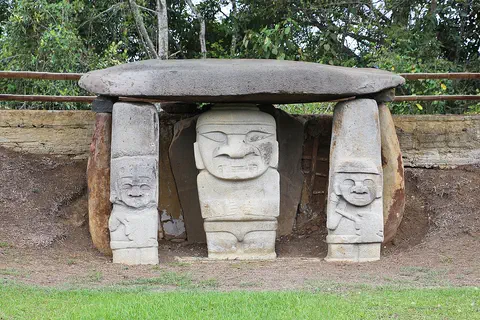
Colombia is in the northwest of South America, with coasts on both the Caribbean Sea and the Pacific Ocean. Three ranges of the Andes run through it, and most people live in the cool mountains, where the capital, Bogotá, sits on a high plateau. About 53.4 million people lived there in 2026, according to DANE, the national statistics office.
-
 Watch
 Country
Argentina
Argentina covers most of the southern part of South America. The Andes mountains run down its western side, grassy plains called the Pampas spread across the middle, and windy Patagonia stretches to the far south. INDEC, the national statistics office, estimates that about 46.5 million people lived there in 2026, many of them in and around Buenos Aires.
Explore next
-
 Watch
3D
Animal
Green anaconda
The green anaconda is one of the largest snakes on Earth. This olive-green, spotted boa lives in the rivers, swamps and flooded grasslands of northern South America, where it lies hidden in shallow water with only its eyes and nose showing.
-
 Watch
Animal
Burmese python
The Burmese python is one of the largest snakes in the world. In its home in South and Southeast Asia it has become rare because so many are caught, but in southern Florida, where people let pet pythons go, it has spread through the Everglades and eats many of the animals that live there.
-
Watch
Country
Brazil
Brazil covers about half of South America and is the fifth-largest country in the world. It holds most of the Amazon River basin and much of the world's largest rainforest, and about 214 million people lived there in 2026, most of them near the Atlantic coast.
-
Watch
Country
Colombia
Colombia is in the northwest of South America, with coasts on both the Caribbean Sea and the Pacific Ocean. Three ranges of the Andes run through it, and most people live in the cool mountains, where the capital, Bogotá, sits on a high plateau. About 53.4 million people lived there in 2026, according to DANE, the national statistics office.
-
Watch
Country
Argentina
Argentina covers most of the southern part of South America. The Andes mountains run down its western side, grassy plains called the Pampas spread across the middle, and windy Patagonia stretches to the far south. INDEC, the national statistics office, estimates that about 46.5 million people lived there in 2026, many of them in and around Buenos Aires.
-
 Watch
3D
Animal
Jaguar
The jaguar is the largest cat in North and South America. It lives near rivers and swamps, swims well, and has such a powerful bite that it can crack a turtle's shell. Most jaguars live in the Amazon rainforest.
-
 Watch
Animal
Reticulated python
The reticulated python lives in the forests, riversides and even towns of Southeast Asia. It can grow longer than any other kind of snake, it is covered in a net-like pattern, and it is such a good swimmer that it has reached many small islands across the sea.
-
 Watch
Animal
Aldabra giant tortoise
The Aldabra giant tortoise is one of the largest land tortoises on Earth. Wild ones live on Aldabra Atoll, a ring of coral islands in the Indian Ocean, where more than 100,000 of them graze, browse and shape the land like elephants do in Africa. They can live for more than 100 years.
For parents & teachers
What children will learn
- Explain what a constrictor is and how a boa catches and eats its prey.
- Compare live birth in boas with egg-laying in pythons.
- Describe how camouflage and senses help a snake that hunts by ambush.
- Discuss why pet snakes must never be released into the wild.
Recommended ages: 3 to 17 · About 15 minutes
Talk about it
- Why might farmers be happy to have boas living nearby?
- What should someone think about before getting a pet that can live 20 to 30 years?
- Why could one species live in rainforests, deserts and farmland when many others cannot?
Try at home or in class
- Cut a piece of string 3.9 meters long and stretch it out; then lie down next to it with a friend to compare.
- Make a camouflage card: color one paper snake with patches and bars and one in a single bright color, then hide both in a pile of leaves and see which is easier to spot.
Key vocabulary: constrictor, live-bearing, ambush, camouflage, captive, habitat generalist
Where these facts come from
- The IUCN Red List of Threatened Species , International Union for Conservation of Nature (IUCN terms of use (no redistribution of Red List data or range maps))
- Wikidata , Wikimedia Foundation (CC0 1.0)
- GBIF Backbone Taxonomy and GBIF Occurrence Search , Global Biodiversity Information Facility (CC0 1.0 (backbone); occurrence counts are facts derived from records under CC0, CC BY and CC BY-NC)
- Wikimedia Commons , Wikimedia Foundation (Per file: Public domain, CC0, CC BY or CC BY-SA only (credited on each page))
- Boa constrictor, IUCN Red List assessment 2021 , IUCN
- Boa constrictor , Smithsonian's National Zoo and Conservation Biology Institute
- Python , San Diego Zoo Wildlife Alliance
Checked, not yet human-reviewed. Last updated October 27, 2026. Spotted a mistake? Tell us.